

E-Business
COVID-19: Building Skilled Digital Capacities as Recovery Strategy


By: Engr. Prof. Mohammed Ajiya
The entire world is currently in the throes of a deadly pandemic. So far, there have been over 2.5 millionconfirmed cases of COVID-19 worldwide, resulting in more than 170,000 deaths, many of whom, incidentally, were critical human resources whose knowledge and expertise the world may initially struggle to replace.

Prof. Mohammed Ajiya
As a result, an unprecedented global lockdown is in place, with restrictions imposed by majority of governments on both international and local travel as well as on intra-city movement by their citizens.
This has led to the temporary closure of all but essential businesses and services, forcing many of those businesses, as well as the governments that imposed the lockdowns, to embrace the new reality of having their staff work from home for an extended and indeterminable period of time.
The COVID-19 pandemic will have lasting economic repercussions long after it has been vanquished, with a global recession certain to follow. According to the Asian Development Bank, the pandemic is projected to cause a global loss in GDP of up to $4.1 Trillion before it is over.
One critical factor in this is the fact that the pandemic descended upon a world that was essentially unprepared for it.
Whether or not there was adequate medical planning globally for a pandemic of this scale is up for debate, and many points can be made both for and against.
What is indisputable, however, is that most businesses, governments and other organisations were largely unprepared for the prospect of their entire workforce suddenly unable to show up for work, and their customers no longer able to come physically to them – for the foreseeable future.
One of the legacies of the COVID-19 pandemic, therefore, should be that we are never caught unawares again, at least in terms of preparedness for necessary social distancing. ICT planning is the optimal way to ensure this, with special focus on the concepts of e-commerce, e-government, remote work, and e-Learning.
E-commerce: E-commerce refers to the buying and selling of goods and services electronically (over the Internet). E-commerce is thriving under the conditions of the current pandemic as consumers are forced to shop mainly from home.
According to Forbes, the wealthiest person in the world is currently Jeff Bezos, founder and CEO of e-commerce behemoth Amazon.
While the pandemic has resulted in several of his fellow billionaires losing large chunks of their net worth, Bezos’ net worth is actually increasing due to the pandemic. His company Amazon is currently hiring 100,000 new full and part-time workers to help meet increased demand from consumers staying home and shopping online.
Locally, e-commerce giants Konga and Jumia are also poised to benefit from the lockdown imposed by the Federal Government, as traditional shopping outlets are largely unavailable to consumers or, when available, may be counterproductive to the objective of social distancing.
Konga has already confirmed “a significant increase in shopping activity, especially for groceries and other essentials” during the ongoing pandemic.
Both Konga and Jumia carry their own products in addition to providing a platform for business owners to sell their goods online without having to set up their own e-commerce sites.
So, what has the COVID-19 pandemic taught us about commerce? Traditional retailers without the option of conducting their commercial activities online will lose business at times like this, while businesses that engage in both traditional and e-commerce will continue to thrive.
Post COVID-19, businesses not wanting to be caught out again in similar situations will need to plan for including e-commerce capabilities in their business model as a matter of urgency.
E-government: E-government is defined as government’s use of technology, particularly web-based Internet applications to enhance the access to and delivery of government information and services to citizens, business partners, employees, other agencies, and government entities.
The deployment of e-Government solutions has been known to accelerate government decision-making processes, provide additional employment, aid youth empowerment, and even spur gender inclusiveness. E-Government is also a key factor for sustainable development and wealth creation.
With the current lockdown, all but essential government offices in Nigeria are shut down, meaning that many government services are currently unavailable to citizens and other stakeholders. While this is unavoidable due to the COVID-19 pandemic and the necessity for social distancing, it highlights the urgent need for alternate means of work and productivity in our government.
For example, Estonia, a small country in Northern Europe, possesses by far the most digitally advanced government in the world. In addition to the fact that all government activity is entirely paperless, 99% of government public services are also available online 24/7. This includes voting, ID issuance, e-signature (all documents can be signed electronically), taxes, police services, healthcare, notary services, census, education, company registration, the justice system, immigration, public transport ticketing, and much more. The only government services not currently available online are marriage, divorce, and real estate transactions.
Even with a lockdown in place, Estonia’s citizens and residents will clearly still be able to access public services seamlessly from their government.
Estonia, by the way, is not a particularly wealthy country. Its estimated GDP for 2020 is $32.742 Billion; for comparison, Nigeria’s is $504.57Billion. Estonia shows what is achievable with proper digital capacity building, planning and execution. Public services do not have to become unavailable to Nigerians in the event of a similar situation reoccurring. Citizens should not have to wait for a lockdown to be over if they have urgent government transactions to conclude. In the light of the COVID-19 pandemic and its consequences, Nigeria needs to urgently re-examine its strategies for work and productivity, and its attitude to e-government.
Remote Work: On 23rd March 2020, one week before the Federal Government declared a full lockdown in FCT, Lagos, and Ogun State in an attempt to curb the spread of COVID-19, a circular was passed ordering all non-essential public servants on grade level 12 and below to work from home until further notice. While a small percentage of workers have managed to discharge some of their duties from home starting from then and during the subsequent lockdown, the unfortunate reality is that majority of staff supposedly “working from home” have not been properly equipped with the required digital skills and tools, and are therefore, unable to accomplish any meaningful work during this time.
This loss in productivity has affected both the public and private sectors and looks set to continue for as long as lockdown measures remain in place. The economic consequences of this are yet to be quantified but will continue to be felt nationwide long after things return to a semblance of normality. Could it have been different if the tools, capacity, and infrastructure for effective remote working were in place and pervasive? The answer is a definite yes.
Majority of today’s work tasks can be performed using information and communications technology in addition to the more traditional methods. There are technology solutions for tasks ranging from meetings and collaborative work to data analysis, marketing, and customer relationship management. Remote working software solutions can be deployed by employer organisations to enable their employees remotely and securely connect to the organisations’ servers, edge-computing or cloud via Virtual Private Networks, and access documents, files, services and tools pertaining to their job roles just as if they were sitting in their offices within the organisations’ premises. These are the tools required for modern work tasks, both on-site and remotely.
However, for a workforce to be effective at using these tools, they need to possess a certain level of digital literacy as well as proficiencies specific to their job roles and tools required for those roles. This is where capacity comes in. The final piece of the puzzle is infrastructure. This encompasses widespread availability, reliability, and affordability of broadband Internet resources across the country, reliable voice communications networks, and reliable power supply. With these three factors securely in place, any organisation can theoretically continue to function at close to full productivity regardless of any lockdowns or similar situations. Any required meetings would be conducted using video and web conferencing solutions, staff would continue to deliver on their assigned tasks, and collaboration among teams would be seamless regardless of the geographical locations of team members.
Capacity building in post-pandemic Nigeria: In recognition of the fact that majority of organisations (both public and private) were largely unprepared for the effects of the COVID-19 pandemic, we have explored avenues for better preparedness going forward, via e-commerce, e-government, and remote work.There is, however, an underlying capacity building requirement to all three concepts, the absence of which would make it impossible to attain the level of future preparedness sought.
SMEs engaged in commercial activities (buying and selling) who do not currently have digital skills and e-commerce capabilities may simply have no idea where to begin.
Coordinated and comprehensive capacity building on e-commerce should be made available to SMEs post-COVID-19 to provide them with the required knowledge and available options for adding e-commerce to their current business model.
E-government is another core area where massive capacity building is required, in the light of the pandemic and subsequent lockdown. Decision makers in MDAs need to understand how e-government solutions can be applied to the delivery of their organisations’ mandates; their IT departments need to learn how to implement, deploy and maintain those solutions; while their key staff need capacity building on the operation and administration of the platforms.
Finally, for remote work to be viable and sustainable, a certain level of digital literacy is required in staff of both public and private organisations, with additional digital proficiencies required according to their specific job functions. This is essential if the staff are to effectively complete their job functions mainly using digital tools from remote locations. Also, due to the highly dynamic nature of information and communications technology, regular retraining and upskilling is necessary even for directors, management and staff that are already digitally literate. In addition, digital security matters. It has now become mandatory for organisations to design and deploy their own ICT Security Policy. IT departments in these organisations must learn how to select, deploy, integrate and maintain secure remote working platforms that are suitable for their organisations’ specific needs. These organisations must seek the capacity building that is required for their staff, if they are to be immunised from loss of productivity during any subsequent lockdowns or similar situations.
The COVID-19 pandemic has shown us that nothing is beyond the realms of possibility. Scientists, as well as various works of fiction, have long predicted a scenario like the one we currently face, but the truth is that most of us never thought it would actually happen.
Now that we know otherwise, it is imperative that we ensure that the loss in productivity and economic effect of this pandemic is mitigated for any similar future events. The current pandemic has shone a spotlight on the ways in which we were unprepared for the situation and provides us with the opportunity to plug those gaps in case of any future reoccurrences. We must seize that opportunity with both hands and run with it.
Digitally retooling the workforce and enthroning the mastery of digital knowledge and capability is the ultimate roadmap and gateway to national development and survivability for Nigeria and Africa.
Digital Bridge Institute (DBI), established by the Nigerian Communications Commission (NCC), is Nigeria’s foremost Centre of Excellence in Information & Communications Technology training and education with campuses in Abuja, Lagos and Kano, and three further campuses upcoming in Yola, Enugu, and Asaba.
DBI’s mandate is to build skilled digital capacities for Nigeria at all levels, making it uniquely placed to help the nation tackle the issues discussed above. DBI offers digital capacity building in areas ranging from Digital Literacy to Cybersecurity, Networking, Network Security, Office and Productivity Tools, Software Development, AI, IoT, Robotics, 3D, VR, Blockchain, etc. In addition to traditional learning methods, DBI offers comprehensive e-learning capabilities, enabling the Institute to deliver world-class capacity building programmes both on-site and remotely.
Engr. Prof. Mohammed Ajiya is President/CEO Digital Bridge Institute – DBI


E-Business
Kaspersky Discovers New Phishing Campaign Exploiting Google Tasks Notifications to Steal Corporate Credentials


Kaspersky has uncovered a new phishing scheme that abuses legitimate Google Tasks notifications to trick corporate users into revealing corporate login credentials.

By leveraging Google’s trusted @google.com email domain and notification system, attackers bypass traditional email security filters and exploit users’ trust in familiar services.
In this campaign, victims receive an authentic-looking notification from Google Tasks with the subject line “You have a new task.” The message creates the illusion that the recipient’s company has adopted Google’s task management tool, pressuring them to act quickly. The notification often includes elements of urgency, such as a high-priority flag and a tight deadline, to prompt the victim’s immediate response.
Upon clicking the embedded link, users are directed to a fraudulent form disguised as an “employee verification” page, where they are asked to enter their corporate credentials under the pretense of confirming their status. These stolen credentials can then be used for unauthorised access to company systems, data theft, or further attacks.
“Google’s vast ecosystem of services gets exploited by scammers. The scheme with Google Tasks is part of a broader trend observed before and continuing into 2026, where cybercriminals misuse legitimate platforms to distribute scams and phishing.
Notifications originating from legitimate domains naturally evade many spam and phishing filters, while the social engineering aspect – making it seem like an internal company process – lowers the victim’s guard,” comments Roman Dedenok, Anti-Spam Expert at Kaspersky.
E-Business
esentry 2025 Report Shows Healthcare, Financial Services and Telecoms as Staging Grounds for Increased Cyberattacks in Africa

Cyber adversaries targeting African organisations are increasingly shifting away from opportunistic attacks toward deliberate, sector-specific campaigns aimed at the continent’s most critical digital infrastructures, according to the esentry 2025 Annual Report released by esentry, Lagos-based Africa’s leading indigenous Managed Security Service Provider (MSSP).

The report identifies healthcare, financial services, and telecommunications as the primary staging grounds for high-velocity cyberattacks, reflecting a growing focus on sectors that underpin economic stability, public welfare, and digital connectivity across Africa.
The findings are drawn from one of the largest cybersecurity datasets analysed in the region. Over the course of 2025, esentry processed more than 31 billion security events, generating 3.5 million alerts and successfully blocking over 15,000 malicious attempts. This monitoring scale shows that, while traditional financial institutions remain a core target, the threat landscape has expanded to include digital lending platforms, healthcare systems that store sensitive personal data, and telecom operators responsible for national and regional connectivity.
Within the healthcare sector, the report highlights ransomware as the most acute risk, with attackers frequently exploiting exposed Remote Desktop Protocol (RDP) services to compromise patient data and disrupt essential medical operations. In financial services, organisations are facing a surge in credential abuse, insider-related threats, and info-stealer malware designed to enable fraud and unauthorised access. Telecommunications providers are increasingly targeted by highly tailored phishing campaigns and attacks on exposed web services, which aim to harvest credentials and compromise customer data.
Commenting on the findings, Gbolabo Awelewa, Chief Business Officer at esentry, said the nature of cyber threats across Africa has evolved significantly. “The threats we are seeing today are deliberate, informed, and carefully tailored to local enterprises. Attackers are exploiting trusted access and moving quietly within networks, which makes early detection critical. Our coordinated cybersecurity model, spanning Defence, Intelligence, Offence, and Security Engineering, allows us to combine scale, speed, and deep contextual insight to detect and neutralise threats before they escalate,” Awelewa said.
A defining trend identified in the report is the shift from overt system exploitation to the abuse of legitimate access. By leveraging compromised credentials and ‘living-off-the-land’ techniques, attackers can blend into routine enterprise operations and significantly delay detection. This approach has compressed the attack lifecycle, enabling adversaries to move from initial access to full operational impact in fewer than 15 days.
To counter this acceleration, the report emphasises the importance of early detection and automated response. esentry says it currently contains low-complexity incidents in under 90 seconds, using a combination of structured threat hunting and centralised telemetry to anticipate and absorb attacker pressure rather than reacting after damage has occurred.
As African organisations continue to digitise, the esentry 2025 Annual Report positions itself as a critical reference point for understanding the continent’s evolving cyber threat environment. The report concludes that protecting Africa’s digital trust will require a shift away from fragmented security tools toward disciplined, coordinated defence frameworks, what esentry describes as a unified Phalanx formation.
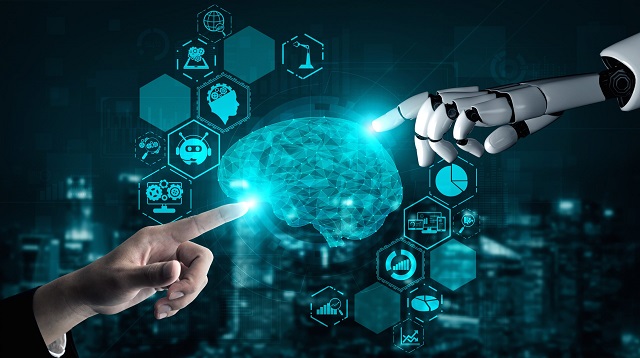
The African Development Bank Group (AfDB) and the United Nations Development Programme (UNDP) have launched an ambitious $10 billion project to support the adoption of Artificial Intelligence (AI) across the continent.

The 10 Billion Initiative intends to accelerate ethical AI adoption and inclusive digital economic growth in Africa.
The initiative follows the Nairobi AI Forum, which took place earlier this month in Kenya and brought together governments, private sector leaders, development partners, and tech innovators to define pathways for impactful AI adoption.
According to the organisations, the strategy is a co-designed collaboration between the Bank Group, UNDP, and commercial partners that aims to raise up to $10 billion by 2035.
The resources will be used to create up to 40 million new jobs across the continent by 2035, through targeted investments that provide the groundwork for AI and accelerate widespread adoption in everything from entrepreneurship and regional data infrastructure to policy frameworks and skill development.
Nicholas Williams, AfDB Group ICT operations division manager, commented: “As a leading multilateral development institution, the bank is leveraging its comparative advantage to ensure Africa is not left behind in the AI era.
“The AI 10 Billion Initiative paves the way for expanded partnerships and sustained investments that will accelerate AI entrepreneurship, strengthen data and infrastructure ecosystems, and support inclusive growth across the continent.”

Leo Stan Ekeh at 70; thanks Tinubu, Obasanjo, Nigerians, Global Tech Community

Iran-Israel-US Conflict and CBN’s FX Gains: A Stress Test for Nigeria’s Monetary Stability

JAMB Uncovers AI-Driven Fraud Targeting UTME Candidates, Warns Parents

SERAP Asks FCCPC to Investigate Google, Meta, Others over Alleged Rights Abuses

Reps Mull Commission to Regulate Fintech Operations

Accidental Billionaire Opts for Jail Instead of Returning Money Credited Him by Mistake

New Horizons Nigeria Breaks Ground: First to Fuse Mandarin into ICT Curriculum

Kaspersky Brings more Transparency to Threat Detection with New Hunt Hub

NDPC Commits to Balancing Data Privacy, Protection Information

OADC Lagos Reinforces Commitment to Local Data Hosting and Digital Transformation @ NDPC’s National Privacy Week Summit




 General News3 days ago
More 14m Farmers to Benefit from AfDB-backed Initiative

 Telecom3 days ago
MTN Nigeria Posts Record N1.70 Trillion Pre‑Tax Profit, Declares N20 Dividend for 2025

 Telecom3 days ago
Dimension Data Nigeria Secures ₦20Billion Funding to Strengthen Digital Infrastructure

 News3 days ago
Galaxy Backbone Confirms Over 150,000 Active Official Government Email Accounts, Clarifies Status of GOVMAIL

 Telecom3 days ago
Alerzo Liquidates Delivery Fleet as N4.38bn Moniepoint Loan Row Deepens

 General News3 days ago
Newmark Webinar Explores How AI Could Transform Healthcare in Africa
 General News16 hours ago
SERAP Asks FCCPC to Investigate Google, Meta, Others over Alleged Rights Abuses
 E-Financial15 hours ago
Iran-Israel-US Conflict and CBN’s FX Gains: A Stress Test for Nigeria’s Monetary Stability