

E-Financial
Customer Questions “Disappearance” of N3.7m from his Ecobank Account

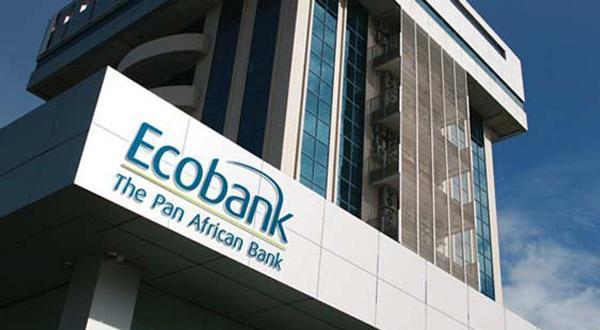
Peter Ezeike, a customer of Ecobank, has accused the bank of orchestrating the theft of N3,755,000(Three million, Seven Hundred and Fifty-Five Thousand naira) from his savings account during the period of 2018 to 2019.

Ezeike, who had been residing in the United Arab Emirates (UAE) since 2017, returned to Nigeria in 2021 only to discover the significant financial loss.
According to him, the unauthorized transactions took place while he was away in the UAE, with all the activities on his account between 2018 and 2019 transpiring without his knowledge.
Despite being the sole operator of a savings account, he found that deposits and cash withdrawals occurred without his consent, including a suspicious payment of N100,000 to an unfamiliar name, Aderinoye A. Quazeem.
The customer suspects insider involvement and points to his prior relationship with Ibrahim Akeyan, a former Ecobank staff at the Sango Ota branch in Ogun State.

Ezeike alleges that he frequently left money with Akeyan when unable to join a queue for deposits before relocating to Dubai.
Speaking to the Foundation for Investigative Journalism, Ezeike said; “Mr. Ibrahim Akeyan was an employee of Ecobank at its Sango Ota branch in Ogun State.
He was a regular face. Several times I would leave deposit money with him if I was unable to join a queue for some reason. We related freely and he knew my account details. There was never a problem then,” the Dubai returnee said.
“He is the person I suspect had tampered with my account due to that relationship I had with him. Some events that played out after I reported the missing money to the bank further reinforced my suspicion against him and even the bank itself.”
When contacted, Akeyan denied knowing Ezeike; “I don’t know the person. I dealt with many customers and I cannot remember the name you are mentioning. The customer should approach the bank for whatever issues they have. I handed over properly before exiting the bank, and if there are questions for me to answer, it is the bank that will invite or call me.”, he said.
Upon his return to Nigeria in 2021, Ezeike was astonished to find an insufficient balance in his account. A detailed examination of his statement of account covering November 1, 2018, to March 30, 2021, revealed a series of unauthorized withdrawals and deposits, all transacted in his name at the Idi-Iroko branch.
Attempts to clarify the situation were met with further complications.
Ezeike applied for another statement of account at the bank’s branch at Redemption Camp of the Redeemed Christian Church of God on November 22 the bank official who attended to him said his account had been blocked and the request could not be processed.
The accused branch of Ecobank initiated an investigation but has yet to provide any resolution or restitution to the customer.
Ezeike reported the suspicious transactions to Aderemi Adeleke, the branch’s customer service manager, and Olajide Folake, the branch manager, seeking a thorough investigation.
However, the situation took an unexpected turn when Ibrahim Akeyan contacted Ezeike on his newly acquired Nigerian phone number.
Perplexed by this development, Ezeike questioned the bank officials, only to discover that they had released his contact information to Ibrahim without his consent. The justification provided was to inform Ibrahim of the investigation before potential arrest. This revelation left Ezeike disheartened and further fueled his mistrust in the bank’s handling of the matter.
Despite four scheduled meetings, Ibrahim Akeyan failed to attend any, raising more questions about the bank’s commitment to resolving the issue.
The case has now reached the attention of the head office, prompting a virtual meeting. However, Ibrahim’s non-compliance continues to hinder progress, leaving Ezeike in the dark regarding the status of the investigation and the recovery of his funds.
This incident highlights the urgent need for a comprehensive investigation into the alleged misconduct, and Ecobank is under scrutiny for potential internal lapses that may have facilitated the unauthorized transactions.
As the investigation unfolds, the bank faces growing pressure to address these serious allegations and provide a transparent account of the events surrounding the disappearance of Peter Ezeike’s funds.


Central Bank of Nigeria (CBN) has launched a new digital platform to track every foreign exchange transaction involving Bureaux De Change (BDC) operators, marking a major step in its efforts to improve transparency and strengthen oversight of the country’s retail forex market.

In an operational guidance issued on July 15 to authorised dealer banks and licensed BDCs, the apex bank introduced the FX BDC Purchase Tracker (FXBT), a centralised electronic portal designed to monitor foreign exchange purchases by BDCs from the point of request through approval, settlement and eventual sale.
The CBN said the portal will require BDCs to upload real-time or same-day data on all FX purchases made through the Nigerian Foreign Exchange Market (NFEM), giving the regulator transaction-level visibility across the retail FX market.
According to the bank, the platform is designed to prevent abuse by making it easier to detect operators attempting to exceed the weekly purchase limit of $150,000, obtain allocations from multiple banks or divert foreign exchange outside approved channels.
The launch of the tracker builds on the CBN’s February policy that restored direct access for licensed BDCs to purchase foreign exchange from authorised dealer banks through the NFEM. While that policy improved access to official FX, the new platform provides the digital infrastructure to monitor how the funds are used.
Under the new framework, authorised dealer banks must conduct comprehensive Know-Your-Customer (KYC) and customer due diligence checks before selling foreign exchange to any BDC.
The new guideline also says banks must verify beneficial ownership information, retain incorporation documents and carry out enhanced due diligence for higher-risk operators.
Any BDC that fails these checks will not be allowed to access official foreign exchange.
The guidance also requires banks to acknowledge BDC purchase requests submitted through the FXBT portal within two business hours and immediately notify operators whether their requests have been approved or rejected.
To discourage speculation, the CBN directed that any forex purchased through the NFEM but left unused must be sold back into the market within 24 hours after the expiration of the utilisation period.
BDCs are also required to disclose any previously unused balances when submitting fresh requests.
In addition, all foreign exchange transactions between banks, BDCs and customers must be settled through registered accounts with licensed financial institutions.
Third-party transactions are prohibited, and any transfer outside a BDC’s registered settlement account will be treated as a regulatory violation.
The apex bank also said all authorised dealer banks and licensed BDCs are expected to comply with the new regulatory guidance and operational procedures with immediate effect.


President Bola Tinubu has signed the Presidential Executive Order on Virtual Assets Coordination, 2026, introducing a coordinated framework to regulate Nigeria’s fast-growing virtual assets sector, combat fraud and strengthen oversight without creating a new regulatory agency.

The Executive Order, which took immediate effect, establishes a Virtual Asset Council to harmonise the activities of financial, revenue and capital market regulators while promoting responsible innovation in the digital economy.
According to a statement issued on Friday by the President’s Special Adviser on Information and Strategy, Bayo Onanuga, the order was signed pursuant to Section 5 of the 1999 Constitution to address growing regulatory gaps as virtual assets increasingly blur the boundaries between currencies, commodities, securities and payment systems.
The Presidency said the fragmented regulatory landscape had exposed Nigeria to risks including money laundering, terrorism financing, cybercrime, data privacy breaches, fraud and significant revenue losses, with fraudulent operators exploiting loopholes to defraud unsuspecting investors.
Under the new framework, the Central Bank of Nigeria (CBN) will chair the Virtual Asset Council, while the Nigeria Revenue Service (NRS) and the Securities and Exchange Commission (SEC) will serve as vice-chairmen. Other members include the Nigerian Financial Intelligence Unit (NFIU) and the Office of the National Security Adviser (ONSA).
The Council will coordinate policy, strengthen collaboration among regulators and work with the Attorney-General of the Federation to develop a harmonised legal framework that aligns virtual asset regulation with Nigeria’s economic, security and social priorities.
The Executive Order also establishes a Virtual Asset Office, domiciled at the CBN, to serve as the Council’s operational secretariat. The office will coordinate information sharing, applications and reporting among participating agencies through an integrated supervisory technology platform while allowing each institution to retain control over its data.
The Presidency stressed that the order does not establish a new regulator or transfer statutory powers from existing agencies. Instead, it creates a coordination mechanism under which regulatory responsibilities will depend on the nature of the virtual asset or activity involved.
Under the arrangement, the SEC will continue to regulate virtual assets classified as securities, while the CBN will oversee payment, settlement, custody and other non-security virtual asset services. The Council will resolve jurisdictional disputes where responsibilities overlap.
As part of the reforms, the CBN will launch a regulatory sandbox that will allow eligible firms to test virtual asset products and blockchain-based solutions under close regulatory supervision before they are introduced into the wider market.
Similarly, the Nigeria Revenue Service will issue a dedicated tax policy for the virtual assets sector to clarify tax obligations, improve voluntary compliance and ensure the rapidly expanding industry contributes fairly to government revenue.
The Federal Government is also finalising a comprehensive Virtual Assets White Paper, which will outline Nigeria’s long-term policy direction for the sector.
President Tinubu directed the newly established Council to produce a Harmonised Implementation Framework within 30 days to facilitate the immediate implementation of the Executive Order and strengthen confidence in Nigeria’s digital economy.

World Bank has said that despite nearly three years of economic reforms by the federal government, about 79 per cent of Nigerians remain poor or vulnerable to falling into poverty.

The bank stated this in its newly approved Country Partnership Framework for Nigeria, covering 2026 to 2032, and its accompanying Streamlined Country Diagnostic.
The report which highlighted the country’s deepening social and economic challenges, indicated that while recent macroeconomic reforms have helped stabilise the economy and restore investor confidence, the benefits have yet to translate into meaningful improvements in living standards for most Nigerians.
The World Bank noted that the seven-year strategy seeks to support Nigeria’s ambition to create more and better jobs through private-sector-led growth while accelerating poverty reduction.
According to the Streamlined Country Diagnostic document, “Thirty-three per cent of its population is ultra-poor (food insecure by age-weighted caloric intake), 61 per cent is below the poverty line, and 79 per cent is near poor (below the poverty line or vulnerable to falling back into poverty).”
The World Bank pointed out that Nigeria’s economic performance over the past decade had been constrained by structural rigidities, policy missteps, dependence on crude oil, and repeated external shocks, leaving millions trapped in poverty.
It stated that about 139 million Nigerians currently live below the national poverty line, with poverty concentrated largely in the northern part of the country.
The report also noted that more than 86 million Nigerians remain without electricity, while three to four million young people enter the labour market every year with limited employment opportunities.
It added that sustaining macro-fiscal and structural reforms would be critical to reducing inflation, expanding fiscal space and ensuring that recent economic stabilisation translates into improved living standards.
According to the report, the reforms have begun to improve macroeconomic indicators.
Economic growth increased from 3.5 per cent in the first half of 2024 to 3.9 per cent during the corresponding period of 2025, foreign reserves exceeded $42bn, fiscal deficits narrowed, and investor confidence strengthened.
However, it warned that high inflation continues to undermine household incomes. The report stated, “High inflation, though declining, continues to erode real incomes, particularly for the poor. Social protection efforts to support the most vulnerable have been slow and uneven in their rollout.”
The World Bank added that although the reforms helped Nigeria avoid a more severe economic crisis, institutional weaknesses, weak policy coordination, and inadequate budget transparency continue to pose significant risks.
It warned that sustained reform implementation, backed by deeper structural measures, would be required to improve Nigeria’s medium-term economic outlook.
Under the new Country Partnership Framework, the World Bank said job creation would serve as the primary pathway for reducing poverty.
The report explained that international experience from countries such as India, Indonesia, and China shows that moving people into productive employment remains the most effective tool for reducing poverty.
To achieve this, the framework will prioritise labour-intensive sectors, particularly agriculture and micro, small and medium enterprises, while addressing structural deficiencies in electricity, digital infrastructure, education and healthcare.

Dangote Refinery’s Private Placement Reportedly Hits $2.5Bn

FG, UNODC Plan National Strategy against Organized Crime

EFCC Busts NIS Visa Overstay Racket, Uncovers N700m in an Account

CBN to Monitor Every Dollar with FXBT, Forex Tracker

NCC, NDLEA Partner to Fight Piracy and Drug Trafficking

NRC, Ponzi Scheme Collapses Resulting Loss of Billions of Naira

NASENI Moves to Digitize CCB’s 5m Assets Declaration and Operations

Lebara Nigeria Launches Lebara Play, Africa’s First Telecom-Owned Micro-Drama Platform

CANAL+ Partners Samsung to Pre-Load DStv Stream on New Samsung TVs In Nigeria, Other African Countries

Tokenization, Blockchain Technology will Transform Financial Institutions – IMF



 News2 days ago
EFCC Busts NIS Visa Overstay Racket, Uncovers N700m in an Account
 News2 days ago
NCC, NDLEA Partner to Fight Piracy and Drug Trafficking

 News3 days ago
FAAN to Replace Physical ID Check with V-Pass Biometric Verification

 News3 days ago
CBN Introduces Digital Tracker to Monitor BDC Forex Transactions
 General News2 days ago
Dangote Refinery’s Private Placement Reportedly Hits $2.5Bn

 News3 days ago
CAC Begins Removing 100,000 Companies from Register Over Regulatory Non-Compliance

 Telecom3 days ago
Airtel Delivers Free Employability Training to Young Nigerians @ World Youth Skills Day

 Telecom3 days ago
ntel Plays Down Calls and Data Services, Moves to BET Agenda