

General News
Customs, Others Hindering Cashless Policy – Chukwu


Osita Chukwu, national chairman, Save Nigeria Freight Forwarders Importers and Exporter Coalition (SNFFIEC) speaks about the economic losses and maladministration in the ports.
According to him, some elements have continued to sabotage the Federal Government’s ports reform processes.
He spoke to peter ugwu.
On Recent Developments in the Ports
After the visit of Dr. Ngozi Okonjo-Iwuala, minister of Finance and the Presidential Ports Reforms Committee, we had some calm in the ports. However, it is sad to state now that the situations are slipping down again.
Most of the things we pointed out then are yet to be attended to.
We want to seize this opportunity to call again on the Minister to compel the Customs and other constitutionally approved agencies operating in the port to abide by the fundamentals of ports operations, because it sounds ridiculous that when the Federal Government puts down an order only for a ministry, parastatals or agencies under it go contrary to that. Some people even dabble into functions of the presidency when they have not been called upon to do so.
If such gambling persists, the Save Nigeria Freight Forwarders Importers and Exporters Coalition (SNFFIEC) will not hesitate to embark on nationwide strike.
Cashless Policy and Nigeria Ports system
Before that, I want to point out that last time we had a town-hall meeting, we were promised by the Federal Ministry of Finance that the presidency will no longer condone any interference of multiple examinations, multiple chase by Customs, illegal collections, bribery and corruption within and outside the ports.
Even with the cashless economic policy people still carry cash running over N10 million while entering Nigeria ports for clearing activities.
Cash flows in Nigerian Ports.
And it takes face to face chat for bribery, corruption and atrocities committed during these venture to be established. Are we really ready for economic development? And there is a kind of preferential treatment on way operators handle issue of cargo checks. The Controller General of Customs should move swiftly to curtail such economic sabotage and obnoxious actions met against agents in our ports.
Reforms
Even with the concession and ports reform programme, the way things are one could fear that Customs is getting tired of pursuing its statutory duties; meanwhile, SNFFIEC thinks there is nothing wrong for us to imbibe ports management system in other countries where revenue generation is typically handled by the private entities.
For instance, it’s private companies that manage America’s revenue generation through ports systems. The main job of customs is supervision of documents.
So, when government wants to hide under the umbrella of Ports Concession, have they been able to alter Customs Law, which should place every duty collection under Custom’s purview.
Now, if you go to various terminals it is very glaring that things are yet to brazen up in the right direction, so we need immediate changes. There are still little foxes that spoil our economic vines.
Excess Charges
Another area we disagree with the authority is that when you have notified them about a particular cargo coming into the country, due to one challenge or the other they direct the cargo to another port, now the problem is that they will expect me to pay for the extra movement. I don’t think I should be the one to do that, because you are even delaying to render a service I had paid for. It implies system failure.
While vessels are waiting at the mainstream importers and freight forwarders are being billed. Why? The last meeting we had with the Nigerian Institute of Shipping (NIS), and the Nigerian Shippers Council (NSC) it was agreed that any vessel that someone must have stuck an agreement with the operator, you must be ready to pay if you were not able to discharge such cargo as predetermined by the consignee.
The earlier we identify those who do not want the nation’s economy to grow, the better for us, because I don’t see the rational behind a demand for container deposit of N450, 000 like we witness in the ports now.
Regulating Ports Operations
Although, I am commending the economic team, including the presidential committee on ports reform, Federal Ministry of Transport who collaborated with the Lagos State Government by using taskforce to dislodge trucks that block the Apapa-Oshodi Expressway, at the same time, I want to say that they still have much work left in their plates.
Because if you don’t create enough enabling environment to enable the stakeholders – shipping companies, clearing agents, terminal operators, etc to execute their functions, the system will remain stagnant.
The link road within and out-sketches of the ports are nothing to write home about. Containers brought in from oversea, and paid the necessary taxes, hoping to recoup his investment, only for it to crash at the ports gate leading to the market. We have resolved not to continue this way.
Let’s call a spade by its name.
We know that in the ports of Maryland, Jersey, Baltimore, UK, Cape Ports or Durban you can never see government agency not meant to be at the port loitering about around ports corridors unless invited.
Even the presidency has issued order to that effect, but who will ensure compliance; approach customs on that and they will paint pictures of perfect systems for you. Police presence ought to be for the maintenance of law and order and not to be part of examinations and at the end containers are being turned-back without genuine reasons.
Even with much hypes that our borders are porous, yet the Police, SSS are inside the ports chasing already cleared containers. Yet, government is claiming to have perfected the system.
What are the duties of the SSS and police in the ports that Customs and the Immigration can not do? Regrettably, the Federal Operations Unite (FoU) of the customs mandated by the government to leave Lagos metropolis to man the borders, are not complying with the directive.
Terminal Operators
People are being pushed to the wall. We know that the long consequence of frustrations people are being subjected to leads to revolutions and quasi-civil war going in different countries. In as much as we pray that does not happen in Nigeria, it is better that those in authority do the right thing.
Presently, the terminal operators have embarked on giving unnecessary (double) charges. Some things you hear of Terminal Handling Charges (THC) and other acronyms that mesmerize you.
The THC is it for the machine to bring down the container that one container costs as much as N75, 000? Seven percent surcharge (7%) is meant for port maintenance and development.
Federal Government has not told us how the fund is used that we have the ports in deplorable conditions.
Even with the concession programme, we are still the way we were. The ports seemed better managed in terms of charges in the day of NPA. We need total overhauling in the system.
Auction Base
Having auction base at different place in the country will help contain economic wastes perpetuated in our ports.
For instance, during physical examination; which we feel is better, when Customs impound a container containing excess goods than what was declared, they normally seize such containers.
Although we have advocated that Customs should charge penalties on the spill over instead of seizing everything.
However, during auctioning everybody is left in the dark.
Therefore, there should be an auction base with screens to display commodities before and during the process. We still have a long way to go in or ports reform, and until government starts asking the right people questions, we nation’s port will continue to groan.


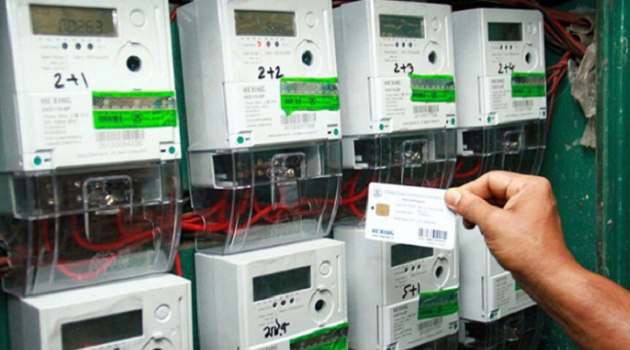
Nigerian Electricity Regulatory Commission (NERC) has ruled in favor of electricity consumers, directing distribution companies (DisCos) to refund ₦20.33 billion in outstanding costs for meters bought under the Meter Asset Provider (MAP) framework.

NERC
Signed on February 27, 2026, by NERC Chairman Musiliu Oseni and Commissioner Dafe Akpeneye, Order No. NERC/2026/025 amends a 2023 directive.
It requires DisCos to disburse the funds via energy credits over 12 months starting March 1, 2026, addressing years of slow refunds.
As of December 31, 2025, DisCos owed this amount due to delays in reimbursing prepaid customers who funded their own meters.
DisCos must automate credits for the full MAP meter cost upon activation, disbursed monthly over 120 months based on the customer’s tariff—credits cannot offset legacy debts.
Prepaid customers will receive a monthly token by the 4th day equivalent to the reimbursement value; for arrears, they’ll get two tokens per month.
Postpaid customers will see a distinct credit line on bills subtracted from totals, with two line items monthly for arrears.
NERC mandates monthly reports on reimbursement values using an approved template, plus dedicated email channels for complaints with resolution status included.
The order aims to end delays, improve notifications, and boost sector trust. DisCos must accelerate arrears recovery over 12 months without further excuses.
This follows NERC’s February 2026 compliance review, amid ongoing power sector challenges highlighted by Power Minister Adebayo Adelabu.

Nigeria Centre for Disease Control and Prevention (NCDC) has raised alarm over ravage of Lassa fever cases across 18 states and 67 Local Government Areas (LGAs) of the country.

Dr Jide Idris, director-general of NCDC, in statement yesterday, said that Bauchi, Ondo, Taraba, Edo and Benue accounted for more than 80 per cent of confirmed cases recorded during the 2026 peak transmission season.
Idris, described as particularly worrisome the growing infections among healthcare workers, with 28 confirmed cases and three deaths reported so far this season.
NCDC attributed the sustained transmission and rising fatalities to operational gaps at the state level, urging urgent action to strengthen outbreak response and control measures.
According to Idris, field investigations showed most transmissions were occurring in known endemic areas, but weak implementation of established response frameworks had contributed to the continued spread and higher case fatality rate.
He said that gaps identified include infections in general outpatient and maternity settings, poor adherence to Infection Prevention and Control (IPC) protocols, and inadequate pre-positioning of Personal Protective Equipment (PPE).
He added that delayed patient presentation due to financial barriers, inconsistent activation of State Incident Management Systems, weak contact tracing, persistent stigma and poor isolation centre standards were also driving transmission.
Idris emphasised that outbreak response implementation and health service delivery fell primarily under state governments within Nigeria’s federal structure, urging them to strengthen accountability and resource allocation.
He called on affected and high-risk states to urgently activate and closely monitor their Incident Management Systems, ensuring timely coordination and efficient outbreak response at all levels of healthcare delivery.
He also urged the immediate release of response funds, strict enforcement of Infection Prevention and Control (IPC) compliance in public and private health facilities, and continuous availability of PPE and other critical supplies.
The NCDC boss also advocated accelerated financial protection mechanisms to reduce late presentation and high fatality rates, alongside institutionalised rodent control and environmental sanitation measures under a One Health approach.
He advised healthcare workers to maintain a high index of suspicion and adhere strictly to IPC guidelines.
He also urged the public to keep environments clean, prevent rodent entry into homes, store food safely and seek early medical care when symptoms appeared.
Idris noted that Lassa fever was treatable, with improved outcomes when detected early, adding that Nigeria was also responding to other epidemic-prone diseases including Cerebrospinal Meningitis, Diphtheria, Mpox and Cholera.
He reiterated NCDC’s toll-free emergency line, 6232, for reporting suspected cases and obtaining further information

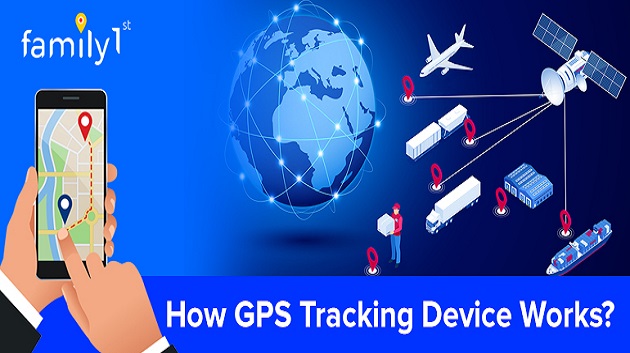
The Lagos State Traffic Management Authority (LASTMA) has deployed a number of real-time digital solutions, including surveillance drones, GPS-enabled patrol vehicles, and automatic incident detection software.

The agency has also established a central command and control centre to reduce emergency response times and improve traffic safety throughout Lagos.
According to the agency, the digital transition will replace manual reporting and fragmented coordination with an integrated, data-driven platform capable of instantaneously detecting, verifying, and dispatching responders to crashes and breakdowns.
According to general manager Olalekan Bakare-Oki, LASTMA, body cameras, mobile data terminals, and toll-free hotlines now feed into a unified operations hub that gives real-time visibility of traffic situations across the state.
Incidents detected by digital surveillance are validated in real time and dispatched to the nearest patrol team using GPS tracking, while officers are instructed via modern communication devices.
According to the agency, the system has eliminated delays caused by poor event reporting and logistical constraints, enabling faster diversions, quicker clearance of accident scenes, and better coordination with medical and security agencies.
Field commanders and rescue teams now operate on synchronised data networks, allowing immediate decisions that reduce secondary crashes and prolonged congestion.
According to LASTMA’s 2025 operational summary, the agency rescued 1,075 people from crash scenes, and impounded 17,169 vehicles for various traffic violations across Lagos through its toll-free hotline.
These figures reflect how timely reporting and coordinated response have already reduced secondary accidents and eased congestion, according to the agency.
It went on to it achieved this with the toll-free reporting system, body cameras, and field coordination networks but with the newly deployed suite of smart technologies, the agency’s impact is poised to multiply.
Bakare-Oki said the upgrade aligns with the state’s smart-city agenda, positioning LASTMA as a technology-enabled public safety agency and laying the groundwork for faster, more reliable mobility management on Lagos roads.

NAICOM Signs MoU with BPP to Deepen Insurance Compliance in Public Procurement

FG Approves GIS-enabled Digital Postcode to Tackle Logistics Gaps, Boost E-commerce

Firm Enhances its Security Awareness Platform with SCORM and PDF Support

GSMA, African Operators, Others to Launch Low-cost 4G Devices

Binance Cuts Illicit Activity Exposure by 96%, Leads Global Crypto Compliance Push
Kaspersky Brings more Transparency to Threat Detection with New Hunt Hub

Dr. Cairo Ojougboh Foundation Bolsters Nigeria’s Education Drive with ₦2.7m Student Support

NDPC Commits to Balancing Data Privacy, Protection Information

OADC Lagos Reinforces Commitment to Local Data Hosting and Digital Transformation @ NDPC’s National Privacy Week Summit

PwC Reveals AI Scaling Gap Slows Africa’s Digital Transformation




 Telecom2 days ago
Sunil Bharti Mittal Conferred GSMA Lifetime Achievement Award for Transforming Global Telecommunications

 Telecom2 days ago
Why Digital Trust Matters: Secure, Responsible AI for African SMEs?

 General News2 days ago
Krishnan Exits Africa Data Centre to Embark on Professional Chapter

 E-Business2 days ago
Jumia Tech Week 2026 Begins with Tech Deals on Smartphones, Electronics, and Everyday Technology

 General News3 days ago
Leo Stan Ekeh at 70; thanks Tinubu, Obasanjo, Nigerians, Global Tech Community

 Broadcasting2 days ago
NCAA Orders Overland Airways to Refund VAT Charged on 2025 Tickets

 Telecom2 days ago
House Probes Fintech Regulation via Public Hearing on New Commission Bill

 News2 days ago
AfDB Supports Francophone Africa Start-ups with €6.5M