

General News
D. Day as 56m Nigerians Choose between GEJ and GMB

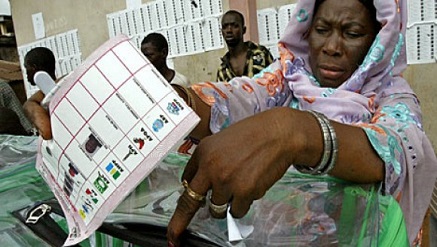
No fewer than 56 million Nigerians will file out today to elect the next president in an election believed to be the keenest in the history of the country, according to Punch newspapers.
The figure represents 81.9 per cent of the total number of 70,383,427 voters that registered for the election.
The ruling Peoples Democratic Party presidential candidate, Dr. Goodluck Jonathan and the opposition All Progressives Congress candidate, Gen. Muhammadu Buhari (retd) are once again asking for Nigerians’ votes in this year’s general elections to enable them to lead the country.
The two political gladiators contested in the 2011 general elections won by Jonathan. But this year’s election has generated much tension across the country following the near equal strength of the two major presidential candidates in the poll.
According to Punch, the Independent National Electoral Commission had in February shifted the general elections as a result of insecurity in the North-East and poor distribution of the Permanent Voter Cards.
The INEC Chairman, Prof. Attahiru Jega, had said that the commission was empowered by Section 26 (1) of the Electoral Act 2010 (as amended) to shift national elections due to some factors.
He explained that the postponement followed reports by the National Security Adviser, Col. Sambo Dasuki (retd.) and other service chiefs that their agencies would not be able to guarantee security of the commission’s personnel in some parts of the country. Jega had denied that INEC was forced to shift the polls, adding that the electoral body took the best decision under the prevailing circumstances.
“Nobody has forced us to take this decision; it is a very weighty decision, but under the present circumstances, we have taken the best decision and we stand by it,” he had said.
The postponement of the elections was said to have given security agencies the opportunity to reduce the insecurity posed by the Boko Haram terrorist group in the three North-Eastern states of Borno, Adamawa and Yobe as well as to allow the electoral body to improve in its distribution of the PVCs.
INEC, in its bid to ensure credible conduct of the elections, introduced a lot of innovations, including the PVCs and the smart card readers to prevent rigging.
The electoral body also increased existing polling units by 30,000. By this addition, the total number of polling units across the country’s 774 local government areas is now 150,000 from the initial 119,973.
The creation of the additional units was contained in an INEC bulletin signed by the Director in charge of the commission’s secretariat, Ishiaku Gali.
Gali had said the decision to create the additional polling units was taken at the commission’s meeting on August 12, 2014 so as to decongest polling units across the country.
As Nigerians elect the new president today, however, the electoral body has put the current total number of registered voters at 70,383,427 of which Lagos State with 5,426,391 has the highest number of registered voters. Nigeria’s commercial capital is followed by Kano with the second highest number of registered voters of 4,751,818.
Meanwhile, INEC has warned the electorate to shun activities that could trigger off breakdown of law and order as they vote for the candidates of their choice.
The Resident Electoral Commissioner in Ekiti, Mr. Sam Olumekun, and Head, Voter Education in Kwara State, Mr. Jacob Iyanda, asked the electorate to remain orderly while casting their ballots.
Olumekun, who spoke with Saturday PUNCH through the commission’s Public Relations Officer, Alhaji Taiwo Gbadegesin, said, “Voters are to be orderly and follow the instructions of electoral officers. They are not supposed to accept bribe because that is against the ethics of the election.”
Also, Iyanda warned voters or politicians against canvassing for votes during accreditation.
He said, “Voters are expected to come to the polling units with their PVCs. Secondly, they should follow the instructions of INEC officials because they are going to move from one point to the other in the process of accreditation.
“Voters should not canvass for vote, they should not wear any clothe or cap that has symbol of any political party. No symbol of a political party should be found on them. Voters should cast their votes and if they know they want to stay back to watch the proceedings, they should stay quietly and stay out of trouble.
“It is also wrong for them to accept bribe from party agents to cast their votes.
“Voters should make sure that once they finish accreditation between 8am and 1pm, by the time the real voting is supposed to come up by 1.30pm, everybody is supposed to be at the polling units. Once the voters are called to queue up and counted, then it will be difficult to start looking for someone who is not around. So before 1.30 pm, all voters must have converged on the polling units.”
The Deputy Director in charge of Voter Education in Osun State, Rev. Canon Stephen Ojewande, warned politicians and their parties against making provocative comments that could create bad blood among voters.
Urging voters to conduct themselves at the polling units while exercising their civic responsibility peacefully, Ojewande assured them of adequate security.
He also warned that anyone caught canvassing for votes on the election day would be dealt with according to the provision of the law.
Ojewande said, “We want voters to go to their polling units with their PVCs. Accreditation will be done and after this, voting will start. Nobody should canvass for votes during accreditation or voting time.”
Head of Voters Education Department in Oyo State, Mr. Ayodele Folami, said voters were expected to arrive at the polling units by 8am for accreditation.
He said, “We have electoral guidelines guiding the conduct of our staff, ad-hoc members and voters. It is standard rule and having gone through more than a decade of democratic process, we expect voters to have acquainted themselves with the rules. They are expected to be at the polling units by 8am and cooperate with our staff while verifying their PVCs.
“They are also expected to be law-abiding and respect the next voter who could be loyal to a rival party. Normally, political discussion is not allowed around the polling units because it could lead to violence.”
Folami added, “At no time on the day of the election will candidates or their supporters be allowed to campaign. All campaigns stop before the day. Campaign on such day is against electoral guidelines. Any politician who does so on the days of the elections will face the law and could jeopardise his chances or that of his candidate. It is also a crime to take bribe from party agents to cast vote for their candidate on election day.”
In Plateau, the police said that they had taken measures, along with all relevant authorities and stakeholders to forestall breakdown of law and order during the polls.
The Police Public Relations Officer, DSP Emmanuel Abuh, said that the police are also in touch with heads of various institutions, including universities, asking them to sensitise members of their communities against being used by unscrupulous politicians or taking the law into their hands.
He said, “Just as we have been briefing various stakeholders on the preparations for the elections, the police are working round the clock. No segment of the society will be left or neglected. Every precautionary measure has been taken to ensure that there is no breakdown of law and order.
He added, “As you can see, all the security agencies in the state carried out a show of force round the streets of Jos and its environs. This is to show you that we are serious about the election.”
Assistant Registrar, Information and Publication, University of Jos, Mr. Aaron Abdullahi, said that the institution did not envisage any problem during the polls as students are currently on break till April 16.
Abdullahi said, “The students are currently on break until April 16, but we have adequate security cover on campus right now. UNIJOS security staff members are currently on one-week intensive training from Monday, March 23 to 27. The resource persons are drawn from the police, DSS, military and other security experts.”
Meanwhile, the Federal Road Safety Commission said the body had deployed 20,000 personnel and 413 patrol vehicles along designated routes for today’s elections.
Corps Marshal, FRSC, Mr. Boboye Oyeyemi, said this was to ensure sanity on the nation’s highways during the polls.
This is contained in a statement signed by the Spokesperson for the commission, Mr. Imoh Etuk, and made available to Saturday PUNCH in Abuja on Thursday.
It said the commission had drawn a roadmap toward effective patrolling of designated routes on the highways to ensure best road safety practices among road users during the exercise.
It said the 24 Emergency Ambulance Response Centres at the various routes across the country would also complement efforts of the commission.
The routes are: FCT, Kaduna, Gombe, Jigawa, Taraba, Niger, Kogi, Ondo, Edo, Osun, Nasarawa, Plateau and Kwara states where the centres were located.
He said, “Motorists are hereby enjoined to ensure proper planning and management of trips through maintenance of their vehicles and compliance with traffic rules and regulations.
“ Road users are strictly warned to desist from all road vices such as overloading, speed limit violation, non-use of seat belt, route violation (driving against traffic), making/receiving calls while driving and night trips.
“Details of the objectives of this special exercise include the removal of obstructions from the highways; traffic control/decongestion and public enlightenment campaigns.
“Road users are strictly advised to desist from night trips and ensure that vehicles which ply the highways conform with safety standard,” the corps marshal added.
He listed functional head/tail lights, wipers, tyres, fire extinguisher, caution sign and non-defective windscreen as some of the basic conditions to be met by all motorists.
Oyeyemi urged motorists to call the FRSC Toll Free Emergency Numbers: 122 and 070022553772 to report any traffic crash or any other traffic-related challenges, for prompt response.


Jumia Nigeria has launched its highly anticipated December Holiday Sale, unlocking a wide range of festive deals and savings for shoppers across the country from December 2 to December 28.

This year’s campaign goes beyond seasonal discounts, introducing a special sub-series titled “Celebrate Naija / Naija is Game,” running from December 15 to January 18. The initiative spotlights uniquely Nigerian themes and experiences, infusing the holiday season with cultural relevance and local inspiration.
The December Holiday Sale delivers a compelling mix of value, quality, and discovery, featuring the popular 12 Days of Christmas promotions, exclusive Brand Days, and deep-discount Anchor Deals across multiple product categories.
Speaking on the campaign, Temidayo Ojo, Chief Executive Officer, Jumia Nigeria, said the sale reflects the platform’s commitment to meeting the evolving needs of Nigerian consumers.
“The December Holiday Sale is our way of helping Nigerians celebrate the season without compromise. Today’s shoppers are value-driven, they want quality, convenience, and affordability. This campaign brings all three together with festive deals that address real household needs and aspirations,” Ojo said.
He added that strong Black Friday momentum continues on the platform, offering customers extended savings opportunities throughout the festive period.
On the creative direction behind the campaign, Lere Awokoya, Chief Marketing Officer, Jumia Nigeria, noted that the 2025 holiday sale is rooted in everyday moments that matter to customers.
“This year’s campaign is built around the joy of giving and daily value. ‘Celebrate Naija’ brings that spirit to life through culturally relevant themes and surprises that resonate across regions and lifestyles. We’re excited for Nigerians to discover everything we’ve curated—from gifts and essentials to dream purchases,” Awokoya said.
Shoppers can access deals across key categories including electronics, home and kitchen, fashion, beauty and personal care, and everyday essentials, with seamless online price discovery supported by Jumia’s nationwide logistics network.
Extending beyond major urban centres, Jumia’s fulfilment and pick-up infrastructure ensures customers in secondary cities and peri-urban communities enjoy the same festive prices without additional travel costs, turning convenience into tangible value.
With thousands of deals going live throughout the season, customers can expect faster deliveries, extensive pick-up options, and transparent pricing, making holiday shopping simpler and more affordable nationwide.

By Blaise Udunze
Nigeria’s refining crisis is one of the country’s most enduring economic contradictions. Africa’s largest crude oil producer, strategically located on the Atlantic coast and home to over 200 million people, has for decades depended on imported refined petroleum products. This illogicality has drained foreign exchange, weakened the naira, distorted investment incentives, and hollowed out state institutions. Instead of catalysing industrialisation, Nigeria’s oil wealth became a mechanism for capital flight, rent-seeking, and institutional decay.

Dangote
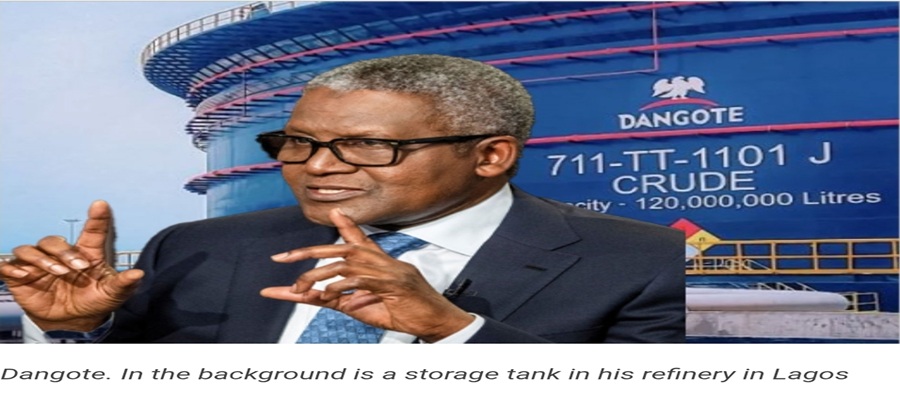
With the challenges surrounding the refining of crude oil, the establishment of Dangote Refinery signifies an important historic moment. The refinery promises to reduce fuel imports to a bare minimum, sustain foreign exchange growth, ensure there is constant fuel domestically, and strategically position Nigeria as a regional exporter of refined oil products if functioned at full capacity. Dangote Refinery symbolises what private capital, technology, and ambition can achieve in Africa following years of fuel queues, subsidy scandals, and global embarrassment.
Nigerians must have a rethink in the cause of celebration. Nigeria’s refining problem is not simply about capacity; it is about systems. Without addressing the policy failures and institutional weaknesses that made Dangote an exception rather than the rule, the country risks replacing one failure with another, this time cloaked in private-sector success.
For a fact, Nigeria desperately needs the emergence of Dangote refinery, and its success is in the national interest. Hence, this is not an argument against the Dangote Refinery. But history warns that structural failures are not solved by scale alone. Over the year, situations have shown that without competition and strong institutions, concentrated market power, whether public or private, can undermine price stability, energy security, and consumer welfare.
The Long Silence of Refinery Investments
Perhaps the most troubling question in Nigeria’s oil history is why none of the global oil majors like Shell, ExxonMobil, Chevron, Total, or Agip has built a major refinery in Nigeria for over four decades. These companies operated profitably in Nigeria, extracted their crude, and sold refined products back to the country, yet never committed capital to domestic refining.
Over the period, it has been shown that policy incoherence has been the cause, not a matter of technical incapacity, such as price controls, resistant licensing processes, subsidy arrears, frequent regulatory changes, and political interference, which made refining an unattractive investment. Importation, by contrast, offered quick returns, lower political risk, and guaranteed margins, often backed by government subsidies.
Nigeria carelessly designed a system that rather rewarded importers and punished refiners. Dangote did not succeed because the system improved; he succeeded despite it. His refinery exists largely because of the concessions from the government, exceptional financial capacity, political access, and a willingness to absorb risks that institutions should ordinarily mitigate. This raises a deeper concern; when institutions fail, progress becomes dependent on extraordinary individuals rather than predictable systems.
The Tragedy of NNPC Refineries
If private investors stayed away, Nigeria’s state-owned refineries should have filled the gap. Instead, the Port Harcourt, Warri, and Kaduna refineries became monuments to mismanagement. Records have shown that between 2010 and 2025, Nigeria reportedly wasted between $18 billion and $25 billion, over N11 trillion, just for Turn Around Maintenance and rehabilitation. Kaduna Refinery alone is estimated to have consumed over N2.2 trillion in a decade.
Despite these expenditures, output remained negligible. This was not merely a technical failure but a governance one. Contracts were poorly monitored, accountability was absent, and consequences were nonexistent. In functional systems, such outcomes trigger investigations, sanctions, and reforms. In Nigeria, the cycle simply repeated itself, eroding public trust and deepening dependence on imports.
Where Is BUA?
Dangote is not the only Nigerian conglomerate to announce refinery ambitions. In 2020, BUA Group unveiled plans for a 200,000-barrels-per-day refinery. Years later, progress remains unclear, timelines have shifted, and execution appears stalled.
This pattern is revealing. When multiple large investors struggle to translate plans into reality, the issue is not ambition but environment. Refinery projects in Nigeria appear viable only at a massive scale and with extraordinary political leverage. Smaller or mid-sized players are effectively crowded out, not by market forces, but by systemic dysfunction.
Policy Failure and the Singapore Comparison
Nigeria often aspires to emulate Singapore’s refining and petrochemical success. The comparison is instructive. Singapore has no crude oil, yet built one of the world’s most sophisticated refining hubs through consistent policy, investor protection, infrastructure planning, and regulatory certainty.
Nigeria chose a different path: price controls, subsidies, weak contract enforcement, and politically motivated policy reversals. Refineries became tools of patronage rather than productivity. Capital exited, infrastructure decayed, and import dependence deepened. The outcome was predictable.
The Cost of Import Dependence
For years, Nigeria spent billions of dollars annually importing petrol, diesel, and aviation fuel. This placed constant pressure on foreign reserves and the naira. Petrol subsidies alone were estimated at N4-N6 trillion per year, often exceeding national spending on health, education, or infrastructure.
Even after subsidy removal, legacy costs remain: distorted consumption patterns, weakened public finances, and entrenched interests built around importation. These interests did not disappear quietly.
Who Really Benefited from the Subsidy?
Although framed as pro-poor, fuel subsidies disproportionately benefited importers, traders, shipping firms, depot owners, financiers, and politically connected intermediaries. Smuggling across borders meant Nigerians subsidised fuel consumption in neighbouring countries.
Ordinary citizens received marginal relief at the pump but paid far more through inflation, deteriorating infrastructure, and underfunded public services. The subsidy system functioned less as social protection and more as elite redistribution.
The Traders’ Dilemma
Why did major fuel marketers like Oando invest in refineries abroad but not in Nigeria? Again, incentives explain behaviour. Importation offered faster returns, lower capital requirements, and political insulation. Domestic refining demanded long-term investment under unstable rules.
In an irrational system, rational actors optimise accordingly. Importation thrived not because it was efficient, but because policy made it so.
FDI and the Confidence Problem
Sustainable Foreign Direct Investment follows domestic confidence. When local investors, who best understand political and regulatory risks, avoid long-term industrial projects, foreign investors take note. Capital flows to environments with predictable pricing, rule of law, and policy consistency.
Nigeria’s challenge is not attracting speculative capital, but building conditions for patient, productive investment.
Dangote and the Monopoly Question
Dangote Refinery deserves credit. But scale brings power, and power demands oversight. If importers exit and no competing refineries emerge, Dangote could dominate refining, pricing, and supply. Nigeria’s experience with cement, where domestic production rose but prices soared due to limited competition, offers a cautionary tale.
Markets function best with competition. Without it, price manipulation, supply risks, and weakened energy security become real dangers, especially in countries with fragile regulatory institutions.
The Way Forward: Competition, Not Replacement
Nigeria does not need to weaken Dangote; it needs to multiply Dangotes. The goal should be a competitive refining ecosystem, not a replacement of a public monopoly with a private monopoly.
This requires transparent crude allocation, open access to pipelines and storage, fair pricing mechanisms, and strong antitrust enforcement. State refineries must either be professionally concessional or decisively restructured. Stalled projects like BUA’s should be unblocked, and modular refineries should be supported.
The Litmus Test
Nigeria’s refining crisis was decades in the making and cannot be solved by one refinery, however large. Dangote Refinery is a turning point, but only if embedded within systemic reform. Otherwise, Nigeria risks trading one form of dependency for another.
The true test is not whether Nigeria can refine fuel, but whether it can build fair, open, and resilient institutions that serve the public interest. In refining, as in democracy, excessive concentration of power is dangerous. Competition remains the strongest safeguard.
Blaise, a journalist and PR professional, writes from Lagos and can be reached via: [email protected]

Mr. Tim Akano, renowned entrepreneur, technologist, and philanthropist, has been honoured with two Distinguished Alumnus Awards by Obafemi Awolowo University (OAU) and Baptist Day School, Oluponna, in recognition of his outstanding contributions to education, mentorship, technology, innovation, and community development at large.

Both awards were conferred in November 2025, and this mark a significant milestone in Mr. Akano’s lifelong commitment to human capital development and social impact.
Mr. Akano, a 1983 graduate of Obafemi Awolowo University, was recognized by the university for his global impact in entrepreneurship, technology and innovation, as well as his sustained mentorship of students.
In 2023, he awarded 1,000 scholarships that was worth ₦60 million to OAU students for them to study Artificial Intelligence. Since then, he has consistently adopted five students from the Department of International Relations annually under his structured mentorship initiative.
In the same vein, at Baptist Day School, Oluponna, Mr. Akano received a historic honour as the first alumnus ever to be decorated with a Distinguished Alumnus Award since the school was established in the 1930s. During a recent visit to the school, Mr. Akano inspected several infrastructural projects financed by him through the Tim Akano Foundation three years ago.
These include the construction of a borehole, modern toilet facilities for teachers and pupils, and the erection of a perimeter fence and gate around the school which has prevented incessant disturbance of pupils by Fulani Herdsmen who previously engaged in reckless grazing within the school premises, polluted the environment with cow waste, and exposed the children to security risk. All these challenges have since become a thing of the past following the erection of the perimeter fence.
In addition, the School Principal recounted a tragic incident that occurred before the fence was built, when a nine-year-old pupil was kidnapped within the school premises and was never found. According to the Principal, the pupil had gone into a nearby bush to answer the call of nature, unaware that kidnappers were hiding there. Since the completion of the fence three years ago, no case of pupil kidnapping has been recorded in the school.
The principal further disclosed that the school has experienced a geometric increase in enrolment since Mr. Akano’s intervention. In 2025 alone, over 30 new pupils were enrolled. This is a trend that has been consistent over the past three years.
To further enhance safety and learning conditions, the Tim Akano Foundation pledged to provide a grass-cutting machine to maintain the expansive school compound, noting that the pupils are fragile and overgrown vegetation could expose them to snake bites. The Foundation also announced the adoption of 10 best graduating pupils, committing to sponsor their secondary school education.
Furthermore, in a move to motivate and support teachers, the Foundation introduced a monthly cash incentive for all teachers, aimed at complementing the modest government salaries. The November incentive was paid immediately, with assurances that the initiative would continue in perpetuity.
In a symbolic and emotional moment, Mr. Akano presented the pupils with the glazed copy of his Primary School Leaving Certificate, issued by Baptist Day School in 1975. All pupils were invited to hold the certificate as a powerful reminder that “if I can do it, you can do even more.” In appreciation, the school management presented Mr. Akano with the Distinguished Alumnus Award, celebrating his transformative impact on the institution and its pupils.
Similarly, at Obafemi Awolowo University, Mr. Akano was honoured with the Distinguished Alumnus Award for his sustained mentorship of students and his contributions to entrepreneurship development, technology, and innovation within Nigeria and the global community.
The double recognition underscores Mr. Tim Akano’s enduring legacy as a bridge between education, opportunity, and societal transformation.

Access Holdings Shareholders Approved to Raise N40bn Capital Through Private Placement

Jumia Kicks Off December Holiday Sale, Bringing Festive Deals to Shoppers Nationwide

NIMC launches Pre-Enrolment Portal to boost NIN registration efficiency

OAU, Baptist Day School Oluponna honour Akano with Distinguished Alumnus Awards

NIMC rolls out Pre-Enrolment Portal for seamless NIN registration

Nigeria Records Highest Weekly Cyberattacks in Africa — Report

Cyber Tsunami Hits Nigeria as Breaches Surge 1,047%, esentry Q3 Report Reveals

Jumia’s Data Shows Nigerians Turning to Digital Retail to Navigate Inflation Pressures

How Insecurity is Bleeding Nigeria about $15bn Annually and Destroying Its Economic Future

GenAI Adoption Among African workers Outpace Global Peers




 General News2 days ago
FirstCap Acts as Joint Issuing House on Veritasi Homes & Properties Plc’s ₦30 Billion Bond Programme

 News2 days ago
PalmPay Launches N400 Million World Travel Carnival, Rewarding Users with Free Global Trips

 E-Business2 days ago
Nigeria Takes the Lead in the Global WSIS+20 Digital Agenda

 Telecom2 days ago
Qualcomm Completes Third Edition of Make in Africa Startup Mentorship Program

 Telecom2 days ago
Mastercard Expands Africa Acceptance Network by 45% in 2025, Driving Digital Economy Growth

 E-Business3 days ago
UBA Partners CIG Motors, Lagride, Launches $100m “Drive to Own” Scheme

 Telecom2 days ago
Fynd Expands Global Footprint, Adds Africa With Surtee Group Partnership

 Telecom2 days ago
AI Meets Governance: Anambra Rolls Out SmartGov for Seamless Citizen Interaction