

E-Business
DHL Brings IOT to Supply Chain Management

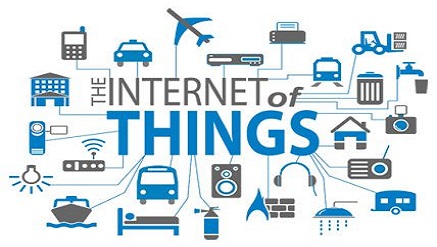
DHL Supply Chain, in partnership with Cisco and start-up Conduce, is implementing Internet of things (IOT) technology to optimise operational efficiency in the warehouse environment.
DHL Supply Chain is the contract logistics unit within DHL Group, which offers logistics services ranging from national and international parcel delivery, e-commerce shipping and international express, road, air and ocean transport to industrial supply chain management in more than 220 countries worldwide.
According to the company, the implemented IOT solution enables DHL to monitor operational activities in real-time, through a responsive graphical visualisation of operational data drawn from sensors on scanners, helping decision-makers achieve improved measurable results.
All material-handling equipment used in performing the warehouse processes is monitored, including receiving and storage of couriered goods, picking of products for order fulfilment and loading of products for delivery, adds the company.
The logistics company says it is testing the technology in Germany, the Netherlands and Poland, with plans to bring it to SA soon.
“Through our collaboration with Cisco and Conduce, we are integrating innovative solutions to build the digital supply chain of tomorrow today. This is changing the way we collect, analyse and use data, and ultimately, our ways of working at these sites. By monitoring operational activities in real-time rather than retrospectively, we can interpret data more meaningfully, and immediately re-engineer processes or warehouse layouts to boost operational efficiency and address potential safety blind spots in a warehouse,” says Markus Voss, CIO and COO, DHL Supply Chain.
The company says its customers will benefit from Cisco’s WiFi infrastructure, which obtains location services, and Conduce’s intuitive interface used to access and visualise all the organisation’s data.
Kevin Parent, CEO of Conduce, says visualising operational data with heat maps has changed the way data is analysed and used, and is expected to contribute to operational efficiencies.
“The platform does not just display operational data; it unlocks insights on how well warehouses are running by pulling together data of all elements in a warehouse environment into one unified, engaging interface. Conduce helps decision-makers at DHL achieve improved, measurable results in the real world,” he explains.
Paul Stone, DHL Supply Chain CEO Africa, says the company collaborates closely with customers, technology experts and think tanks to proactively develop digital solutions aimed at transforming the industry.
“I am excited to be at the forefront of this innovative digital supply chain solution. The ability to monitor operational activities in the warehouse in real-time provides DHL the opportunity to proactively re-engineer processes. This way we further enhance the service levels provided to our customers, improve productivity, and provide a platform for our people to be safe in the workplace,” he points out.



On World Health Day, Kaspersky warns of risks tied to the digitisation of healthcare and use of telemedicine. Recent incidents show that medical services can be breached, and as a result, medical records may be leaked and then traded on the dark web.

The operations of healthcare services can get disrupted. Another aspect is that healthcare platforms may share user data with third parties that handle it irresponsibly.
Telemedicine has moved from a convenience to a core part of healthcare delivery, but its security model has not kept pace with its adoption, and the risks are not theoretical. Recent incidents highlight how real these risks have become.
In 2023, it was disclosed that Cerebral, a major telehealth provider focused on mental health services, had been sharing sensitive patient data – including mental health assessments, intake information, and personal identifiers – with third-party platforms such as social media and advertising networks. Millions of users were affected over several years.
More broadly, incidents in 2025 illustrate a different but equally critical risk – large-scale disruption of digital healthcare infrastructure. The breach of the ManageMyHealth patient portal exposed sensitive medical records of more than 120,000 patients, while the attack on SimonMed Imaging compromised over a million records and led to ransomware demands. These cases show that both telemedicine platforms and the broader digital healthcare ecosystems are increasingly targeted by attackers.
In parallel, scam campaigns focusing on medical topics are evolving, inviting patients for check-ups or follow-up consultations. Often the domains of the alleged “medical services” websites were created just a few weeks ago, links to the social media accounts on their pages are not working, and the Terms of Use and Privacy Policy pages are absent.
At the same time, these pages request users’ personal information, including photos of documents and even photos of parts of the body that need medical attention. Such websites often try to convince users with branding, fake doctor profiles, and urgent calls to action.
Users risk submitting sensitive personal data that can be either sold on the dark web, be used for identity theft, or subsequently used in more sophisticated attacks in the future that are targeted specifically at them for further data extortion.
To safeguard sensitive data, use a reliable security solution with an AI-powered anti-phishing component which prevents clicking on malicious links.
“The digital healthcare experience is transforming access to care, but it is also expanding the attack surface in ways many users underestimate. Medical data is highly valuable and actively traded on the dark web, making patients a prime target for fraud and targeted phishing.
“At the same time, health-related scams exploit urgency and trust, using fake consultations or discounted offers to trick users into sharing sensitive information. Patients should approach digital healthcare with the same caution as financial services – verifying providers, avoiding unsolicited links, and understanding how their data is used. Security and privacy must become a core part of the digital healthcare experience,” comments Anna Larkina, Web Content and Privacy Analysis Expert at Kaspersky.
A series of recent cybersecurity incidents affecting financial institutions, government-linked platforms, and fintech operators is beginning to reveal a pattern that can no longer be ignored. What may have initially appeared as isolated breaches is now raising deeper concerns about a broader and possibly coordinated threat landscape targeting the country.

At the heart of this conversation is a critical shift in perspective. Cybersecurity incidents must no longer be viewed as problems belonging to individual organisations. They represent a national risk. The growing frequency and spread of these attacks suggest that no institution is immune, and more importantly, that those not yet affected cannot afford complacency. For organizations that have not experienced any disruption, this is not a moment for reassurance. The emerging pattern suggests it may only be a matter of time.
The growing concern follows a wave of alleged cyber incidents targeting organizations across banking, fintech, government, insurance, and education sectors, raising fears that sensitive data belonging to millions of users may be at risk.
At the centre of the unfolding situation are bank customers, fintech users, government workers, and students, whose personal and financial information could be exposed if the claims are substantiated. What initially appeared as isolated breaches is now being viewed as a potentially broader and more coordinated threat affecting Nigeria’s digital infrastructure.
Against this backdrop is a post by @TrendingEx on X (formerly Twitter), which claimed that more than 3TB of sensitive data linked to multiple Nigerian organizations had been published online. The post listed entities including Remita, Sterling Bank, Zenith Bank, the Oyo State Government, Leadway Assurance, GetBumpa, and Ahmadu Bello University, alongside more than 30 other companies.
Beyond these cases, the breadth of organizations named has raised deeper concerns about systemic exposure. The entities span financial services, public sector systems, insurance providers, fintech platforms, and academic institutions, suggesting that attackers may be probing shared weaknesses rather than targeting single organizations in isolation.
Cybersecurity incidents of this nature typically involve attackers exploiting technical vulnerabilities or misconfiguration to gain access, followed by the extraction of sensitive data. Such data is often used for extortion, fraud, or public leaks. In some cases, the scale of access may be overstated, but even limited breaches can have far-reaching consequences when systems are interconnected.
What makes the current situation particularly concerning is not just the incidents themselves, but their apparent timing and spread. The near-simultaneous emergence of cybersecurity concerns across banking, fintech, and public sector systems suggests a broader systemic vulnerability. From institutions such as Flutterwave to Fidelity Bank, past and recent incidents continue to illustrate that no segment of the ecosystem is insulated from risk.
Cybercriminal tactics in these scenarios often follow a familiar pattern. Attackers typically seek to gain initial access through technical vulnerabilities or misconfiguration. Once inside, they may attempt to extract sensitive data which is then used as leverage. In many cases, organizations are approached with demands, with the threat of public exposure if compliance is not met.
However, not all claims made by threat actors are accurate. In some instances, attackers exaggerate the scale of their access to increase pressure. A breach involving a limited number of records may be presented as a compromise affecting millions. This strategy is designed to create panic, attract attention, and force quicker responses from targeted organizations.
In response to rising cyber risks, the Central Bank of Nigeria has introduced a mandatory cybersecurity self-assessment for banks and financial institutions, signalling tighter regulatory scrutiny across the sector.
At the policy level, the Minister of Communications, Innovation and Digital Economy has also emphasized the importance of collaboration in strengthening national cyber resilience, highlighting the need for stronger coordination between government and the private sector.
Despite these developments, experts warn that the public narrative must be handled carefully. Focusing solely on individual organisations risks overlooking the broader issue of systemic vulnerability. More importantly, isolating affected institutions could discourage transparency and delay information sharing, both of which are critical in responding effectively to cyber threats.
The wider implication is that cybersecurity incidents can no longer be treated as isolated corporate challenges. As digital systems become increasingly interconnected, a breach in one organization can have ripple effects across multiple sectors, undermining trust in the broader digital economy.
For individuals, the risks are immediate and tangible. Data breaches can expose personal information, enabling identity theft, financial fraud, and targeted cyberattacks. This makes vigilance essential not just for institutions, but for everyday users who rely on digital platforms.
While the full extent of the alleged breaches remains unclear, the pattern of claims, their timing, and the range of organizations involved point to a critical moment for Nigeria’s cybersecurity landscape.
Whether these incidents are ultimately confirmed or not, they underscore a growing reality: in an interconnected digital environment, the security of one organization is closely tied to the security of all.
Gbolabo Awelewa, chief Business Officer, Esentry, said that industry-wide collaboration is critical. Cyberattacks targeting banks and payment platforms are becoming more coordinated and sophisticated, and no single organization can address them alone.
“Stronger collaboration between financial institutions, fintechs, regulators, and cybersecurity providers will enable faster threat intelligence sharing and a more unified response to emerging risks.
“At esentry, we see first-hand how proactive security measures make a significant difference. Organizations need continuous monitoring of their infrastructure, regular vulnerability assessments, stronger identity and access management, and real-time threat detection capabilities to identify and respond to attacks before they escalate.
“Beyond technology, institutions must also prioritize resilience; ensuring they can detect, respond to, and recover quickly from incidents.
“Ultimately, cybersecurity today is an ecosystem challenge, and organizations that combine strong security frameworks with industry collaboration will be better positioned to stay ahead of evolving threats,” he stated.
However, there is a growing concern that public discourse may be drifting in the wrong direction. Focusing on blame or singling out affected organisations risks undermining collective security. When institutions are publicly isolated, it may discourage transparency and delay critical information sharing, both of which are essential in responding to cyber threats effectively.
More importantly, a fragmented approach can embolden attackers. When threat actors perceive a lack of unity, they are more likely to expand their activities, targeting additional organizations and exploiting systemic weaknesses. This makes it imperative for stakeholders to adopt a unified stance.
The current moment calls for a shift from reaction to coordination. Regulators, private sector players, and cybersecurity professionals must work together to build a shared defence framework. This includes timely information sharing, joint incident response strategies, and consistent enforcement of security standards across the ecosystem.
For the public, the implications are equally significant. Data breaches are no longer abstract technical events. They carry real-world risks, including identity theft, financial fraud, and targeted social engineering attacks. As such, awareness and vigilance must extend beyond institutions to individual users who interact with digital platforms daily.
Ultimately, the message is clear. Nigeria’s cybersecurity challenges cannot be addressed in isolation. Whether the threat originates from within or outside the country, its impact is collective. Every breach, regardless of where it occurs, has the potential to weaken trust in the broader digital economy.


Custodian Investment Plc shelled out N419.13 million in penalties to the Central Bank of Nigeria (CBN) and other regulators for breaches in the 2025 financial year, up sharply from N19.17 million in 2024.

Custodian Investment
The company revealed this in its audited financial statements filed on the Nigerian Exchange (NGX).
CBN accounted for N391 million of the penalties, including a hefty N240 million fine for violating intraday liquidity facility (ILF) rules on a CBN bond trade.
The ILF allows banks to settle same-day transactions with repayment due by close of business.
Custodian also paid N76 million for Customer Due Diligence lapses and N75 million for ignoring internal audit fixes on a misclassified high-risk customer.
Smaller fines piled on, but the firm recovered the full N240 million ILF penalty from Sterling Bank Plc, the counterparty.
Despite the hit, profit before tax climbed to N77.35 billion, with fines under 1% of that figure.
After recovery, the net cost shrank below 1% of management expenses and profit.
Net income hit N91.32 billion, easily covering N21.1 billion in expenses including fines, fueled by surging investment income, fair value gains, interest growth and an insurance unit turnaround from loss to profit.

Multichoice Bleeds Customers in South Africa, Loses 580,000 Subscribers

FG Asks MDAs to Halt New Policies Until Full Compliance with RIA

Broadcast Station Owners Reject IBAN’s Threat to Boycott Wike’s Media Engagements

BVN Database hits 68.6m – NIBSS

How Unethical Deals Triggered CBN Takeover of Union Bank -Forensic Report

Spotify’s Loud & Clear Report Reveals Over ₦60Bn Revenue for Nigerian Artists in 2025

Madonna University Taps Tech Guru Adote for Strategic Board Role

China Threatens to Shut Nigeria’s Satellite Over $11.44m Unpaid Debt

Healthcare Under Attack: Why Cybersecurity is Now Critical Care

Why JustMarkets Is a Strong Choice for Gold Trading




 E-Business2 days ago
FG to Strengthen Cybersecurity Coordination as NDPC Probes Alleged Data Breach

 Telecom2 days ago
Compensation for Poor Service Quality is Automatic- NCC

 E-Business2 days ago
Offset Communications Slams N50m Suit against Qore Technologies for Alleged Copyright Infringement

 Telecom2 days ago
FG Moves to Strengthen Cybersecurity Coordination as NDPC Probes Alleged Data Breach

 General News2 days ago
Tinubu Approves N3.3 Trillion Payment Plan to Boost Power Supply

 News2 days ago
Beware of Fake Cerelac Products – NAFDAC

 General News2 days ago
SERAP Sues CCB over Electoral Act, New Tax law

 E-Business1 day ago
Nigeria Cyberattacks: Stronger Collaboration as a Panacea