

General News
DHL Reaffirms Commitment to Nigeria as MD SSA Visits

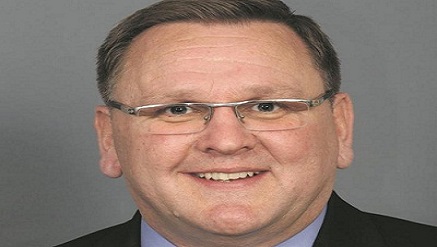
DHL Express, leading international express and logistics company, said it will not relent in operational expansions and investment strategy across Sub-Saharan Africa, and considers Nigeria as a key market within this strategy.
Charles Brewer, managing director of DHL Express Sub-Saharan Africa and Sumesh Rahavendra, head of Marketing, Sub Saharan Africa are in the country to attend the 24th World Economic Forum Africa held in Abuja, Nigeria.
“The fact the ‘The World Economic Forum’ is being hosted in Nigeria for the first time is a major recognition by the economic and political world of the continuous growth and remarkable potential of West Africa and the African continent as a whole.
“With a population of over 160 million in Nigeria alone, it is the right time to gather world leaders to deliberate on the theme, forging inclusive growth and creating jobs. The future continues to look bright for Africa.” comments Brewer. “We expect the continent to continue to ‘surge’ as a result of sector investment, increased consumer spending and economic activity.”
He continued, “Nigeria is an attractive market for us and with the recent rebasing of the Nigerian economy, we see a major opportunity. The opportunity is for us is to expand our footprint within the country and service semi-urban and rural areas so that anyone – from a student to a small business – can access our network, and the over 220 countries and destinations that we serve.
“There are thousands of SMEs in Nigeria and we need to provide easy access and a team of highly trained Certified International Specialists to lead them to the very obvious opportunities that trading with the world can present. DHL is committed to becoming their provider of choice and as part of that journey we will provide even more access points across Nigeria.”
Outside of the expansion of its retail footprint, Brewer’s other priority is around people development and employee engagement. “I believe we have some of the best talent in our organization and we have the opportunity to hone and develop this talent. I am very passionate about our investments in training, and in our various programs that provide support for employees and their families.”
“People are at the core of our business,” comments Randy Buday, country manager for Nigeria. “As the market leader, we will continue to invest in our people, equipment and facilities to ensure that we continue to exceed the demands of our customers. As the first and largest express company in Africa, we are well-placed to service the growth of Nigeria, ensuring its viability and attractiveness on a global scale.”
DHL is the global market leader in the logistics industry and “The Logistics company for the world”.
DHL commits its expertise in international express, air and ocean freight, road and rail transportation, contract logistics and international mail services to its customers.
A global network composed of more than 220 countries and territories and about 285,000 employees worldwide offers customers superior service quality and local knowledge to satisfy their supply chain requirements.
DHL accepts its social responsibility by supporting environmental protection, disaster management and education.


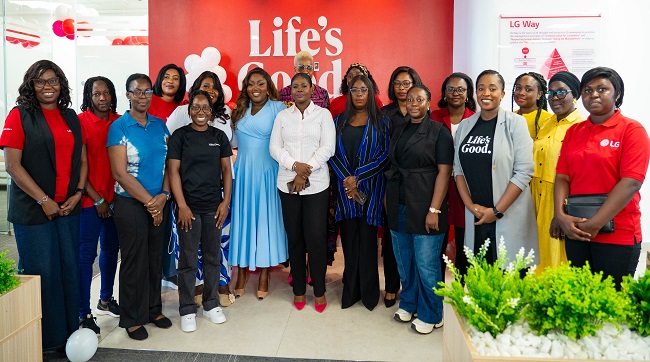
LG Electronics has reinforced its commitment to gender inclusion and women’s empowerment with the successful hosting of its 2026 Women’s Month event, themed “Women Who Power Progress,” at its Lagos office.

The event brought together accomplished women from diverse industries for a thought‑provoking panel discussion that explored their personal journeys, career-defining moments, and the inspiration behind their success in traditionally male-dominated and highly competitive fields.
The distinguished panel featured award‑winning filmmaker Mrs. Biodun Stephen, Mechanical Engineer Engr. Adeola A. Adeleke, Interior Design Leader Dr. Jennifer Chukwujekwe, and MEP Engineer Engr. Moyosore Onabolu. The session was expertly moderated by actress and entrepreneur Blessing Obasi‑Nze, who guided candid conversations around ambition, resilience, and purpose.
Throughout the discussion, panelists shared compelling stories of perseverance, the challenges they overcame, and the values that shaped their professional paths. They also offered practical advice to women navigating their careers, emphasizing the importance of resilience, continuous learning, self-belief, and mentorship as key drivers of long-term success.
A major highlight of the event was the keynote address delivered by Engr. Dr. Funmilade Akingbagbohun, the first female National Chairman of the Nigerian Institution of Mechanical Engineers (NIMechE), Mechanical Engineer, and STEM Advocate. Her keynote address tagged “Women Building, Fixing, Innovating, and Powering the Future of Technology,” delivered a compelling call to action for women, organisations, and society at large.
“Women are building, fixing, innovating, and powering the future of technology. As we mark International Women’s Day, my call to action is simple but urgent: rise, build, break barriers, and lift others along the way,” she said.
“To organisations like LG Electronics, continue to foster inclusive environments where women can thrive, lead, and innovate. To every woman here, be bold, pursue excellence, and never underestimate your potential. To the next generation, embrace STEM careers with confidence and courage. And to all of us, support one another because success is more meaningful when it is shared.”
“While we celebrate progress, we must acknowledge the challenges that still exist, from gender stereotypes and underrepresentation in leadership to the pressure of balancing multiple roles. Yet today’s woman is competent, resilient, and visionary. We are no longer waiting for opportunities; we are creating them, claiming them, and excelling in them. When women rise, organisations grow, and society progresses. There is no limit to what we, as women, can accomplish.”
Speaking at the event, the Managing Director of LG Electronics, Mr. Hyoung Sub Ji, underscored the company’s belief in the transformative power of inclusion.
“At LG Electronics, we believe that empowering women is not just a social responsibility, it is a catalyst for innovation, growth, and sustainable progress. Creating platforms where women’s voices and experiences are celebrated is essential to building a more inclusive future,” he said.
Held in a vibrant and engaging atmosphere, the event also provided a valuable networking platform for attendees to connect, celebrate achievements, and exchange ideas in a relaxed and inspiring environment.
In line with the broader International Women’s Day theme, “Give to Gain,” LG Electronics used the occasion to reaffirm its belief that investing in women strengthens communities, organisations, and society at large.
Through initiatives like “Women Who Power Progress,” LG Electronics continues to champion diversity and inclusion, celebrating women who are not only breaking barriers but actively shaping the future and powering progress across industries.

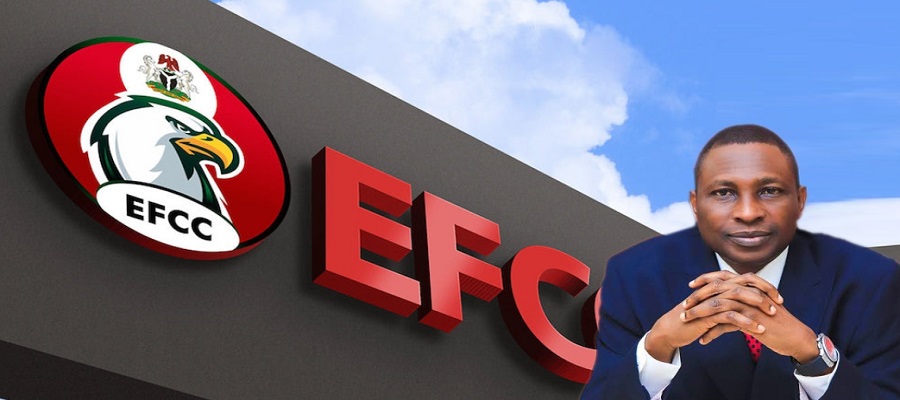
Economic and Financial Crimes Commission (EFCC) has warned of rising cryptocurrency-related crimes, revealing that illicit digital currency transactions exceeded $160 billion globally in 2025.

Ola Olukoyede, chairman, raised the concern during the inauguration of the United Nations Office on Drugs and Crime Country Programme for Nigeria (2026–2030) in Abuja.
Olukoyede, warned that digital currencies such as Bitcoin are increasingly being exploited by criminal networks to move funds across borders undetected.
According to him, advances in technology, weak regulatory frameworks, and gaps in global financial systems have created fertile ground for cyber-enabled financial crimes.
The anti-graft agency boss stressed that tackling cryptocurrency crime required coordinated national strategies, stronger institutions, and intelligence-driven enforcement.
According to him, the new UNODC programme comes at a critical time when Nigeria and the global community are facing growing threats from organised crime, cybercrime, and illicit financial flows.
Olukoyede described the initiative as a strategic platform to strengthen the rule of law, improve the criminal justice system, and protect citizens from financial and violent crimes.
Musa Aliyu, chairman of the Independent Corrupt Practices and Other Related Offences Commission (ICPC), in his comments, called for stronger inter-agency cooperation.
Aliyu said Nigeria faced interconnected threats, including violent extremism, smuggling, organised crime, and illicit financial flows, warning that no single agency could address them alone.
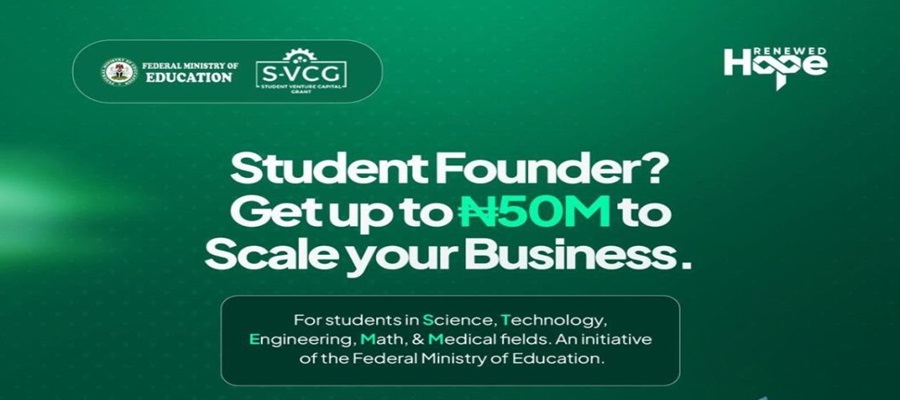
Federal government has awarded N50 million each to 45 students selected from 65 finalists drawn from public and private tertiary institutions nationwide under the Student Venture Capital Grant (S-VCG).

Tunji Alausa, minister of Education, unveiled the initiative at the weekend at the United Nations Development Programme Innovation Hub in Ikoyi, Lagos, describing it as a bold step toward positioning Nigerian youth as drivers of global innovation.
Alausa said the programme marked a significant shift in education policy, aimed at empowering students through innovation, entrepreneurship, and skills development. He noted that the grant offers equity-free funding, mentorship, incubation, and access to digital tools.
He explained that the beneficiaries emerged after a rigorous selection process involving over 30,000 applicants from more than 400 tertiary institutions across the country, culminating in a three-day bootcamp and pitch session before industry experts.
According to the minister, the initiative is designed to transform tertiary institutions into hubs of innovation and economic development, enabling students to move from ideation to commercialisation and become job creators.
“Today is not just another programme event. We are activating a new future for Nigerian students where great ideas are nurtured into impactful solutions,” he said.
Also speaking, Suwaiba Ahmad, minister of State for Education, described student entrepreneurship as a critical national strategy for job creation and economic growth. She emphasised the need for institutions to move beyond theory and support students in translating ideas into viable enterprises.
Similarly, Bosun Tijani, minister of Communications and Digital Economy, commended the initiative, urging beneficiaries to focus on building sustainable and impactful solutions rather than pursuing short-term gains.
He advised students to adopt consistency and long-term thinking, noting that small, sustained efforts could lead to meaningful innovation and societal impact.
In her goodwill message, Elsie Attafuah reaffirmed the commitment of the United Nations to supporting Nigeria’s innovation ecosystem.
She encouraged beneficiaries to refine their ideas, respond to market needs, and contribute meaningfully to national development through innovative solutions.
The minister acknowledged key partners, including the UNDP, Google, and the Bank of Industry, for their support in implementing the initiative and expanding opportunities for young innovators across Nigeria.

LG Electronics Celebrates Women Who Power Progress @ 2026 Women’s Month Event

EFCC Waxes Worriedly over $160Bn Crypto Crime Losses

Dangote Refinery Debunks Speculations on IPO

FG Awards N50m Each to 45 Students under S-VCG

NGX REGCO Fines 5 Firms N291m for Market Manipulation

Spotify’s Loud & Clear Report Reveals Over ₦60Bn Revenue for Nigerian Artists in 2025

Madonna University Taps Tech Guru Adote for Strategic Board Role

China Threatens to Shut Nigeria’s Satellite Over $11.44m Unpaid Debt

Jumia Tech Week 2026 Begins with Tech Deals on Smartphones, Electronics, and Everyday Technology

FCCPC Bans Lagos ‘No Refund’ Policy, Vows Fines and Shutdowns for Traders




 E-Financial2 days ago
CBN bars large‑ticket loan defaulters from banking services in tough new crackdown

 General News2 days ago
ARN Rejects Medical Bill over Attempt to ‘Scrap’ Profession

 Telecom2 days ago
NIGCOMSAT Supports Startups Growth with the Launch of Accelerator 3.0

 Telecom2 days ago
FG Unveils Digital Economy Research Fund Scheme

 News2 days ago
Meningitis Kills a Quarter Million People a Year -Study

 News2 days ago
Stakeholder says AI is Crucial to Nigerian Data Centres Amid Persistent Grid Collapse
- General News2 days ago
Nigeria Advances Digital Governance as NITDA takes over NGEA Portal

 General News2 days ago
Zarttech Reflects on Its Role in Changing Global Perceptions of Africa