

Telecom
Direct Selling Offers Flexible & Accessible Pathway to Entrepreneurship – Biram Fall


Mr. Biram Fall, QNET’s Regional General Manager (RGM) for sub-Saharan Africa (SSA) has explained that direct selling offers a flexible and accessible pathway to entrepreneurship.

Mr. Biram Fall, QNET’s Regional General Manager (RGM)
He said that in the traditional retail model, shop owners buy goods from manufacturers and mark them up to pay for their business costs such as rent, before selling them on to the end consumer but in the direct selling model, distributors sell high-quality goods directly to the customers outside of the store environment, reducing business costs and eliminating the need to raise prices on their goods.
Fall argued that in addition to providing unique, life-enhancing products to consumers, the direct selling industry has had a significant impact on Sub-Saharan economies.
According to the World Federation of Direct Selling Associations annual report, the region’s direct selling market was valued at USD627 million in 2021, with over 5.4 million distributors actively participating in entrepreneurial activities that generate household income and contribute to the broader economy.
He pointed out that one of the primary reasons individuals are joining direct selling is because it allows them to start businesses with minimal upfront investment and no formal education requirements.” Not only are new distributors able to start their business efficiently, but they also have the opportunity to gain valuable skills through free training sessions, workshops, and conferences where they can improve their sales techniques, soft skills, and leadership abilities.
This opens doors for those with limited resources or who face barriers to traditional employment, such as stay-at-home parents or individuals in underserved communities. Because of the low barrier to entry and support resources many direct selling companies offer, many people can generate additional income, build social networks, and develop essential business and life skills by becoming distributors.
For instance, the flexible earning opportunities benefit the stay-at-home spouse through joining a direct selling company, choosing products to sell, and earning commissions or profits based on their sales volume. With the flexibility to manage their own schedule, they can balance household responsibilities while actively promoting and selling products. The income generated supplements household finances, helping to meet expenses, save, and achieve personal goals.”
He added that, direct selling offers training and support, enabling individuals to develop valuable sales and entrepreneurial skills.
In addition to benefiting local entrepreneurs, direct selling companies offer an extensive portfolio of goods, including innovative beauty and wellness products, eco-friendly household items, exclusive lifestyle items and accessories, nutritional supplements, and much more to customers. These products are frequently developed in-house or incorporate proprietary ingredients and formulas that are unique in the market.
Continuing, Fall stated that while the industry has improved the lives of many, it also faces legitimate criticisms – especially in emerging markets that have little or no exposure to this type of sales model. Africa has often been called the new frontier of growth for the direct selling industry with the region experiencing one of the highest three-year CAGR at 6%. Yet, in many African nations, legitimate direct selling businesses are often misunderstood as illegitimate schemes due to lack of awareness and relevant legislation.
The lack of industry regulatory bodies, such as a direct selling association whose mission is to provide education about the business model, has resulted in an insufficient legal definition of the industry and serious misunderstandings among authorities and the public.
“One common misconception is that it is a pyramid scheme or get-rich-quick fraud. Some critics point out that certain dishonest entities, many of whom masquerade as direct selling companies, have violated the laws by making exaggerated revenue promises, pressuring sales representatives to purchase products, and using unethical marketing strategies.”
Despite the challenges, many direct selling companies are determined to change the industry’s image in Sub-Saharan Africa. The largest organisation representing the global direct selling industry, the World Federation of Direct Selling Associations (WFDSA), published an official Code of Ethics governing the actions of direct selling companies and their responsibilities towards ensuring fair competition and operating according to local customer protection laws – a toolkit that direct selling companies adhere to worldwide.
For businesses such as QNET, a lifestyle and wellness-focused direct selling company, implementing more robust procedures, such as regular training and monitoring of distributors’ activities to ensure adherence to sales practices, product sales and compensation claims, and product safety regulations, is a crucial component to addressing the misconceptions about direct selling. For example, training programmes, such as QNETPro, help educate, inform, and train distributors on how direct selling works, QNET’s product portfolio, and compensation plans.
Direct selling companies can improve transparency by providing clear and accurate compensation plans and product pricing information to governments, legislative bodies, distributors, and customers to combat misinformation regarding the industry. Creating and maintaining freely accessible resources, such as the WFDSA website and the Direct Selling Disinformation Centre, are positive steps towards shifting the public’s perspective on direct selling, and help local communities benefit from this industry.
speaking on the way forward, Fall argued direct selling in Sub-Saharan Africa has emerged as a significant driver of alternative employment opportunities and economic empowerment, while also providing customers with unique and diverse products. “The industry has successfully enabled individuals, including those with limited resources, to start their own businesses and generate income, fostering entrepreneurship and skill development.
However, direct selling faces challenges in the region, including misconceptions, regulatory gaps, and fraudulent entities. To overcome these obstacles, direct selling companies are taking proactive measures, such as adhering to codes of ethics, implementing training programs, and enhancing transparency.
By educating the public, engaging with regulatory bodies, and providing accessible resources, the industry aims to transform the narrative and highlight the positive impact of direct selling in Sub-Saharan Africa, empowering individuals and contributing to local economies”, he said.



Airtel Africa said on Tuesday it has partnered with SpaceX to introduce Starlink’s direct-to-cell satellite technology to all its 14 markets.

The satellite-to-mobile service will begin across Africa in 2026, with data for select applications and text messaging, Airtel Africa said in a statement.
Airtel Africa customers with compatible smartphones in regions without terrestrial coverage will have network connectivity through Starlink.
The deal also includes “support for Starlink’s first broadband Direct to Cell system, with next-generation satellites that will be capable of providing high-speed connectivity to smartphones with 20x improved data speed,” Airtel Africa said.
Last month, Kyivstar, Ukraine’s largest mobile operator, became the first in Europe to launch Starlink’s direct-to-cell satellite technology in a bid to keep millions connected amid wartime blackouts and disrupted infrastructure.

Nigerian Communications Commission (NCC) has blamed the actions of the National Oil and Gas Suppliers Association (NOGASA), for the recent telecom blackout experienced in the Abuja area.

NCC
A statement issued on Friday by the Head, Public Relations, NCC, Mrs. Nnenna Ukoha, while acknowledging the challenges and impact of the degraded Quality of Service (QoS) in the area on subscriber experience, stated: “The challenges are a result of the activities of the National Oil and Gas Suppliers Association (NOGASA), which disrupted diesel supplies to sites with the attendant telecommunications services outages in Abuja.”
She however disclosed that the telecommunications sector regulator is committed to ensuring restoration of seamless communication services to the affected area, and all Nigerians at large, and recognizes the importance of reliable power supply for the provision of optimal telecommunication services.
“The Commission is collaborating with major stakeholders and licensees to address these challenges, largely caused by disruption to diesel supply affecting IHS Nigeria Limited, the colocation provider responsible for powering Airtel and MTN base stations in the affected areas.
“The NCC is actively engaging with relevant stakeholders to address the diesel supply issues and explore sustainable solutions.
“The Commission urges all parties to work together to collaboratively resolve these challenges swiftly by removing the diesel supply bottlenecks affecting critical telecommunications infrastructure, arising from NOGASA’s actions.
Ad image
“In the face of these challenges, we reiterate our commitment to fostering a conducive environment for the growth and sustainability of telecommunications services in Nigeria.
“We are taking proactive steps to facilitate dialogues between the impacted service providers and other stakeholders to promptly resolve the diesel supply concerns that have negatively impacted service quality.”
While assuring that the Commission remains dedicated to effectively managing the situation and will keep the public updated on progress towards restoring full telecommunication services in Abuja, Mrs. Ukoha appreciated subscribers for their patience.
“We thank telecommunications subscribers for their understanding and patience during this period and reaffirm our commitment to delivering high-quality telecommunications services nationwide,” she said.
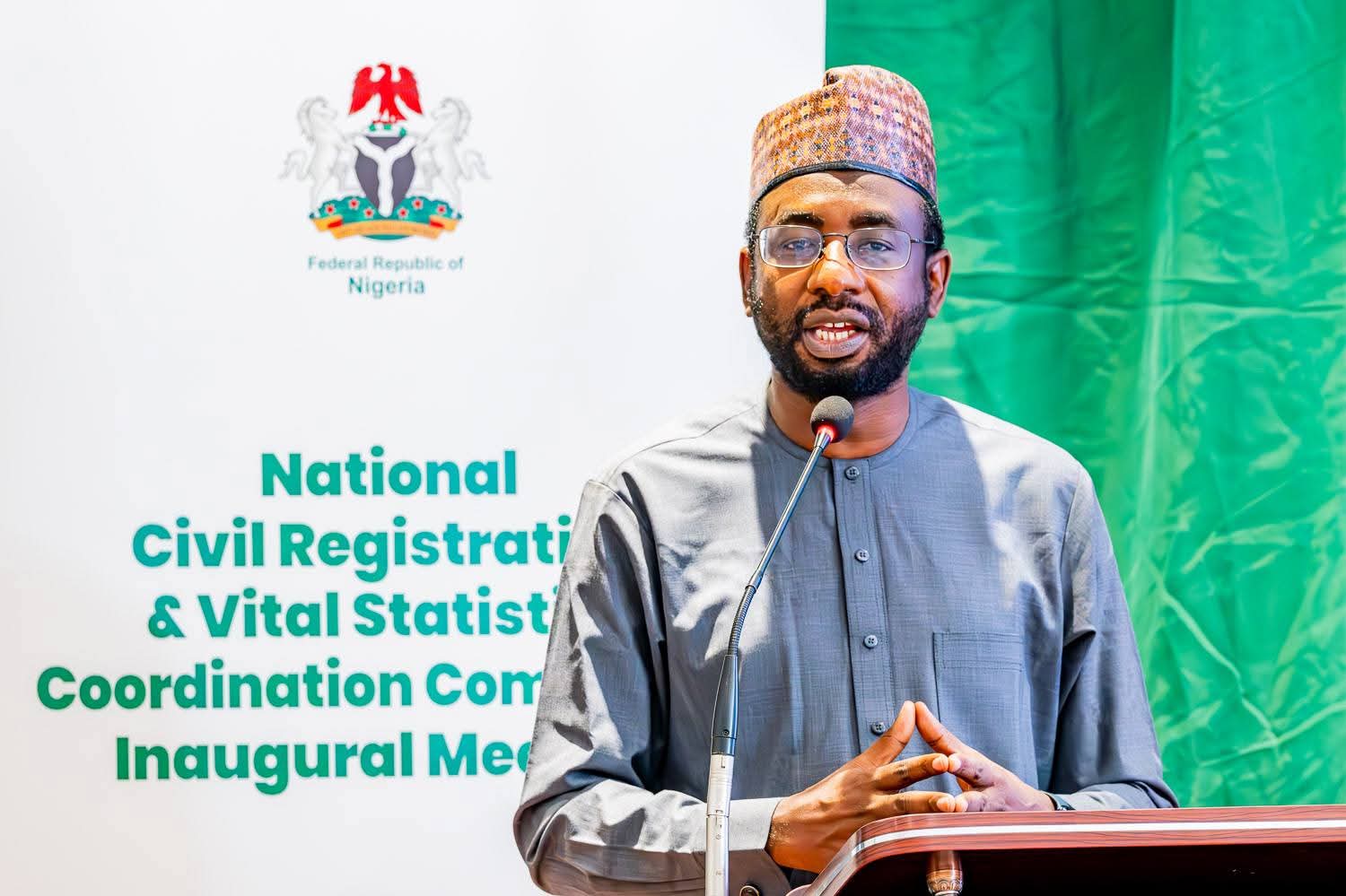
Mallam Kashifu Inuwa Abdullahi, Director-General of the National Information Technology Development Agency (NITDA), has called for a fundamental shift in Kano State’s economic strategy, urging stakeholders to embrace innovation, technology and collaboration as the drivers of growth in the 21st century.

Mallam Kashifu Inuwa Abdullahi, Director-General of the National Information Technology Development Agency (NITDA)
This is contained in a press statement e-authored by the Director of Corporate Communications & External Relations at NITDA, Hajia Hadiza Umar.
Speaking at the Kano Startup Weekend, Mallam Abdullahi acknowledged Kano’s long-standing reputation as the commercial nerve centre of Northern Nigeria and the wider Sahelian region, noting that its history of trade, enterprise and human capital provided a solid foundation for future growth.
Abdullahi emphasised that while these strengths powered Kano’s success for centuries, the modern economy now offered even greater opportunities through innovation and technology.
He described innovation as the process of transforming ideas into impactful solutions through commercialization, stressing that when ideas were effectively deployed, they created value, solved societal challenges and generated sustainable economic growth.
He noted that Kano’s large market, strategic location and vibrant entrepreneurial culture placed it in a strong position to take advantage of innovation-driven opportunities.
According to him, “Innovation is the process of taking an idea from inception to impact. Invention on its own is a cost centre, but when you commercialise an idea, when you turn it into a product or service that solves a real problem and creates value, that is when you begin to drive economic growth and inclusion.”
He noted that the state hosted numerous degree-awarding institutions across federal, state and private ownership, providing a strong base for human capital development.
However, the NITDA DG expressed concern that these institutions often operated in isolation from industry, with research outputs rarely translating into commercial or industrial applications.
He explained that innovation did not happen in silos and stressed the need for a strong, interconnected ecosystem that brought together academia, industry, startups, entrepreneurs and government.
According to him, universities should conduct research informed by industry needs, industries should leverage research to improve productivity and competitiveness, and startups should serve as the bridge that converted ideas into market-ready solutions.
The NITDA boss further encouraged entrepreneurs to leverage technology to build businesses that could grow beyond local markets, explaining that innovation-driven enterprises had the power to scale rapidly, create jobs and position Kano competitively at both national and global levels.
According to him, digital platforms and emerging technologies now made it easier for startups to reach wider markets and develop solutions that were previously unimaginable.
“You can start your business here in Kano, but your thinking must be global from day one. Technology has removed barriers. With the right skills and platforms, a startup in Kano can build solutions that serve not just Nigeria, but the world,” he noted.
Highlighting NITDA’s ongoing interventions, its Director-General outlined the Agency’s commitment to building national innovation capacity through targeted human capital development programmes.
He cited the Digital Literacy for All (DL4ALL) initiative, which aimed to equip Nigerians across all segments of society with essential digital skills, and the 3 Million Technical Talents (3MTT) programme, designed to produce a pipeline of globally competitive technical professionals in areas such as software development, data analysis and emerging technologies.
He said, “Through DL4ALL, we are ensuring that Nigerians at all levels have the basic digital skills needed to participate in the digital economy, while 3MTT is deliberately building a pipeline of globally competitive technical talents who can drive innovation, create jobs and attract investment.”
Abdullahi explained that these programmes were key pillars of President Bola Ahmed Tinubu’s Renewed Hope Agenda, which prioritised skills development, innovation, job creation and inclusive economic growth as pathways to national prosperity.
According to him, empowering Nigerians with digital and technical skills was essential for building a resilient economy capable of competing in the global digital landscape.
“President Tinubu’s Renewed Hope Agenda is about investing in people, empowering them with relevant skills and creating opportunities for inclusive growth.
“At NITDA, we are using digital skills and innovation as tools to translate that vision into real economic impact for Nigerians,” he said.
The NITDA boss urged all stakeholders in Kano to work together to build a functional innovation ecosystem that could unlock the state’s vast potential and expressed confidence that with the right mindset, strong collaboration and sustained investment in digital skills and innovation, Kano could reclaim its historic leadership role and emerge as a major innovation and entrepreneurship hub in Nigeria and beyond.

REA, NBS Partner to Deliver Comprehensive Energy Data for Nigeria

Check Point Reveals Nigeria as Second Most Targeted African Country for Cyberattacks in November

Airtel Africa Partners Starlink to Launch Direct-to-cell Service in 14 Markets

CBN Revokes Licenses of Two Mortgage Banks, NDIC Begins Liquidation

JustMarkets Launches Global Boost Contest With Gold Prizes for Traders

Nigeria Records Highest Weekly Cyberattacks in Africa — Report

Hackers Breach Phones of Dangote and Otedola, Demand Ransom

Cyber Tsunami Hits Nigeria as Breaches Surge 1,047%, esentry Q3 Report Reveals

MTN Nigeria Has Invested Over ₦32.23 Billion in National Priorities Through Its Foundation

FG Lists Bank Charges Nigerians Will Stop Paying from January 2026




 E-Financial2 days ago
Supreme Court Clears Fidelity Bank in ₦225bn Sagecom Saga

 E-Financial2 days ago
Preventing Financial Crimes Amid Mounting Insecurity: Why Following the Money is Now a Survival Imperative

 E-Financial2 days ago
Union Bank Clinches Top Workplace Practice Honour at Sustainability Awards

 Broadcasting2 days ago
Davido, Babajide Sanwo-Olu, Karl Toriola, Others To Be Honoured At The Most Influential People of African Descent Awards In Lagos

 News1 day ago
SiBAN New Executive Council to Champion Vision for Nigeria’s Digital Economy

 Telecom2 days ago
NITDA Charts Path for Kano as Innovation Hub

 Telecom1 day ago
NCC Blames NOGASA for Abuja Outage

 E-Financial1 day ago
Tax Reform or Financial Exclusion? The Trouble with Mandatory TINs