

E-Business
Domain Registrations on.ng Hit 17,367 in November- NiRA


The Nigerian Internet Registration Association (NiRA) in its “Domain Report from January 1,to November 30 this year”, has disclosed that there was a slight increase in the number of domain names registered in November 2014.
According to the report, there was also a slight decrease in the number of domain names renewed in the same month.
Additional 1,742 domain names were registered, with renewal of 828 domain names and transfer of only 33 domain names.
NiRA said that, the total activities of domain names in November 2014, was less than in the month of October 2014.
So far this year, as at 30th November 2014, there were 17,367 domain names registered.
The number of NiRA Accredited Registrars has increased to 47, with some applications for Registrar registration undergoing processing.
Every month, at least an applicant completes their registration process and commences registration of .ng domain names, etc, NiRA said.
Meanwhile, on Wednesday 19th November 2014, Dr. Omobola Johnson, minister of Communication Technology, presented the unified email platform “fedcs.gov.ng” initiative to the Head of Service, Danladi Kifasi and Directorate staff.
The email platform is expected to serve as the only means of email communication for all Federal Civil servants.
This Initiative is expected to aid the adoption and penetration of .gov.ng amongst the civil servants.
It is one of the products of the swithcto.gov.ng, a campaign that NIRA started in April 2012 and was launched by the Federal Ministry of Communication to encourage all government agencies, parastatals and all other government bodies to adopt .gov.ng.
The “switchto.gov.ng” programme, reflects the Nigeria’s country code top level domains (ccTLD), meant as a good step in right direction.
Dr. Omobola Johnson, at the presentation of the Initiative, stressed that it is a simple but very important tool for the take-off of the official electronic communication platform in the Federal Civil Service of the Federation.
The Minister charged civil servants to make effective use of the unified email platform of the Federal Government. She reiterated that there is need for all government officials to have the unified email addresses and also personal email accounts that ends with .ng
She disclosed that 42, 000 email accounts have been created for all officers on grade level 10 to grade level 17 in the Federal Civil Service.
Also a standard naming convention has been adopted in the creation of email accounts for all civil servants: [email protected].
NIRA said, it is proud to be part of the Steering Committee on .gov.ng migrations by ALL Ministries Departments and Agencies of the Federal Government of Nigeria promoting .ng, the country code Top Level Domain ccTLD which is Nigeria’s unique identity on the Cyberspace.
The Association also congratulated the Minister of Communication Technology, The Head of Service for the Federation, National Information Technology Development Agency (NITDA) and Galaxy Backbone including Mr. S L Akinnusi for his tenacity to see this happen.
—


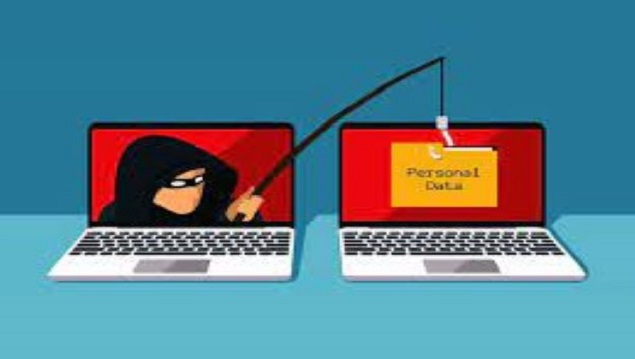
Kaspersky analysed phishing and scam campaigns observed from January through September 2025 and found that 88.5% of attacks globally sought credentials for various online accounts.

Another 9.5% targeted personal data such as names, addresses, and dates of birth, while 2% focused on bank card details.
According to data from Kaspersky, over 38 million phishing links were clicked in Africa in the previous year (from November 2024 to October 2025) – all of which were detected and blocked by Kaspersky solutions.
Not everyone uses protective solutions on their devices however, and phishing remains one of the most prevalent cyber threats, with attackers luring users to fake websites where they unwittingly surrender their login credentials, personal information, or bank card details.
Kaspersky research shows that most phishing pages transmit stolen information via email, Telegram bots, or attacker-controlled panels, before it enters underground resale channels.
Data stolen through phishing is rarely used only once: credentials from multiple campaigns are consolidated into data dumps and sold on dark web markets, in some cases for as little as $50. Buyers sort and verify the data to check whether accounts remain active and reusable across different services.
According to Kaspersky Digital Footprint Intelligence, average 2025 prices ranged from $0.90 for global Internet portals to $105 for crypto platforms and $350 for online banking access. Personal documents such as passports or ID cards sold for about $15 on average, with pricing influenced by account age, balance, linked payment methods, and security settings.
As datasets are enriched and combined, attackers can build detailed digital profiles that may later support targeted attacks on executives, finance staff, IT-administrators or individuals with valuable assets or personal documents.
“Our analysis shows that credentials account for nearly 90% of phishing attempts. Once collected, logins, passwords, phone numbers, and personal details are aggregated, checked, and resold, sometimes years after the initial theft.
Combined with new information, even old credentials can enable account takeovers and targeted attacks against both individuals and organisations.
By leveraging open-source intelligence and old breach data, attackers can craft highly personalised scams, turning one-time victims into long-term targets for identity theft, blackmail, or financial fraud,” said Olga Altukhova, senior web content analyst at Kaspersky.

The cybersecurity landscape is evolving rapidly, with organisations seeking more robust ways to protect their digital assets. A recent global study conducted by Kaspersky reveals a growing shift toward proactive security strategies, particularly the adoption of Secure by Design development and Cyber Immunity – an innovative approach that embeds resilience directly into system architecture.

The study highlights that 90% of cybersecurity professionals surveyed in the Middle East, Turkiye and Africa (META) region are familiar with Secure by Design development. This methodology integrates security into the very fabric of a system from its inception, rather than treating it as an afterthought.
Such an approach is already employed in high-stakes industries like aerospace, where security cannot be bolted on later – it must be intrinsic. Despite its advantages, however, adoption has been slow due to challenges related to standardisation and cost.
Cyber Immunity is the next frontier in cybersecurity
Building on Secure by Design principles, Cyber Immunity takes cybersecurity a step further by creating systems that inherently resist attacks without the need for constant patching or additional security layers. The study reveals that most experts are familiar with Cyber Immunity but interpret it differently.
When asked what they associate with the term, 64% of respondents in the META region linked it to Secure by Design systems that remain resilient under attack, while 56% viewed it as a combination of technology and policy measures that block cybercriminal access. Another 48% connected it to highly skilled cybersecurity teams, indicating that while awareness is high, a unified understanding is still developing.
The growing demand for proactive security
One of the most striking findings is the optimism surrounding inherently secure systems. Over half of respondents in the META region (63%) believe it is already possible or definitely achievable to design systems capable of withstanding cyberattacks without relying on additional security solutions.
Another 32% think it might be possible, reflecting openness to this idea despite some uncertainty. This shift in mindset aligns with a broader industry trend: traditional reactive security measures are no longer sufficient.
With AI-powered threats and increasingly sophisticated attacks, organisations need solutions that do more than just detect breaches—they must prevent them by design.
Integrating Cyber Immunity into security strategies
The study emphasises that resilience, expertise, and flexibility will define the next generation of cybersecurity. While Secure by Design provides the methodology, Cyber Immunity represents the ultimate goal—systems so robust that they minimise reliance on external defences.
“For companies looking ahead, Cyber Immunity offers more than just protection — it brings clear business benefits. When systems are built to be secure from the ground up, there’s less need for constant updates, patches, and extra security tools. That means fewer costs, less strain on IT teams, and stronger, more reliable protection over time,” said Dmitry Lukiyan, Head of KasperskyOS Business Unit.
Most importantly in today’s threat landscape, Cyber Immunity offers robust protection against next-generation challenges — including AI-driven attacks capable of outmaneuvering traditional security measures.
When security becomes an intrinsic property of system architecture rather than an external addition, businesses gain more than just protection—they secure a competitive market advantage.
This proactive approach future-proofs critical infrastructure, enabling organisations to operate confidently even as threats evolve. It transforms cybersecurity from a defensive necessity into a strategic differentiator that accelerates digital transformation while mitigating risk.
As the cybersecurity environment becomes more complex, Cyber Immunity is emerging as a vital strategy. Organisations that adopt it now will not only enhance their protection but also position themselves ahead of the curve in an increasingly volatile digital world.


Konga, Nigeria’s leading composite e-commerce platform, has launched its inaugural 2026 shopping campaign, Konga Jara, offering 25 per cent discount on Starlink internet kits alongside free nationwide delivery.

Konga
The campaign, drawing from the Nigerian concept of “jara” — the extra value traders add to purchases — aims to deliver exceptional deals across categories, helping shoppers turn new year aspirations into reality through affordable technology and value-driven shopping.
To qualify for the Starlink discount, customers must purchase kits on Konga.com, activate them at starlink.com/activate, and email activation details to [email protected] for verification against Starlink’s records. Discounts are subject to terms and conditions.
Konga said spotlighting Starlink underscores reliable internet’s role in Nigeria’s digital economy, supporting work, learning, entrepreneurship and communication for households and businesses.
Mr Onochie Melvin, Head of Commercial Planning at Konga, said: “We listened carefully to what Nigerians said they needed to truly kickstart 2026 on the right footing. Reliable internet connectivity emerged as the foundation upon which other aspirations depend.”
He added: “Students need it for online learning, entrepreneurs need it to scale digital businesses, and professionals rely on it for remote work. This Starlink offer is not just about selling products; it is about removing barriers that prevent Nigerians from fully participating in the digital economy.”
Beyond connectivity, Konga Jara provides genuine products from original equipment manufacturers (OEMs) with transparent pricing, warranties and authenticity guarantees.
As a composite e-commerce ecosystem, Konga integrates shopping, payments and logistics for seamless nationwide access, with exclusive deals shared via its social media channels throughout the campaign.
Shoppers can explore offers at www.konga.com and follow Konga’s official pages for updates across the Konga Group.

Nigeria, Others Lag Behind as Egypt Tops Africa in AI Readiness

Wema Bank Upgrades ALAT Banking App

Firm Launches AI-powered Platform to Simplify New Tax Laws

Study Reveals 88.5% of Phishing Attacks Focus on Stealing Account Credentials

X Suspends Twitter Account for Rules Violation

Banks quietly move to enforce new ₦50 transfer levy from Jan. 1

FIRS says NIN, CAC Numbers to Serve as Tax IDs from 2026

Nigeria Takes the Lead in the Global WSIS+20 Digital Agenda

PalmPay Launches N400 Million World Travel Carnival, Rewarding Users with Free Global Trips

Check Point Reveals Nigeria as Second Most Targeted African Country for Cyberattacks in November




 General News2 days ago
Ministry of Finance Leads FG-Backed Deal to Deliver Quality Homes and Boost Agriculture in Niger State

 News2 days ago
SERAP Sues INEC Over Alleged ₦55.9Bn Election Funds Diversion

 Telecom2 days ago
FG Plans to Invest $460m World Bank Loan in Fibre Infrastructure

 News2 days ago
AI Founders and Developers to Converge in Lagos for AI in Action 2026 conference

 E-Financial2 days ago
NDIC Declares Second Liquidation Dividend for Heritage Bank Depositors

 News2 days ago
FG Inaugurates N40Bn CCTV Control Centre for Third Mainland Bridge

 General News2 days ago
Tax Reforms Panel Rejects KPMG’s Critique of New Laws

 General News2 days ago
Indonesia Blocks Elon Musk’s Grok Over Deepfake Concerns