

Broadcasting
Domicilation of NBC in Ministry of Information and Culture; a Grave Misplacement

by Kayode Ahmadu
All players in the broadcasting value chain from equipment manufacturers to content providers are being affected by the impact of rapid evolution of broadcast technology and the growth of broadband internet access.
These developments demand higher technical quality with improved coverage and improved efficient utilization of spectrum from regulators, who have to be strong and efficient in their drive to deliver bespoke first in class broadcast services.
The need, therefore, of commensurate technical capacity and knowhow cannot be over emphasized.
Regulation both on international and regional levels require high technical skills and knowledge in order to manage frequency spectrum and in particular decisions adopted at high levels of ITU (International Telecommunications Union), which is a United Nations specialized agency formed to “facilitate international connectivity in communications networks”. Frequency spectrum is allocated globally by ITU and it also develops technical standards to ensure standardization in the ICT world.
As we are now in the age of Information Communication and Technology (ICT), it is apposite to take a close look at the meaning of the term ICT. The term ICT is made up of Information Technology (IT) which relates to Computer Hardware, Software and Peripherals; and Communications Technology which involves Telecommunications and Broadcasting. The current use of the term ICT is firmly established and it implies corresponding physical moves towards the convergence of service and technologies. In particular Telecommunications and Broadcasting can today use the same technology for transmission e.g. Information Protocol (IP) Technology, Fibre Optic Cable, Very Small Aperture Terminals (VSATs) and Radio.
Furthermore, transmission and frequency control are coordinated using information technology hardware and software like Computers and Software Programmes.
In line with the above, Governments the world over are also ‘getting with the Programme’ by making their policies and administration fit into an ICT or convergence model; whereby the Broadcasting, Information Communications and Postal Services are under the same Ministry and or, are regulated by the same super regulatory Body, albeit called by varying names.
Let’s look at the ICT Industry supervising structure of some Countries that pioneered the development of ICT as well as Countries with comparable levels of development to Nigeria:
* The United States of America ‘Federal Communications Commission’ FCC regulates both International and local Communications by Radio, Television, Wire, Satellite and Cable and is responsible for implementing and enforcing America’s Communications Law and regulations. It is an independent U.S. Government Agency overseen by Congress.
* The United Kingdom has it’s Office of Communications Ofcom established in 2003 to replace Organizations, namely Oftel, the ITC, the Radio Authority, the Radiocommunications Agency and the Broadcasting Standards Commission. This includes Spectrum Management and Auctioning. In addition, since 2011 it took over Postcomm’s functions to include regulation of postal services. Along with 45 other Public Bodies Ofcom supports the Department for Digital, Culture, Media & Sport (DCMS).
* In Malaysia The Malaysian Communications and Multimedia Commission (MCMC) regulates the Communications and Multimedia Industries based on the powers provided in the Malaysian Act 1998 and Strategic Trade Act 2010. Apart from pursuing the Government’s policy objectives for the Sectors, MCMC oversees the new regulatory framework for the converging Telecommunication and Broadcasting Industries and online activities. In 2001 Postal Services and licensing under the 1991 Act and the Certification Authorities under the Digital Signature Act 1997 were added.
* Nearer home, under it’s Ministry of Communication and Technology Ghana has its National Communications Authority (NCA), which has the responsibility of regulating Telecommunications, Frequency Spectrum, Broadcasting Authorization, Amateur Radio Licencing, Numbering, Standards & Clearance, Schedule of Fees amongst others.
*South Africa has its Independent Communications Authority of South Africa (ICSA). It was established in July 2000 by merging the Telecommunications Regulator, the South African Telecommunications Regulatory Authority (SATRA) and the Independent Broadcasting Authority (IBA). In 2005 the Postal Regulator was included.
We can go on and on with scenarios in numerous countries but for the constraint of space in this short position paper.
This trend enables Countries to fully take advantage of convergence and its underlying concomitant benefits. A single knowledgeable and agile Agency is ideal and more likely to bring about policies, activities, infrastructure and an enabling environment such as shared media and spectrum or facilitate services in underserved and unserved areas to bridge the digital divide.
In Nigeria we still have separate Regulators for the Broadcasting and Telecommunications Industries. Worse still, they are under separate Ministries. Again, we need to ask the nagging question…”why Nigeria is still lagging behind”? Why are we not conforming with this obvious global trend?
Thankfully though our visionary President Muhammadu Buharihas gone one step towards convergence by renaming the Communications Ministry as the Ministry of Communications and Digital Economy.
A development that is quite commendable and apt. Government needs to however take the next bold step of moving the NBC from its current misfit stead, into a single super regulatory Body for Broadcasting and Telecommunications Sectorsunder the Ministry of Communications and Digital Economy
This would automatically put Nigeria in step with universal best practices and prevailing trends, as we have seen in the examples mentioned above.
The move would also position the NBC in a better environment than it is presently, to tackle the challenges of ongoing Digital Switch Over (DSO).
It is imperative to note that Nigeria has significant deadlines issues with this exercise and thus must take steps to ensure success this time around.
The success of the DSO is not negotiable as it would be of enormous economic benefit to the country and would also be greatly impactful on the quality of broadcasting services made available to the citizens at large; not to mention its job creation potentials.
In conclusion, domiciling NBC and its activities, especially the ongoing DSO, in the Information and Culture Ministry is a gross misplacement.
It portends danger that could be of grave consequences if the needful is not done immediately.
KAYODE AHMADU
B.Sc (Hons) Physics, 1981 – Jos
M.Sc Physics/Electronics, 1986 – Jos
LCOR Harvard Business School, Massachusetts USA


Spotify has unveiled Nigeria-specific data from its annual Loud & Clear report, highlighting how Nigerian artists generated more than ₦60 billion in revenue from the platform alone last year, amid explosive growth in streams, local consumption, and global discovery.

The report, which analyzes millions of data points to illuminate music streaming economics, shows Nigerian artists’ revenue surged over 140% in the past two years.
This boom stems from rising global appeal and stronger domestic engagement, with 30.3 billion streams and 1.6 billion listening hours on Spotify in 2025. First-time discoveries of Nigerian music hit 1.3 billion, up 26% from 2024.
Locally, Nigerian tracks dominated Spotify Nigeria’s Daily Top 50, accounting for over 80% of features, while consumption of homegrown artists jumped 170% year-on-year.
“Nigeria’s music scene thrives on creativity, innovation, and global influence,” said Jocelyne Muhutu-Remy, Spotify’s Managing Director for Africa. “Loud & Clear spotlights how artists are forging sustainable careers and deepening local ties.”
Key highlights include:
55% year-on-year growth in local streams for Nigerian female artists.
75% surge in streams for independent Nigerian artists.
Independents and indie labels earning 58% of all royalties from Nigerian artists on Spotify.
Spotify’s editorial playlists featured nearly 2,000 Nigerian artists in 2025, boosting visibility. Nigerian music appeared in 320 million global user playlists and over 12 million in Nigeria, totaling more than 60 million playlists worldwide.
The report also notes evolving tastes, with top-growing genres in Nigeria over five years including pop urbaine, alternative pop, anime, emo, and drill.
For full details, visit spotify.com/loudandclear.
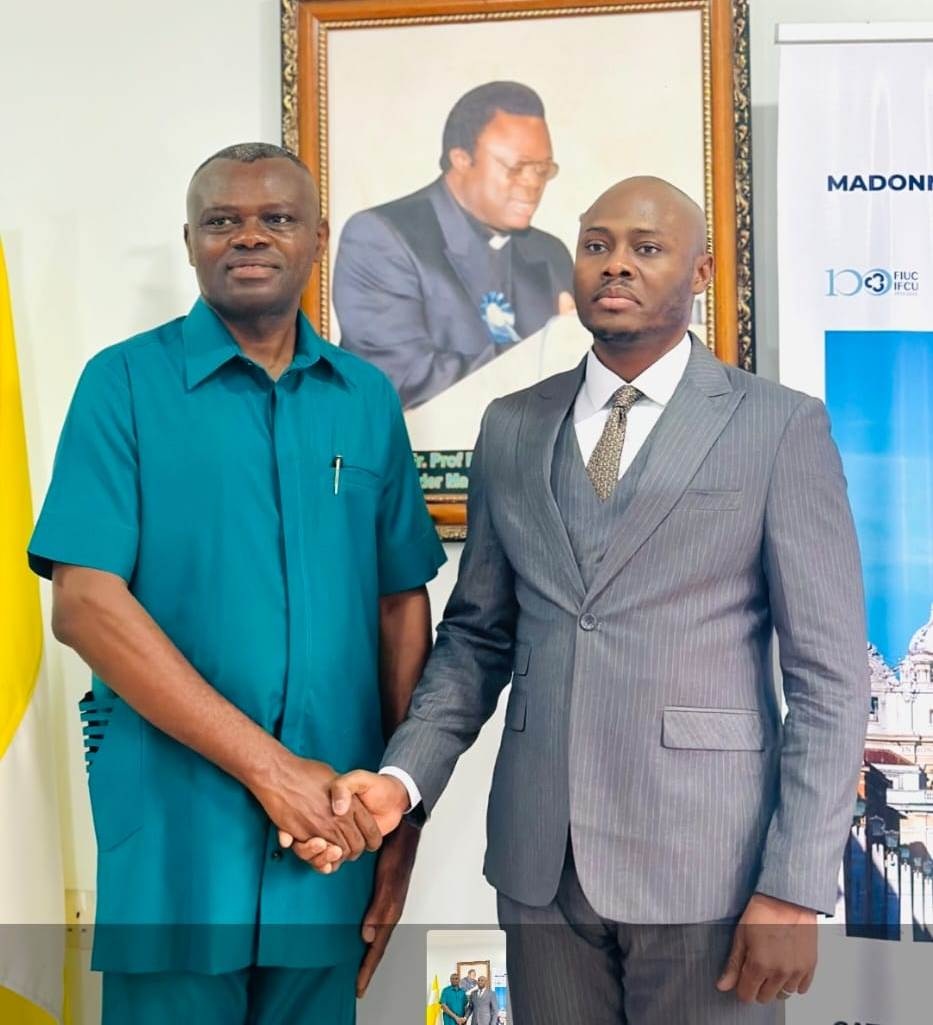
Technology strategist Rock Adote has been appointed to the Board of Trustees of Madonna University Nigeria, a move expected to strengthen the institution’s push toward digital governance and modern technological systems in higher education.

Madonna University
Adote, who has built a reputation in cybersecurity, enterprise identity management and digital transformation, brings over a decade of experience in designing secure digital infrastructure and managing identity systems for organizations.
Stakeholders believe his expertise will support the university’s efforts to strengthen data security and modernize its academic and administrative digital frameworks.
The appointment reflects the university’s growing commitment to technology-driven leadership as institutions increasingly rely on digital systems for academic operations, data management and research collaboration.
Universities today manage large volumes of sensitive digital information, including student records, research data and staff credentials, making strong cybersecurity and identity management frameworks essential.
As a member of the Board of Trustees, Adote will participate in providing institutional oversight and guiding strategic policy direction for the university.
The board is responsible for safeguarding academic standards while steering long-term development initiatives and ensuring the institution remains responsive to evolving global trends in education and technology.
Industry observers say Adote’s background in enterprise digital systems positions him to contribute significantly to the university’s digital transformation agenda, particularly in strengthening technological resilience and governance frameworks across its operations.
Other newly appointed members of the board include Sir Nwagwu Aloysius Emeka, Chief Arthur Obi Okafor (SAN), Professor Anagboso Martin Osita, Mrs. Ike Angela Unaoaku, Barrister Augustine Nenwa Obo and Rev. Fr. Stephen Ifeanyichukwu Nwatah.
Speaking on the appointment, Adote expressed appreciation for the opportunity to serve, emphasizing the importance of aligning higher education institutions with emerging technological realities.
According to him,
“Digital transformation will play a crucial role in shaping the future of academic administration, research and learning environments”.
Analysts note that the inclusion of technology leaders in university governance structures signals a growing recognition that digital transformation is becoming central to the competitiveness and sustainability of modern higher education institutions.
With Adote’s appointment, Madonna University is expected to further strengthen its technology strategy and position itself as a forward-looking institution within Nigeria’s higher education landscape.

By: Kerissa Varma, Microsoft Chief Security Advisor, Africa
Africa’s healthcare sector is facing a silent emergency. Many healthcare operators, facilities and doctors across Africa already grapple with the challenges of under-resourced environments, an uneven distribution of resources and massive demand for services.

Kerissa Varma, Microsoft Chief Security Advisor, Africa
Now healthcare administrators must turn their attention to a relatively new and extremely urgent concern. While doctors fight to save lives, cybercriminals are infiltrating hospitals, laboratories, and clinics, turning life-saving environments into digital battlegrounds.
A growing epidemic
World Health Organisation director-general Tedros Adhanom Ghebreyesus noted that the digital transformation of healthcare, combined with the high value of health data, has made the sector a prime target for cybercriminals, commenting that “At best, these attacks cause disruption and financial loss. At worst, they undermine trust in the health systems on which people depend, and even cause patient harm and death.”
Recent attacks have exposed the fragility of Africa’s medical infrastructure. In May 2025, Mediclinic Southern Africa was hit by a cyber extortion attack, compromising sensitive HR data. Later in 2025, Lancet Laboratories faced a regulatory penalty for failing to notify patients about data breaches under South Africa’s POPIA law, while a ransomware strike on the National Health Laboratory Service disrupted blood test processing nationwide, delaying critical care for millions.
M-Tiba, a Kenyan digital health platform managed by CarePay and backed by Safaricom, suffered a significant cyberattack and data breach in late 2025, while earlier this year Pharmacie.ma, a Moroccan pharmaceutical platform, was reportedly the target of an alleged data leak incident that allegedly involved the unauthorised export of a customer database. And recent research indicates that Nigeria’s private healthcare sector is now one of the most targeted on the African continent, with attacks increasing at an alarming rate.
Many incidents also go unreported, as hospitals and healthcare facilities rarely disclose them publicly, yet these incidents are not isolated, with ransomware dominating the threat landscape. Africa’s healthcare sector is heavily targeted by cybercriminals, with healthcare organisations facing an average of 3,575 weekly attacks in 2025, a 38% surge from the previous year, with encryption of patient data, temporary loss of access to hospital systems and the risk of data appearing on the dark web cited as potential impacts.
Why healthcare is a prime target
The healthcare industry in Africa, particularly in the public sector, is working with legacy systems, fragmented infrastructure, and underfunded IT teams, all of which combine to make the sector an easy target for unscrupulous bad actors.
Many medical institutions are adopting open-source AI tools for diagnostics and patient management. While cost-effective, these platforms often lack enterprise-grade security, leaving sensitive data exposed. Combined with fragmented storage of paper and electronic patient records – often unencrypted and scattered across multiple systems – the risk of breaches multiplies.
Hospitals and healthcare facilities cannot afford downtime. Every minute offline risks lives, making them more likely to pay ransoms in an attempt to regain control of their systems. Cyber insurers indicate that in 2 of 5 cases of a ransom being paid, data and operations still cannot be recovered. Additionally, in instances where some or all of the seized data is recovered after paying a ransom, the attacker goes on to request further payments.
Medical records are also a premium target for cybercriminals. In the USA, researchers found that patient records, insurance details, and research data fetch premium prices on the dark web – up to 10 times higher than financial data, according to cybersecurity analysts. A single stolen medical record can sell for $260–$310, compared to $30–$50 for a credit card, because unlike credit cards, medical records never expire and medical information cannot be easily changed, making it useful for years. Medical records frequently include personal identifiers, insurance details, and sometimes biometric data, enabling identity theft and fraud, while criminals use medical data for fake insurance claims, prescription fraud, and targeted scams. Microsoft believes cybersecurity needs to be embedded into every technology implementation. This should be a key priority, especially with sensitive medical data and operations.
How healthcare can use modern technology safely
As Africa’s healthcare systems digitise and embrace AI, protecting the digital lifeline must become as critical as protecting the physical one. Key steps can secure healthcare organisations and facilities like laboratories and diagnostic services’ systems.
Include cybersecurity in your resilience planning
Medical professionals and healthcare facilities often prioritise the resilience of physical capabilities. Power backups, multiple devices should equipment fail, and a standby roster in the event of a practitioner being unavailable are all practices that save lives. Equally cybersecurity and safeguarding online systems needs to be built into the overall resilience planning of medical facilities and services.
Investing in cybersecurity technology that can quickly identify and contain attacker activity before it leads to system downtime or data theft can save lives. Having a response plan that is practiced and maintained in the event of a cyber breach and ensuring strong data backups could mean the difference between a total failure of health services or a minor incident. Ensuring incident response plans are aligned with local compliance laws such as South Africa’s POPIA, and Kenya and Nigeria’s Data Protection Acts is critical for healthcare providers to meet both their resilience and compliance objectives.
Prepare for AI-driven attacks that are going to increase attacker speed and success
Threat actors are increasingly exploiting the interconnectedness of modern software ecosystems and operational structures to conduct malicious activity, so regular auditing of third-party integrations, especially those involving AI or cloud services, is critical.
Adversaries are using AI to scale and tailor operations, with AI-driven phishing being 4.5x more effective than traditional phishing. However, in equal measure, AI is transforming cyber defence – it automates response and containment, detects threats faster and more accurately, and identifies detection gaps and adapts to attacker behaviour. Healthcare organisations should invest in AI-driven threat detection for faster response and anomaly detection and must also take steps to secure AI models and data pipelines by implementing robust access controls, vulnerability scanning, and regular patching for open-source tools.
Remote and wider access to patient records requires strong identity practices
As both patients and medical professionals start accessing patient records digitally, strong means of identification, verification and authentication are critical. The Microsoft Digital Defense Report 2025 notes that the abuse of valid accounts is a frequent occurrence, with malicious actors gaining access to user credentials (usernames and passwords) and using them to infiltrate systems without triggering traditional security alerts. Therefore, organisations must deploy phishing-resistant multifactor authentication (MFA) and conditional access to strengthen user defences.
Invest in people and skills
People are at the heart of robust cybersecurity measures, so it is vital to train staff against common tactics such as phishing, which is the most common entry point for attackers, and apply role-based access controls for both clinical and research data to prevent privilege misuse.
Cybersecurity is no longer an IT issue – it’s a patient safety issue. Healthcare services and providers must treat digital resilience with the same urgency as infection control. By investing in comprehensive cybersecurity strategies and leveraging AI-powered defences, Africa’s healthcare sector can position itself as a crucial front line against emerging threats and help build stronger, more resilient digital ecosystems.

SEC Shuts Over 400 Fraudulent Investment Schemes, Arrests Operators

NigComSat-1R, Nigeria’s Only Satellite to Expire this Year

Nigeria, Ghana Trigger Stunning 45 Percent Surge in MTN Dividends

Banks, Offices to Close for Thursday and Friday for Eid-el-Fitr

ATCIS Urges FG to Ensure Safety of Consumers Data

Kaspersky Discovers New Phishing Campaign Exploiting Google Tasks Notifications to Steal Corporate Credentials

esentry 2025 Report Shows Healthcare, Financial Services and Telecoms as Staging Grounds for Increased Cyberattacks in Africa

AfDB, UNDP Launch $10Bn AI Initiative for Africa

Mutual Benefits Assurance Settles ₦5.9bn Claims in January 2026

MultiChoice Suspends Yearly DStv Price Hike as Canal+ Pushes Growth




 E-Financial3 days ago
CBN Rolls Out New Rules for Safer Instant Payments, More Customer Control

 News3 days ago
NIMMME Inaugurates Engr. Michael Orekyeh as 13th National Chairman in Abuja

 E-Financial3 days ago
CBN Tightens BVN Rules to Curb Fraudulent Banking Transactions

 Telecom3 days ago
MTN Nigeria Races Ahead in Fibre Broadband Market

 Broadcasting2 days ago
Spotify’s Loud & Clear Report Reveals Over ₦60Bn Revenue for Nigerian Artists in 2025

 E-Financial3 days ago
Nova Bank Appoints Jude Anele as Managing Director/CEO

 E-Business3 days ago
Tech Expert Unveils BAT-BOT AI App to Curb Fake News ahead of 2027 Elections

 Telecom2 days ago
PwC Warns Nigeria Telcos of AI Fraud Risks