

E-Business
e-learning, Entertainment Boost EMEA Tablet Market

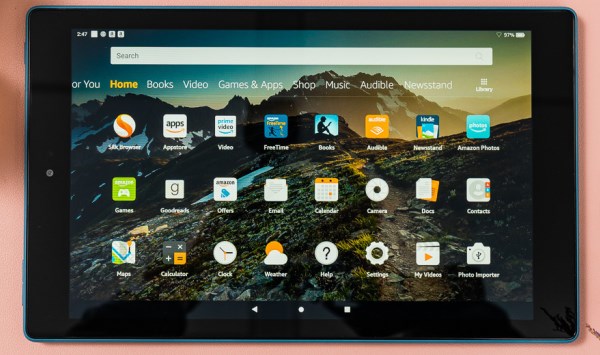
Tablet market performed positively in the second quarter of 2020 in the Europe, Middle East, and Africa (EMEA), with shipments growing by 23.8% year-on-year (YOY), for the first time in six years.

This is according to the International Data Corporation’s (IDC’s) latest Tablet Tracker, which shows the tablet market in the region reached 11.9 million units, posting the strongest growth since 2013, when the market had not yet reached maturity.
This as global smartphone shipments are expected to drop nearly 10% in 2020.
The consumer segment tablets were the main growth driver, with 27.1% YOY growth. This was triggered by the COVID-19 pandemic and the sudden need to acquire devices for leisure and education purposes during lockdown, according to IDC.
“Demand in Western Europe remained healthy throughout the whole quarter as tablets emerged as a reliable and affordable alternative for consumers to meet their needs for content consumption and provide access to remote schooling during the lockdown,” says Helena Ferreira, research analyst, IDC Western Europe Personal Computing Devices.
“Backlogs created in the first quarter of the year, due to severe constraints in the supply chain, also contributed to the large volume of shipments.”
The Western European tablet market grew 28.3% YOY in the second quarter of the year, while Central and Eastern Europe (CEE) and Middle East and Africa (MEA) increased 26.9% and 10.8% YOY respectively, notes the report.
“The CEE and MEA tablet markets in 2Q 20 performed much stronger than predicted,” says Stefania Lorenz, associate VP at IDC EMEA.
“The spike in consumer demand for tablets was driven by the lack of notebooks in the market. In fact, tablets were not expected to be the first choice for home-schooling or home-working, but younger students and children were equipped with tablets instead of notebooks. The ‘forced’ working and schooling from home has pushed demand to high volumes in both CEE and MEA.”
In 3Q20, the EMEA tablet market is expected to jump 10.9% YOY and close 2020 with 3.7% YOY growth. The growing number of devices per household is expected to help maintain a buoyant third calendar quarter, notes the report.
“Despite the easing of lockdown restrictions throughout the region, consumers remain cautious in general – income that would otherwise have been spent on holidays or other activities has been allocated to home entertainment and e-learning, which has benefited tablets,” says the report.
In terms of vendor performance, Samsung retained the lead in EMEA, with a solid performance across the whole region, while Apple remained in second position, driven by the popularity of the iPad among consumers in Western Europe and its compelling education solutions.
Huawei retained third place, with the vendor aggressively pushing its tablet devices through promotional campaigns and bundling offers, while Lenovo’s slate devices in the education sector have seen growing traction, securing fourth place for the vendor.



Elon Musk, billionaire Tesla owner, has asked a United States (US) federal court to award him up to $134 billion in damages from OpenAI and Microsoft, stating that the companies earned “wrongful gains” from his early support of the artificial intelligence startup.

Elon Musk,
This is according to a court filing, reported by Reuters.
In filings ahead of a trial expected to start in April in Oakland, California, Musk stated that OpenAI benefited between $65.5 billion and $109.4 billion from his contributions when he helped co-found the organisation in 2015, and Microsoft gained between $13.3 billion and $25.1 billion through its involvement.
He has asked a United States (US) federal court to award him up to $134 billion in damages from OpenAI and Microsoft, stating that the companies earned “wrongful gains” from his early support of the artificial intelligence startup.
This is according to a court filing, reported by Reuters.
In filings ahead of a trial expected to start in April in Oakland, California, Musk stated that OpenAI benefited between $65.5 billion and $109.4 billion from his contributions when he helped co-found the organisation in 2015, and Microsoft gained between $13.3 billion and $25.1 billion through its involvement.
Musk’s legal team argues that his early financial and strategic contributions, including approximately $38 million in seed funding, the recruitment of key personnel, and assistance in connecting founders with contacts, laid the foundation for the later success of OpenAI and Microsoft’s commercial AI efforts.
“Without Elon Musk, there’d be no OpenAI. He provided the bulk of the seed funding, lent his reputation, and taught them all he knew about scaling a business. A pre-eminent expert quantified the value of that,” Musk’s lead trial lawyer Steven Molo told Reuters.
“Just as an early investor in a startup company may realise gains many orders of magnitude greater than the investor’s initial investment, the wrongful gains that OpenAI and Microsoft have earned—and which Mr Musk is now entitled to disgorge—are much larger than Mr Musk’s initial contributions,” the filing said.
Musk, who left OpenAI’s board in 2018 and now leads AI company xAI, alleges that OpenAI violated its founding non-profit mission when it restructured to include a for-profit arm tied to Microsoft’s investment and commercial strategy.
Meanwhile, OpenAI has labelled the lawsuit “baseless” and part of a “harassment campaign” by Musk, and Microsoft’s legal team has said there is no evidence the company “aided and abetted” OpenAI in any wrongdoing.
Both companies have asked the judge to limit what Musk’s expert witness may present at trial, arguing that the damages calculations are unreliable and could mislead a jury.
According to Reuters, Musk’s filing says he may pursue punitive damages and other penalties, including a possible injunction, if the jury finds the companies liable, though it did not specify what form any injunction would take.

In December 2025, organisations globally faced sustained cyber pressure, as the average number of cyber-attacks per organisation per week reached 2 027, a 1% increase from the previous month and a 9% increase from December 2024.

This is according to December 2025 Global Cyber Attack Statistics by Check Point Research, the threat intelligence arm of Check Point Software Technologies.
According to the statistics, Latin America was the hardest hit, with companies experiencing an average of 3 065 cyber-attacks per week, a 26% year-over-year increase.
In contrast, Africa saw a decline in attacks, with Nigeria (4 622 attacks per week) and Angola (4 002 attacks per week) being the most targeted countries on the continent.
The report’s findings highlight the evolving cyber threat landscape, with ransomware and GenAI-driven data risks posing significant challenges to companies worldwide.
Ransomware attacks jumped 60% year over year, with 945 publicly reported incidents in December. Qilin was the most active ransomware operator, responsible for 18% of publicly disclosed attacks.
“Ransomware continues to scale through industrialised operations, while unmanaged GenAI usage is creating widespread data exposure at enterprise level,” said Omer Dembinsky, data research manager at Check Point Research.
The report noted the education sector was the most targeted industry globally, with 4 349 cyber attacks per week; followed by government (2 666 attacks per week); and associations and non-profits (2 509 attacks per week).
The widespread adoption of GenAI tools has introduced new cyber security risks, with one in 27 GenAI prompts posing a high risk of sensitive data leakage.
Experts warn that companies must prioritise prevention-first security, real-time AI threat intelligence and strong governance over AI tools to mitigate these risks.
Hendrik de Bruin, head of security consulting at Check Point Software, added: “Strengthening ransomware resilience, deploying AI-powered prevention and enforcing clear GenAI governance will be critical to reducing cyber risk in the year ahead.”
E-Business
Half of Global Companies Build SOCs to Enhance Cybersecurity, with a Focus on Human Expertise

Among the primary reasons for establishing a Security Operations Center (SOC) are strengthening cybersecurity posture, enabling faster detection and response and gaining a competitive edge.

Interestingly, despite the increasing demand for automated cybersecurity solutions, businesses rely on skilled security professionals to make key decisions, as human expertise remains essential for effective security management.
A Security Operations Center (SOC) is a dedicated organisational unit responsible for continuous monitoring and safeguarding of a company’s IT infrastructure. Its core mission is to proactively detect, analyse and respond to cybersecurity threats.
To identify the main drivers, strategic priorities, and potential challenges in SOC planning and implementation, Kaspersky has conducted a comprehensive global study involving senior IT security specialists, managers and directors from companies with 500 or more employees.
All participants operate without a SOC but have plans to establish one in the near future. The study spans 16 countries across APAC, META, LATAM, Europe, and Russia, providing valuable insights into the emerging trends and best practices in SOC development worldwide.
The findings of the research reveal that 50% of companies intend to establish SOCs to strengthen their cybersecurity posture, and 45% are motivated by the need to address increasingly sophisticated and dangerous threats.
Other drivers include budget optimisation, the necessity for faster detection and response, and the expansion of software, endpoints and user devices – factors that demand more comprehensive and layered security measures.
These are cited by 41% of organisations. Additionally, 40% seek better protection of confidential information, 39% aim to meet regulatory requirements and one-third (33%) expect SOC capabilities to provide a competitive edge. Larger enterprises tend to cite each of these reasons more often, reflecting the broader operational and regulatory pressures they experience.
Continuous monitoring becomes the leading SOC requirement
Among the key functions organisations plan to delegate, 24/7 security monitoring leads at 54%. This around-the-clock vigilance enables early detection of anomalies, prevents escalation and sustains cyber resilience in real-time. This demand highlights a strategic requirement for proactive risk management, as organisations aim to defend against persistent threats that can strike at any moment.
Companies intending to fully outsource SOC operations show a stronger interest in applying “lessons learned” methodologies, whereas those developing internal SOCs focus more on access management to maintain tighter control.
Human expertise drives SOC technology choices
While SOCs use advanced technology, the choices made by organisations show that human analysts are very important. Among the solutions that organisations plan to include in SOC are – Threat Intelligence Platforms (48%), Endpoint Detection and Response (42%) and Security Information and Event Management systems (40%) – sophisticated solutions that automate data collection and reduce operational load, however, they depend heavily on skilled security professionals who provide critical context, interpret complex findings and make final decisions when guiding appropriate responses.
Other solutions chosen include Extended Detection and Response (38%), Network Detection and Response (37%) and Managed Detection and Response (33%). Large enterprises tend to adopt more technologies (5.5 per SOC on average), while smaller ones integrate fewer (3.8).
“To successfully build a SOC, companies must prioritise not only the right mix of technology but also the careful planning of processes, clear goal-setting and effective resource distribution.
“Well-defined workflows and continuous improvement are essential to ensure that human analysts can focus on critical tasks, making the SOC a proactive and adaptable component of their cybersecurity strategy,” comments Roman Nazarov, Head of SOC Consulting at Kaspersky.

NGX Gives Securties Firm 10 Days to Resolve Theft, Forgery Allegations

KongaPay K-Save Users Save over N3.2Bn

NCC Gives Amazon’s Kuiper, BeetleSat Nod to Provide Satellite Broadband Services in Nigeria

Cybersecurity Firm Detects a Wave of Crypto Phishing Following BlockFi Bankruptcy
NCC Unveils Spectrum Roadmap to Power Nigeria’s $1tr Digital Economy

Banks quietly move to enforce new ₦50 transfer levy from Jan. 1

FIRS says NIN, CAC Numbers to Serve as Tax IDs from 2026

FIRS Declares NIN, CAC Numbers as Tax IDs from 2026

US Begins Partial Visa Ban on Nigerians January 1

Galaxy Backbone Tops FG’s Website Performance Ranking




 E-Financial2 days ago
Here Are Nigerian Banks That Have Secured Their Licences

 Telecom2 days ago
MTN CEO Toriola Hails Nigeria’s Telecom Transformation at MIPAD

 E-Financial2 days ago
Zenith Bank Top Nigerian Bank Pick Ahead of GTCO, AccessCorp

 News2 days ago
ICPC Charges Ozekhome with Forgery, Corruption Over London Property

 E-Financial2 days ago
Nigeria Processed $92.1Bn Crypto Transactions in 12 Months — PwC

 Telecom2 days ago
Lebara Launches Agent Registration Portal

 E-Financial2 days ago
How Crypto Criminals Stole $700m from People – often Using Age-Old Tricks

 E-Business2 days ago
Elon Musk Seeks $134Bn from OpenAI, Microsoft for ‘Wrongful Gains’