

E-Financial
Ecobank Launches Custody Business in Nigeria

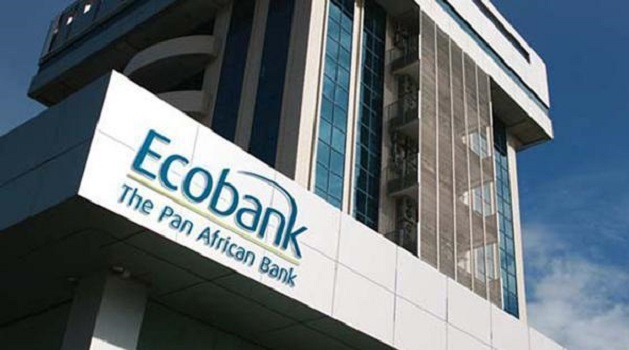
Ecobank Nigeria limited has launched custody business operation in Nigeria. This follows the acquisition of regulatory approvals from Securities and Exchange Commission (SEC) and the Central Bank of Nigeria (CBN).

Ecobank Group has extensive expertise offering custody services in its other subsidiaries within the Central Africa, Francophone and Anglophone West Africa regions, with a combined asset size of over USD4Billion in Assets Under Custody.
The custody business in Nigeria will be provided through Ecobank Nominees Limited, the special entity set up to hold clients’ assets separate from the Bank’s assets
Announcing the launch in Lagos, Managing Director/Regional Executive, Ecobank Nigeria, Bolaji Lawal, stated that the new custody offering positions the Bank to offer more value-adding banking and investment solutions to its customers. He reiterated that Ecobank’s mandate in Nigeria is to deliver the brand promise as the platform of choice for convenient, affordable, and instant banking and investment services to customers in the country.
“As a Pan-African Bank with gateway into other African countries, there was an identifiable gap to offer custody services in Nigeria. We have therefore decided to provide a better way for Nigerian investors to protect their assets and to spread their business interests across the continent seamlessly, through our support”. He stated.
In her comment, Adebola Adedeji, Head of Custody/Managing Director of Ecobank Nominees Limited, disclosed that the custody business has fully commenced operations and is now in the market for business and already signing on customers.
She explained that “the custody business is set to position the Bank as a one-stop shop offering premium financial services and investor solutions to our valued customers. Custody services are already being offered in some other countries where Ecobank has operations, and expanding into Nigeria will further serve as inroad to the African and international markets for our customers”.
She added that “Ecobank custody offers an efficient post-trade service with the deployment of a world-class technology solution that will enhance client experience every stage of the investment cycle.
“Our comprehensive service offerings include settlements, fund administration, corporate actions processing, portfolio valuation, FX services, securities lending, cash management, escrow agency services, reporting, multi-market access through Ecobank Group affiliates, amongst others.”


First Asset Management investment management rating just got an upgrade to ‘AA’ from ‘AA-’ by DataPro and affirmation of A+(IM) by Agusto & Co. This reflects how we are continuously improving to serve our investors better. Our funds levelled up too as Agusto & Co upgraded our First Asset Money Market Fund rating to A+ (f) (up from Aa‑(f)).

What its means for customers
It means you are investing with a firm that is getting stronger, smarter, and more disciplined. Our upgraded rating recognizes our solid performance track record, the strength of our parent financial group, and the systems we have put in place to manage investments responsibly.
We have also improved our governance and decision-making structure, with experienced professionals leading well-defined investment and risk committees. Behind the scenes, our team of seasoned investment experts constantly monitor markets, manage risks, and position portfolios to navigate volatility and capture opportunities.
At the same time, we have strengthened our risk management and compliance framework to ensure that everything we do meets global best practices. In simple terms, it means your money is being managed with discipline, transparency, and strong oversight.
Independent rating agencies — Agusto & Co and DataPro Limited recognize these improvements. Their ratings highlight our commitment to responsible asset management, strong governance, and operational systems designed to support stable long-term performance.
But beyond the ratings, what really matters is helping you build wealth over time.
That is why we offer a range of investment plans designed for different goals — whether you are just starting your investment journey, looking to grow your portfolio, or aiming to build long-term financial security.
If you are part of the next generation of investors, this is your moment to start early and stay ahead. The earlier you begin investing, the more time your money has to grow.
Jump on the First Asset investment journey. Explore our investment plans and start building your future with a firm that is getting stronger.

By Matthew Anthony, Senior Market Analyst- Africa
Oil prices spiked to just above $120 over the weekend as escalations of the Israel -US-Iran war intensified, with key energy installations targeted.

FXTM
As a result, major oil suppliers are due to meet shortly to open the tap of their strategic reserves. Another contributor to the hike in oil prices has been the effectual closure of the strait of Hormuz (where 20% of the world’s oil supply goes through).
Major oil producing nations like Nigeria may profit from this conflict provided they are able to put a lid on inflation- a major consequence from rising oil prices-and use the windfall for critical budget needs while preparing for potential market shocks.
Outside of Nigeria, a wave of risk aversion engulfed global markets on Monday as ongoing conflict in the Middle East accelerated the flight to safety.
Asian shares plunged, European markets opened deep in the red while US equity futures signaled to a negative open as investors scrambled to price the chaos from the Iran conflict.
In the commodity space, oil prices jumped over 25% as major Middle East producers curbed output. Brent has gained roughly 30% this month, pushing 2026 gains to over 70% while WTI crude is up almost 80% year-to-date as of writing.
The last time oil benchmarks crossed into triple digits was back in 2022 during the Russian-Ukraine war. And for most it’s still a painful memory as geopolitical risk and covid-19 supply disruptions caused inflation to skyrocket across the globe.
In the FX space, the dollar remains supported by safe-haven demand along with the Swiss franc. However, the star performer is the Canadian Dollar which has appreciated against every single G10 currency month-to-date thanks to its sensitivity to oil markets.
Gold ended last week in losses despite the risk-off sentiment and overwhelming disappointing NFP report. Non-farm payrolls slid by 92,000, representing the biggest monthly decline in payrolls since October 2025, while the unemployment rate rose to 4.4%.
However, gold remains locked within a daily range thanks to a broadly stronger dollar and inflationary risks revolving around the conflict in the Middle East. Surging energy prices have sparked inflationary fears, forcing markets to reassess the possibility of lower interest rates.
Traders are pricing a 50% chance that the Fed cuts rates twice in 2026. The February CPI and January PCE index, which is the Fed’s preferred inflation gauge – may offer crucial insight into the path of price pressures.
Should the incoming inflation data further shave Fed cut bets, the dollar could strengthen – enforcing fresh pain on precious metals. Looking at the charts, a weekly close below $5000 may signal a steeper decline. Bulls could still fight back if $5000 proves reliable support.
Polaris Bank has joined the global community in celebrating International Women’s Day 2026, reaffirming its commitment to promoting gender equality, empowering women, and supporting initiatives that foster inclusive growth across society.

Polaris Bank
International Women’s Day, celebrated annually on March 8, provides an opportunity to recognize the achievements of women across all sectors while highlighting the need to accelerate action towards gender equality. At Polaris Bank, the day serves as a reminder of the vital role women play in driving economic growth, innovation, and community development.
Speaking in commemoration of the day, the Managing Director/CEO of Polaris Bank, Kayode Lawal, emphasized the Bank’s commitment to creating an enabling environment where women can thrive professionally and financially.
“Polaris Bank remains dedicated to fostering a culture of inclusion, opportunity, and empowerment for women. From supporting female entrepreneurs to ensuring equal opportunities within our workforce, we believe empowering women is not only the right thing to do but also a key driver of sustainable development,” the CEO stated.
Over the years, Polaris Bank has implemented several initiatives aimed at supporting women-led businesses, promoting financial inclusion, and strengthening leadership opportunities for women within the organization. These efforts align with the Bank’s broader commitment to sustainable development and inclusive economic growth.
As part of this year’s celebration, the Bank will spotlight inspiring stories of hope from women across the community, within its workforce and customer base, while encouraging meaningful conversations around leadership, financial empowerment, and gender equity.
Polaris Bank continues to champion initiatives that create opportunities for women to succeed, recognizing that empowering women ultimately leads to stronger families, thriving communities, and a more resilient economy.

Africa Startups Raised $272m in Funding in February

First Asset Management Secures Ratings Upgrade

NICA Confers Professional Fellowship on Uche Uzoebo

Starlink Rolls Out V2 Satellites for Direct 5G Connectivity to Smartphones, Eyes Nigeria’s Rural Gaps

Madonna University Taps Tech Guru Adote for Strategic Board Role

Dr. Cairo Ojougboh Foundation Bolsters Nigeria’s Education Drive with ₦2.7m Student Support

Kaspersky Brings more Transparency to Threat Detection with New Hunt Hub

Kaspersky Discovers New Phishing Campaign Exploiting Google Tasks Notifications to Steal Corporate Credentials

esentry 2025 Report Shows Healthcare, Financial Services and Telecoms as Staging Grounds for Increased Cyberattacks in Africa

AfDB, UNDP Launch $10Bn AI Initiative for Africa




 Telecom1 day ago
Dimension Data Nigeria Seals N20bn Bond Deal to Bridge Digital Infrastructure Gap

 Telecom1 day ago
First Batch of Nigerian Undergraduates Emerged in Airtel Africa Foundation Scholarships Programme

 E-Business1 day ago
CBN Affirms Alpha Morgan Bank’s Capitalisation

 E-Financial1 day ago
Polaris Bank Marks IWD2026 with Renewed Pledge to Women’s Empowerment

 General News1 day ago
Mojisola Sayo-Kazeem Reflects on Leadership, Opportunity, Women in Tech @ IWD

 General News1 day ago
Experts Weigh Blockchain Option for Nigeria’s Elections Process

 News1 day ago
EFCC Seals Anti-Corruption Alliance with Anambra Security Chiefs, Traditional Rulers

 General News8 hours ago
Zedvance Hits ₦96bn Lending Milestone, Eyes ₦250bn Target in 2026