

Broadcasting
EFCC v. Emeka Mba: The Puzzles and Contradictions


The continued prosecution of Emeka Mba, erstwhile director general, National Broadcasting Commission (NBC), by the Federal Government through the Economic and Financial Crimes Commission (EFCC), presents several agonizing puzzles and contradictions.
Recently, the Minister of Information, National Orientation and Culture, Alhaji Lai Mohammed admitted that government was grateful for the N34 billion realised by NBC through the special auction of part of the 700Mhz digital dividend broadcast spectrum to MTN Nigeria in June 2015.
Lai Mohammed’s feeling of elation and satisfaction stems from the fact that the amount has been critically pivotal in funding the ongoing implementation of the Digital Switch Over [DSO] from analogue transmission.
Emeka-Mba In effect, government is satisfied that the Management of NBC under Mba applied good sense of creativity and innovativeness in creating that critical resource pool that leapfrogged and escalated implementation of the digital switch over plan.
Ironically, while government has appropriated the outcome of that creative and innovative transaction between NBC and MTN, which has given it the impetus to indeed implement the digital switch over along the framework created by Mba’s Management team, the EFCC, an agency of the same government has been seeking grounds to isolate Mba from the high points of the transaction, which culminated in the funds realized from the licensing of the spectrum.
The same EFCC has been studiously working at the same time to criminalize him for working with NBC’s consultants to achieve the desirable. The same consultants that originated the very idea of auctioning the 700Mhz digital dividend broadcast spectrum. Ever heard of cutting one’s nose to spite the face? How is EFCC going about this?
The Commission literally considers that: “well, maybe after all there’s nothing fishy in the transaction, but how on earth could the legal consultants get paid as much as N2.89 billion? This must be evidence of money laundering.”
A lot of ignorance fly around here. Consultants generally and legally negotiate transaction success fees in percentages- whether the transaction is a Public-Private partnership requiring the services of transaction advisors or an industry-specific technical intervention such as the one under review benefits are negotiated in percentages.
The consultants benchmarked its demand for a transaction success fee on a threshold. Both the board and Management of NBC negotiated this down.
It is important that we go through this carefully once more. The EFCC has changed its accusations against Mba severally since this matter was evidently manufactured. And it would appear that the idea is to rope Mba in, by hook or crook. Initially, members of the public were told that Mba misappropriated N15 billion.
The documents of how the transaction was originated, all the justifications and approvals- by even the relevant ministers and the Federal Executive Council- up till its perfection and the crediting of NBC accounts are clear, open and available.
No money was misappropriated. As a matter of fact, no money was even under any threat of misappropriation. The amount in question was lodged with Zenith Bank as collateral for the set top boxes manufacture and government approved rebate for Nigerian households, being a key demand by the Set Top Box Manufacturers Association of Nigeria, before they could even engage or manufacture.
#Never mind that due approvals from the NBC Board, Minister, Federal Executive Council as well as President and Commander-in-Chief are all in place.
Puzzles! The puzzles continue. For example, one of the charges against Mr. Mba is: while being director general of the NBC on or about the 31st day of August 2015, “awarded contracts for the supply of set top boxes in the sum of N1,237,400,000 (one billion two hundred and thirty seven million, four hundred thousand naira) for the Digital Switch Over for the National Broadcasting Commission to Gospell Digital Technology, Trefoil Global Investment Limited, Zinox Technology, Media Concept International Limited, Digitune Media Technology Limited, SMK Engineering & Construction Limited, I-Box Engineering Limited, Innosson Communications Limited, African Cable Television Limited, Trendcorp Africa Limited, TV Enterprises, STB Manufacturing Co Ltd, and Design Build Concept Limited without seeking approval of the Bureau of Public Procurement contrary to section 40 of the Public Procurement Act No. 65, 2007, and punishable under section 58 of the same Act.”
But, if all 13 companies got manufacturing contracts illegally, why are they still being used to manufacture the set top boxes? Is it possible that the fact that they are manufacturing the set top boxes as spelt out in the contracts has vitiated the purported “illegality” of the contract as contended by the EFCC?
And if that were to be the case, why is Mba’s status never viewed by the same EFCC through the prism of the successful outcome in every department of the entire framework, engagement, implementation and deployment of the Digital Switch Over?
The reality, however, is that all the set top boxes currently being used for the DSO pilot flag-off in Jos, and the DTT signal distribution service recently launched in Abuja by the Vice President, Prof. Yemi Osibajo, are totally and fully the proceeds of what the EFCC contends are illegal transactions, for which Mba is now being prosecuted.
It is like saying that the ram is rotten, but its barbecue (suya) is, nevertheless, irresistibly tasty. Think about this puzzle. For over a decade, Nigeria despite several vows by government, could not meet its international obligation to transition from analogue to digital broadcasting, as mandated by the International Telecommunications Union (ITU).
The recurring challenge over government’s inability to meet this obligation had always been blamed on unavailability of funds. Successive governments failed to appropriate necessary funding for this very crucial national development program, despite mouthing all sorts of promise.
In 2014, the NBC’s legal consultant, Basil Udotai, submitted a proposal to the Commission to help raise funds through a special auction for the DSO project.
The NBC Management, headed by Mba thought the proposal was brilliant. He got the board of the agency involved and the board gave its nod.
All necessary due diligence were done, and transaction success fee requested by the consultants was cut down from 20% to 10% by the board.
It is the cumulative value of that 10% transaction success fee that the EFCC is now holding unto and dressing it up with the bizarre, but annoying toga of the “crime” of money laundering. The straightforward and intelligent thing to do, you would imagine, is examine records of transaction success fees for consultants in similar or related transactions in Nigeria and show graphically how the one in question differs injuriously to NBC from national industry rates.
Strikingly, for the first time in the history of alleged corruption cases brought up by the Commission, the EFCC has been unable in the charges levelled against Mr. Mba, to trace any money to Mba or establish any ground on which Mba may have directly benefited by the transactions or indeed even by its own standards of money laundering.
But, by gosh, no, just hold Mba; subject him to media trial; intimidate, malign, and wear him out. Like Cinna the Poet (in William Shakespeare’s “Julius Caesar”), lynch him; even if he is obviously not Cinna the Conspirator.
After all, some names also carry dire consequences. Although things rapidly lose their meanings these days and the ceremony of innocence is brutally drowned, Emeka’s case is one puzzle and contradiction that will continue to torment the conscience of this nation.
Obaze writes from Lagos


Broadcasting
DG NCC Tasks University Dons on Research Commercialization, IP Management to Build Global Competitive Ecosystems

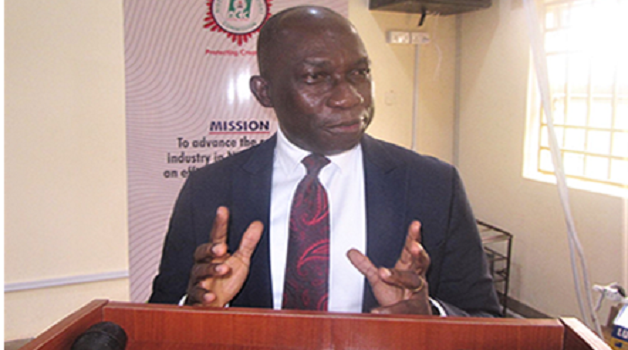
Dr. John Asein, director-general, Nigerian Copyright Commission (NCC), has charged universities to leverage Intellectual Property (IP), innovation management and research commercialisation to build vibrant, sustainable and globally competitive ecosystems.

The DG stated this while delivering a paper on: ‘’Research Commercialisation, IP Policy and Innovation Management’’ at the Committee of Vice-Chancellors of Nigerian Universities (CVCNU) organised Business Clinic themed: Unlocking University-Driven Business Ecosystems: Innovation, Partnerships and Sustainable Enterprise Models in Abuja.
The programme was targeted at engaging Vice-Chancellors, principal officers and other key officers in Nigerian Universities in a practical dialogue on how to transit their institutions into thriving business ecosystems through innovation, enterprise development and strategic partnerships.
In his presentation, Dr. Asein, disclosed that Universities are now recognised as engines of national development and innovation hubs that must connect scholarship to business.
He noted that with over 300 Universities in Nigeria, there is need for structured pathways to turn ideas into commercial outcomes while attention should be focused on IP assets in our universities in order to harness them in a safe, sustainable and satisfactory manner.
The DG NCC speaking further on leveraging resources from the creativity locked up within the university system, harped on the need to harness the soft power of our youth as Nigeria’s most valuable natural resources are its people.
Drawing demography from Nigeria youthful population, he observed that over 70 percent of Nigerians who are under the age of 30 are mostly in the university system studying. These youths, he noted, shape cultures, technology and innovation through creativity and digital skills.
He tasked universities to become innovation factories where young people can explore ideas, protect their IP and grow startups by integrating innovation culture, entrepreneurship training and IP awareness into its learning environment.
He equally urged Universities to look beyond the sciences to commercialize traditional knowledge-based innovations and harness the potentials in the creative arts disciplines like music, visual arts, theatre arts and others for commercial outcomes.
Dr. Asein, recommended that universities as centres of learning, should take the lead in using the IP system for promoting education and learning, wealth creation, revenue generation and institutional development.
Underscoring the need for all universities to have an IP Policy, he noted that the Model developed by the Nigerian Copyright Commission in partnership with the CVCNU is a good starting point.
The Secretary-General, CVCNU, Prof. Andrew Haruna, presented the welcome address at the event while the Director, Technology Innovation and Commercialisation, NOTAP, Mrs. Adah H.N. Mokolo-Oladunke represented the Director-General, NOTAP at the event.
The 2025 CVCNU Business Clinic witnessed attendance from representatives of Public and Private Universities across the 36 States in Nigeria.


Drone
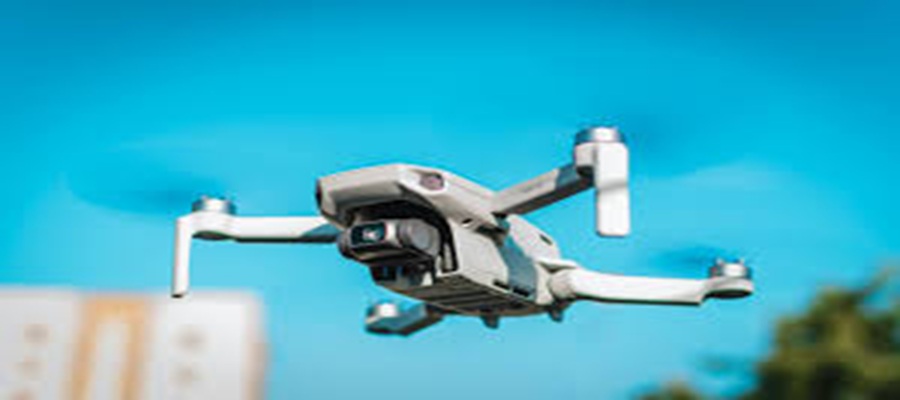
The US Department of Homeland Security (DHS) will invest $115 million in counter-drone technology to safeguard the 2026 FIFA World Cup and events marking America’s 250th independence anniversary, creating a dedicated office for rapid drone system deployment.
Homeland Security Secretary Kristi Noem described drones as “the new frontier of American air superiority,” stressing the need to counter threats from drug cartels using unmanned aircraft for smuggling and surveillance, alongside incidents like a 2025 NFL stadium drone flight and 2024 New Jersey sightings.
The funding supports 11 World Cup host cities expecting over one million visitors, building on FEMA’s $250 million grants to those states and addressing risks heightened by cartels’ advancing tech, including a reported FBI tracking plot in Mexico.
DHS has conducted over 1,500 counter-drone missions since 2018, with the new Program Executive Office accelerating acquisitions amid President Trump’s border security push.
Broadcasting
Youth Talent Takes Center Stage as T2 Ignites High-Octane Rap Battles @ Carnival Calabar

The energy at the Carnival Calabar Music Concert reached a new high as T2 introduced a first-ever rap battle platform, giving young Nigerians an electrifying stage to showcase their talent, creativity, and self-expression while competing for exciting prizes.

Held at the U.J. Esuene Stadium, the activation blended pulsating music, vibrant culture, and youthful energy into a dynamic celebration that kept thousands of carnival-goers fully engaged from start to finish.
Eight fearless contestants stepped into the spotlight, going bar for bar in an intense lyrical showdown. Rappers fused local languages, pidgin, and sharp punchlines, creatively weaving the T2 brand into their verses.
Anchored by the energetic hosting duo MC Double I and MC Princess, the rap battles thrilled over 16,000 attendees, including the Governor of Cross River State, Senator Bassey Otu, delivering an unforgettable showcase of youth talent and cultural expression.
With prizes including fridges, gas cookers, sound systems, and airtime top-ups, the competition remained fierce throughout the night. After two high-energy rounds narrowed the field to a five-man final duel, Emmanuel Eye emerged as the overall winner, taking home the grand prize — a fridge.
“I never expected this at all,” Emmanuel said. “I came to the concert like anyone else, and hearing about the T2 rap battle was a surprise. When I got the chance to perform, I just went for it. Being named the overall winner is amazing, and I’m grateful to T2 for creating this platform to showcase our talent.”
Beyond the stage performances, T2’s presence added a digital layer to the carnival experience. As part of its role as Digital Technology Partner of Carnival Calabar, the brand introduced the MyT2 App as a lifestyle companion, while also enabling line reactivations, airtime top-ups, and instant rewards for hundreds of attendees, blending technology seamlessly into the live celebration.
Commenting on the activation, Chinelo Manefo, Specialist, Events and Sponsorship at T2, said:
“The energy from both the rappers and the crowd was incredible. This platform reflects exactly what T2 aims to create — a celebration of youth, creativity, and culture, enhanced by technology that connects people and experiences. Seeing the audience so immersed shows how music and performance can empower the next generation.”
The Carnival Calabar Music Concert, headlined by Tiwa Savage, Timaya, and top local performers, was further energized by T2’s interactive rap battle platform. By blending music, culture, youth expression, and digital innovation, T2 reinforced its commitment to championing Nigeria’s next generation, giving young creatives a stage to shine while enriching how they experience the festival.

PalmPay User Shares Experience on Fintech Apps to Trust in Nigeria

Stakeholders Demand Stronger Governance and Infrastructure to Drive Tech Adoption @ Lagos AI Summit

Nigerians Target Self-Improvement, Business Startups in 2026 Google Data

35 Million Nigerians Face Acute Hunger in 2026, UN Warns

How Inside Jobs and Policy Shocks Trigger Nigeria’s Rising Loan Crisis

Banks quietly move to enforce new ₦50 transfer levy from Jan. 1

Jumia CEO says Black Friday Signals Nigeria’s E-Commerce Maturity

Galaxy Backbone Celebrates the Federal Government’s Paperless Civil Service Milestone

19 Nigerian Banks Meet CBN Recapitalization Targets Ahead of March Deadline

Nigeria’s Internet Usage Hits 1.24m Terabytes – NCC




 E-Business3 days ago
Firm Detected a Scam Exploiting OpenAI’s Teamwork Features

 E-Financial3 days ago
MoMo PSB Expands Cross-Border Transfers Across Africa

 Broadcasting3 days ago
DG NCC Tasks University Dons on Research Commercialization, IP Management to Build Global Competitive Ecosystems

 E-Financial3 days ago
Banks to Cut Fraud Response Times to Under 30 Minutes

 Telecom3 days ago
FG Expands 3MTT Programme Across the Country

 E-Financial1 day ago
Zenith Bank Gets Regulatory Approval for Full Takeover of Paramount Bank

 Telecom2 days ago
MTN Nigeria Suffers 9,218 Fibre Cuts in 2025 as Vandalism, Theft Cripple Network

 E-Business1 day ago
Firm Detected a Fivefold Surge in QR Code Phishing Attacks in the Second Half of 2025