

General News
EFIna Has Impacted Financial Inclusion Stakeholders- Ladipo


Modupe Ladipo is the CEO, Enhancing Financial Innovation & Access (EFInA), an independent, professional, non-profit organization conceived and funded by DFID and Ford Foundation.
EFInA’s mission is to make the Nigerian financial system work better, especially for the poor. Modupe previous work experience has primarily been within Investment Banking in the UK and she has has over 20 years financial services experience covering corporate strategy & development, product & markets development, mergers & acquisitions, retail and institutional brokerage.
She has worked for Tata Consultancy Services, Merrill Lynch, ABN AMRO, the London Stock Exchange and Credit Suisse Financial Products.
Modupe talks about EFInA and sundry issues in this interview with peter ugwu
EFIna’s Achievements in Last Seven Years
At EFIna, we focus on four main pillars that include; research, advocacy, capacity building and innovation fund.
Through-out our lifetime as EFIna, we want to promote financial inclusion in Nigeria. So, if we look back on what we have achieved in those four pillars and in moving the wheel for financial inclusion in Nigeria, we have actually achieved a lot with support from the industry.
The supports are coming from both the regulator and the service providers. From the regulator’s point of view, we were recently commissioned to conduct a research; measure the impact of relevant financial inclusion approaches as part of measures to deepening financial inclusion in the country.

EFIna’s Four Main Pillars
We have reviewed nine policies and eight came to play after EFIna was structured. In fact, EFIna had a very direct impact and involvement in the development and finalization in reviewing those policies and regulations.
Sometimes, we supported the regulator in sharing and disseminating composite information about some policies. That is part of the Advocacy piece of our work; which anchors on providing an enabling environment in such that players can come up with relevant products and services.
Then, for us Capacity Building is really imperative, because it’s a new area. Thus, both the regulators and the providers must improve; so that, one is not misleading the other.
Because, you can have regulations that providers might not agree with and such scenario creates logjam to development. Sometimes, if the providers are ready and there are no regulations, they cannot launch a particular product.
So, we work in tandem with both sides through conferences, workshops, and a lot of direct capacity building for individual companies to actually bring them up on a whole range of topics: mobile payment, agents banking; and other strategic measures to ensure the industry is well vest with its responsibilities.
Other Financial Inclusion Support Approaches
We do this by using data, conducting research and inviting keynote speakers who have experience working in this field. Also, we bring another provider or regulator to talk to us about and how they have actually done it.
As part of the advocacy, we have two working groups EFIna set up in EFIna secretariat, namely, Non-interest Finance Working Group, which constitutes: when we want to bring alternative or additional financial service or product.
The Group has been working since 2010. In the working group, we intend to have both regulators and operators as members. That way we can get in tandem; and it provides opportunity for the regulators to say, ‘this is what they are thinking about’, and for direct input from the market players to either support or seek ways for amendments.
Some regulators and few market operators are interested in that space. We also have Mobile Money Working Group which started in 2012. That again, it is about bringing together regulators and market players to really discuss on opportunities, and challenges.
For instance, when we started the non-interest group, none of the regulators had regulations in their respective segments; CBN, PENCOM, NIDC or NICOM none of them had regulations. So, we started with ‘blank sheet of paper’, and we sat down to look at the ways to go. We are happy that presently PENCOM has multi-fund guidelines; NIDC has set up their non-interest deposit insurance; CBN has guidelines; NICOM has its own way of doing it. We were involved in developing each of those guidelines or regulations and their capacity. On the operators’ side, we have seen very significant improvements, because they are better informed.
They have launched a lot of services; the Securities and Exchange Commission also sits on our non-interest finance model; now, they have come up with regulations. So, it has taken a lot and after about five (5) years and in our last meeting in December, the Group is now looking at how to sustain its operations via membership who will pay a contributory fee.
EFIna and Sustainability of Financial Inclusion in Nigeria
If we look at 2008 when we did the first survey, only about 21.7% adult population was banked. We addressed some of their concerns: the barriers, supply and demand sides. From the consumer side you see issues like irregular income, high minimum balance, charges, and a whole of issues we were battling with.
The supply side was basically ‘the cost of service to customers is too high’, ‘we cannot recoup what we spend on them, therefore, we are constantly losing money’. And financial inclusion is all about sustainability. If yours is a loss-making venture, you cannot sustain it….
…But You Can Break Even At A Point?
Of course, you may break even for some time, but incurring losses could impoverish you. In other words, we were out to understand both sides and see how we can support them.
So, through our Innovation Fund, we gave grants to organizations as incentive to them. So, if you are planning to develop products and services aimed at the low income segment and relevant to their needs, we can support in two different ways.
We can do that at a Technical Assistant grand level, which is ‘I have an idea. I want to test, pilot it, refine it and I need support’.
We can give a grant on that level at $250,000 Or you have tested, piloted and ready to launch; again, a financial product targeted at low income earners, we can help in the implementation, nurture, launch or roll out.
We can give up to $2 million. So, those are not for individuals, not for lending rather for developing relevant products and services. In that, we see sustainability. So far, we have seen progress.
Results So Far
Based on data we have launched since 2008 to 2014, in terms of number and population, we added 25 million (customers) to the banked segment. And that is a lot, we are looking at the sizes of some African nations.
And it takes a lot to achieve such feats. For the banks, you talk about Know Your Customers (KYC), mobile agents, regulations. In fact, every regulation has paid its role in trying to get us to where we ought to be.
The providers have also considered ways to cut their operational costs. So, you wouldn’t want to go and build a branch in the middle of a rural area, where you get 10 customers. So, how else can you support the rural dwellers, who also are in dire need of the financial services that are not so costly?
That is when the Agent Banking Regulations came up in 2013. What the concept means is that, those ‘mums’ and papas’’ shops can be used as agents by banks; in such that when you go there you can conduct certain banking transactions.
The challenges rural dwellers are facing are obvious. For instance, if it will cost N200.00 to visit the nearest branch of a bank, probably to go and deposit N500.00, it doesn’t make (savings) sense. We hope Agent Banking will address that issue with time.
People talk about M-pessa. It took the operators three years to break even; get volumes. It was only towards the end of 2012 that mobile money licences were given in Nigeria; we are coming to our three years. To us, it is like a reflection point. So, till last year, the things that needed to be done are such as customer awareness.
Evolving Trends in Financial Inclusion (Services)
In our last year’s survey, some of the respondents are still asking questions like, ‘what do we need mobile money for?’ And the kind of things they talked about, you cannot currently use the products to execute them.
So, that might be why it’s still not getting the expected attractions. For example, people are asking if they can use the platform to pay school fees, hotel bills, ‘pay for my boss fares’, among others.
So, if we do not have such platform available now, they are not likely to use it. None of them talks about money transfer, because we have many ways of transferring money in Nigeria.
Even if it is not the automated process, you see people go to motor parks, send the money through the drivers or through friends, family members; some send airtime and you go and cash it at a discount.
So, because we have so many other ways of dealing with cash transfer, which they didn’t have in Kenya and some other African countries, it is either post office or a bank account; then if you don’t have access to either of the two, you will be subject to sending it through a family member, so, each country is different.
We should focus on our differences and not try to replicate what is obtainable elsewhere verbatim. By the time it can be used to pay bills or transport fares, and then the more people will use it.
In Nigeria, most people tend to wait for others to testify about the operational competencies of a particular phenomenon before they ‘rush’ to embrace it. That is the kind of stage we need to get to increase the uptake and adoption rate of mobile money.
Comparing Nigeria to Other African Countries’
Probably, our growth rate is slower, but we are catching up with the trend and we have more numbers. It is about really finding what it takes to get to the peak. I am confident that with the data we have just gathered; because we have not asked such questions before, we will soon get there.
The data are telling us about something. We only need to sit down with our mobile money group and make the data available to them to work on. Topical will be how to address the raised points, because it is about the customers; their satisfaction is paramount. We will identify channels to help us scale up the process.
Roles Of Post Offices & Agent Banking
Actually, a lot of people would say they don’t really know where the Agents are; neither can you open up a database that shows us where the stations nor shops are. That first, is a bit difficult. As part of our survey this time we asked questions like, ‘Is there a petrol station near to you? Is there any post office around your area? Or do you have a ‘provisions’ shop near to you? Can you identify a restaurant near to you? The questionnaire was meant to give people ideas about where they can go and establish agents presence, so they can be as close to the customers as possible. So, they are beginning to roll out. The problem those establishing the agents are battling with is as per how many transactions you can be able to push to the agent for sustainability. Although, the agents have their core businesses but you have to train them.
Some of them (agents) expressed concern that should they fix a bank’s signage on the roof of their shops that people might have the notion they are keeping large amount of money. So, there was a lot of discussion around security and how we can have insurance cover for them.
The truth is that for the rural areas we just have to come up with strategies about how to penetrate those areas. With the agents, we can achieve that; but we need to be claver about how we do it. Post Offices offer us an option. But there are only about 5,000 of them.
CBN & Partners’ Efforts
The CBN and the Bill and Merindagate Foundation are mapping out the potential and current access points. And they intend to map out motor parks, and some other points. The result is expected in April this year.
They did similar exercise few years ago. They added markets this time. Although they did mapping in motor parks before, but they shave more questions to address. That will help; give ideas as the potential outlets are situated.
Secondly, they will map commercial and microfinance bank branches, mobile money outlasts, etcetera. They are doing it all over Nigeria and the map can show you where there are, ‘nothing’ at the moment or maybe just one and other areas have everything. So, you will begin to see where supply is an issue. From our end, we can look at demand, because we have asked questions about those who don’t have accounts and would like to open.
We have actually seen high level of ‘yes, I would like to have this or that’. The numbers are in the region of ten to fifteen million. Some of them are concerned about how it benefits them or how to access it or use it.
So, financial education or literacy is very important. A lot of people do not, yet, understand the benefits of certain products.
Also, having a robust customer-challenge-redress mechanism is very important; ‘if I have a problem, who do I go to? Those are the things we see that before people will start dabbling into the process, they need to fully understand.
Incentives for Operators
Government can digitize payment systems. Government can say for example, you can pay your taxes through your mobile money. We have seen that happen in Cameroun. If there is a property tax, it can be used as a pilot scheme.
Afterwards, we will learn from the mistakes, readdress them and move other payments to the digital or mobile platform. If you want to pay cash you can as well go to the bank and pay through the mobile. So, if government can give that as a sort of mirage, it will help.
There are other conditional transfers-where they give money or benefits to certain loyal-privileged homes, they can increase the trend. They are actually doing it with a kind of program between mobile money operators and certain departments of the Government like the Ministry of Health. Then, they will publish the result on what worked, how it worked, and what the issue is.
Connectivity
The challenge people talk about is network failure. The issue of drop calls; you send an SMS and it’s not delivered. For instance, if somebody had paid money into your account and you are expecting to get an alert, yet it didn’t come.
Someone might send a partner to purchase goods in a particular shop with a promise to transfer the money to your account. If that didn’t deliver, I might be thinking you are trying to be claver and vice versa, because I might think you got it and lied.
How mobile money operators address that issue is very important too. If they, the telcos are to take the responsibility, let them address the challenge. For instance, we still need to extend network coverage to certain rural areas; use multiple channels or mobile shops like the PoS, it will become more ubiquitous.
EFIna, E-Tranzact Mobile Money Activation Project
E-Tranzact is one of our guarantees. Like I explained earlier, we give grants for innovations. So, we gave them a grant to do some work in Kano and Ogun States. They will try to demonstrate how market women, for instance, can pay each other for goods and services through using the mobile phones. They have made progress on the project.
The fund was based on combined efforts of EFIna and E-Tranzact. They had a little challenge in Kano State, because of the security related issues. In Ogun State, they have made fair progress in terms of recruiting agents, customers.
So, there was a lot of customer awareness they had to do. They also give incentives to customers, motivating them to participate and continue to use the channels afterwards. The pilot phase is coming to an end. We will see if they will continue when the incentives are withdrawn. We have other guarantees operating in many jurisdictions in the country.
EFIna’s Expectations In 2015
We hope that financial inclusion will continue to be at the forefront for the banks and providers to add value to their customers.
While the banks will continue to see they have to diversify, the customers will see the need to embrace the platforms. With the drop in oil price and the devaluation of the Naira, they (the banks) have to think of other ways to generate revenue, increase their customer number with different products and services. So, we see it as a major opportunity to really focus on what need to happen to deepen financial inclusion.


Anambra State Government says it is exploring partnerships with the Federal Government and other stakeholders to extend digital connectivity to underserved rural communities across the state.

The Managing Director and Chief Executive Officer of the Anambra State ICT Agency, Mr Chukwuemeka Fred Agbata, disclosed this during a virtual media engagement with journalists on Thursday.
Agbata said rural connectivity remained a major challenge because telecommunications operators were often reluctant to invest heavily in communities where network deployment might not be commercially viable.
He said the state was willing to explore opportunities to leverage Federal Government infrastructure and the Universal Service Provision Fund (USPF) to extend connectivity to underserved communities.
“We understand what digital inclusion means because we are dealing directly with these communities,” Agbata said.
According to him, the objective is to ensure that rural residents are not excluded from the benefits of digital government and the wider digital economy simply because of where they live.
Agbata said the effort formed part of the state’s broader digital transformation agenda, which is targeting deeper digitalisation of government services and a more digitally enabled business environment by 2030.
He said the second phase of the agency’s digital transformation agenda would focus on e-governance, digital infrastructure, smart government and the use of emerging technologies to drive development.
“My core vision is that we would have digitised every single government entity in Anambra State,” he said.
The ICT boss said the digital transformation agenda would extend beyond government ministries, departments and agencies (MDAs) to businesses and residents across the state.
He said the agency was already developing websites for government MDAs and transforming them from mere information platforms into channels for delivering government services.
“We are building websites for all the MDAs. We are also automating them to be able to carry out services and give government support and government services through their websites,” he said.
Agbata said the initiative would reduce the need for citizens to physically visit government offices to access basic services.
He said the Smart Anambra platform had already demonstrated growing demand for remote access to government services.
According to him, the platform recorded about 14,000 visits between July 9 and July 29, averaging approximately 700 visits daily, despite limited publicity.
He said the data indicated that residents were interested in accessing government services online, including applications, permits and identification-related processes.
“What the data is already showing us is that we really need to build a system that allows people to actually get government services remotely,” Agbata said.
He explained that the objective was to allow residents to initiate processes online, complete forms remotely and only visit government offices where physical presence was eventually required.
This, he said, would reduce the time and cost citizens spend travelling to Awka or other government offices to access services.
Agbata said services in areas including hospitals, schools and other government processes were being connected to Smart Anambra.
Anambra Targets 2030 for Digital Government
Agbata said the state’s 2030 target was to deepen the digitalisation of government services and create an environment where businesses could increasingly operate within the formal digital economy.
He said the agency was working with the Ministry of Commerce to promote the formalisation of businesses, particularly SMEs and businesses operating in major markets.
“One of the biggest challenges that we have is that SMEs are not formalised enough,” he said, adding that the agency was exploring partnerships to address the challenge.
The ICT agency boss said the transformation would be gradual because major government initiatives required the necessary approvals and resources.
On the possibility of making Anambra completely paperless, Agbata disclosed that the State Executive Council was already operating a paperless system.
He, however, said the entire civil service might continue to operate a combination of digital and paper-based processes for some time because of the complexity of government operations.
“What might happen is a dual situation,” he said, adding that selected MDAs could be used as pilots for deeper digital transformation.
Agbata also disclosed that the Anambra State ICT Agency had commenced the deployment of a locally trained artificial intelligence (AI) system to automate its operations and explore applications in governance, revenue management and public-sector productivity.
He explained that the agency did not develop a frontier large language model from scratch because of the huge computing and financial resources required.
Instead, he said, it adopted an open-source model, modified it and was training it for specific local use cases.
“We have started doing our own local AI system. It is an open-source system, so we didn’t build our own frontier model. We basically looked at open source and modified it, and we are training it,” Agbata said.
He said the system had already been deployed to automate the agency’s operations end-to-end.
“We have used it to automate our agency end-to-end. Everything that we do now is currently automated,” he said.
Agbata said the agency was exploring how the model could be applied across other areas of government to improve productivity, address revenue leakages and strengthen governance.
He said the AI initiative formed a major part of what he described as the agency’s “2.0” phase following his reappointment by Gov. Chukwuma Soludo.
According to him, the second phase would build on achievements in infrastructure, capacity development, e-governance and smart government while placing greater emphasis on AI and emerging technologies.
Agbata also said the state’s free public Wi-Fi initiative remained operational, stressing that the programme was introduced before the electioneering period.
“The free Wi-Fi didn’t start as a political thing, a campaign thing. It started way before the campaigns,” he said.
He explained that the strategy was adjusted during the campaigns to enable residents to follow the governor’s activities and participate in live engagements while on the move.
According to him, existing Wi-Fi locations, including facilities at the state Secretariat, remain operational, although occasional downtime occurs, particularly during periods of adverse weather.
“There are downtimes now and then because with the rains and all of that, these things have their uptime and their downtimes, but it is still very much available,” he said.
He disclosed that there were currently no plans to establish additional Wi-Fi locations, noting that existing sites were still providing services.
Agbata said the state would continue to develop digital skills and education programmes, including Smart Schools and other capacity-development initiatives.
He also called for stronger collaboration among government, technology companies, telecommunications operators, local technology manufacturers and other stakeholders to accelerate the state’s digital transformation.
He cited the procurement of about 2,000 computers supplied by indigenous technology company, Zinox, as an example of the state’s engagement with local technology providers.
Agbata said the agency would remain open to partnerships capable of supporting Anambra’s technology agenda.
He said the ultimate objective was to build an Anambra where residents and businesses could increasingly interact with government digitally, while technology becomes a central driver of economic development across the state.

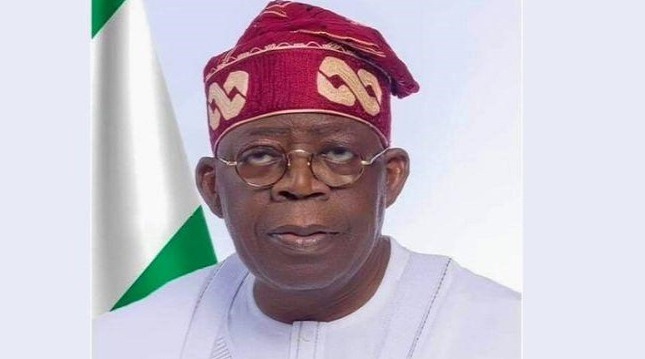
United States Government has said that Nigeria is not making significant progress in fiscal transparency, referencing gaps in the country’s budget disclosure, expenditure reporting, public procurement transparency and audit processes.

The assessment is contained in a report by the United States Department of State, which reviewed Nigeria’s fiscal transparency practices in its 2026 fiscal transparency report for countries published on Tuesday.
The report noted that the US government stated that Nigeria made some key fiscal documents available to the public, significant shortcomings remained in the disclosure of budgetary information and the management of public finances.
The report noted that “the government made its enacted budget and end-of-year report widely and easily accessible to the public, including online, but did not publish its executive budget proposal within a reasonable period.”
It also stated that while the Nigerian government had made information concerning the country’s debt obligations publicly available, its budget documents failed to provide a comprehensive picture of government revenues and expenditures.
“The government made information on debt obligations, including major state-owned enterprise debt, publicly available, but budget documents did not provide a substantially complete picture of the government’s revenues and expenditures, or break down expenditures to support executive offices in the budget,” the report stated.
The US government further raised concerns about discrepancies between Nigeria’s approved budget and the actual revenues and expenditures recorded during implementation.
It said, “Actual revenues and expenditures did not reasonably correspond to those in the enacted budget.”
The report also criticised the country’s supreme audit institution, stating that it did not meet international standards of independence and did not publish substantive reports, although it had access to the entire executed budget.
“The supreme audit institution did not meet international standards of independence or publish substantive reports but did have access to the entire executed budget,” it stated.
The assessment, however, acknowledged that Nigeria’s sovereign wealth fund had an adequate legal framework and disclosed information about its funding and the general approach to withdrawals.History
“The sovereign wealth fund had a sound legal framework and disclosed its source of funding and general approach to withdrawals,” the US government said.

The World Bank Group is supporting the expansion of Africa’s digital commerce infrastructure to help small businesses reach new markets, create jobs, and strengthen economic opportunities across the continent.

Through Jumia, Africa’s leading e-commerce platform, the investment is expected to enable approximately 60,000 local annual active sellers to participate more fully in the digital economy, support around 1,800 direct jobs, and create income-generating opportunities for more than 100,000 independent sales agents.
As digital commerce continues to grow across Africa, reliable access to online marketplaces, logistics networks, and digital payments are becoming increasingly important for entrepreneurs and small businesses seeking to expand beyond local markets. Strengthening this infrastructure can help firms increase sales, improve productivity, and connect consumers with a wider range of affordable goods and services.
To support this effort, the International Finance Corporation (IFC), the private sector arm of the World Bank Group, is investing US$25 million in equity in Jumia Technologies AG (Jumia), Africa’s largest public e-commerce platform. The investment will support Jumia’s next phase of growth across its core African markets, strengthening its integrated marketplace and logistics network.
By expanding access to digital commerce tools and services, the investment will help businesses grow, improve price transparency, and contribute to more inclusive and resilient private sector development across Africa.
“The support of the World Bank Group is a milestone for Jumia and for African e-commerce more broadly. It validates both the discipline we have brought to our business in recent years and the tangible impact our platform has on small businesses, jobs, and consumers across our eight markets. With partners like the IFC, we can accelerate the digital commerce infrastructure Africa needs” said Francis Dufay, CEO of Jumia.
“Jumia demonstrates how pan-African e-commerce platforms can expand economic opportunity at scale. Our investment supports the company’s next phase of growth while contributing to create jobs, digitizing supply chains and distributions channels and mobilizing private investment” said Farid Fezoua, Director for Equity, Funds, and Venture Capital at the International Finance Corporation, World Bank Group.

Airtel Nigeria Adds Over 1,000Cell Sites in Nationwide Expansion to Surpasses 17,000

MacOS Users Report More Cyber Threats than Windows Users – Survey Reveals

Mastercard, TeamApt Collaborate to Expand Digital Payments Across Africa

Access Holdings Sets New Benchmark in Nigeria’s Finance Talent Pipeline

Anambra Seeks Digital Inclusion in Rural Communities

EFCC Busts NIS Visa Overstay Racket, Uncovers N700m in an Account

Fact-Check: Elon Musk’s “Tesla Pi Phone” is Internet Rumor

NBC Tasks Broadcasting Stations over 2028 DSO Global Deadline

NBC Scraps Annual Digital Access Fee on DSO

Glo Sponsored African Voices to Feature Netflix’s “The Polygamist” Stars




 Telecom2 days ago
ipNX Joins Calls for Innovation-Friendly Ecosystem and Stronger Local Opportunities at Regenesys AI Summit

 E-Business2 days ago
NDPC Probes UNILAG, Lotus Bank, Hackerbella over Alleged Students’ Data Misuse

 E-Financial2 days ago
KudiWave Asks for Clarification over N750m Transfer from PalmPay Account

 News2 days ago
PalmPay Reinforces Commitment to Youth Empowerment on International Youth Day

 Telecom2 days ago
NCC Reports over 5,000 Fibre Cuts in 6 Months

 Telecom2 days ago
Google Selects Six Nigerian News Creators for Emerging Voices Growth Lab

 E-Financial2 days ago
Nigerians Borrow More to Buy Homes as Mortgage Demand Climbs – CBN

 General News2 days ago
NUPRC Warns of Counterfeit, AI-Generated Appointment Letters