

General News
Election Tensions Raise Fear of Nigeria’s of Break-Up

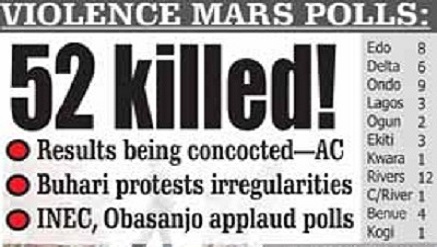
As Nigeria approaches its most divisive and closely fought election since the end of military rule in 1999, its leaders are having to reassure voters that Africa’s most populous nation will remain in one piece, according to Reuters.
The Feb. 14 vote pitting President Goodluck Jonathan, a Christian popular in his southern oil-producing Niger Delta region and in the east, against former military ruler Muhammadu Buhari, a Muslim favored in the north and religiously mixed southwest, is already proving violent, with the electorate in Africa’s biggest economy more polarized than for decades.
“Despite the much-vaunted fear that our nation may not survive the elections … I remain optimistic that we have … the maturity to rise above the challenges,” Senate President David Mark told parliament last week.
“Our nation will not disintegrate after the elections.”
Ever since 1914, when Britain carved Nigeria out of a swathe of West Africa that was home to diverse peoples speaking more than 500 languages, it has been dogged by the question of how viable it is as a unified nation state.
Reuters said that, most analysts say that even if serious bloodshed follows the election, as many expect, the worst-case scenario of a break-up of a country of 180 million people remains unlikely.
“Nigeria has an enormous capacity to absorb risk,” the International Crisis Group’s Africa director Comfort Ero said. “While there are significant concerns about the elections, we are not predicting break-up.”
However, she added that the republic was “in deep trouble, probably more than at any time since the end of military rule … or even the civil war.”
The last time a bit of Nigeria tried to secede, it triggered the 1960s Biafra civil war in which more than a million people died. After that it seemed Nigerians were better off together.
But as the election cycle has hotted up, some have floated the idea of division, and Boko Haram insurgents controlling territory the size of Belgium in the northeast are waging an increasingly bloody campaign for a breakaway Islamic state.
Separately, dozens of people die every month in ethnic violence in the Middle Belt, where the largely Christian south and mostly Muslim north meet across a patchwork of minority groups that are likely to be split between the two candidates.
“Nigeria is bursting at the seams with ethno-religious … problems waiting to explode,” columnist Bayo Oluwasanmi wrote in the African Herald Express, a local daily, last month.
“Competition in the coming 2015 presidential election could break the already tattered ties that keep Nigeria whole.”
That is probably hyperbole but there are signs the elections could trigger violence that may not be as easy to quell as in 2011, when Buhari’s loss to Jonathan triggered three days of riots in the north that killed 800 and displaced 65,000.
Besides regional and ethnic differences, Buhari is also a protest vote for many who say Jonathan has failed to tackle insecurity and corruption, Nigerians’ two biggest complaints, and who was seen as tough on both when he ruled in the 1980s.
The pair hugged as they signed a peace pact last week, but clashes between thugs from the ruling People’s Democratic Party (PDP) and Buhari’s opposition All Progressives Congress (APC) have marred campaign rallies, and the rhetoric remains poisonous and sometimes tinged with religion.
Last year the PDP accused the APC of a “devilish plot” to impose an “Islamic agenda” on Nigeria, a dangerous appeal to religious sentiment, while Jonathan has played up his Christian identity, forging ties with hardline evangelical pastors.
PDP state governor Ibrahim Shema had to retract a speech in November in which he described APC supporters as “cockroaches” and urged the crowd to “crush them”, a chilling echo of Hutu militia radio broadcasts during the 1994 Rwandan genocide.
On the other side, APC governor Rotimi Amaechi said this month that if the poll was not fair, the opposition would set up a “parallel government”, as happened after a disputed election in Ivory Coast in 2010.
“If they deny Buhari victory, it could mean civil war because both sides are so dug in,” prominent northern opposition politician Mohammed Junaidu told Reuters.
The 2010 Ivory Coast election did spark a civil war but the country was already militarily divided, which Nigeria is not.
In Kenya in 2007, a disputed election triggered three weeks of ethnic bloodshed that killed 1,200, a toll that would be far higher in Nigeria where there are many more people and weapons.
Ultimately what makes these polls so dicey is that they are a genuine contest, said John Campbell, a former U.S. ambassador to Nigeria and fellow at the Council on Foreign Relations.
By running in 2011 Jonathan broke an agreement with northern elites, in their minds at least, that it was the north’s ‘turn’ to field a president. Now such regional deals are in tatters.
“In the past there has been a kind of consensus among the people who run Nigeria … Elections at the presidential level were largely predetermined,” Campbell said. “What we are talking about now are real elections, with a polarized electorate.”


The Nigerian Aviation Handling Company Plc has announced the signing of a chain of contracts with major airlines for the provision of total handling solutions.

In a statement on Tuesday, the company announced the signing of contract renewals with Air France, KLM and Virgin Atlantic, as well as the African operator, RwandAir.
NAHCO also signed fresh contracts with United Nigeria – Regional, Bellagio and Malaikair.
According to the statement, the contracts with Air France and KLM are for three years and will run till 2028, respectively. The duration of the contract with Virgin Atlantic was also put at three years.
The duration for the RwandAir contract is for three years, effective 1 October 2025.
The statement read, “The new contract with United – Regional would be for a period of five years, effective from 1 August 2025. For Bellagio and Malaikair, the contracts are for three and five years, respectively.
“Bellagio Air, Nigeria’s rising star in aviation, is redefining air travel with a blend of luxury, efficiency, and reliability. Headquartered in the vibrant city of Ikeja, Lagos, Bellagio Air is committed to providing world-class service across key domestic and regional routes.”
The Group Executive Director, Commercial and Business Development, NAHCO Plc, Saheed Lasisi, who expressed his delight with the new contracts, said NAHCO is already ready to exceed customers’ expectations.
According to Lasisi, NAHCO’s more than 46 years of unblemished excellent service delivery puts it heads and shoulders above any other service provider in the industry.
“This is what we have been doing for almost half of a century. We will continue to delight our customers and make our stakeholders happy by exceeding expectations in all aspects of our service offerings. We are always willing and ready to do more,” Lasisi added.
The Group Managing Director/Chief Executive Officer, NAHCO Plc, Olumuyiwa Olumekun, added that with the new fleet of equipment the company is deploying, service delivery will only be better.

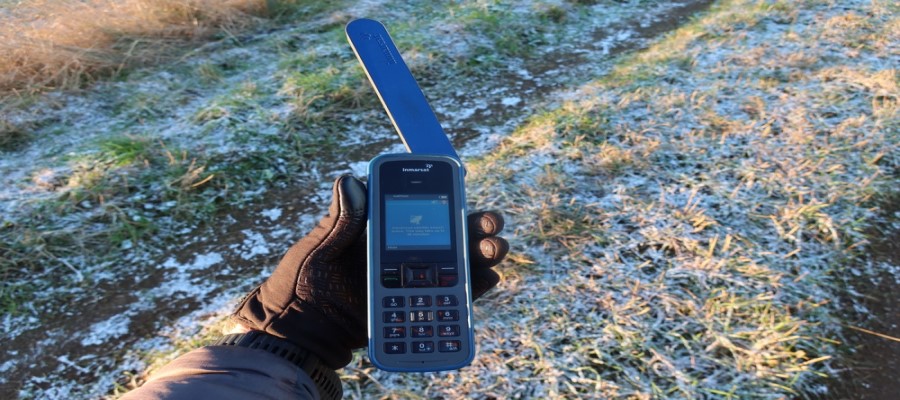
Nigerian Communications Commission (NCC) has unveiled a forward-looking strategy that places satellite-enabled mobile connectivity at the heart of the country’s drive to bridge its long-standing coverage gaps.

The draft Spectrum Roadmap for the Communications Sector for 2025 to 2030 lays out how satellite technologies could help deliver reliable voice and data services to millions of Nigerians who live beyond the reach of conventional mobile networks.
The direction is outlined in the Commission’s draft Spectrum Roadmap for the Communications Sector covering the period.
The proposed approach highlights non-terrestrial networks as a complement to existing mobile infrastructure, especially in areas where terrain, insecurity, or high costs limit the deployment of base stations.
The NCC said D2D satellite technology, which allows standard mobile phones to connect directly to satellites, is gaining traction globally as a means of delivering voice and data services without reliance on ground towers.
According to the regulator, the technology could help close persistent coverage gaps in rural, riverine, and border communities that remain outside the reach of conventional networks.
It also noted that satellite-backed connectivity could improve network reliability by providing alternative links during fibre cuts, power failures, or other disruptions affecting terrestrial systems.
The Commission added that wider adoption of D2D services could support emergency communications, public safety operations, Internet of Things applications, and services such as smart agriculture in underserved regions.
It also pointed to potential investment opportunities through partnerships between mobile network operators and satellite companies, including more efficient use of shared spectrum resources.
Beyond D2D services, the roadmap places emphasis on Low-Earth Orbit satellites to expand broadband access to remote parts of the country.
It also proposes better utilisation of Geostationary Orbit satellites and the exploration of high-altitude platforms, such as stratospheric balloons, to support mobile backhaul and rural connectivity.
The policy signals come shortly after Airtel Africa announced an agreement with SpaceX to introduce Starlink-powered direct-to-cell services in Nigeria.
The NCC’s roadmap is expected to shape future spectrum allocation, licensing decisions, and technology adoption across the telecommunications sector.
General News
House of Reps Releases Certified Copies of Tax Reform Acts amid Gazette Discrepancy Claims

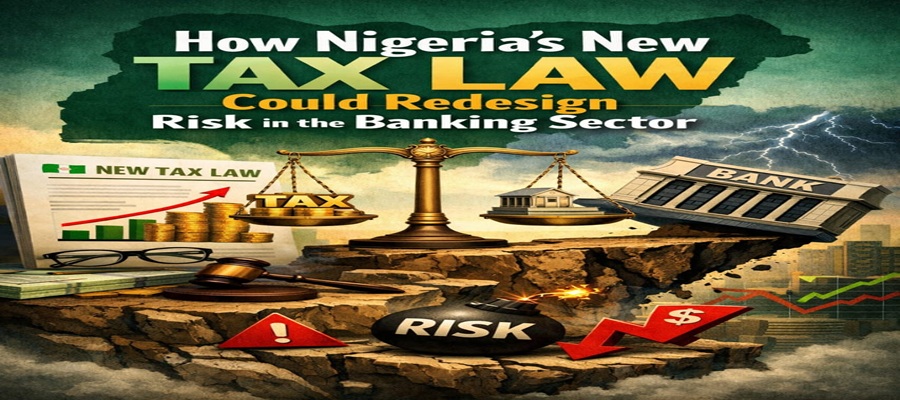
House of Representatives has released certified true copies of the four tax reform Acts signed into law by President Bola Tinubu, addressing public concerns over alleged discrepancies between legislative versions and circulated gazetted documents.

Tax Reform Acts
House spokesperson, Akin Rotimi, disclosed this in a statement, noting that Speaker Tajudeen Abbas directed the immediate publication of the Acts—including endorsement and presidential assent pages—for public verification, in collaboration with Senate President Godswill Akpabio.
The move followed allegations raised by Rep. Abdulsamad Dasuki on the House floor, highlighting inconsistencies between Bills passed by the National Assembly and executive gazetted versions, which he warned could erode legislative integrity and public trust.
Abbas constituted a seven-member ad hoc committee chaired by Rep. Aliyu Betara, with members including Idris Wase, Sada Soli, Adedeji Faleke, Igariwey Iduma, Fred Agbedi and Babajimi Benson, to investigate the alleged alterations, unauthorised circulation and preventive measures.
The committee’s mandate includes probing circumstances around the discrepancies, while Abbas ordered internal verification and public release of certified copies to dispel doubts and safeguard legislative records. Legal experts, tax professionals and civil society had demanded clarification and implementation suspension amid heated debates triggered by Dasuki’s intervention.
The released laws comprise the Nigeria Tax Act, 2025; Nigeria Tax Administration Act, 2025; National Revenue Service Establishment Act, 2025; and Joint Revenue Board Establishment Act, 2025, described as foundational to modernising Nigeria’s tax system.
These reforms aim to enhance compliance, curb inefficiencies, eliminate overlaps and bolster fiscal coordination across federal, state and local tiers, following extensive stakeholder consultations, committee reviews and plenary debates under Abbas’s leadership.
Rotimi reassured Nigerians: “The National Assembly is an institution built on records, procedure, and institutional memory. Every Bill, every amendment, and every Act follows a traceable constitutional and parliamentary pathway.”
He emphasised that only National Assembly-certified versions hold authority, urging the public, institutions and stakeholders to disregard all other circulating documents as unofficial.

NAHCO Signs New Ground Handling Deals

Firm Identifies Global Scam Activity Linked to the Release of Avatar 3

Showmax Unlocks Easier Payments for Nigerian Subscribers via Baxi

Mandatory Biometric Verification for Starlink Users in Nigeria Begins

Ecobank Offsets Repayment of $300m Eurobond Notes

Banks quietly move to enforce new ₦50 transfer levy from Jan. 1

FIRS says NIN, CAC Numbers to Serve as Tax IDs from 2026

Financial Sector Faced AI, Blockchain and Organised Crime Threats in 2025 – Report

PalmPay Launches N400 Million World Travel Carnival, Rewarding Users with Free Global Trips

Minister Claims Bandits Exploit Poor Network, Bounce Calls Off Multiple Towers




 News2 days ago
Court Sends Faleti, Ex-Lagos Director to Jail for Stealing ₦48.9m from Access Bank

 E-Financial2 days ago
Remita Powers over ₦100 Trillion in Payments as Nigeria’s Digital Economy Expands

 News3 days ago
974 Nigerians Face Imminent Deportation from Canada Amid Enforcement Surge

 General News3 days ago
House of Reps Releases Certified Copies of Tax Reform Acts amid Gazette Discrepancy Claims

 E-Financial2 days ago
Why 2026 Must Be the Year Nigeria’s Economy Works for All

 E-Financial2 days ago
Flutterwave Acquires Nigeria’s Mono in $25m-$40m All-Stock Deal

 E-Financial2 days ago
2026: SEC to Review Rules to Incentivise SME Listings

 General News2 days ago
Nigeria Targets Satellite-to-Mobile Services in Draft Spectrum Roadmap