

News
Embrace .ng Domain for Cyber Security-NiRA

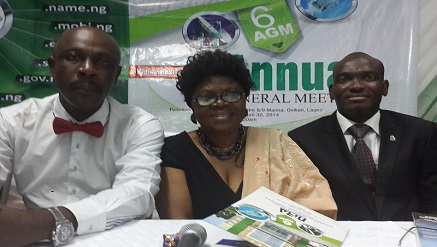
Nigeria internet Registration Association (NiRA) has renewed its bid to ensure more Nigerians and organization register and host their online presence on the .ng domain as efforts to ensure security of e- mails as well as reducing all the fraudulent traffic credited to Nigeria online.
The issue resonated at the 6th annual general meeting (AGM) of the Association held in Lagos on Wednesday, as the Association maintained that the domain is as secured as others across the world.
Similarly, Mary Uduma, NiRA’s president, reiterated that August, 2014 deadline for all Government Ministries, Departments and Agencies to migrate to the government domain of .gov.ng for all government internet activities and official businesses remains on course.
Uduma, who spoke with newsmen at the AGM held in Lagos, said that official email addresses ending in .gov.ng are much more secure than those addresses obtained from the freely available internet services.
She enunciated that most of the fraudulent mail traffics credited to Nigeria are actually not from the country but because there was no official domain and most of the MDAs use free domain, the email addresses could be easily hijacked and used fraudulently.

According to her, if the traffic emanating from Nigeria were contained in the secured government domain of .gov.ng, the activities of the internet criminals could be reduced to the barest minimum, as it is safer, adding that as most of the offices are in unsecured domain it is thus difficult to defend any allegation against Nigeria on fraudulent internet activities.
Uduma hinted that that more than “40,000 .gov.ng email accounts have been created for all principal officers, permanent secretaries, heads of paratstatals, directors and other management staff of various MDAs and new easy to remember domain names being created. This will allow affairs of the site to be run more securely within the national domain space.
NiRA targets up to 250,000 domains hosting for the year 2013, but, according to Uduma “The Migration recorded was impressive as over 5o% of the set target was achieved. She however noted that” The August deadline for all MDA to migrate is not changing.”
To however guarantee secured platform on the .ng domain and security on the internet space, various international training programmes were exposed to Nigerians even as Uduma mentioned Domain Name System Security Extension (DNSSEC) training for the internet body fix for Abuja.
According to the NiRA president, “The Domain Name System Security Extension (DNSSEC) training can strengthen trust in the Internet by helping to protect users from redirection to fraudulent websites and unintended addresses. The DNSSEC training coming up in July in Abuja is organised by NiRA for Nigerians”.
Corroborating Uduma’s views, Akinbo Adebunmi, acting chief operating officer (COO) of NiRA, said, they do more on sensitisation of Nigerians on the importance of registering locally accordingly, even as he stated that it is a means of overcoming the fear to migrate to the country code domain name
“The .ng platform is as secured as any international platform, so we encourage all Nigerians to register their names, company or business names, emails and websites on the .ng. Since its introduction in April last year, the .ng has brought the recognition of the international body, Internet Corporation For Assigned Names And Numbers (ICANN).
“We intend to have road shows, exhibitions and award of excellence as well as have 100,000 Nigerians registered to mark the centenary anniversary of the country, as a way of creating awareness to the general public.” Akinbo said.



INTERPOL’s African Cyberthreat Assessment Report 2026 revealed that Artificial intelligence accounts for 55 per cent of reported cybercrimes across Africa and making attacks faster, more sophisticated and increasingly difficult to detect.

The report warns that the continent’s rapid digital transformation, marked by more than 1.1 billion mobile subscribers in 2025, is being matched by an equally rapid evolution in cybercrime, while fragmented legislation and limited AI readiness among law enforcement agencies continue to weaken responses.
The 40-page assessment, based on survey data from 36 African member countries, said cybercrime has shifted from isolated criminal activity to an industrialised, borderless ecosystem powered by AI.
According to the report, East Africa has become a hotspot for mobile money fraud and ransomware attacks targeting critical infrastructure, while business email compromise (BEC) and romance scams are widespread across Central and West Africa.
Southern Africa, it noted, has become an attractive target for international cybercriminals due to its high level of internet connectivity.
The report also highlighted the growing financial impact of cybercrime across the continent, revealing that losses have more than doubled since 2024, rising from 192 million dollars to 484 million dollars.
It attributed the increase largely to AI-enabled scams, credential harvesting and automated social engineering attacks.
INTERPOL said online scams remained the most commonly reported form of cybercrime in 2025, with criminals exploiting mobile money platforms, social media and AI-generated content to deceive victims.
It added that 72 per cent of surveyed countries reported the existence of scam centres, with the highest concentration recorded in Southern and West Africa.
The report further identified digital sextortion and online harassment as persistent threats, driven increasingly by AI-generated deepfakes and synthetic media.
According to data from TrendAI, one of INTERPOL’s partners, about 600,000 sextortion incidents were detected during the reporting period.
Business email compromise schemes have also become more sophisticated, with AI being used to generate highly convincing email communications.
The report said Africa-based threat actors are increasingly targeting victims in Europe and North America using cyber infrastructure spread across multiple jurisdictions.
INTERPOL warned that the absence of real-time information sharing between banks, telecommunications companies and law enforcement agencies has created significant vulnerabilities in tackling financial cybercrime.
It said cybercriminals are no longer relying solely on stolen credentials but are now creating AI-generated synthetic identities by combining genuine personal information with fabricated details.
These synthetic identities, the report noted, have been used to bypass biometric verification systems, open bank accounts, obtain mobile loans and register SIM cards under false identities.
Neal Jetton, Director of INTERPOL’s Cybercrime Directorate, described cybercrime as one of the most significant criminal threats facing Africa.
“Cybercrime has emerged as one of the most significant criminal threats to the region. AI is automating every stage of a cyberattack from reconnaissance and phishing to extortion and evasion.
“However, we see that when countries work together, cybercriminal infrastructure can be identified, disrupted and dismantled,” he said.
Despite the growing threat, the report highlighted progress in strengthening cybersecurity across the continent.
It disclosed that 17 African countries enacted or amended cybercrime legislation in 2025, while Senegal launched an online reporting platform to improve responses to online offences affecting children.
The report also noted that regional capacity-building initiatives are helping to improve long-term cyber resilience.
INTERPOL said four major cybercrime operations conducted in 2025, Operation Serengeti 2.0, Operation Contender 3.0, Operation Sentinel and Operation Red Card 2.0, resulted in more than 1,500 arrests, the seizure of hundreds of electronic devices and the recovery of over 100 million dollars.
To address the growing threat, the report recommended the adoption of standardised digital forensic capabilities, stronger cross-border collaboration, greater investment in AI literacy for law enforcement personnel and formal public-private partnerships to improve cybercrime prevention, detection and response.
The African Cyberthreat Assessment 2026 forms part of INTERPOL’s African Joint Operation against Cybercrime initiative, funded by the United Kingdom’s Foreign, Commonwealth and Development Office, with data contributions from Fortinet, Mastercard, the Shadowserver Foundation, S2W and TrendAI.

Nigerian students will soon design, assemble, test and fly drones as part of their university education, following a partnership between Miva Open University and Abuja-based defence technology company Terra Industries.

The collaboration comes as Nigeria intensifies efforts to develop indigenous capabilities in advanced manufacturing and defence technology, with both organisations seeking to strengthen Africa’s pipeline of deep-tech talent.
The partnership will see students gain hands-on experience in drone engineering and related technologies through dedicated labs and industry collaboration.
The partners will establish robotics, drone and virtual reality laboratories across Miva’s study centres, beginning with a pilot facility in Abuja.
Students will also gain access to industry-led workshops, research opportunities, internships and mentorship in artificial intelligence, robotics, cybersecurity and autonomous systems.
According to the partners, Terra’s engineering teams will work alongside Miva faculty to integrate hands-on hardware training into academic programmes, exposing students to real-world engineering challenges and building industry experience before graduation.
Nathan Nwachuku, co-founder and CEO of Terra Industries, said Africa’s technological future depends on developing engineers capable of building solutions for local challenges.
“The engineers who will build Africa’s future must learn by building. This partnership creates opportunities for students to work with the technologies shaping modern security, infrastructure and autonomous systems,” said Nwachuku.
Miva Open University said the initiative forms part of its commitment to experiential learning, adding that students will have the opportunity to “design, test and fly drones as part of their academic experience”.
The partnership builds on Terra’s expanding role in Nigeria’s defence technology sector. Earlier this year, the company signed a joint venture with the Defence Industries Corporation of Nigeria to localise the production of drones, robotics systems and cybersecurity infrastructure, supporting efforts to strengthen domestic manufacturing and reduce reliance on imports.


Atte Ayodeji, a Nigerian computer scientist,has developed an artificial intelligence algorithm capable of detecting, counting, grouping and generating healthy hair follicles during hair transplant procedures, an innovation that earned him the Best Innovative Technology award.

Atte Ayodeji
Ayodeji also graduated with a Distinction in his Master of Science (MSc) in Computer Science from Birmingham City University on Friday, adding another milestone to an impressive academic year.
Beyond his award-winning hair transplant innovation, the Nigerian researcher developed a system and framework on Explainable Artificial Intelligence (XAI) as a professional responsibility in the diagnosis of lung cancer.
His dissertation received a silver award at the PGXPO2026 Winter, further highlighting the impact of his research in applying artificial intelligence to healthcare.
Sunday Dare, special adviser on Media and Public Communication to President Tinubu, celebrated Ayodeji’s achievements in a post on X, recalling how he first met him in 2019 during his National Youth Service.
“In 2019 when I became a Minister of the Republic, I met a young man of medium height, genteel with penetrating eyes: Atte Ayodeji. His words rarely come out and he could easily be passed by unnoticed. But I noticed him especially when my SA Kemi Areola brought him to me asking my approval for him to do his Youth Service in my office. I approved. From then on he was unstoppable. His brilliance shown and he developed skills beyond his frame.”
Highlighting Ayodeji’s recent accomplishments, Dare congratulated him saying, “Congratulations Atte. I am proud of you!”

NBC Files Fresh Appeal against Judgment Barring it from Imposing Fines on Broadcast Stations

Nigerians Lost N25.85Bn to Digital Payment Fraud in 2025 –CBN

NRS Announces 30 Percent Tax on Corporate Crypto Income

Kaspersky Identifies Cyberespionage as a Growing Threat Across Africa, Others

PalmPay’s Transaction Guard Gives Users More Control, As Fraud Tactics Evolve

NRC, Ponzi Scheme Collapses Resulting Loss of Billions of Naira

From Scarcity to Scale: What Africa Can Learn from India’s Agricultural Transformation

EFCC Busts NIS Visa Overstay Racket, Uncovers N700m in an Account

BON Establishes Six Ad Hoc Committees to Modernize Broadcasting

Tokenization, Blockchain Technology will Transform Financial Institutions – IMF




 News2 days ago
Atte, Nigerian Develops AI Algorithm for Hair Transplants

 E-Financial2 days ago
FCT Court Awards Ex-Customers N15m against Stanbic IBTC over Data Privacy Breach

 E-Financial2 days ago
CBN Exposes over 13,000 BVNs Tied to Fraud as Banks Tighten Security

 News2 days ago
FG to Abolish Subsidies in Power Sector in 2027 – Minister

 General News2 days ago
Dare Tackles Onaiyekan over Criticism of Tinubu, Says Economic is Working

 General News2 days ago
SERAP Asks Tinubu to Probe Alleged N6.79Bn Missing Police Funds, Firearms

 General News2 days ago
Lenacapavir, HIV Injectable Drug Offers Pregnant, Lactating Mothers 100 Percent Protection – Study

 Telecom2 days ago
Starbase Technologies Introduces Yolly, a Reward-Based Social Entertainment Platform