

Telecom
Emergence Communications Centres 5 Years After

Nigeria has poor record of disaster management in spite of the existence of various agencies whose primary responsibility is to effectively respond to disaster whenever and wherever it happens, with the view of assisting the victims.
Among these agencies include the police, fire service, road safety and above all National Emergence Management Agency (Nema), established in 1999 to coordinate activities of all disaster management activities in the country.
Instances are bound which exposes inefficiency of these disaster management agencies, among them are the bomb explosion at the Ikeja military cantonment that resulted in the loss of many lives and Bellview Airline crash at Lisa village in Ogun state.
It is regrettable that greater percentage of Nigerians that died as a result of the explosion at the cantonment were not killed by the exploded bomb but due to fear of uncertainty, as they were not adequately informed about what was going on. Many thought that Nigeria was under attack by external forces and in the process of running for dear life; they met their untimely death by jumping into the canal thinking that it is an escape route.
Observers believe that if people were informed either through radio, television or public address system on the cause of the explosion many lives lost in that disaster would have been saved. Few years after this unfortunate incident, Nigeria’s level of preparedness in disaster management was put to test again when a Bellview Airline crashed at Lisa village in Ogun State. It took more than 24 hours to locate the crashed aircraft, and by the time this was done, all the passengers on board who were alive few hours after the crash had died.
On December 10, 2005, now defunct Sosoliso Airline crashed and went up in flames within the perimeter walls of Port Harcourt airport, consuming 110 passengers including 62 children. The airport fire service was not able to save any passenger from the inferno owing to malfunctioning of the equipment. These few of several instance of the level decay in the country’s emergency management institutions, as well as to strengthen these institutions and to provide a more effective means of emergency management that the federal government through the ministry of information and communications directed Nigerian Communications Commission (NCC) to establish Emergency Communications Centres in the country. It was designed to offer Nigerians in distress situation assistance by them putting a call to through to the centre on its code and the centre will respond with rescue depending on the nature of the distress.
How the centres came about
The ministry of information and communications in august 2005 set up a committee headed by engr. Steven Bello, then executive commissioner in NCC, but now acting executive vice chairman, NCC. Other members of the committee include Mr. F. Y. Daudu from Ministry of Information and Communications who served as secretary, Mr. Balarabe Gambo of National Emergency Management Agency, representatives of the Police, and Nigerian Telecommunications Limited (Nitel), as well as Mr. Chioke Ogugua representing telecommunications operators.
The committee was to determine the organizational framework and administrative structure that will be required to establish and operate a public protection communications system; recommend a suitable telephone number that will be assigned for distressed call all over the country; as well as recommend means of funding for the scheme to ensure that it is self-sustaining and independent of government funding or budgetary allocations. The committee was also to recommend a frequency or frequencies that should be reserved to communicate with the centres; to determine, if there is any legislative enactment required in order to give legal backing to any of the recommendations made; and recommend modalities for its implementation.
The committee was given four weeks to submit its reports to the feral executive council. Upon the rectification of the report, NCC was directed to implement the recommendations on the establishment of the National Emergency Communications Centres.
Implementation Effort
As part of its implementation plans, NCC mapped out four levels of interaction on the establishment of the centres. These include interaction with equipment vendors such as Nokia, Siemens, Huawei among others who will be supplying equipment that will be used in the centres, telecommunication operators, civil society agencies responsible for disaster management as well as state governments that going to provide land for the centres.
At the interactive session with telecommunications service providers held in Lagos, Mr. Steven Bello, explained that the emergency service code is usually an all service number that can be call in any situation where state-run emergency services are needed.
Bello noted that the interaction with operators was to discuss the requirement for the interconnectivity of such centres which is based Geographical Information System (GIS). According to him, the commission wants the operators to be able to send information about the subscriber on their network who is dialing 119 prescribed distress code in case of emergency.
“We want to get where the co-ordinates of the cell site from which the call is coming from, we want to get the telephone number if possible the caller’s state and local government. Once we get this information, we can use it to query our data base which we are about compiling, from there we will be able to get the nearest response agency close to the victim,” he said.
He cited instance of people who get into distress in places where they don’t know anybody or telephone number of closest police station, ambulance and other emergency response agencies. Such people, he said, can dial the three digit number which will direct the person to an emergency communications centre nearest to him, and from there the person will be directed to the nearest response agency that can help him.
Apart from this, each of the centres would have standby ambulance and other infrastructure such as a borehole to take care of fire related disasters. “We will have fuel depot in the emergency communications centres so that the police vehicle or ambulance stationed at the centre will not complain that they don’t have fuel to move when it’s being called,” Bello stated.
“We are going to provide all the necessary infrastructure, in fact, in the emergency communications centres we will also provide helicopter landing park so that the states that have helicopters such as Abuja and Kaduna can make use of them when there is need for the helicopter to go and rescue somebody who is in a place that is not accessible by road.”
He said that all emergency calls to the centre code are going to be toll free from all network operators in the country.
In line with the recommendations of the committee on the method of financing the communications centres so that they won’t be dependent on budgetary allocation, Bello said they are looking at a similar system in United States of America where one percent in every call made is taxed to finance the centre.
Having realized the need to partner relevant agencies in the establishment of these centres, Bello said NCC would collaborate with Nema in the implementation of the scheme.
He said that explained the presence of Mr. Daniel Gambo, deputy director, communications, Nema, at the interaction with telecom operators. Gambo said they intend to engage experts in disaster reduction and management that will assist in the operations of the centres.
Mr. Samuel Uchega, managing director, Mavis Computel Nigeria, the consulting company for the scheme, said there is going to be a legislation that will prescribe penalty for phones identified to have made calls or send short message service that is not meant for emergency situation to the code. The penalty, he said will be to block such phone line.
He explained that they are also going to establish a smooth communications between distress caller and the administrators in the emergency centres. Ucheaga also noted that the emergency communications centres are going to interface with switches of telecommunications operators to ensure that calls are not delayed in anyway.
NCC has so far gotten land allocation from four state governments for the establishment of emergency communications centres in their states; these include Taraba, Kwara, Plateau and Kaduna.
Sequel to this federal executive council early last year approved the release of N2.4billion for the commencement of the Emergency Communications Centres project across the country.
It more than a year after the approval no concrete result has been seen towards the realization of this laudable initiative.
In his first media interaction session after being pronounced acting executive vice chairman, NCC, engr. Bello re-affirmed his commitment to realizing the Emergency Communications Centre project among other projects initiated under the immediate past EVC, Engr. Ernest Ndukwe. With this assurance it is the believe of Nigerians that concerted effort should be made to see that at least the first set the centre where land have been acquired takes off.


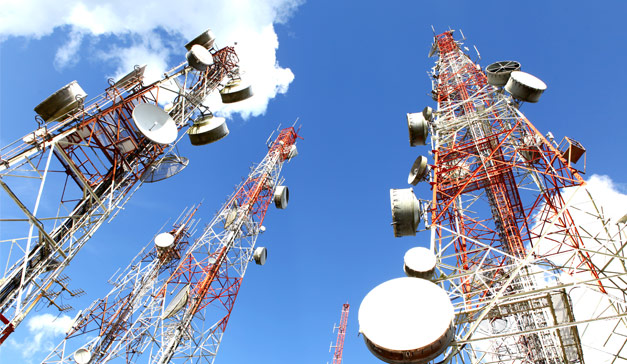
Clean and reliable power for telecom networks in Ethiopia, Liberia, and Sierra Leone will be expanded following a $45 million investment by the International Finance Corporation (IFC) in IPT PowerTech.

The investment targets countries where limited power supply continues to slow digital connectivity and broader economic participation, the institution stated earlier this week.
To enable this expansion, the IFC is providing a $45 million corporate financing package consisting of an A-loan of $27 million and $18 million in blended finance.
The blended portion is sourced from the Canada-IFC Blended Climate Finance Programme and the IDA20 Private Sector Window Blended Finance Facility.
The initiative marks the IFC’s first direct infrastructure engagement in Liberia in a decade and in Sierra Leone in six years.
It will help scale solar- and battery-based power systems that reduce reliance on diesel and support greener, more resilient telecom networks.
By improving the quality and stability of power to telecom towers, the initiative will strengthen mobile coverage and ensure that households, schools, health centres, and small businesses can depend on consistent digital services, said the IFC.
The funding supports the modernisation, operation, and maintenance of 2 235 telecom sites across the three nations. More than 90% of these are located in off-grid or weak-grid locations.
With new solar and battery systems powering these sites, mobile networks will experience fewer outages and improved service quality.
Optimising the energy mix is estimated to reduce power costs for operators by up to 30% in Liberia, 26% in Sierra Leone, and 52% in Ethiopia.
This transition is also expected to cut emissions by more than 10 624 tonnes of carbon dioxide annually. Furthermore, the partnership will promote gender inclusion by expanding opportunities for women in technical, operational, and leadership roles within the sector, says the IFC.
This agreement reflects a shared vision for a greener telecom industry and empowers the company to scale its innovative energy platforms, according to Nabil Haddad, CEO of IPT PowerTech Group.
Reliable and affordable power for telecom networks is a cornerstone of Africa’s digital transformation, said Nathalie Kouassi-Akon, IFC regional director for West Africa and the Gulf of Guinea.
Through this partnership, the institution is supporting a scalable, private sector-led solution that enables mobile operators to reach underserved and fragile communities more sustainably, added Kouassi-Akon.
The project advances the World Bank Group and African Development Bank’s Mission 300 initiative, which aims to provide electricity to 300 million Africans by 2030.


Expedier has unveiled “Expedier for Business,” an online pro-banking platform to simplify global payments, multi-currency transactions, and financial operations for expanding companies.

Kingsley Madu
The tool centralizes payments, invoicing, payroll, and treasury into one secure dashboard, tackling challenges like fragmented systems and poor visibility that hinder international scaling.
Kingsley Madu, Co-Founder and CEO of Expedier, said: “African businesses are increasingly global… Expedier for Business was built to simplify how companies manage money across borders while maintaining visibility, control, and compliance.”
Key features include customizable dashboards for payments, invoices, and workflows; support for USD, CAD, GBP, EUR, and more; virtual cards; automated payroll/invoicing; currency swaps; and real-time tracking.
Security measures cover two-factor authentication, KYC/KYB verification, and team access controls.
As cross-border trade and remote work boom in Africa, the platform aids firms dealing with international suppliers, teams, and customers. It is now available for organizations scaling globally.

Nigerian fintech unicorn Moniepoint Inc. has finalised its acquisition of a 78% stake in Kenya’s Sumac Microfinance Bank, gaining a key deposit-taking licence for credit expansion in East Africa’s biggest economy.

The deal, marked by a Nairobi reception, bypasses the Central Bank of Kenya’s licence freeze, letting Moniepoint rival giants like Safaricom and Equity Group after a stalled Kopo Kopo bid.
It signals Africa’s fintech shift to licensed banking and mergers, equipping Moniepoint to roll out high-speed SME lending via Sumac’s 20-year-old infrastructure and branches.
The acquisition builds a cross-border merchant ecosystem beyond fees, integrating recent Orda buyout (cloud restaurant software) for “business-in-a-box” tools like inventory, payroll, and capital amid Kenya’s digital lending scrutiny.
Moniepoint, which hit $294 billion annualised transactions in 2025, eyes Kenya’s SMEs with Nigeria-honed retail expertise.

NCC to Curb SIM Fraud, Strengthen Digital Security with New Platform

NBC Boss Urges Content Ceators to Participate in DSO

Kidnappers Now Use Banks to Collect Ransoms — Expert

CBN Says Bank Customers Won’t Lose Deposits because of Recapitalisation

Jury Finds Meta, Google Liable for Woman’s Social Media Addiction

Kaspersky Discovers New Phishing Campaign Exploiting Google Tasks Notifications to Steal Corporate Credentials

esentry 2025 Report Shows Healthcare, Financial Services and Telecoms as Staging Grounds for Increased Cyberattacks in Africa

Spotify’s Loud & Clear Report Reveals Over ₦60Bn Revenue for Nigerian Artists in 2025

China Threatens to Shut Nigeria’s Satellite Over $11.44m Unpaid Debt

MTN Nigeria Posts Record N1.70 Trillion Pre‑Tax Profit, Declares N20 Dividend for 2025




 E-Financial3 days ago
CBN Directs IMTOs to Open Naira Settlement Accounts

 Telecom3 days ago
Nigerians Lose N12.5Bn to AI-Driven Scams- PwC

 General News3 days ago
Court Remands Hacker for Allegedly Stealing N3.09Bn from FCMB

 Telecom3 days ago
Airtel Africa, Starlink Mobile Data and Messaging Testing Take off in Kenya

 E-Financial3 days ago
DLM Capital Group’s AAA-Rated Sovereign Bond-Backed Composite Notes (“SBCNS”) Strengthens Investor Confidence with Successful First Principal & Interest Payment

 E-Business3 days ago
AU Sees AI Adoption Evolving to Boost Economic Growth in Africa

 News3 days ago
Kaspersky, AFRIPOL Conduct Joint Cybersecurity Training for African law Enforcement

 Telecom3 days ago
GATEWAY Programme Opens Doors for 340,000 Nigerian Youths to Tap into $1.85trn Global Gig Economy