

E-Business
Encomiums for TD Africa as Nigeria Prepares for Tech Experience Centre Launch

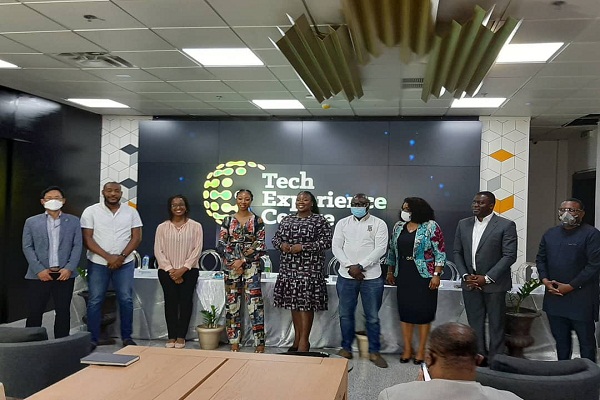
A number of globally renowned Original Equipment Manufacturers (OEMs) in the technology space have commended TD Africa, Sub-Saharan Africa’s leading technology, lifestyle and solutions distributor for successfully birthing the continent’s first Tech Experience Centre.

The commendations come ahead of the October 1st launch of the centre located in the high-rise Yudala Heights on 13 Idowu Martins, Victoria Island, Lagos.
Equally important, the Minister of Communications and Digital Economy, Dr. Isa Ali Pantami is expected in Lagos to commission the Centre, with the Lagos State Governor, BabajideSanwo-Olu, alongside a number of other high profile dignitaries, expected in attendance. The event will be streamed live to millions across the world from 5pm.
In a chat with newsmen, Chidalu Ekeh, head of the Tech Experience Centre, stated that aside reducing the decision making cycle for Chief Executive Officers (CEOs), Chief Information Officers (CIOs), Chief Technology Officers (CTOs), as well as other technology consumers, the Centre will also serve as a training centre for young Nigerians on latest technology.
“We are creating a path in this country where state-of-the-art technology will be accessible to CEOs, CIOs, CTOs and others technology consumers, so that they can make prompt decisions without leaving the country,” Chidalu said.
“What we have on board is a tech genius area where our customers will be able to take advantage of the partnerships that we have with the various OEMs on board.
“The Centre will afford young Nigerians the opportunity to receive world-class training on the latest technology.”
Also speaking on the reason for mobilising other tech giants to bring the massive project to life, Mrs. Gozy Ijogun, managing director (Sales) TD Africa, explained that the centre is aimed at adding value to the technology space in Nigeria in particular and Africa in general.
Ijogun said: “I am sure everyone is wondering what TD Africa is doing with the Tech Experience Centre. At TD Africa, we consider ourselves value added distributors.
“We are not just here to buy and sell. We add value to the economy. For that reason, we came up with the Tech Experience Centre so that Africans can experience technology the way it should be in this part of the world.
“No other distributor can do this. TD Africa is here to add value to the Information and Communication Technology (ICT) ecosystem.”
The Centre, housed within an impressive eight-floor edifice, will play host to tech giants, such as Cisco, Microsoft, Dell Technologies, HP, Schneider Electric, Zinox, Philips, Samsung, Apple and Bosch, among others.
“The structure also houses a cutting-edge gaming arena, lifestyle and smart home area, café, training centre, conference rooms and expansive office spaces, among others.
Olakunle Oloruntimehin, general manager, Cisco, West Africa, expressed delight with the concept behind the Tech Experience Centre, adding that it would be a great opportunity to offer latest technologies to consumers under the same roof with other tech giants.
“It is a good opportunity to collaborate with TD Africa and other OEMs under one roof. Technology is being democratised and it is important that people come together to take this outcome forward.
“Cisco is excited not only to partner with TD Africa but also to work with other OEMs under one space to make this work,” Oloruntimehin said.
Chioma Iwuchukwu-Nweke, country manager (Nigeria), Philips, also expressed excitement with the expected launch of the project. She revealed that Philips would delight tech customers at the Centre with latest health-driven home appliances.
Nweke said: “This is a dramatisation of the phrase ‘think global, act local.’ This is what TD Africa is doing with the Tech Experience Centre, by bringing lots of multinationals in the technology space in one place so that customers will experience latest technology.
“Before now, people always take technology to be something they have to travel outside the country to experience.
“We are sure that the Centre is going to change this narrative, especially at this time when the thought of travelling is a little bit scary for a lot of people. For us at Philips, customers should expect total innovative home appliances.”
On her part, Vivian Mike-Eze, marketing communication manager, Schneider Electric, commended the vision behind the initiative.
She urged tech consumers to be ready for an immersive experience with smart home concepts at the Tech Experience Centre.
“There has not been such a centre that gathers all the tech giants together in one place here in Nigeria. So, TD Africa has really set a precedent.
“I believe that people visiting the Tech Experience Centre expect to experience technology. In Nigeria, there is really a market for advanced technology that has been ignored for too long.
“This vision by TD Africa to bring the latest technology and get customers to experience it live is a fantastic opportunity to tap into. Because of the Centre, customers do not need to travel to the US or UK to actually see latest technology.
“Schneider Electric promises customers home automation, using the smart phone concept, when they walk into the Tech Experience Centre.
“This involves having the ability to control the temperature and ambience in their homes, with just a voice command. It is easy to talk about it, but there is no better idea than experiencing it by testing the controls and seeing it live.”
In addition, Microsoft Senior Partner, Specialist-Modern Work, Josh Adekeye, appreciated TD Africa, noting that the Centre will promote customer immersive experience. He promised that Microsoft would always support the Centre, which will reduce the burden for Microsoft to fly its customers to other countries to see its latest technological rollouts.
Adekeye said: “For us at Microsoft, when we heard about the Tech Experience Centre, we knew that it was something we needed to participate in. Before now, we usually fly our customers to Microsoft Technology Centre either in Dubai or in the US.
“However, when this opportunity came, we indicated interest and supported TD Africa to achieve it. We will always support the Centre. The beauty of technology is in seeing it.
“What Microsoft brings to the table is customer immersive experience. It means the customer will see the technology, feel the impact and make their decision easily and quickly.”
Lending his voice, Managing Director, Samsung (Nigeria), CadenChiyeon Yu hailed TD Africa for galvanising other tech giants to bring the Tech Experience Centre to life, adding that the Centre will afford Samsung a great opportunity to expose customers to its latest offerings in Internet of Things (IOT), Artificial Intelligence (AI) and other innovations shaping the global tech ecosystem.
Meanwhile, Ayokunmi Solesi, Country Manager (Nigeria), Bosch, described the Centre as a huge landmark on the African continent, adding that Bosch was ready to bring modern kitchen appliances to the delight of customers at the Centre.
Solesi said: “This is live experience. When you see big OEMs like Bosch, Schneider Electric, Samsung, Cisco, Microsoft, among others coming under a platform, you will realise that something great is about to be born.
“This is a huge landmark, not just in Nigeria, but also in Africa. For us at Bosch, this is a very commendable initiative,” Solesi said.
The Tech Experience Centre is an ambitious project, the first of its kind in Africa, to house global technology giants under one roof, with the aim of making latest and cutting-edge technology easily accessible to Nigerians and other nationals.
Experts and economic watchers have hailed the expected launch of the centre as a major development that will shore up Nigeria’s relevance in the global technology space, while also boosting the nation’s economy.


Microsoft is stepping up its push to expand artificial-intelligence adoption across Africa as competition intensifies with Chinas DeepSeek for influence in one of the worlds youngest and fastest-growing digital markets.

The company plans to train 3 million Africans on its AI technologies this year through partnerships with schools, universities and other institutions, with a focus on South Africa, Kenya, Nigeria and Morocco.
The effort reflects Microsofts broader attempt to accelerate adoption of its AI ecosystem across emerging markets where developers and enterprises are increasingly experimenting with generative AI tools.
Alongside the training initiative, Microsoft is working with MTN Group (MTNOY), Africas largest telecommunications company, to distribute Microsoft 365 and its Copilot digital assistant to about 300 million subscribers.
The Elevate program is designed to expand AI literacy and reduce cost barriers that might otherwise limit adoption, according to regional leadership.
The push comes as Chinese technology firms expand their footprint across the continent, with DeepSeeks open-source models accounting for roughly 11% to 14% of chatbot use in several African markets and reaching about 20% in countries such as Ethiopia and Zimbabwe following investments tied to digital infrastructure and telecom networks.
Microsoft is also increasing its infrastructure investment in the region.
In South Africa, the company plans to invest 5.4 billion rand, or about $330 million, to expand its cloud and AI capacity by the end of next year, while it is also exploring plans for a geothermal-powered data center in Kenya.
Early corporate adoption is emerging across the continent, with South African grocer Spar Group using Copilot in ways that save more than 700 employee hours annually and Nigerias Access Holdings integrating AI into daily workflows.
Regional leadership has suggested broader AI adoption could potentially contribute up to $1.5 trillion to Africas gross domestic product by 2030 if governments and businesses continue investing in digital infrastructure and AI skills.


Kaspersky Global Research and Analysis Team (GReAT) has uncovered a new Android malware campaign in which cybercriminals distributed the BeatBanker Trojan under the guise of the Starlink application for Android.

Threat actors primarily target users from Brazil; nevertheless, Kaspersky experts don’t rule out that users from other countries may also face this threat.
The Trojan employs a Monero cryptocurrency miner and additionally installs a BTMOB remote administration tool (RAT) on the infected devices. To maintain its persistence, BeatBanker uses an uncommon mechanism involving a nearly inaudible looped audio file.
“At first we saw BeatBanker being distributed under the guise of a public services app; it installed a banking Trojan in addition to a cryptocurrency miner. However, our recent detection efforts uncovered a new campaign with another BeatBanker variant that deploys the BTMOB RAT instead of the banker module.
The attackers appear to be using a fresh lure with the Starlink app to reach more victims from different countries. Therefore, it is important for users to stay vigilant and use advanced solutions to protect their smartphones,” comments Fabio Assolini, Head of the Americas & Europe units at Kaspersky GReAT.
Initial vector of infection
Kaspersky experts believe that cybercriminals distribute a fake Starlink application containing the BeatBanker Trojan through phishing pages that mimic the Google Play Store. After execution on a compromised device, the Trojan displays a user interface that also mimics Google Play. Cybercriminals trick victims into granting installation permissions, thus allowing the download of additional hidden malicious payloads.
Crypto mining and BTMOB RAT module
When a user clicks UPDATE on the fake Google Play page, a Monero cryptocurrency miner deploys. BeatBanker monitors battery percentage and the temperature of an infected smartphone, as well as user activity after which a hidden cryptocurrency miner is started or stopped.
The Android Trojan also installs a BTMOB RAT on the compromised device. BTMOB enables full remote control and is sold as Malware-as-a-Service.
It is capable of automatic granting of permissions, hide system notifications and has mechanisms designed to capture screen lock credentials, including PINs, patterns and passwords on compromised devices. The malware also gives cybercriminals access to the front and rear cameras, GPS location monitoring and constant collection of sensitive data.
To ensure persistence and hinder uninstallation, BeatBanker maintains a fixed notification in the foreground and activates a foreground service with silent media playback. This tactic is designed to prevent the operating system from removing the malicious process.
Kaspersky’s products detect this threat as HEUR:Trojan-Dropper.AndroidOS.BeatBanker and HEUR:Trojan-Dropper.AndroidOS.Banker.*.

By Shameel Joosub
For centuries, Africa has powered global economic growth through its resources, labour, and human potential, yet too little of that prosperity has been realised on the continent itself. Today, artificial intelligence presents a rare opportunity to change that trajectory.

As the global economic order undergoes its most significant transformation since the end of the Second World War, Africa stands at a decisive inflection point.
With the world’s youngest population, rapidly expanding digital adoption, and vast untapped potential, Africa is uniquely positioned not just to participate in the AI era, but to help shape it.
Realising this opportunity, however, will require deliberate investment, enabling regulation, and a commitment to ensuring that the benefits of AI reach all 1.5 billion people across the continent.
When I reflect on AI, what strikes me most is that it is enabled by humanity.
Intelligence is fundamentally human, and AI is an extraordinary amplifier of human creativity and capability.
It is not about replacing people. It is about empowering them to do more, faster, and better.
While this progress is remarkable, our responsibility as African businesses is to extend these capabilities beyond our corporate walls so that AI can unlock Africa’s underutilised potential and drive inclusive growth.
Unlocking Africa’s Potential Across Industries
As a purpose-led African connectivity and digital services company serving 223.2 million customers across South Africa, the DRC, Egypt, Ethiopia, Kenya, Lesotho, Mozambique, and Tanzania, Vodacom has invested strategically in AI across multiple sectors.
Our mobile networks reach a population of 588 million people. That reach must translate into opportunity.
Consider agriculture. One of our subsidiary companies, Mezzanine, leverages AI to unlock previously invisible insights into soil composition, empowering farmers to make data-driven decisions that improve crop yields and profitability.
When farmers thrive, food security strengthens and rural communities prosper. That is inclusive growth in action.
In financial services, AI is strengthening trust and security. In Kenya, Graph Network Analytics enhances M-Pesa fraud detection by mapping money movements in real time, helping protect more than 37 million customers who rely on the service in their daily lives.
As criminals target digital payment platforms, AI helps predict and prevent fraud scenarios, including SIM swap fraud and identity theft.
AI is also supporting national infrastructure. In South Africa, connectivity and IoT solutions monitor coal transport in real time from pit to port to power station.
This improves operational efficiency and supports energy security, addressing critical infrastructure challenges that have constrained economic growth.
These are not isolated examples. They represent a broader truth. Technology delivers its greatest value when it solves real problems for real people.
The Infrastructure Imperative: Modernising Regulation
Yet none of this is possible without one fundamental prerequisite: connectivity. Connectivity requires sustained investment in infrastructure, supportive policy environments, and regulatory frameworks that enable innovation.
If Africa is serious about universal access, modern and enabling regulation is essential. Spectrum licensing must be efficient and predictable. Infrastructure sharing must be supported. Universal service funds must be effectively deployed. Administrative barriers to infrastructure rollout must be reduced. Cloud and data platforms, which power AI capabilities, must be supported through enabling policy environments. These are not peripheral issues. They are fundamental to accelerating Africa’s digital and economic transformation.
These challenges represent only a portion of the regulatory barriers that must be addressed to deliver affordable, reliable connectivity to all Africans.
Pan-African Coordination: Our Collective Responsibility
Africa’s greatest advantage is its youth, but demographics alone will not deliver growth. To realise this potential, we must actively skill up young people in our schools and universities so they can take full advantage of an AI-driven future.
That requires modernising education curricula to embed AI literacy, data capability and practical problem-solving at scale. Companies like Vodacom are investing in digital skills development, but unlocking Africa’s potential will require coordinated action across government, academia and industry.
This is why governments and intergovernmental institutions such as the African Development Bank Group, the African Union, SADC, ECOWAS, and other regional bodies play a critical role in harmonising regulatory frameworks across the continent. Greater coordination can accelerate investment, enable scale, and support the development of an integrated digital economy.
Pan-African alignment of telecommunications regulation is not merely a technical objective. It is essential to unlocking inclusive growth and ensuring that Africa can compete effectively in the global digital economy.
Our Moment
Africa has long contributed to global progress. In the AI era, it has the opportunity to define its own future as a creator of innovation, productivity, and inclusive growth. The foundations are already in place. Our young population, expanding connectivity, and accelerating digital adoption position the continent to lead in ways that were not previously possible.
But this outcome is not guaranteed. It depends on the choices we make now. By modernising regulation, investing in connectivity as foundational infrastructure, and ensuring that AI empowers individuals, businesses, and communities, Africa can secure its place as a central force in the global digital economy.
That is the Africa I believe in. That is the Africa we are building at Vodacom, connecting people, enabling opportunity, and ensuring that technology serves the progress of society as a whole
Shameel Joosub, is group Chief Executive Officer, Vodacom Group
Source: Tech Africa News

Court Freezes Bank Accounts of Petrocam, Founder over Alleged N9Bn Zenith Bank Debt

FG Approves First National Policy on Cosmetic Safety, Health

FCCPC Says Telcos, Energy Firms Lead Consumer Complaints in Nigeria

Microsoft Expands Africa AI Push while DeepSeek Gains Users

Mobile Phones Used by Food Vendors Could Spread Infections- Experts

Dr. Cairo Ojougboh Foundation Bolsters Nigeria’s Education Drive with ₦2.7m Student Support

Kaspersky Brings more Transparency to Threat Detection with New Hunt Hub

Kaspersky Discovers New Phishing Campaign Exploiting Google Tasks Notifications to Steal Corporate Credentials

esentry 2025 Report Shows Healthcare, Financial Services and Telecoms as Staging Grounds for Increased Cyberattacks in Africa

AfDB, UNDP Launch $10Bn AI Initiative for Africa




 Telecom3 days ago
China Threatens to Shut Nigeria’s Satellite Over $11.44m Unpaid Debt

 Telecom3 days ago
US Court Dismisses All Claims Against Binance in Major Anti-Terrorism Lawsuit Victory

 Telecom3 days ago
TikTok Pumps $200k into AI Media Literacy for Sub-Saharan Africa at Nairobi Summit

 General News3 days ago
More Nigerians Emerge Millionaires in Week 9 of NIVEA’s Consumer Campaign

 E-Business3 days ago
NITDA, Nkenne AI Seek to Localise AI for Nigerians

 E-Business2 days ago
FG Moves to Strengthen Children’s Online Safety

 Telecom3 days ago
NCC Orders Telcos to Report Cyberattacks Within 4 Hours from 2027

 E-Business3 days ago
Meta to Charge Location Fees on Ads to Six Countries from July 1, 2026