

Telecom
Etisalat Thinks Decade Ahead via Telecoms Engineering Internship programme

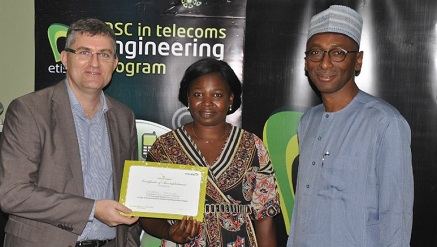
Etisalat, regarded as the fastest growing telecommunication company in Nigeria, said that it is grooming local telecommunication engineers that would take the industry to the next level in the next 10 to 15 years.
The Company rolled out another set of postgraduate students of Ahmadu Bello University, Zaria as part of its 2015/16 Etisalat Telecommunication Engineering Postgraduate Programme (ETEPP), in furtherance of its aim to develop indigenous manpower in the Nigerian telecommunication industry.
The course intakes were unveiled during the closing ceremony of the 2016 edition of the internship programme held in Abuja recently.
The internship is part of the Etisalat Telecommunication Engineering Postgraduate Programme (ETEPP), a Master’s Degree course in Telecommunication Engineering at Ahmadu Bello University, Zaria which is a Corporate Social Responsibility initiative of Etisalat.
This program provides students with the opportunity to gain practical knowledge through a month-long internship stint with various departments of the technical division of Etisalat Nigeria.

Speaking at the ceremony, Ibrahim Dikko, vice president, Regulatory and Corporate Affairs, Etisalat Nigeria, explained that the internship programme which commenced in 2013 is a flagship Corporate Social Responsibility (CSR) initiative of Etisalat Nigeria designed for students to gain practical experience in the field of telecommunication by undergoing a month-long work experience in various departments of the engineering section of Etisalat, to augment and buttress their course work in school.
“The objective of this program is to drive and improve the quality of local manpower in the telecommunication industry by adding practical knowledge to the theory students have learnt in the school. Through this initiative, Etisalat is grooming local telecommunication engineers that would take the industry to the next level in the next 10 to 15 years,” he said.
On his part the Chief Technical Officer, Etisalat Nigeria, Stephane Beuvelet said Etisalat is proud to be involved in the telecommunication industry skill development initiatives.
“ETEPP and this internship are very important initiatives, designed by Etisalat to ensure that these students become assets to Etisalat and the telecommunication industry in future. This internship is a major step towards the development of rounded engineers that would excel in both theoretical and field work”, he added.
Beuvelet further explained that Etisalat took the challenge of raising and improving local manpower in the telecommunication industry in Nigeria after observing a gap in Nigerian universities offering courses in telecommunication engineering in the country. “We are working in partnership with Plymouth University UK, the Etisalat Academy, UAE and the prestigious Ahmadu Bello University, Zaria,” he said.
“In addition to the Students Masters’ programme, lecturers of the Ahmadu Bello University are also sponsored for their Ph.Ds in Plymouth University UK, while three best students of ETEPP will be at the Etisalat Academy in the UAE,” he added.
Commending Etisalat for the good gesture, Head, Department of Computer Engineering, Ahmadu Bello University (ABU), Zaria, Dr. Yusuf Jibril said “this CSR initiative of Etisalat has impacted much on our department and our students in many ways. Under this initiative Etisalat and Huawei Technologies donated state of the art equipment to the department, exposed our students to the most recent practices in the telecommunications industry and also sponsored some of our lecturers for their PhD in Plymouth University UK. We really appreciate this good gesture and hope other telecommunication companies can emulate this.”
One of the interns of the Etisalat Telecommunication Postgraduate Programme (ETEPP), Kelechi Okogwu, an M.Sc. student of Telecommunication Engineering, Ahmadu Bello University, Zaria expressed his appreciation to Etisalat. According to him, the initiative presents a wonderful opportunity to anyone interested in developing a career in telecoms engineering, with the course content well thought-out between the faculty and Etisalat.
“The internship programme reinforces our class room knowledge; in fact we have benefited so much starting from the basics of telecommunication technologies, to the current developments in the industry, as well as a peep into the future of telecommunication engineering,” he said.


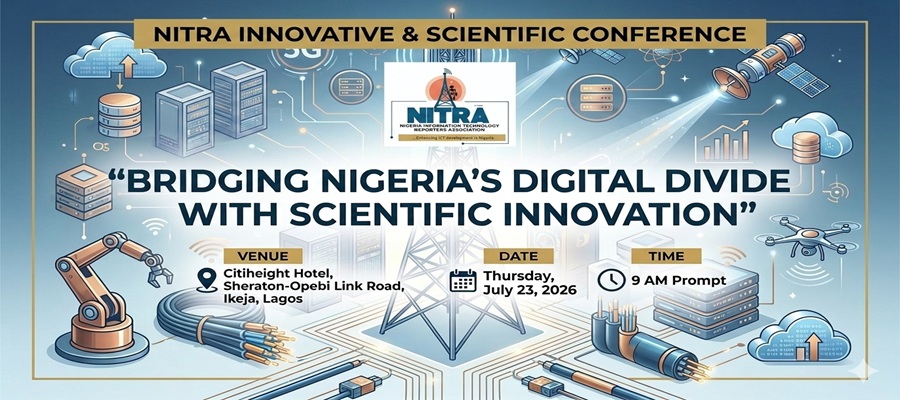
The need for Nigeria to think outside the box in its need to drive towards global relevance with innovations and scientific developments will be on the front burner at the NITRA Innovative & Scientific Conference scheduled to hold on Thursday July 23, 2026 in Ikeja, Lagos.

NITRA
The Nigerian Communications Commission (NCC) will lead other delegates to discuss and take far-reaching decisions at the event, which has its theme as “Bridging Nigeria’s Digital Divide With Scientific Innovation”.
Other companies that have indicated interest in partnering with NITRA include mobile communications company, Tecno; Africa’s premier end-to-end AI solutions company, Hyperspace; and telecommunications data infrastructure company, Digital Realty.
Speaking on the proposed event, the Chairman, Nigeria Information Technology Reporters Association (NITRA), Chike Onwuegbuchi noted that the event will seek to create a platform for government and private organisations to deliberate on policies around scientific innovations in Nigeria, challenges, place of indigenous and foreign collaboration, roles of each stakeholder, and grassroots development in that regard, among others.
According to him: “The Federal government, with series of programmes and partnerships, has established the urgent need to create an ecosystem that thrives on scientific innovation, breeding institutions and individuals with a target of placing the country at the fore-front of Next-Gen development.
It is a known fact that digital and scientific innovations are crucial, not only to the survivability of a nation, but also to the sustainability of its growth and development, with significant effect on economic strength, global image, defense and security, government capabilities to function, and public health and safety, communication and digital footprint, among others.
The federal government is actively driving scientific innovation to foster economic diversification and build a $1 trillion economy by 2030. Efforts are heavily focused on commercializing research, establishing massive research funds, and funding strategic infrastructure, particularly in technology, biotechnology, and healthcare. Core government initiatives and policies include the newly instituted National Research and Innovation Development Fund (NRIDF), which aims to mobilize about $500 million annually to support research and the commercialization of scientific outputs; and the Nigeria Genomic City, a multi-ministerial initiative aimed at transforming Nigeria into a leading hub for genomics, precision medicine, and biotechnology. It is designed to protect indigenous data, stimulate artificial intelligence in health, and develop a highly skilled scientific workforce.
According to the General Secretary of NITRA, Mr. Chidiebere Nwankwo, the forum will also be a vehicle to propagating the views of decision makers to the public, thereby furthering the cause of public awareness and information dissemination on the topic.
The focus, he said will be on how Nigeria can sustain digital innovative growth and scientific development in Nigeria
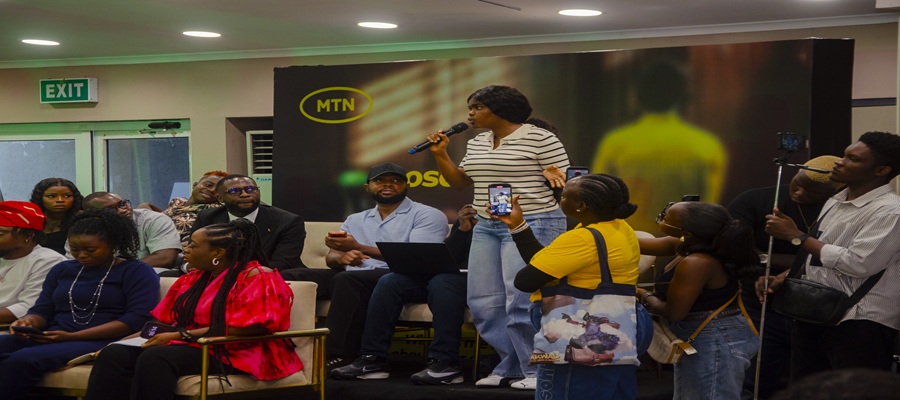
Concerns over network reliability and its impact on Nigeria’s growing creator economy took centre stage at MTN Nigeria’s Data on Trial event, where content creator and streamer, Jarvis, challenged telecommunications operators to improve connectivity for digital creators.

Speaking during the event, Jarvis asked whether there were locations in Nigeria where uninterrupted internet connectivity could support real-life (IRL) streaming without network disruptions.
“Are there places where there is no breakage when streaming IRL?” she asked.
Her question highlighted the challenges faced by content creators who depend on stable internet services for live streaming, content uploads and real-time engagement with audiences.
Responding, MTN Nigeria’s Chief Technical Officer, Mr Yahaya Ibrahim, said network performance depends on several factors, including location, network coverage, device capability and the number of users connected to a particular base station.
He noted that operators continue to invest in expanding network capacity to meet the growing demand for data services.
Earlier, MTN’s General Manager, Network Performance and Quality Assurance, Mr Michael Ndukwe, explained the evolution of mobile network technology in Nigeria, from first-generation (1G) services to the current fifth-generation (5G) technology.
According to him, each phase of technological advancement has significantly increased network capacity and enabled new digital services.
Ndukwe cited Nigerian Communications Commission (NCC) data showing that Nigerians consumed about 13.2 million terabytes of data in 2025.
He added that data usage reached approximately 4.06 million terabytes in the first quarter of 2026, reflecting the country’s increasing reliance on digital platforms and online services.
According to him, the growth is being driven by wider adoption of 4G and 5G networks, increased smartphone penetration, the proliferation of smart devices and expanding use of social media platforms.
Participants at the event noted that as more Nigerians build businesses and careers around digital content, access to reliable and high-speed internet has become critical to sustaining the country’s digital economy and creator ecosystem.
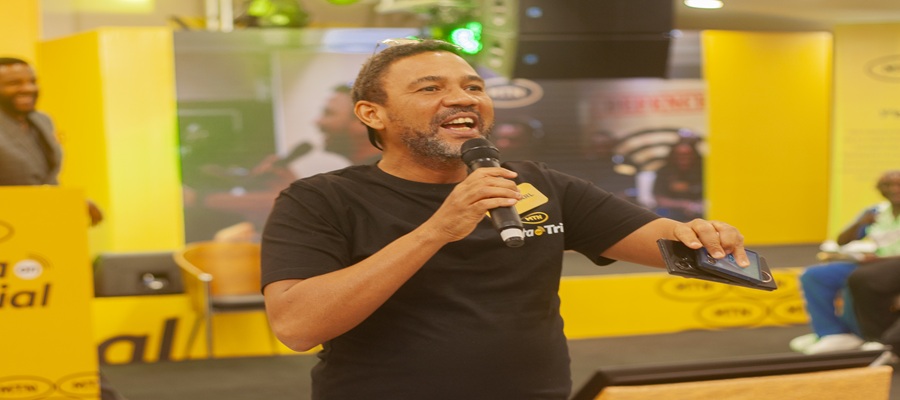
In an era where customer complaints about data consumption often play out on social media, MTN Nigeria took an unusual step. Rather than issue another statement, the company opened its doors and invited critics, customers, influencers and journalists to interrogate its operations at the Data On Trial in Lagos.

Dr Karl Toriola, MTN Nigeria
The session offered a rare glimpse into the realities behind Nigeria’s digital economy. MTN Nigeria CEO, Dr Karl Toriola, acknowledged public concerns and encouraged participants to ask difficult questions. “Give it to us as hard as you can. Ask us the most difficult questions, don’t hold back,” he said. The company used the platform to explain how factors such as automatic cloud backups, video streaming and app settings contribute significantly to data consumption, issues many users often overlook.
Beyond addressing consumer concerns, MTN shed light on the scale of investment required to keep Nigeria connected. Toriola disclosed that the company invested close to ₦1 trillion in network infrastructure last year and plans to exceed that figure this year. He explained that these investments support network expansion, improved capacity and service delivery for millions of Nigerians across the country.
The session also highlighted MTN’s commitment to accountability. Company executives explained that MTN’s billing systems are independently audited and reviewed by regulators to ensure accuracy and fairness. “What we are saying authoritatively is we will never deliberately shortchange you on the consumption of your data,” Toriola stated, reaffirming the company’s position on customer trust and transparency.
More than a defence of its network, Data On Trial reflected a company willing to engage openly with the people it serves. At a time when digital connectivity has become central to everyday life, MTN’s decision to answer tough questions in public signalled a broader commitment to transparency, customer education and continuous investment in Nigeria’s digital future.

Dangote Refinery’s Private Placement Reportedly Hits $2.5Bn

FG, UNODC Plan National Strategy against Organized Crime

EFCC Busts NIS Visa Overstay Racket, Uncovers N700m in an Account

CBN to Monitor Every Dollar with FXBT, Forex Tracker

NCC, NDLEA Partner to Fight Piracy and Drug Trafficking

NRC, Ponzi Scheme Collapses Resulting Loss of Billions of Naira

NASENI Moves to Digitize CCB’s 5m Assets Declaration and Operations

Lebara Nigeria Launches Lebara Play, Africa’s First Telecom-Owned Micro-Drama Platform

CANAL+ Partners Samsung to Pre-Load DStv Stream on New Samsung TVs In Nigeria, Other African Countries

Tokenization, Blockchain Technology will Transform Financial Institutions – IMF




 Telecom2 days ago
Helios Towers Secures $29m Facility to Expand Across Africa

 News2 days ago
ValueJet Expands Fleet with Boeing Aircraft, Targets Wider African Network

 Telecom2 days ago
NCC Begins Stakeholder Consultation on MVNO Business Rules

 E-Financial2 days ago
First Securities Brokers Empowers Nigerians to Trade in the Stock Market with the Launch of FirstInvest App

 Telecom2 days ago
Surge in Fibre Cuts Hobbles Service Provisioning

 Broadcasting2 days ago
NBC Scraps Annual Digital Access Fee on DSO

 E-Business2 days ago
Jumia Seeks for Payment Harmonisation, Stronger Policies to Boost Africa’s Digital Trade

 News2 days ago
Court Orders Final Forfeiture of 48 Properties Linked to Former AGF Abubakar Malami