

News
Experts Say GMO Poses Food Sovereignty Risk


Global Prolife Alliance (GPA), a global health organization has again warned that genetically modified organisms (GMO) foods are unsafe for human consumption.

GPA also claimed that the promoters of such items have a sinister motive to, ultimately, destroy Nigeria’s food security
Global Prolife Alliance chaired by Dr. Philip Njemanze, has been advocating for the ban of cultivation and distribution of GMO seeds in Nigeria.
In a series of letters to President Bola Tinubu and the National Assembly, Global Prolife Alliance disclosed that some foreign interests acquired a private army to train mercenaries hired from Africa and beyond to disguise as herdsmen, bandits and insurgents to kill farmers, who are the natural seed growers.
The GPA said, sometime ago, natural seed growers were tracked through technology and killed because natural seed growers were seen as competitors of biotech companies providing GMO foods.

The group said the latest system being advocated by some interested parties “is designed to track the identity and financial records of every Nigerian, to track and kill the most economically viable Nigerians, leaving in the country a people in abject poverty that could easily be controlled.
“The overall strategy is to capture the food security of Nigeria.”
It said some interests had intervened with deceptive programmes, leading to the death of many seed grower-farmers in Nigeria.
The group further said: “Our agricultural productivity has plummeted. Farmers cannot go to the farm for fear of being killed in their farms. Nigeria is now a nation in hunger, worse than a decade ago before the nefarious activities began.”
The group added that “GMO seeds deceptively called high-yield improved seeds do not replicate themselves; hence they are called ‘suicide seeds,’ that is, once planted and it grows, you cannot replant the next generation. The farmers have to go to the promoters every planting season to collect new seeds.”
The GPA said that it is at that “point that the promoters intend to dictate their terms to allow Nigerian people to feed on the toxic GMOs. “Meanwhile, because the GMO seeds are planted alongside the natural crops, the cross-pollination would make the natural seed also carry the GMO seed genes rendering them also GMO crops. This has a serious implication: for example, a 1% contamination of the natural crops would make them be classified as GMO; hence they will remain banned from European, Russian, American, and Asian markets.
“Agriculture in Nigeria would stop being a foreign currency earning sector of the economy. The foreigners are killing the Nigerian farmers, not Islamic extremists.”
The GPA said that since 2009, terrorists have been sponsored and branded Boko Haram, bandits and herdsmen to carry out genocide of farmers in Nigeria to capture Nigeria’s food security.
“Consider this, from 2015-2018, 37,500 farmers were killed, 32,000 were Muslims, and 5,500 were Christians. Despite the fact that 85% of the victims were Muslims, the international and local press propaganda mercenary branded it ‘Islamic terrorism.’
“Any attempt to uncover the truth is met by another orchestrated kidnapping of school children for ransom to depict it as criminal activity rather than well coordinated operations of the sponsors and their biotech accomplices. A corrupt set of people within the Nigerian government collaborated with the foreigners’ agenda, committing treason against their motherland. The time to end this is now!
“We urge the National Assembly and FG to ban all GMO seed cultivation and distribution in Nigeria.
“Amend the National Biosafety Management Agency Act 2015 to be based on precautionary principles in the Cartagena protocol.
“Repeal the National Health Act 2014 that authorizes collection of gametes and organs without consent. “Commence NASS hearings on the national security threat posed by biotech companies and their affiliates in Nigeria.”
The group also noted that GMO foods are banned in Europe.
Mr Nnamdi Cos-Ukwuoma, an agripreneur, posited that GMO is an evil wind and a conspiracy.
He said: “Genetically Modified Organism (GMO) technology seems to defy nature. Nature renews itself. When this natural order is altered through scientific or laboratory-controlled genetic engineering or modification to introduce new traits into an organism (plant or animal) the effect can be catastrophic to humans and the ecology. GMO technology purports to create disease/pest resistant seed varieties and increase yield.
“It is natural that the farmer goes into the farm with seeds that will yield him a bumper harvest for consumption and more than enough for planting in the next farming season. But it is not so with most GMO seeds which never reproduce themselves and make the farmer dependent on the particular source of supply (patent owner and suppliers) year in, year out.
“Despite efforts by the new world order and developers of GMO to adduce seemingly convincing arguments to convince the agri-preneurs that their seeds which have been biochemically altered at the molecular level for their own interest and for reasons only known to them farmers have bluntly resisted accepting their seeds and their baits.
“Reasons include that GMO seeds deny farmers the natural privilege of re-using seeds from their farms or to sell to maximize profit. For instance, cassava stems harvested from some GMO cassava are sterile and cannot be used again. Farmers need to contact the developers for fresh order.
“As a biotechnology product, the development and use of GMO seeds are regulated by various government agencies and international organizations to ensure safety and environmental sustainability.”
He acknowledged that some sources insist that GMO seeds are inherently unstable and have the propensity of causing cancer, reproductive problems, organ damage, allergic reactions, immunosuppression and antibiotics resistance, etc.
Cos-Ukwuoma further said: “In deference to nature, in recent times, farmers have begun to embrace farming practices that support life and the environment. Organic farming is becoming popular among farmers. “But GMO and its protocols contradict practical organic farming and are highly dependent on chemicals for pest control and boosting yield.
“In the opinion of farmers and other major stakeholders, GMO is a conspiracy because its proponents are not seen as transparent in all matters relating to their activities and campaigns. In all, it is shrouded in secrecy.
“Purportedly powered by the new world order, it seems driven by the science of quick, certain and compulsive need for bountiful yields and immediate gratification.
“As a farmer, I shun GMO seeds and all their attractions because to me, they defy the natural order of multiplying seeds and boosting food production as against purely organic farming protocols.
“However, there is no compulsion or force on farmers to embrace GMO seeds. One needs to satisfy himself of his reason to go for these new seed varieties. Natural or organic seeds remain a rational preferred option for farmers.”
Interestingly, Pastor Chris Oyakhilome, founder of LoveWorld Incorporated better known as Christ Embassy, has claimed that GMO corns cause hypertension hence it should be avoided.
In a live broadcast during a church programme, Oyakhilome said: “I’m sure many of you who don’t have an idea of organic corn. What it is. Don’t think of the one you’ve been buying in the market, in your local market I mean. Don’t think that one is really organic.
“Most countries don’t have the original corn anymore. It’s one of the earliest genetically modified crops, so most of what you’ve been eating is modified a long time ago.



Federal Airports Authority of Nigeria (FAAN) has announced plans to introduce a biometric identity verification system, known as V-Pass, to speed up passenger processing and enhance security at domestic airports nationwide.

This initiative is aimed at strengthening aviation security, reducing passenger processing time and eliminating dependence on physical identity documents.
A statement issued yesterday by Henry Agbebire, director of Public Affairs and Consumer Protection, FAAN, said the new facial recognition platform, developed in partnership with Verxid Technologies Limited, would enable passengers to verify their identities through biometric authentication, allowing them seamless access through airport security checkpoints and boarding gates.
According to him, the initiative formed the focus of a strategic meeting between FAAN and Verxid Technologies Limited, where both organisations reviewed deployment plans, security safeguards and measures to improve passenger experience.
The statement hinted that the authority centred on ensuring the successful rollout of the digital platform while maintaining high security standards.
The statement quoted, Adebola Agunbiade, director of Commercial and Business Development, FAAN, as describing the V-Pass as another milestone in the authority’s ongoing digital transformation programme.
According to her, the platform indicated FAAN’s commitment to deploying innovative technology that enhances passenger facilitation while reinforcing aviation security across domestic airports.
She assured that the system would provide every traveller with a secure digital identity through a one-time enrolment process.
Under the arrangement, Nigerian passengers would register using their National Identification Number (NIN) alongside facial biometric capture, while foreign travellers would enroll with their passports through Optical Character Recognition (OCR) supported by biometric authentication, the statement added.
FAAN said the system would verify passenger identities before they gain access to restricted airport areas and once again before boarding their flights.
The agency noted that the dual-verification process was designed to prevent identity fraud, impersonation and unauthorised access to airport facilities, while giving security agencies greater confidence in passenger authentication.
Passengers would be able to complete the verification process either through self-service kiosks or with assistance from trained FAAN personnel.
The deployment would also include electronic gates to automate access into controlled areas, reduce queues and improve passenger movement across airport terminals.
According to the developers, first-time registration is expected to take about one minute, while subsequent biometric verification would take less than 30 seconds.
Apart from passenger processing, the V-Pass platform would also provide airlines with secure digital access to flight schedules, passenger manifests and boarding statistics.
FAAN assured travellers that data protection remained a critical component of the project, stressing that the platform fully complies with the Nigeria Data Protection Regulation (NDPR).


The Central Bank of Nigeria (CBN) has launched a new system to monitor how Bureau De Change (BDC) operators buy foreign exchange in the country.

Under the new arrangement, all licensed BDCs must report their foreign exchange purchases through a platform called the FX BDC Purchase Tracker (FXBT). The portal will allow the CBN to monitor transactions in real time or on the same day they take place.
The directive was announced in a circular dated July 15, 2026, and signed by the Director of the CBN’s Trade and Exchange Department, Aderinola Shonekan.
According to the apex bank, the new framework is designed to support its February 2026 policy that allows licensed BDCs to buy foreign exchange directly from authorised dealer banks in the Nigerian Foreign Exchange Market (NFEM).
The CBN said the initiative will improve transparency, strengthen compliance, increase liquidity in the retail forex market, and ensure proper participation by market operators.
A major feature of the framework is the FXBT portal, which will serve as a central database for tracking all foreign exchange purchases made by BDCs from banks.
Under the guidelines, every licensed BDC must register on the platform and submit transaction details either in real time or on the same day the transactions occur.
The CBN stated that the system will help regulators identify violations, detect suspicious transactions, monitor compliance with market rules, and improve confidence in the foreign exchange market.
The framework builds on the CBN’s February 2026 decision to allow licensed BDCs back into the official foreign exchange market. Under that policy, each eligible BDC can purchase up to $150,000 weekly from authorised dealer banks at market rates.
The apex bank said only BDCs with valid licences will be allowed to access foreign exchange through the framework. Operators whose licences have been suspended or restricted due to regulatory issues will not be eligible until those restrictions are lifted.
The CBN also directed banks to carry out thorough Know Your Customer (KYC) and customer due diligence checks before onboarding any BDC. Required documents include valid operating licences, Tax Identification Numbers (TIN), Corporate Affairs Commission (CAC) registration documents, and information on beneficial ownership.
Banks have also been warned not to sell foreign exchange to BDCs that fail to meet the required compliance standards.
To encourage fair competition, the CBN said BDCs can buy foreign exchange from any authorized dealer bank of their choice. Banks are prohibited from forcing BDCs into exclusive arrangements or charging referral fees that limit their ability to transact with other banks.
Under the new process, BDCs must submit electronic requests for foreign exchange through a bank’s designated portal. Banks are required to acknowledge requests within two business hours and communicate approvals or rejections immediately after processing.
Requests can only be rejected for valid reasons, such as incomplete documentation, exceeding weekly purchase limits, unresolved compliance concerns, or internal risk management issues.
The CBN also introduced stricter rules on how purchased foreign exchange can be used. All transactions between banks and BDCs, as well as between BDCs and customers, must be conducted through accounts held with licensed financial institutions. Third-party transactions remain prohibited.
In addition, BDCs are not allowed to keep unused foreign exchange purchased through the official market. Any unused funds must be sold back into the market within 24 hours after the permitted usage period expires.
The apex bank warned that failure to comply could lead to forfeiture of funds and suspension from the market.
BDC operators must also disclose any unused balances from previous allocations when applying for new purchases, while banks are expected to consider those balances when calculating weekly allocations.
Beyond reporting through the FXBT portal, BDCs must continue submitting weekly reports to the CBN. These reports must include details of foreign exchange purchased from banks, sales to end users, unused balances, and settlement records.
The CBN said the reporting requirements will improve transparency and help regulators better monitor foreign exchange flows in the retail market.
The bank warned that violations of the framework could attract penalties under the Banks and Other Financial Institutions Act (BOFIA) 2020 and the Foreign Exchange Act. Sanctions may include fines, suspension from the foreign exchange market, withdrawal of BDC licences, revocation of banks’ authorised dealer status, and referrals to law enforcement agencies where necessary.
The CBN’s Trade and Exchange Department will oversee compliance through regular and surprise inspections carried out in collaboration with other departments.
The apex bank said the new directive is part of its wider efforts to reform the foreign exchange market, improve transparency, boost liquidity, and restore confidence in the system.
Concerns over compliance breaches, speculative trading, and abuse of foreign exchange allocations had continued even after BDCs were reintroduced into the official market earlier this year.
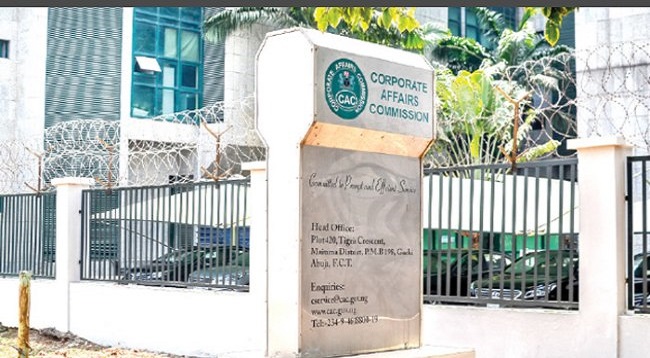
The Corporate Affairs Commission (CAC) has announced the commencement of another exercise to remove 100,000 companies from Nigeria’s register of companies for failing to comply with statutory requirements under the Companies and Allied Matters Act (CAMA), 2020.

In a public notice issued on Thursday, and dated July 15, 2026, the commission said the exercise was being carried out pursuant to Sections 692(3) and 692(4) of the Companies and Allied Matters Act, 2020.
The notice stated: “This is to notify the General Public and Esteemed Customers that the Corporate Affairs Commission has commenced another round of striking off names of companies from the Register pursuant to the provisions of Section 692 (3) and (4) of the Companies and Allied Matters Act, 2020.”
According to the commission, the affected companies are listed on its official website.
“The list of the affected One Hundred Thousand (100,000) companies can be accessed at the Commission’s Website,” the notice said.
The CAC directed all affected companies to update their records by filing outstanding annual returns and beneficial ownership information within 90 days.
“The affected companies are hereby advised to take steps to file all outstanding Annual Returns (and by extension Persons with Significant Control/Beneficial Ownership information) and regularize their records within ninety (90) days of this notice,” the commission said.
It added that companies must send proof of compliance to the designated email address, [email protected], within the stipulated period.
The commission warned that failure to comply would result in the affected companies being removed from the register without any further notice.
“Please note that companies that fail to comply within the stipulated timeline shall be struck off the Register without further notice,” the notice stated.
The CAC reiterated its commitment to improving service delivery, saying, “The Commission remains committed to providing prompt and efficient services to the satisfaction of our valued customers.”

FAAN to Replace Physical ID Check with V-Pass Biometric Verification

World Bank Says 79 Percent of Nigerians Still Trapped in Poverty despite Reforms

SEC Begins Drive to Recover Unclaimed Dividends

ntel Plays Down Calls and Data Services, Moves to BET Agenda

Nigeria Facing Rising Cybercrime Losses – Report

NRC, Ponzi Scheme Collapses Resulting Loss of Billions of Naira

Nigeria Launches FreeTV Nationwide

NASENI Moves to Digitize CCB’s 5m Assets Declaration and Operations

Lebara Nigeria Launches Lebara Play, Africa’s First Telecom-Owned Micro-Drama Platform

CANAL+ Partners Samsung to Pre-Load DStv Stream on New Samsung TVs In Nigeria, Other African Countries




 E-Business3 days ago
TD Africa Sponsors Check Point Secure 360 Summit to Boost Cybersecurity in Nigeria

 Telecom3 days ago
MTN Foundation, MUSON Celebrate Emerging Music Talents at 2026 Graduation Ceremony

 Telecom3 days ago
NITDA Calls for Digital Infrastructure Expansion to Drive Nigeria’s Industrialisation

 News3 days ago
Guinness Rolls Out Nationwide Consumer Rewards Promotion

 E-Financial3 days ago
Next Currency Crisis May Turn $300Bn in Stablecoins into National Currencies

 General News3 days ago
First Trustees Advocates Estate Planning as an Essential Tool in Every Wealth Creation Strategy

 E-Financial3 days ago
Gigbanc Nigerian Fintech Startup Closes Shop after 3 Years

 Broadcasting3 days ago
Mbunabo, Nigerian Filmmaker Accuses Ghana TV Stations of Pirating Nollywood Films