

News
Experts Suggest Ways to Rejig Cashless


After seeing the cashless economy get off on a shaky start, experts have canvassed the need for more government interventions to discourage cash transactions in every business segments of the economy, Nigeria CommunicationsWeek can report.
When the Central Bank of Nigeria (CBN), came up with the novel ‘Cashless’ policy in 2011, it was aimed at changing the spending culture of Nigerians which is notoriously cash-transaction based with its attendant security challenges.
But six months into the project, most people are still dependant on cash for daily transactions.
Has the project failed six months into trial period? Or are there any measures of successes already credited to the policy?
Folake Ani-Mumuney, head, marketing and corporate communications at First Bank Nigeria Plc said there have been several benefits associated with the ‘Cashless’ policy, although there are still enough rooms for government intervention to make it a sustainable national programme.
Nigeria CommunicaionsWeek learnt that the bank has a good report on the ‘Cashless’ project. For instance, there has been a 200.16 per cent rise in eChannels transaction from December 2011 to May 2012.
“Before the introduction of the policy, we recorded a monthly average of about N3 Billion in eChannels transactions in 2011. But by end of May 2012 volume in eChannels transaction hit N10.6 Billion. That shows there are positives in the policy, although government still has a lot to do in terms to building a sustainable cashless policy,” said Ani-Mumuney.
She noted that the bank is committed to promoting cutting edge technology to serve the diverse needs of its’ teeming customers. “We are also in sync with the Cashless policy and presently, we are driving this policy in Lagos, and Nigeria at large, and this certainly makes our bank very fundamental to the nation’s goal of becoming one of the top 20 largest economies in the world by the year 2020.”
To achieve a frontline position in the cashless policy drive, the Bank took proactive measures by rolling out various e-transaction services and products even before the new CBN policy came on stream.
For instance, FirstBank’s online-real time banking services have been in place for almost a decade in addition to massive deployment of alternative delivery channels like POS, ATM and Internet banking, amongst other products.
“We were able to recognise on time that in the increasingly dynamic and sophisticated business environment, the future of banking will be driven by e-banking, hence we established a dedicated e-banking department many years ago,” said Ani-Mumuney.
Emezino Afiegbe, head, Card Business, concurred stating the bank’s card business segment is focused on delivery world class solutions, hence it’s dealings are measured according to global best practices standard.
Nigeria CommunicationsWeek learnt that the bank is already looking to the mobile telephony platform with a view to reaching the millions of ‘unbanked Nigerians.’ To achieve this, it has introduced the FirstMobile product which complements the existing FirstOnline.
“FirstMobile is aimed at reaching out to the millions of unbanked population who already have or intend to own a mobile phone. The majority of mobile phone users who may be classified uneducated are numeric literates. We are aware of success of such projects elsewhere and we think that with the large mobile phone subscription figures, mobile banking will be a huge success in Nigeria,” said Afiegbe.
Nigeria is Africa’s leading mobile phone market with nearly 100 million active subscribers. It also has the continent’s largest internet users with 45 million connections by December 2011.



The UK Government has announced the appointment of Mr Peter Vowles as the next British High Commissioner to the Federal Republic of Nigeria.

Mr Vowles succeeds Dr Richard Montgomery CMG and is expected to take up his post in Abuja in September 2026. Dr Montgomery remains in post until that time.
Mr Vowles brings extensive diplomatic and development experience to the role, having served as His Majesty’s Ambassador to Zimbabwe from 2023 to 2026 and previously as Ambassador to Myanmar from 2021 to 2022.
He has held senior leadership positions across the FCDO and its predecessor department DFID, including as Transformation Director and Director for Asia, Caribbean and Overseas Territories.
Earlier in his career, Mr Vowles worked in international development across South Asia, Central Africa and East Africa, including postings in Bangladesh, India, the Democratic Republic of Congo and Kenya. He began his career in Zimbabwe, where he worked in education and development.
Peter Vowles said: “I am honoured to be appointed as British High Commissioner to Nigeria. Nigeria is a country of immense importance to the United Kingdom, and I look forward to working closely with Nigerian partners to strengthen our relationship across trade, development and security.”

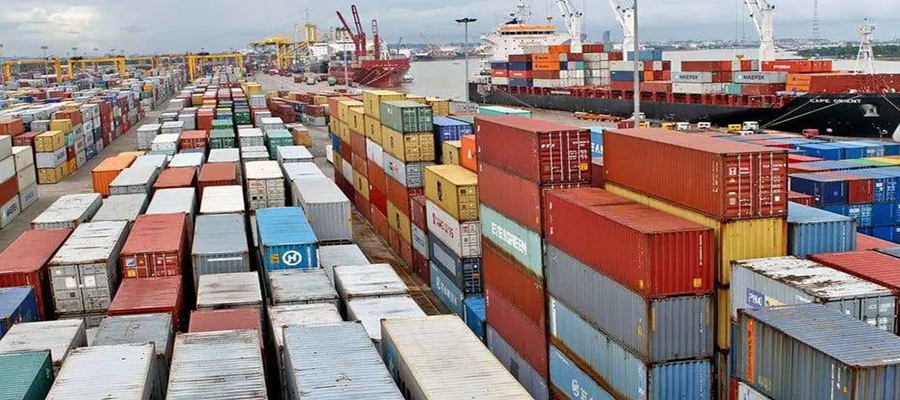
World Bank has ranked the Apapa and Tin Can Island Port complexes in Lagos among the world’s 20 most improved ports in its 2025 Container Port Performance Index (CPPI), released in June 2026.

The ranking places both ports in the “Top 20 Port Improvement Since 2020” category, reflecting significant gains in operational efficiency and vessel turnaround time.
The CPPI is a global benchmark used to assess the efficiency of container ports based on factors such as cargo handling speed, ship turnaround time and overall logistics performance.
According to the report, the improvement highlights ongoing reforms and modernization efforts within Nigeria’s maritime sector.
The Managing Director of the Nigerian Ports Authority (NPA), Mr Abubakar Dantsoho, attributed the recognition to ongoing policy reforms and infrastructure upgrades in the sector.
He said the development reflects the impact of economic policies of President Bola Tinubu and the support of the Minister of Marine and Blue Economy, Mr Adegboyega Oyetola.
“With the investor-friendly policies of President Bola Ahmed Tinubu providing the impetus for increased investment to drive our port infrastructure and equipment modernisation programme, coupled with the unflinching support of the Honourable Minister of Marine and Blue Economy, Adegboyega Oyetola, we have all it takes to further enhance trade facilitation, improve competitiveness and boost the national economy,” he said.
The NPA said the recognition is expected to strengthen investor confidence in Nigeria’s maritime sector and enhance the country’s position as a regional trade and logistics hub.
It noted that improvements in port operations are already contributing to increased efficiency in cargo movement and reduced delays at key terminals.
The authority also pointed to ongoing efforts to modernise port infrastructure and expand digital systems aimed at improving service delivery.
Earlier in February 2026, the NPA said the federal government had intensified efforts to position Nigeria as a leading maritime destination through port rehabilitation and modernization projects.
It also highlighted public-private partnership initiatives, including developments at the Lekki Deep Sea Port, as part of broader reforms aimed at improving efficiency and attracting investment.
The CPPI ranking is expected to further boost Nigeria’s maritime profile and encourage additional investment in the sector.

As digital payment adoption continues to grow across Nigeria and emerging markets, the next phase will depend not just on innovation, but on the strength, reliability, and trustworthiness of the infrastructure behind it.

While the ecosystem has made clear progress in recent years, trust remains a critical issue for users, businesses, and operators alike. Questions around resilience, security, interoperability and transaction reliability continue to shape how the market evolves and how confidently digital payments can scale.
These issues will be central to the deliberations at Digital Pay Expo 2026, where fintech leaders, payment operators, and other ecosystem stakeholders will gather under the theme, “Seamless Digital: Fostering Pan-African Market Expansion in the Era of AI.”
PalmPay’s participation reflects its continued commitment to building trusted and scalable payment infrastructure, while contributing to the broader industry efforts to strengthen systems, standards, and partnerships needed to support long-term ecosystem growth.
Speaking ahead of the event, Olorunfemi Hanson, Head of Marketing and Communications at PalmPay Nigeria, said: “As the financial services ecosystem continues to grow, trust and reliability become even more important.
“The industry’s next phase will be shaped not only by innovation, but by the strength of the infrastructure supporting it. Digital Pay Expo provides an important platform to address the resilience, interoperability, and trust issues that will shape the future of digital payments growth across Africa.”
The event, scheduled to be held from the 17th to the 18th of June, 2026, will feature Chika Nwosu, Managing Director of PalmPay Nigeria, alongside other distinguished guests, including the Director-General, Payment System Management Department (PSMD), Central Bank of Nigeria. The event will examine how the industry can balance innovation, regulation, and scalability while strengthening trust across the digital payments value chain.
For PalmPay, this event reinforces its role in supporting a more resilient, secure and scalable payments ecosystem for Nigeria and emerging markets more broadly.

FG Bans Use of Gmail, Other Personal Emails for Civil Service Operations

Indwelt Studios Seeks Increased Awareness @ World Sickle Cell Day

Standard Bank Targets $15.4b SME Growth in Nigeria, Others with Trade Expansion Drive

Payaza Launches AI-powered Storefront Platform to Drive Cross-border Commerce

NAICOM’s 18 Months Management Spill @ African Alliance Ends

CBN Extends PoS Geo-Fencing Enforcement Deadline to August 2026

FG Targets Alleged N3tn Capital Flight, Opens Airtime Credit Market to Nigerian Fintechs

London Strengthens Global Investment Ties with Africa @ First Ever London-Africa Business Summit

NCC Drafts New Rules for Virtual Mobile Operators

Japan, UNESCO Boost Digital Learning in 15 CoEs with Donation of ICT Equipment




 E-Financial3 days ago
FG Issues Transition Guidelines for Tax Acts 2025

 E-Financial3 days ago
How Fraudsters Stole N134Bn from Banks, Customers in 6 Years – CBN

 Telecom3 days ago
Telecom Regulator, NCC, Digital Encode, AfriGoPay Support eBusinesslife Girls In ICT Campaign

 Telecom3 days ago
Mobile Technologies Boost Africa’s Economy by $240B in 2025, Commences a New Phase of Digital Transformation

 General News3 days ago
Police Uncovers N7.7Bn Telecom Data Fraud Syndicate, Recovers Assets Worth Millions

 Telecom2 days ago
TikTok, ICC Gather Nigeria’s Entrepreneurs to Drive Small Business Growth and Digital Transformation
 E-Business2 days ago
Payaza Launches AI-powered Storefront Platform to Drive Cross-border Commerce

 Telecom2 days ago
How a New NITDA-TikTok Partnership Could Transform Thousands of Nigerian Businesses