

E-Business
Facebook Satellites to Connect Africa

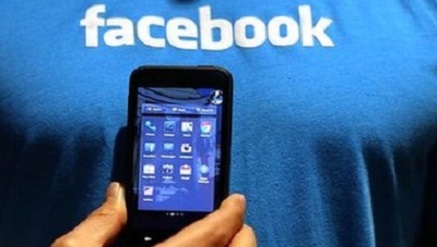
Facebook will proceed with launching satellites to provide Internet to less connected areas of the world, starting next year in Africa.
This is despite reports in June, saying Facebook was ditching its satellite plans. Facebook had reportedly planned to spend as much as $1 billion on the project, but decided not to go through with it because costs were escalating above budget.
However, Facebook CEO Mark Zuckerberg announced on his Facebook wall late yesterday:
“As part of our Internet.org efforts to connect the world, we’re partnering with Eutelsat to launch a satellite into orbit that will connect millions of people.
“As part of our collaboration with Eutelsat, a new satellite called AMOS-6 is going to provide Internet coverage to large parts of Sub-Saharan Africa. The AMOS-6 satellite is under construction now and will launch in 2016 into a geostationary orbit that will cover large parts of West, East and Southern Africa. We’re going to work with local partners across these regions to help communities begin accessing Internet services provided through satellite.”
Facebook renamed the Internet.org app to Free Basics by Facebook last month. The app and Web site are available in 19 countries, and enable access to select “basic services”, such as Wikipedia, health and employment information free of data charges.
Arthur Goldstuck, MD of World Wide Worx, says the news is very exciting as it will bring additional connectivity options to places that previously had very little.
“Of course, providing these satellites is in the interests of Facebook. The company has seen the massive appetite for its services in these regions and it therefore makes sense to fill connectivity gaps in whatever ways it can. Facebook is the most visited log-in service on the continent, so everyone wins.”
“It is a case of you can’t ever have too much Internet,” says Brian Neilson, director of BMI-TechKnowledge.
“The initiative is going to accelerate Internet usage in Africa and it will promote Facebook as a major gateway to the Internet,” said Neilson, who doubts this will become a major problem. “The youth in Africa are more informed than we give them credit for; they will be able to distinguish Facebook as a content provider.
“It will be good for consumers and Facebook but not the middle players on the ground; the small Internet service providers in these regions.”
Growth in the number of people with access to the Internet is slowing, and more than half of the world’s population is still offline. This was reported by the United Nations Broadband Commission last month.
Facebook has 31.5 million users in South Africa, Nigeria and Kenya, statistics released by the social network showed last month, with the majority using mobile devices to access their profiles.
Facebook said its active user population in Africa grew 20% to 120 million in June, from 100 million in September last year. A large portion of these users were in North Africa.


Nigeria Data Protection Commission (NDPC) has joined sixty (60) other Data Protection Authorities (DPAs) in endorsing the “Joint Statement on Al-Generated Imagery and the Protection of Privacy.”

NDPC
The Joint Statement was coordinated by the International Enforcement Cooperation Working Group (IEWG) of the Global Privacy Assembly.
This underscores the growing concerns regarding the privacy risks posed by Artificial Intelligence tools capable of generating realistic images and videos of identifiable individuals.
The Joint Statement highlights concerns over the misuse of Al-powered tools to create non-consensual imagery, defamatory content, and other harmful materials, particularly affecting children and vulnerable groups.
It calls on organisations to implement strong safeguards, ensure transparency, provide effective content removal mechanisms, and comply fully with applicable data protection laws.
The current effort forms part of a continuum of steps being taken by Nigeria to ensure the responsible use of Al. It will be recalled that the Honourable Minister of Communications, Innovation and Digital Economy, Dr ‘Bosun Tijani, led the initiative for the development of the National Al Strategy.
The NDPC also issued the General Application and Implementation Directive (GAID), which, amongst others, mandates privacy by design and privacy by default in the development and deployment of Al tools.
The National Commissioner/CEO of the NDPC, Dr Vincent Olatunji, has directed that the Nigeria Data Protection Act (NDP Act) Compliance Audit Returns (CAR) by data controllers and processors of major importance will serve as a yardstick for monitoring and evaluating responsible use of Al for data processing in Nigeria.
E-Business
Jumia Tech Week 2026 Begins with Tech Deals on Smartphones, Electronics, and Everyday Technology

Jumia Nigeria has announced the launch of Jumia Tech Week 2026, a two-week campaign offering customers access to discounted technology products across key categories, including smartphones, computing, home entertainment, and wearable devices.

Starting from March 2 to March 15, Jumia Nigeria’s Tech Week 2026 is themed ‘Tech Products for Less’ – a deliberate commitment by the e-commerce giant to drive down the cost of technology products for Nigerian consumers. The campaign offers significant price reductions across key product categories, enabling more Nigerians to access the devices they need at prices that reflect the company’s dedication to affordability and consumer value.
Jumia Tech Week will feature deals across a wide range of product categories, including mobile phones, computer systems and accessories, televisions and audio equipment, gaming products, home appliances, portable power solutions, health technology,, and wearable devices.
Customers will also have access to curated recommendations, including top smartphone deals, must-have accessories, gaming essentials, and home technology upgrades.
According to Temidayo Ojo, CEO of Jumia Nigeria, the campaign reflects Jumia’s broader commitment to making everyday technology more accessible to Nigerians.
“Technology has become an essential part of everyday life, and access to the right devices enables more people to participate fully in the digital economy,” said Ojo. “At Jumia, we remain focused on expanding access and improving the shopping experience as we continue to build Nigeria’s everyday retail destination.”
The campaign will include a range of customer engagement initiatives such as flash sales, brand days, anchor deals and interactive activities designed to enhance the online shopping experience.
Special highlight periods, described as Explosion Days, will take place on March 6 and March 13, featuring limited-time offers across selected technology categories. Customers will also be able to participate in interactive activities, including product-based games, treasure hunts,, and live shopping sessions during the campaign period.
The campaign will feature participation from leading brands including Oraimo, Silver Crest, Samsung, Ecoflow, Nivea and Aeon, offering customers a wide selection of technology, household and lifestyle products. Early access promotions already begun during the teaser period from February 16 to March 1, allowing customers to preview selected deals ahead of the official launch.
Jumia Tech Week forms part of the company’s broader strategy to expand e-commerce adoption by improving access to essential products and enhancing the customer experience across its platform. As Nigeria’s e-commerce market continues to grow, Jumia remains focused on strengthening its product assortment, logistics capabilities, and digital experience to serve customers better nationwide.
Customers can participate in the campaign by using the Jumia mobile app or visiting the Jumia website and following the conversation online using #JumiaTechWeek.

Nigeria Deposit Insurance Corporation (NDIC) pays between ₦2 million and ₦5 million as deposit insurance to customers of liquidated banks, Managing Director Thompson Oludare Sunday told the House Committee on Insurance and Actuarial Matters during 2026 budget defence.

NDIC
House Spokesperson Akin Rotimi Jr sought details on depositor entitlements, citing Heritage Bank’s June 2024 collapse and public concerns over financial confidence.
Sunday explained NDIC’s mandate: banks pay risk-based premiums (now under 1%, down from 15/16 of 1%) to guarantee deposits. Coverage is ₦5 million for deposit money banks, primary mortgage banks (PMBs), and microfinance banks (MMOs); ₦2 million for other financial institutions.
Using BVN, NDIC auto-pays guaranteed sums without visits for amounts up to the limit. For Heritage, post-revocation, NDIC liquidated assets—selling buildings, recovering loans, realizing investments—and paid a second ₦24.63 billion dividend on January 6.
“Anything above ₦5 million or ₦2 million depends on recoveries,” Sunday said, noting ongoing asset sales and debt chases.
Committee Chairman Ahmed Jaha Babawo commended the clarity, noting the limit rose from ₦500,000 to ₦5 million recently. Over 90% of Heritage depositors got insured sums in under four days, meeting International Resolution Deposit (IRD) standards.
Babawo added liquidation dividends would be discussed in executive session.

SEC Revokes Registration of Kensington Agro Trading Limited

NCDC Raises Alarm over Lassa Fever Ravaging 18 States in Nigeria

Lagos Deploys Drones, AI to Boost Traffic Response

Purple Woman 3.0 Is Back, to Empower Women in Tech this IWD 2026

NRS Targets N40trillion in Tax, Royalty Revenue in 2026

Accidental Billionaire Opts for Jail Instead of Returning Money Credited Him by Mistake

Kaspersky Brings more Transparency to Threat Detection with New Hunt Hub

Dr. Cairo Ojougboh Foundation Bolsters Nigeria’s Education Drive with ₦2.7m Student Support

NDPC Commits to Balancing Data Privacy, Protection Information

OADC Lagos Reinforces Commitment to Local Data Hosting and Digital Transformation @ NDPC’s National Privacy Week Summit




 E-Financial3 days ago
Iran-Israel-US Conflict and CBN’s FX Gains: A Stress Test for Nigeria’s Monetary Stability

 E-Financial3 days ago
Mutual Benefits Assurance Reaffirms Full Regulatory Compliance, Enhanced Governance

 General News3 days ago
JAMB Uncovers AI-Driven Fraud Targeting UTME Candidates, Warns Parents

 Telecom2 days ago
Sunil Bharti Mittal Conferred GSMA Lifetime Achievement Award for Transforming Global Telecommunications

 General News3 days ago
SERAP Asks FCCPC to Investigate Google, Meta, Others over Alleged Rights Abuses

 News3 days ago
TeamApt, Awabah Partner to Boost Pension Drive for Nigerians

 News3 days ago
FlashChange CEO, Bidemi Oke, Urges Startups to Build Strong Governance Structures Early

 Telecom2 days ago
Why Digital Trust Matters: Secure, Responsible AI for African SMEs?