

General News
Falana/Citadel vs Zinox: FIRS Document Shows Benjamin Joseph Lied under Oath


As the case between Citadel Oracle Concept Limited and Zinox Technologies returns to court, a document from the Federal Inland Revenue Service (FIRS) has put a lie to the claim under oath by Benjamin Joseph, CEO of Citadel, that he was not aware of the contract executed by his company at FIRS.

It will be recalled that Joseph, in his statement on oath in suit No: LD/4335/2014 in the High Court of Justice, Lagos State, dated 28th June, 2019, averred that his company, Citadel, did not execute any contract with FIRS and that he was not aware that a contract had been awarded to Citadel.
In his deposition under oath, Joseph claimed that Citadel “did not at any time execute any contract for the FIRS and neither did the 2nd defendant (Princess O. Kama) who is its agent in respect of the contract it bid for with the FIRS deliver/release any documents to the Claimant (Citadel) indicating that the contract it bid for, or any other contract was awarded to it by the FIRS or any other body.”
However, a letter from the FIRS addressed to the chamber of Afe Babalola & Co dated 11th February 2014 (FIRS/PD/GDS/2559) and signed by one Idrissa Kogo, Head Legal Department, stated: “Contrary to your client’s claim that they knew nothing about the execution of the contract awarded to them and that they did not receive any payment for the execution of the contract, our record reveals otherwise.
“Your client instructed FIRS through a letter dated 13th December 2012 to deal with Princess O. Kama (Your client’s agent) in relation to the contract. Through three separate letters dated 20th December 2012, your client instructed FIRS to pay to the client’s account with Access Bank plc.
“Please note that FIRS acted in compliance with your client’s instruction and with due diligence,” the FIRS letter stated.
The FIRS letter was a response to inquiry by Afe Babalola Chamber, lawyers to Citadel Oracle Concept Ltd and its MD, Mr. Benjamin Joseph, at that time.
Spokesman for Zinox, Mr. Chimezie Orisakwe, when contacted, confirmed the letter, stressing that the document from FIRS was actually in response to inquiries by the chamber of Afe Babalola SAN, who was Joseph’s first lawyer.
“Mr. Joseph had been presenting the story in a manner that portrays him as the victim in a business relationship, but it was apparent that he did not give full disclosure to the chamber of Afe Babalola, who had to write the FIRS to get a proper brief on the matter.

“I want to believe that the disclosure from FIRS which rubbished all the depositions of Joseph and exposed him as a perjurer must have informed the withdrawal of the highly respected Afe Babalola from the case. Interestingly, this letter has already been filed in Suit No. LD/4335/2014, the civil case at the Lagos State High Court.
“More curious is that Mr. Benjamin Joseph, in his Witness Statement on Oath in the said civil case, admitted that he gave the corporate documents of Citadel Oracle Concept Ltd and a letter of authorisation to Princess Kama, his staff, dated 13th December 2012, in respect of the FIRS contract.
“This, therefore, contradicts his present claim that his corporate documents were forged to open the bank account”, Mr. Orisakwe added.
The Zinox spokesman expressed shock that Femi Falana would include Zinox in his purported fiat/charges, even when the company has nothing to do with the transaction or allegations.
He said: “Zinox has never been invited by any investigative agency, including the police and the EFCC, on the so-called allegations.
“There is no report either by the police or the EFCC or any investigative agency where the name of Zinox was mentioned as a suspect.
“There is no judgment or ruling of any court where Zinox was mentioned as having anything to do, whatsoever, with the transaction or the allegations, the basis of the fiat/charges.
“Mr. Leo Stan Ekeh, the Chairman of Zinox, has never made any statement to the police in the course of any investigations and has never been mentioned in any court proceedings or judgment as part of any investigations relating to these allegations.”
Orisakwe cited instances in which Mr. Joseph lost the case and its allied suits. In a petition/case Mr. Joseph reported since 2013 and for which the Inspector General of Police charged him for false information in charge no.CR/216/16, the Zinox spokesman said Mr. Joseph was unable to prove his case.
He recalled that in another case filed by the EFCC at his instance against his partner, Princess O. Kama, in charge no. FCT/HC/CR/244/2018, Honorable Justice Danlami Z. Senchi of the FCT High Court (as he then was), dismissed as false all the allegations made by Benjamin Joseph, and imposed the sum of N20 million as damages against him for false petitioning in relation to these same allegations.
The Zinox spokesman alleged that the current charges said to have been filed by Falana on the basis of a fiat from the Attorney General is the third in a row as he had earlier filed charge no.CR/469/2022, which was struck out by Honourable Justice C. O. Oba of the FCT High Court, by an order dated 8th November 2022.
“He filed the same charges before Honorable Justice A. S. Adepoju of the FCT High Court, and the charges were, once more, struck out by the Honourable Court on 19th March 2024, with Honorable Justice Adepoju holding that: ‘This matter was brought in dead, extinct and should be confined into the dustbin of history…I hold that the instant suit is an abuse of the process of court and it is hereby struck out accordingly,’ Orisakwe said.
He expressed shock that a “learned Senior Advocate in the person of Femi Falana, would, yet, proceed to file the same charges before Honourable Justice A. O. Ebong of the FCT High Court in charge no. FCT/HC/CR/985/24 in November 2024.”
According to the Zinox spokesman, “It is very clear that the deliberate intention for instituting this new charge by Femi Falana SAN, to include the name of Zinox and its Chairman and other persons who were never part of the investigations, is to embarrass them, harm their reputation, and thereby damage their businesses.”
Meanwhile, when the case came up on 9th January 2025, the lawyers to Zinox and Technology Distributions filed Preliminary Objections boldly challenging the jurisdiction of the court over the case and the appearance of Falana, on the ground that the purported Fiat was legally wrongful and defective, and ought not to have been granted to Mr. Femi Falana SAN, in the first place.
This, thus, robs the court of jurisdiction because the case is brought on the basis of the Fiat, and if it is shown that the Fiat is defective and invalid, the court cannot exercise its jurisdiction over the case.
In the light of this development, Mr. Falana asked the court for an adjournment to enable him respond to the Preliminary Objections. The court consequently adjourned the case to 3rd March 2025, to hear the Preliminary Objections and any other pending application.
From a legal perspective, the issue of jurisdiction must first be determined by the court before any other step can be taken in the case, including the plea of the defendants.
This was the reason for the absence of the defendants in court on the said 3rd March 2025, especially as the individual defendants were yet to be served the court papers.


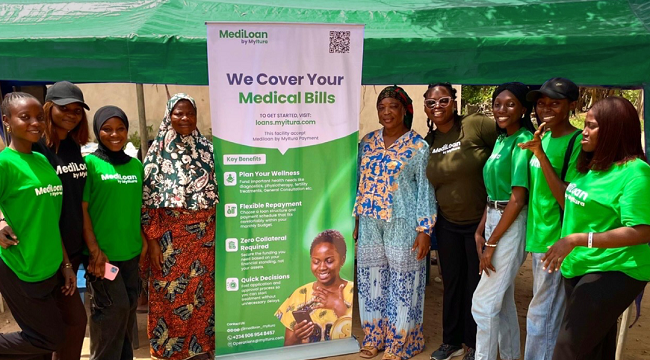
In commemoration of Women’s Month, health-tech platform Myitura has released a new white paper addressing the critical gaps in healthcare financing for women in Nigeria.

Titled “Closing the Gap: Healthcare Financing for Women in Nigeria,” the report highlights how high out-of-pocket costs, limited insurance coverage, and socio-economic factors continue to prevent women from accessing timely healthcare.
According to the report, over 70% of healthcare expenses in Nigeria are paid out-of-pocket, disproportionately affecting women who often delay care due to financial and social constraints.
“When women can afford to take care of their health early, we don’t just save lives; we strengthen families, communities, and the economy,” said Chialuka Kelechi, MyItura’s Chief of Staff.
Key Insights from the White Paper:
- Preventable conditions often escalate due to delayed care
- Women are more likely to deprioritize their own health
- Affordable, structured healthcare financing can significantly improve outcomes
Introducing a Women’s Health Initiative
As part of its commitment, Myitura is launching affordable women-focused health packages (powered by Mediloan), starting at ₦58,180, designed to encourage preventive care and early detection.
The package provides access to:
- Fasting/Random Blood Sugar
- Urinalysis
- Electrolytes
- Urea
- Creatinine
- Pap Smear Submitted slides
- HIV I & II Rapid (Qualitative)
- Hepatitis B Surface Antigen Screening (Rapid)
- Hepatitis C Virus Screening (Rapid)
- Abdominopelvic Ultrasound
- Ongoing support via the Myitura platform
Access:
Women can access these packages by downloading the Myitura app, which makes healthcare more accessible and convenient.
Myitura is a health-tech platform focused on improving access to healthcare through financing, technology, and preventive care solutions.
General News
DBI Unveils Nigeria Digital Economy Outlook 2026: Q1 Report Highlights Strategic Trends, Risks

DigitalSENSE Business Intelligence (DBI), powered by ITREALMS Media, has launched the Nigeria Digital Economy Outlook 2026: Q1 Intelligence Report (Executive Edition), delivering vital insights for navigating Nigeria’s fast-paced digital landscape.

This executive summary spotlights trends, risks, and opportunities in telecommunications, fintech, digital infrastructure, policy shifts, and investment flows. It underscores digital transformation’s pivotal role in boosting economic growth, financial inclusion, and nationwide innovation.
DBI Publisher, Ogbuefi Remmy Nweke, emphasized its value for leaders: “This Executive Edition offers a sharp, strategic view of Nigeria’s digital economy during a pivotal moment. As the sector surges ahead, reliable intelligence is key to seizing opportunities and tackling risks.”
Key highlights include:
Broadband infrastructure expansion.
Surge in digital payments adoption.
Evolving regulations.
Investor pivot to sustainable, profitable ventures.
The report urges action on digital financial inclusion, infrastructure funding, skills training, and public sector digitization.
Freely accessible, the Executive Edition complements the premium Full Edition with in-depth analysis for executives and institutions. Stakeholders can request full access or briefings.
Media & Access Contacts:
Email: [email protected]
Website: www.itrealms.com.ng

The on-going construction works at the National Agency for Science and Engineering Infrastructure, NASENI’s Renewable Energy Industrial Park, Gora, Nasarawa State is gathering momentum as the project is envisioned to address the country’s energy needs.

NASENI’s Renewable Energy Industrial Park, Gora, Nasarawa State
The project occupying a 40-hectare park designed as a multi-energy hub will help curb capital flight and save foreign exchange expenditure by enabling local production of key renewable energy components such as solar panels, mounting racks, wind systems and biomass technologies.
Speaking during an inspection visit on the project site on Tuesday, March 31, 2026, Special Adviser to the Executive Vice Chairman on Renewable Energy, Engr. Suyud Abdullahi Muhammad, who also serves as the Gora Project Manager, disclosed that the initiative is designed to significantly reduce Nigeria’s dependence on imported renewable energy equipment.
“There will be a wind assembly plant, small hydro power equipment production, and solar panel manufacturing; Renewable energy goes beyond just solar, and this park reflects that broader vision,” he said.
Abdullahi noted that the project aligns with NASENI’s goal of reducing energy poverty in Nigeria, where over 80 million citizens remain off-grid, while many connected to the national grid continue to experience inadequate power supply.
The Special Adviser also emphasised on the project’s industrialisation potential, highlighting its role in job creation and value chain development. The park is expected to generate 2,000 direct jobs, with an additional 50,000 indirect employment opportunities across supporting industries when completed.
“This initiative will localise the renewable energy value chain. Instead of relying on imports, Nigeria will begin to produce and eventually export these technologies, starting with the West African market and scaling up to the rest of the continent,” he added.
On sustainability and long-term viability, he revealed that the project is being executed in collaboration with private sector players, academia and other stakeholders, in line with NASENI’s “3Cs” principle of Creation, Collaboration and Commercialisation.
The ongoing construction is being handled by about 35 contracting firms, each handling specific components at varying levels of execution such as Multipurpose Halls for industrial productions, Research and Development (R&D) Centre, Knowledge Park, Energy Centre, Workshops, Researchers Lodge, Studio Apartments, Clinic, Restaurant, Wellness Centre, Solar Farm, Drivers Lounge, Gate House, Internal roads and drainage system and Fencing.
The Gora Renewable Energy Industrial Energy Park is considered a key component of the Federal Government’s Renewed Hope Agenda, aimed at strengthening local manufacturing, enhancing energy security and positioning Nigeria as a renewable energy hub in Africa.

Nigeria, Others Lose $88bn Yearly to Illicit Flows —Edun

Oracle Sacks 12,000 in India, Begins Shift to AI

CBN Says 33 Banks Raise Fresh N4.65 Trillion in Recapitalisation Exercise

NCC Insists Telcos Must Compensate Subscribers for Poor Quality of Service

NITDA Urges Joint Action to Drive Nigeria’s Digital Innovation

Spotify’s Loud & Clear Report Reveals Over ₦60Bn Revenue for Nigerian Artists in 2025

Madonna University Taps Tech Guru Adote for Strategic Board Role

China Threatens to Shut Nigeria’s Satellite Over $11.44m Unpaid Debt

FCCPC Bans Lagos ‘No Refund’ Policy, Vows Fines and Shutdowns for Traders

EFCC Arraigns Two FSDH Bank Officials Over $307k, €50k Fraud




 E-Financial2 days ago
NGX REGCO Fines 5 Firms N291m for Market Manipulation

 E-Financial2 days ago
FG Launches Cross-Border Digital Payments Report

 News2 days ago
Dangote Refinery Debunks Speculations on IPO

 News2 days ago
Descasio Launches “Give to Gain” Leadership Insights Report, Hosts Executive Brunch for Women in Leadership

 E-Financial2 days ago
Interswitch Deepens Strategic Partnership with KCB Group to Advance Digital Payments and Financial Inclusion

 News2 days ago
World Backup Day: Research Reveals 84% of Users Store Sensitive Data Digitally

 General News2 days ago
FG Awards N50m Each to 45 Students under S-VCG

 General News2 days ago
Moniepoint Launches Sixth Edition of Women in Tech Internship with “There Is Space for You” Campaign