

News
FG Names 15 Terrorism Financiers, BDCs

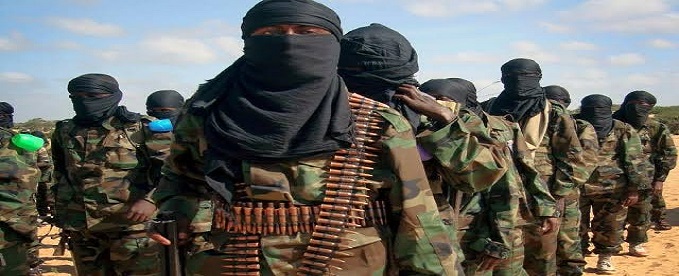
Federal government said that it has uncovered the identity of 15 entities, including nine individuals and six Bureau De Change operators and firms, allegedly involved in terrorism financing.

On Monday, March 18, 2024, the Nigeria Sanctions Committee met and recommended sanctions for their involvement in terrorism financing.
The Nigerian Financial Intelligence Unit (NFIU) in a statement on Tuesday accused a Kaduna-based publisher, Mr Tukur Mamu, of being involved in financial terrorism.
The media entrepreneur is currently being tried by the federal government for allegedly aiding the terrorists who attacked the Abuja-Kaduna train in March 2022, according to Punch.
“The Attorney General of the Federation, with the approval of the President, has thereupon designated the following individuals and entities to be listed on the Nigeria Sanctions List,” a part of the statement titled Designation of Individuals and Entities for March 18, 2024 read.
Punch quoted the NFIU as saying that Mamu “participated in the financing of terrorism by receiving and delivering ransom payments over the sum of $200,000 US in support of ISWAP terrorists for the release of hostages of the Abuja-Kaduna train attack.”
The document said one of the individuals is “the suspected attacker of the St. Francis Catholic Church Owo, Ondo State on June 5, 2022, and the Kuje Correctional Center, Abuja on July 5, 2022.”
Another was described as “a member of the terrorist group Ansarul Muslimina Fi Biladissudam, the group is associated with Al-Qaeda in the Islamic Maghreb.
“The subject was trained and served under Muktar Belmokhtar, aka One Eyed Out, led Al-Murabtoun Katibat of AQIM in Algeria and Mali.”
The NFIU said the individual “specialises in designing terrorist clandestine communication code and he is also an Improvised Explosive Device expert.
“The subject was also a gatekeeper to ANSARU leader, Mohammed Usman aka Khalid Al-Bamawi. Equally, he was a courier and travel guide to AQIM Katibat in the desert of Algeria and Mali. He is into carpentry. The subject fled the Kuje Correctional Centre on July 5, 2022. He is currently at large.”
Another was identified as “a senior commander of the Islamic State of West Africa Province Okene.”
The agency said, the individual “came into the limelight in 2012 as the North Central wing of Boko Haram.
“The group is suspected of the attacks carried out around Federal Capital Territory and the South West Geographical Zone, including the June 5, 2022 attack on St. Francis Catholic Church, Owo, Ondo State.”
Another was described as “a financial courier to ISWAP Okene. She is responsible for the disbursement of funds to the widows/wives of the terrorist fighters of the group.”
According to the document, another of the individuals “in 2015, transferred N60m to terrorism convicts.”
He was also said to have “received a sum of N189m between 2016 and 2018.”
The same person is said to “own entities and business reported in the UAE court judgment as facilitating the transfer of terrorist funds from Dubai to Nigeria.”
Another individual was said to have “received a total of N57m from between 2014 and 2017.”
Another was said to have “had a total inflow of N61.4 bn and a total outflow of N51.7bn from his accounts.”
The document further revealed that under Section 54 of the Terrorism (Prevention and Prohibition) Act, 2022, institutions and individuals are required to:
“(a) immediately, identify and freeze, without prior notice, all funds, assets, and any other economic resources belonging to the designated persons and entities in your possession and report same to the Sanctions Committee;
“(b) report to the Sanctions Committee any assets frozen or actions taken in compliance with the prohibition requirements.
“(c) immediately file a Suspicious Transactions Report to the NFIU for further analysis on the financial activities of such an individual or entity; and
“(d) report as a Suspicious Transactions Report to the NFIU, all cases of name matching in financial transactions before or after receipt of this List. ”
It said “The freezing obligation required above shall extend to
“(a) all funds or other assets that are owned or controlled by the designated persons and entities, and not only those that are tied to a particular act, plot, or threat of terrorism or terrorism financing;
“(b) those funds or other assets that are wholly or jointly owned or controlled, directly or indirectly, by designated persons or entities;
“(c) the funds or other assets derived or generated from funds or other assets owned or controlled directly or indirectly by designated persons or entities; and
“(d) funds or other assets of persons and entities acting on behalf of, or at the direction of designated persons or entities.”



According to the ‘Anatomy of a Cyber World: Global Report by Kaspersky Security Services’, there has been a noticeable decline in the percentage of high-severity incidents over the past few years.

While 2021 recorded the highest proportion at 14.3%, 2025 experienced the lowest in six years at just 3.8%. This trend indicates that many attack attempts were quickly detected and effectively mitigated by Kaspersky MDR experts, preventing their severity from escalating beyond medium levels.
High-severity incidents are defined as attacks involving direct human involvement that result in a significant impact on the customer’s IT infrastructure. In 2025, the number of such incidents detected by Kaspersky MDR decreased by 19% compared to 2024, highlighting improvements in early detection capabilities and more effective remediation efforts among Kaspersky MDR clients.
A detailed analysis of the root causes of these incidents in 2025 reveals the following insights:
Human-driven attacks accounted for approximately 23% of high-severity incidents. Although this represents a slight decrease from 2024, they continue to be the primary cause of serious breaches.
Kaspersky detected such attacks in nearly 21% of customers, demonstrating that motivated adversaries persist in bypassing automated defences. Despite advancements in automated detection tools, these highly skilled attackers still find ways to evade security measures.
Confirmed cyber exercises like Red Teaming made up over 23% of incidents. When activity is verified as part of security testing, it’s often classified as infrastructure false positives, though customers frequently report them as incidents.
Social engineering ranked third, responsible for over 15% of high-severity attacks and affecting nearly 18% of organisations. These are classified as high-severity when successful and not automatically remediated, often leading to security awareness recommendations.
Security policy violations constituted just under 14% of all cases, involving legitimate accounts performing suspicious actions like data exfiltration. Malware incidents represented less than 12%, while artifacts from past attacks, or APT traces, were found in over 7% of cases. Vulnerability detection, though not core focus for Kaspersky MDR, was reported in fewer than 5% of incidents.
“The decline in high-severity incidents highlights the critical importance of adopting a proactive cybersecurity strategy. Human-led solutions such as Managed Detection and Response (MDR) and Incident Response remain essential in combating sophisticated, human-driven threats.
To further enhance the effectiveness and efficiency of in-house security teams, organisations should incorporate advanced, automated solutions like Extended Detection and Response (XDR), which provide improved visibility and enable faster responses.
Additionally, leveraging SOC consulting services can assist in building a robust Security Operations Center from the ground up or optimising an existing one for maximum performance.
An integrated approach to hybrid security operations empowers organisations to detect threats early, contain them swiftly, and ultimately prevent severe breaches from occurring,” comments Sergey Soldatov, Head of Security Operations at Kaspersky.

Google and UpSkill Universe, Sub-Saharan Africa’s leading AI and business skills training partner, have announced a major redesign of the Google Hustle Academy programme.

For the first time, the free training initiative is open to everyone, not just business owners. The new curriculum is focused on equipping individuals and entrepreneurs with practical AI skills.
Small businesses are the engine of Africa’s economy, creating over 80% of jobs on the continent. To help them grow, the Hustle Academy was launched in 2022, providing bootcamp-style training on business strategy, digital skills, AI, and leadership. The program has since trained over 18,000 SMEs, with many reporting increased revenue and job creation.
Now, as AI reshapes the job market, the program is evolving. The 2026 edition is built for anyone in Sub-Saharan Africa, including employees, students, and jobseekers, who wants to use AI to advance their career.
To meet the needs of a diverse audience, the new format includes short, 60-minute webinars and more immersive, high-impact bootcamps. These sessions are laser-focused on putting AI to work immediately in areas like digital commerce, marketing, and growth strategy.
Speaking about the academy, Gori Yahaya, Founder & CEO UpSkill Universe said “The 2026 Hustle Academy is designed to close the AI Skills gap with hands-on training that is short, focused, and immediately useful. AI is reshaping how businesses win and how careers are built, right across this continent.
“We’re excited to renew our partnership, now in its fifth year with Google, combining their global AI leadership with our deep regional AI expertise. The next wave of AI leaders will come from this continent. We are making sure they are ready.”
The Hustle Academy initiative has strengthened digital competitiveness across emerging African economies by enabling SMEs to move beyond AI awareness to practical implementation, positioning them for sustained growth in an increasingly AI-driven business environment.
“We believe that the future of Africa’s digital economy lies in the hands of individuals and entrepreneurs alike. Our new strategy focuses on scaling reach by training individuals in the latest AI-centered tools and techniques,” said a Google representative.

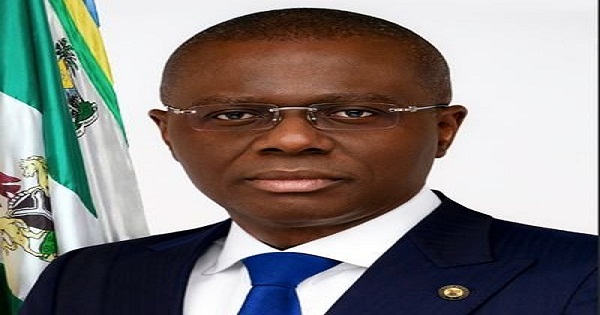
Lagos State has dragged 45 individuals and firms, including Bi-Courtney Aviation, DAAR Communications and Leaders & Company, to revenue court for tax debts running into billions of naira.

Lagos Govt
Bi-Courtney, operators of Murtala Muhammed Airport Terminal Two, faces N38.7 million claim; DAAR, behind Africa Independent Television, owes N22.4 million; ThisDay publishers Leaders & Company allegedly skip N67.1 million.
GMT Energy Resources tops corporates at N145.8 million, followed by Sheriff Deputies at N132.1 million; others like Heyden Petroleum, AA Rescue, BRT operator Primero also listed.
Individuals owe N13.5 million to N35 million each.
Attorney-General Lawal Pedro said suits followed ignored notices, aiming to enforce laws and fund infrastructure.
More defendants: IENG Nigeria, James Fisher, V Care Diagnostics, Venture Garden, Saro Africa, Barry Callebaut, Native Media, First Consulting, Eyowo Payments.
Compliant taxpayers post-notice escaped prosecution; defaulters risk penalties, interest, jail.
Pedro urged prompt filings and payments.

FG to Gift Nigerians over 100 Free TV Channels from May 15

FG New Approves Biometric Passenger Verification System for Airports Security

STBMAN, NBC Bicker over Alleged Due Process Breaches

CBN Dismisses Polaris Bank Liquidation Claim

AfDB Okays $200m for Nigeria’s Digital Backbone, Others

Spotify’s Loud & Clear Report Reveals Over ₦60Bn Revenue for Nigerian Artists in 2025

Kuda MFB Increases Kuda for Her Business Grants to ₦10 Million

Why JustMarkets Is a Strong Choice for Gold Trading

Canal+ to Cut Jobs as Part Sweeping Restructuring

Nigeria tops global rankings for USDT, USDC ownership




 E-Business2 days ago
Nigeria Demands Cloud Sovereignty to Anchor Africa’s Digital Independence

 Telecom2 days ago
Digital Encode Sponsors PAFON 3.0 as CVO Prof. Adewale Set to Deliver Keynote on Cybersecurity and Trust

 Telecom2 days ago
NITDA Boss Warns of AI Threat Shift @ GITEX Africa

 E-Business2 days ago
As Nigerians Struggle to Save, Mutual Benefits Highlights Power of Structured Financial Planning

 E-Financial2 days ago
Polaris Bank Targets Youth with Financial Literacy Drive

 Broadcasting2 days ago
What Adekunle Gold’s Support Means for ‘The Gathering on 100
 Broadcasting1 day ago
FG to Gift Nigerians over 100 Free TV Channels from May 15
 E-Financial1 day ago
AfDB Okays $200m for Nigeria’s Digital Backbone, Others