

E-Financial
FG Slams N50 Levy on Electronic Money Transfer of up to N10,000


The Finance Act 2020 recently signed into law by President Muhammadu Buhari, imposes N50 levy on electronic transfer of money deposited in any bank or financial institution on any account on sums of N10, 000 or more.

The revenue, according to the Act, is to be shared based on derivation 15% to FG & FCT and 85% to states.
The new law which introduces over 80 amendments to 14 different laws and takes effect from 1st January 2021, however, cancels out stamp duty charge on electric transfers.
The Act, among other provisions, notably exempted workers who earn N30,000 minimum wage or less from personal income tax and excempted commercial airline ticket from value added tax (VAT)
These are some of the key highlights of the Act as identified by the PricewaterhouseCoopers (PWC).
The notable changes introduced by the Act, as identified by the firm include: “Compensation for loss of office up to N10m exempted from capital gains tax. Tax due on excess above N10m is to be deducted by the payer and remitted within the time specified under the PAYE Regulations.
“Minimum tax for companies in respect of returns for years of assessments due between 1st Jan 2020 and 31st Dec 2021 has been reduced from 0.5% to 0.25% of gross turnover less franked investment income.
“Cost of donation made in cash or kind to any fund set up by government in respect of any pandemic or natural disaster to be tax deductible subject to a maximum of 10% of assessable profit after other allowable donations.
“FIRS may prescribe the form of accounts other than audited financial statements for small and medium companies as defined under CITA.
“Service of notice of assessment and objections under CITA may be done via courier service, email or other electronic means as may be directed by FIRS in a notice. Tax Appeal Tribunal may conduct its hearing remotely via virtual means, using such technology or application as may be necessary to ensure fair hearing.
“Public character for the purpose of tax exemption requires an organisation or institution to be registered in accordance with relevant laws in Nigeria and does not distribute or share its profits in any manner to members or promoters.
“A small or medium company engaged in primary agricultural production may be granted pioneer status for an initial period of 4 years and an additional 2 years (making a total of 6 years).
“Gross income for personal relief purposes has been redefined as income from all sources less non-taxable income, exempt items and income on which no further tax is payable. In the case of an enterprise, less all allowable business expenses and capital allowance.
“Exemption of low-income earners earning minimum wage or less from personal income tax.
“Goods liable to excise duties have been expanded to include telecommunication services provided in Nigeria as may be prescribed in the law or an Order issued by the President.
“Reduction of import duty on Tractors from 35% to 5%; Mass transit vehicles for transport of more than 10 persons and Trucks from 35% to 10%, and reduction of import levy on Cars from 30% to 5%.
“Taxable supply with respect to goods is defined to include where the beneficial owner of the right in or over goods is a taxable person in Nigeria or the goods or right is situated, registered or exercisable in Nigeria. Services include those consumed by a person in Nigeria whether rendered within or outside Nigeria excluding employment; and in respect of incorporeal, includes exploitation of a right, acquisition of or assignment of rights by a person in Nigeria and incorporeal connected with tangible or immovable asset located in Nigeria. Goods exclude land and building, money or securities.
“A non-resident person that makes a taxable supply to Nigeria is required to register for tax and obtain TIN, include VAT on its invoice, and may appoint a representative in Nigeria for the purpose of its tax obligations. The FIRS may issue guidelines this purpose.
“Exemption of commercial airline ticket from VAT, and hire or lease of agricultural equipment for agricultural purposes.
“Deletion of electronic bank transfer as transaction liable to stamp duty and introduction of electronic money transfer levy of N50 on electronic transfer of money deposited in any bank or financial institution on any account on sums of N10k or more. Revenue is to be shared based on derivation 15% to FG & FCT and 85% to states.
“Accountant General for the Federation to open dedicated accounts for each tax type for the payment of tax refunds to be administered by the FIRS and funded based on annual budgets for tax refund for each tax-type as may be approved by the National Assembly.
“For companies operating in the free trade zones, exemption from taxes is subject to compliance with tax filing and returns obligation to the FIRS under section 55(1) of CITA.
“Establishment of a Crisis Intervention Fund of N500b or other sums as may be approved by the National Assembly; and by way of trust, as a sub-fund of the Crisis Intervention Fund, an Unclaimed Funds Trust Fund.
“Unclaimed dividends in a listed company and unutilized amounts in a dormant bank account outstanding for 6 years or more to be transferred to the Unclaimed Funds Trust Fund as a special debt to the Federal Government to be managed by the Debt Management Office and shall be available to the shareholder or account holder at any time together with the yield thereon.
“Balance of operating surplus of a corporation shall be paid to the CRF of the Federation on a quarterly basis. Finance Minister may effect a direct deduction from TSA or other accounts of a corporation to enforce compliance. Also, it is prohibited to reduce contract values or splitting of procurement to evade the use of the appropriate procurement method.”


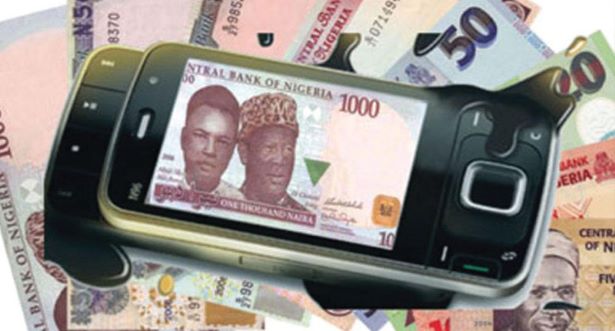
Despite being the global epicentre of mobile money innovation, Sub-Saharan Africa remains home to tens of millions of adults who do not own a mobile money account. A new World Bank report disclosed.

According to the Global Findex Database 2025, Sub-Saharan Africa is widely celebrated as the birthplace of mobile money, a technology that has transformed how people send, receive, save, and borrow money using basic mobile phones.
“Yet, the region still accounts for one of the world’s largest concentrations of adults without mobile money accounts,” it said.
The report shows that while about 40 percent of adults in Sub-Saharan Africa had a mobile money account in 2024, up sharply from 27 percent in 2021, roughly 60 percent still do not.
The reasons, the report argues, are less about lack of awareness and more about deep structural barriers that continue to exclude large segments of the population.
According to the report, a lack of money is the single most common barrier to mobile money account ownership in the region.
For many low-income households, irregular earnings, subsistence livelihoods, and dependence on cash-based transactions reduce the perceived value of maintaining an account, even when services are widely available.
This challenge is compounded by affordability issues. Transaction fees, charges for cashing out, and the cost of maintaining an active SIM card can deter the poorest adults, reinforcing the perception that mobile money is not designed for very small or infrequent transactions.
In Nigeria, the World Bank Group has announced an estimate that 139 million in 2025 will be living in poverty despite the reforms of the federal government.
Mobile phone ownership gaps persist
Mobile money cannot function without a mobile phone, yet phone ownership itself remains uneven. The report finds that 40 percent of adults now own a mobile money account, up from 27 percent in 2021.
And those who do not have a financial account also do not own a mobile phone of any kind.
This creates a double barrier: adults who are financially excluded are often also digitally excluded.
Among those without phones, the cost of the device is cited as the primary obstacle. While basic phones are more affordable than smartphones, the report notes that even these can be out of reach for the poorest households, especially in rural areas. Without addressing device affordability, efforts to expand mobile money risk leaving behind the very groups they aim to serve.
The report disclosed that even when phones and accounts are available, digital capability remains a challenge. The report finds that only about half of mobile money account owners in Sub-Saharan Africa protect their phones with passwords, compared with much higher shares in other regions.
Limited digital literacy raises concerns about fraud, mistaken transfers, and scams, which in turn undermines trust in mobile financial services.
Trust issues are further reinforced by negative user experiences. Only about half of the adults in the region who sent money to the wrong person using mobile money reported getting it back, according to the report. Such experiences can discourage first-time users and lead dormant users to abandon their accounts.
A large untapped opportunity
Despite these challenges, the report points to a significant opportunity. In Sub-Saharan Africa, about a quarter of adults without accounts already own a mobile phone, have official ID, and have a SIM card registered in their own name, meaning they have all the prerequisites for mobile money adoption.
“Closing the gap will require coordinated action: reducing the cost of devices, expanding ID coverage, strengthening consumer protection, and designing low-cost products that reflect the financial realities of poor and rural households,” the World Bank argues.
ation for Africa, turning ambition into scalable capital and risk mitigation solutions.
Building on the successful conclusion of the 17th replenishment of the African Development Fund (ADF-17), which mobilised $11 billion for Africa’s most vulnerable countries, the African Development Bank Group and the Government of the United Kingdom convened global investors and private sector leaders in London to accelerate a new phase of private capital mobilisation for Africa’s development.

The inaugural Africa Private Capital Mobilisation Day, held on 17 December at Lancaster House, brought together more than 150 senior decision-makers from private equity firms, sovereign wealth funds, pension funds, insurers, philanthropies, and development finance institutions and export credit agencies—marking a decisive shift from dialogue to execution.
The high-level event was hosted by the African Development Bank Group in partnership with UK government institutions, the Foreign Commonwealth and Development Office, UK Export Finance and British International Investment, reflecting a shared ambition to scale private capital flows into African economies.
Speaking at the opening, African Development Bank Group President Dr Sidi Ould Tah described the event as a natural continuation of the ADF-17 replenishment process and a decisive step toward addressing Africa’s estimated $402 billion annual development financing gap.
“We will build on recent engagements with development finance institutions, export credit agencies, pension funds, sovereign wealth funds, insurers, and philanthropic partners to advance concrete initiatives under our vision for a New African Financial Architecture,” said Dr Ould Tah.
The Africa Private Capital Mobilisation Day aligns with President Ould Tah’s Four Cardinal Points vision, which focuses on unlocking Africa’s capital potential, strengthening financial sovereignty, transforming demographic growth into a dividend, and delivering resilient infrastructure and value chains.
UK Minister for Development, Jenny Chapman said, “We are delighted that President Ould Tah decided to hold the first Private Capital Mobilisation Day here in London, recognising the critical role of the City of London in mobilising investment for Africa. The UK’s shifting role—from donor to investor—will support countries who want to grow their economies and ultimately ultimately exit the need for aid.”
The programme featured focused discussions on reshaping perceptions of risk in Africa, designing innovative financial platforms, and mobilising capital in fragile and frontier markets.
New analysis on the Global Emerging Markets Risk Database delivered by the Center for Global Development presented new evidence showing that long-term lending to African borrowers has historically been significantly less risky than commonly perceived.
Sector-focused discussions underscored the strategic role of healthcare and aviation in strengthening Africa’s economic resilience, productivity and integration. Participants were introduced to two flagship initiatives championed by the Bank Group and its partners:
– The Africa Medicines and Equipment Facility, developed in partnership with the Gates Foundation, will provide African countries with predictable, timely, and affordable financing to secure essential medicines and medical equipment.
– The Integrated Aviation Transformation Programme for Africa—supported by a dedicated blended-finance facility—aims to modernise and expand Africa’s aviation ecosystem—from airports and airlines to enabling services critical to trade, tourism, and regional integration.
In parallel, President Ould Tah convened a closed-door roundtable with senior executives from approximately 30 leading institutional investors to explore the launch of an Africa-focused Private Sector Innovation Lab. The proposed platform would serve as a dedicated space to co-create new financing instruments, partnership models, and risk-sharing solutions tailored to African markets.
The outcomes of the Africa Private Capital Mobilisation Day are captured in the London Communiqué, setting out clear commitments by the African Development Bank Group and its partners to scale private capital mobilisation for Africa.
Further work will go into setting out priority actions and implementation pathways to scale private capital mobilisation for Africa, turning ambition into scalable capital and risk mitigation solutions.

The Federal Inland Revenue Service (FIRS) has announced that the National Identification Number (NIN) will automatically serve as the Tax Identification Number (TIN) for individual Nigerians beginning in 2026.

The clarification was issued on Monday through a public awareness campaign on the new tax laws shared by the Service on X.
According to the FIRS, registered businesses will also no longer need a separate Tax Identification Number, as their Corporate Affairs Commission (CAC) registration numbers will now function as their official tax identifiers under the revised tax framework.
The announcement follows public concerns over aspects of the new tax laws that require a Tax ID for certain transactions, including the operation and ownership of bank accounts.
Providing further explanation, the FIRS said the Nigeria Tax Administration Act (NTAA), scheduled to take effect in January 2026, mandates the use of a Tax ID for specified transactions. It, however, noted that the requirement is not entirely new, stressing that it has been in existence since the Finance Act of 2019 but has now been strengthened.
“The Tax ID unifies all Tax Identification Numbers previously issued by the FIRS and State Internal Revenue Services into a single identifier,” the Service said.
“For individuals, your NIN automatically serves as your Tax ID, while for registered companies, your CAC RC number is used. You do not need a physical card, as the Tax ID is a unique number linked directly to your identity.”
The FIRS explained that the new system is intended to simplify identification processes, eliminate duplication, close gaps that enable tax evasion, and promote fairness by ensuring that all individuals earning taxable income contribute accordingly.
The agency also urged Nigerians to ignore misinformation surrounding the reform, assuring the public that the new tax framework is designed to improve efficiency and transparency in tax administration.
Meanwhile, the Chairman of the Presidential Committee on Fiscal Policy and Tax Reforms, Taiwo Oyedele, disclosed that banks will be required to request a TIN from all taxable Nigerians as part of the federal government’s new tax administration framework, which will take effect on January 1, 2026.

World Bank Reveals Obstacles to Growth of Mobile Money Accounts in Sub-Saharan Africa

NCC Ranked Among Top 3 MDAs for Best Website Performance in 2025

FIRS Declares NIN, CAC Numbers as Tax IDs from 2026

Woherem Proposes Pragmatic Roadmap to End Terrorism and Banditry in Nigeria

AfDB Group Mobilises Global Private Capital to Close Africa’s Financing Gap

Nigeria Records Highest Weekly Cyberattacks in Africa — Report

Cyber Tsunami Hits Nigeria as Breaches Surge 1,047%, esentry Q3 Report Reveals

Minister Claims Bandits Exploit Poor Network, Bounce Calls Off Multiple Towers

GenAI Adoption Among African workers Outpace Global Peers

Jumia’s Data Shows Nigerians Turning to Digital Retail to Navigate Inflation Pressures




 News3 days ago
US Begins Partial Visa Ban on Nigerians January 1

 News3 days ago
DPLAN Threatens NDPC with Legal Action for Setting aside $32.8m Meta Fine

 News3 days ago
Glo Extends Christmas Greetings, Urges Unity and Care for Others

 E-Financial2 days ago
FIRS says NIN, CAC Numbers to Serve as Tax IDs from 2026

 E-Financial3 days ago
NOVA Bank Opens Regional Office in Owerri

 E-Financial3 days ago
Naira Stability, Lower Borrowing Costs Expected in 2026 — CBN Survey

 Telecom2 days ago
Oyedele Dismisses Claims Bank Accounts Without TIN Will Be Frozen
 E-Financial2 days ago
AfDB Group Mobilises Global Private Capital to Close Africa’s Financing Gap