

News
FG to Cut Deposits in Banks over their Refusal to Lend to Nigerians


The federal government said that it might be forced to cut her deposits with Deposit Money Banks (DMBs), otherwise commercial banks in the country over their reluctance to grant loans to agricultural, mineral resources and small and medium enterprises sectors of the economy.
President Goodluck Jonathan who expressed his government’s dismay, said that banks were not doing enough to support the real sector despite the policies and other measures provided to create an enabling environment for them to thrive over the years.
The President spoke at the opening session of the 7th Annual Banking and Finance Conference of the Chartered Institute of Bankers of Nigeria (CIBN) in Abuja, Tuesday.
Represented by Dr. Yerima Ngama, minister of State for Finance, Jonathan, warned that unless they increase their funding to these critical sectors, government might be compelled to reduce their access to public sector deposits.
Public sector deposits in banks are currently estimated at about N2 trillion but the Central Bank of Nigeria’s (CBN) decision to increase their Cash Reserve Requirement (CRR) for public sector deposits to 50 per cent, as part of the monetary tightening mechanism, had already reduced public funds available to banks to trade with.
The apex bank has intervened through financial intermediation support initiatives such as the Commercial Agricultural Credit Scheme (CACS), and Nigerian Incentive-Based Risk Sharing System for Agricultural Lending, NIRSAL.
The President noted that the banks were getting money from the government at zero interest rate but continued to deny the productive sector the required funding support.
He added that if the banks failed to play their roles, the government might withdraw its deposits in the banks and use a substantial part of the fund to support the productive sector.
Describing the oil sector as external to the economy (because there is little it is drawing from Nigeria to create wealth), Jonathan expressed desire for the banks to jointly do more in agricultural lending, which he noted remained too low to achieve the Agricultural Transformation Agenda’s (ATA), goals of making Nigeria a net exporter of food and catalyst for job creation in the economy.
He said: “The banks have to come together and see how they can put funds together to really support the farmers. “The statistics we have coming from the Central Bank is that when you lend to farmers they pay you. I think we have First Bank’s experience where the percentage of the nonperforming agric loans to performing is less than 1.5 per cent.
“So, the poor actually pay their loans, but why are the banks always eager to go and lend to the riskier businesses than this safe agricultural businesses? “The issue is with our psyche, we think that maybe they are not high tech or maybe there is too much documentation based on a loan of N50,000 or N100,000.
But as a nation, you have to look at it as your responsibility. We owe this nation; we have to rise to that challenge and see that the banking sector should come together with a solution and no longer wait for the Central Bank to be coming with the solution.
“But if we want to believe that the banking sector is not innovative, that it is not ready to come with solutions and they are always looking for government and they are always looking for the Central Bank to do the magic, I am saying that time is running out and people are not patient,” the President warned.
Noting that the banks needed to do more in lending to the agricultural, solid minerals and real sector as a corporate imperative, the President said unless they played their roles in a manner that suggests their readiness to support the nation’s economic development objectives, the CBN may have to introduce new policy measures that would deny the banks continued access to government deposits.
Mr. Segun Aina, president of the CIBN, had in his remarks re-assured the government of the institute’s readiness to partner government in its various initiatives aimed at deepening banking knowledge and improving delivery of top class financial services to the economy
He expressed the hope that the conference would serve as a veritable platform for players in the industry to explore, share experiences and identify strategies to be pursued in ensuring that the financial services industry effectively plays its expected roles in supporting economic development.


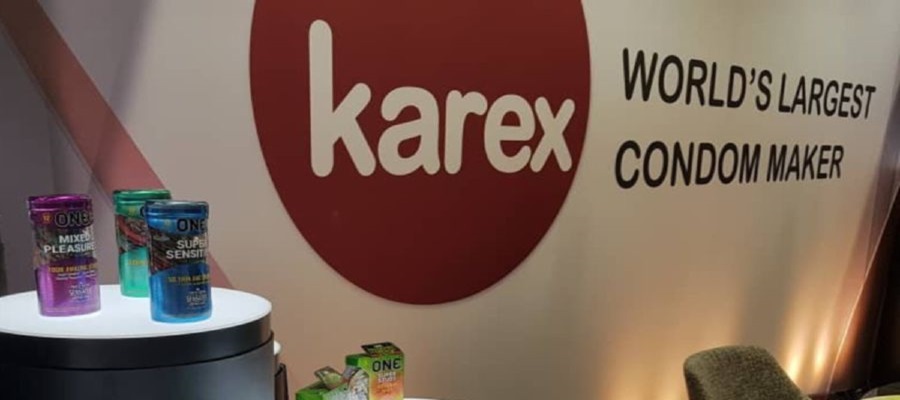
Karex, world’s largest condom maker, plans to raise prices by up to 30 percent due to supply disruptions linked to the Iran war.

This means that safe sex could get more expensive if the war continues to disrupt global supply chains, according to Goh Miah Kiat, CEO, Karex.
Kiat told old Reuters that rising freight costs and shipping delays have increased demand and forced the company to pass costs to customers.
Broader supply chain issues and higher oil prices could impact many everyday products that rely on petrochemicals.
“The situation is definitely very fragile, prices are expensive… We have no choice but to transfer the costs right now to the customers,” Goh told Reuters.
Karex joins a growing list of companies that are bracing for supply chain disruptions amid the ongoing war in Iran.
Based in Malaysia, Karex produces condoms, personal lubricants, gloves, medical catheters and probe covers.
The company manufactures male latex condoms including ONE, Trustex, Carex and Pasante, and it can produce over 5 billion condoms annually. Karex also exports to more than 130 countries, according to its website.
“We’re seeing a lot more condoms actually sitting on vessels that have not arrived at their destination but are highly required,” Goh said.
Federal High Court in Abuja has upheld Federal Competition and Consumer Protection Commission’s (FCCPC) authority to investigate consumer complaints and enforce regulatory oversight in Nigeria.

Tunji Bello, EVC/CEO, FCCPC
In a statement signed by Ondaje Ijagwu, director, Corporate Affairs, the Commission said that in the judgment delivered by James Omotosho on April 20, 2026, the court dismissed a suit filed by Air Peace Limited challenging the Commission’s statutory powers.
The ruling affirmed the Commission’s mandate under the Federal Competition and Consumer Protection Act, 2018 to “receive complaints, assess matters brought before it, and take appropriate lawful steps, including investigation where necessary.”
Reacting to the decision, Tunji Bello, executive vice chairman and chief executive officer of the Commission, said; “the judgment reinforces the importance of regulatory oversight in safeguarding consumers and ensuring fair market practices.”
Bello explained that the case stemmed from complaints involving “unrefunded ticket fares, cancelled flights, and other service concerns affecting passengers.”
Bello stressed that consumers who pay for services are entitled to fair treatment, transparency, and redress in accordance with applicable law.
He also said that investigations conducted by the Commission are administrative processes aimed at establishing facts.
“It does not amount to a finding of liability or wrongdoing,” he said.
The FCCPC boss further reiterated the agency’s commitment to due process and constructive engagement with businesses, noting that the Commission would continue to operate in a “fair, professional, and transparent manner.”
Bello also urged companies operating in Nigeria to cooperate with lawful regulatory procedures and strengthen internal complaint resolution mechanisms to address consumer grievances promptly.
The Commission said it will continue to act within its statutory mandate to protect consumers, promote competitive markets, and build confidence in key sectors, including aviation.

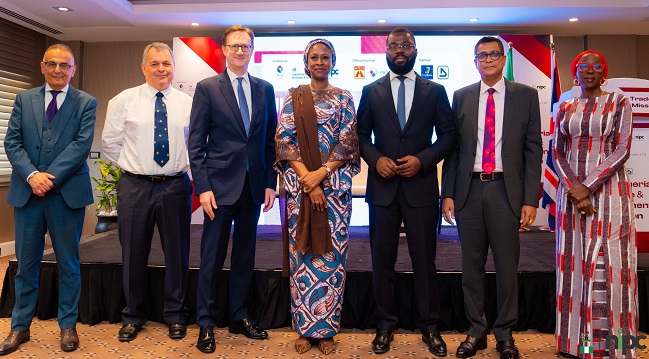
Underscoring the strength of the UK-Nigeria strategic partnership, the UK has completed its first trade and investment mission to Nigeria since the recent State Visit, focused on turning high‑level agreements into practical commercial opportunities for businesses in both countries.

Supported by the UK Department for Business and Trade and delivered by DMA Invest in partnership with the Nigeria Investment Promotion Council (NIPC), the 2-day trade mission brought together 43 delegates from 30 British companies to build partnerships, deepen commercial engagement and pursue new opportunities across priority sectors with their Nigerian counterparts.
With trade between both countries now at a record £8.1 billion, and Nigeria established as the UK’s largest export market in Africa, the mission highlighted where UK expertise can add the more value to Nigeria’s reform‑driven economy.
Opportunities discussed spanned key sectors such as infrastructure; energy and power; water, environment and climate solutions; agriculture; finance and professional services; testing and certification standards; logistics and supply chains; and technology, including education, aviation and communications.
These sectors align closely with the priorities set out under the UK-Nigeria Enhanced Trade and Investment Partnership (ETIP) and reflect areas where UK capability, high standards and long‑term partnership approaches are well matched to Nigeria’s evolving market needs.
The mission also focused on challenging outdated perceptions of Nigeria, highlighting its shift towards a high‑potential, reforming economy, and energising businesses around new commercial opportunities supported by an improving macroeconomic outlook.
It encouraged UK and Nigerian firms to recognise complementary strengths and pursue new partnerships, reinforcing the message that both countries are open for business and natural partners for growth.
Dr Richard Montgomery, British High Commissioner to Nigeria, said: “This trade mission is a clear signal of intent. As the first UK business delegation to Nigeria since the State Visit, it shows how we are turning strong political alignment into real commercial action and long‑term partnerships for businesses in both countries.
“By bringing together UK companies and Nigerian partners across priority sectors and working closely with DMA Invest and the Nigeria Investment Promotion Council, we are backing ambition with delivery and making clear that the UK is committed, engaged and ready to do business with Nigeria for the long term.”
Aisha Rimi, Chief Executive Officer, Nigeria Investment Promotion Commission, said: “This trade mission represents a timely and strategic step in translating the renewed momentum from the UK–Nigeria State Visit into tangible investment outcomes for Nigeria. At the Nigeria Investment Promotion Commission, we are focused on facilitating partnerships that align with our national priorities and unlock value across key sectors of the economy.
The strong interest from UK companies reflects growing confidence in Nigeria’s reforms and its position as a leading investment destination in Africa. We remain committed to working closely with our partners to ensure that these engagements result in sustainable investments, job creation, and inclusive economic growth for both countries.”
Ronald Chagoury Jr. Vice-Chairman of Hitech and ITB, said: “As long-standing investors and operators in Nigeria’s infrastructure sector, Hitech and ITB are proud to support this UK–Nigeria Trade Mission and its focus on delivering tangible commercial outcomes.
“The successful close of a $1 billion ports transaction, backed by UK Export Finance, reflects both our execution capability and the strength of international partnerships when aligned with national priorities. We see this as a pivotal step in advancing Nigeria’s port infrastructure and a strong signal of confidence in the country’s reform agenda under the Renewed Hope framework.”
Atam Sandhu, Chief Executive, DMA Invest, said: “This UK–Nigeria Trade Mission demonstrates the value of bringing government, investors and delivery partners together in a structured, deal-focused environment. Our role is to convene the right stakeholders and translate strategic alignment into practical commercial outcomes.
The quality of engagement across infrastructure, energy, finance and related sectors reflects the depth of opportunity in Nigeria and the UK’s commitment to long-term partnership. We are proud to have supported this mission alongside the UK Department for Business and Trade and NIPC, and to help accelerate conversations that move projects closer to investment and delivery.”
All 43 delegates from 30 British companies participated in the UK-Nigeria Business Forum alongside senior representatives from the UK and Nigerian Governments, Nigerian businesses and the wider private sector.
The forum provided a platform for direct engagement with Nigerian companies, practical discussions, relationship‑building and the exploration of new partnerships aligned with Nigeria’s reform‑driven priorities.
This mission marks an important step in deepening the UK-Nigeria economic partnership. By strengthening relationships, building confidence and supporting deal‑making, it ensures that the momentum from the State Visit continues to translate into sustained commercial outcomes, long‑term investment and shared growth.

Leo Stan Ekeh Foundation to Open Portal for 1,000 University Tech Scholarships on Monday

Karex, World’s Top Condom Maker to Hike Prices due to Iran war

US Library Blames Hackers for Viral Posts Urging Violence in Nigeria

IshowSpeed’s African Tour was ‘Spy Job,’ for Elon Musk- Seun Kuti

PalmPay Hits 35m Users’ Milestone

NBC Boss Urges Content Ceators to Participate in DSO

NITDA Takes Over National Digital Architecture System

DLM SPV PLC Lists ₦9.00bn AAA-Rated Medium-Term Notes on FMDQ Exchange, Sets Benchmark in Corporate Bond Market

FG Shifting Focus to “Meaningful Connectivity” to Drive Inclusion – Minister

Jury Finds Meta, Google Liable for Woman’s Social Media Addiction




 E-Business2 days ago
Lagos Unveils Cybersecurity Guidelines to Tackle Rising Digital Threats

 Telecom2 days ago
NBC Warns Broadcasters Against Bullying Guests, Passing Opinions as Facts

 News2 days ago
FG Borrows N100Bn from Unclaimed Dividends, Dormant Bank Accounts

 E-Financial2 days ago
CitiTrust Heads to Appeal Court over Alleged Ponzi Scheme

 Telecom2 days ago
WATRA Secretary sees Resilience as a Critical Link in West Africa’s Digital Economy

 Telecom2 days ago
Why Nigeria Must Embrace .ng Now – NiRA Reveals Five Critical Steps

 Telecom2 days ago
Tech Shake-Up: Snap Cuts Hundreds as AI Drives Efficiency Push

 News2 days ago
FG Carpets W/Bank, Denies Alleged Diversion of Federation Revenue