

Telecom
Four Technologies that can Drive Nigeria’s Cashless Economy


By Victor Irechukwu, Head of Engineering, OnePipe
Waving your hand to pay after shopping at a store, or simply placing your mobile phone on the checkout counter could seem strange – at least to a number of people in Nigeria. But it is possible and in fact, already standard practice in some countries.

Victor Irechukwu,
This, and other cashless methods can also be possible in Nigeria if the right technologies are adopted. After all, some people already use tollgates where courtesy of something called e-tag, they are let through without waiting to pay every time. It is a form of cashless technology too.
Global cashless payment volumes are set to increase by more than 80% from 2020 to 2025, from about 1tn transactions to almost 1.9tn, and to almost triple by 2030, according to analysis by PwC. Asia-Pacific will grow fastest, with cashless transaction volume increasing by 109% from 2020 to 2025 and then by 76% from 2025 to 2030, followed by Africa (78%, 64%) and Europe (64%, 39%). Latin America comes next (52%, 48%), and the US and Canada will have the least rapid growth (43%, 35%).
Here are some technologies Nigeria should be looking into so as to strengthen the move towards being cashless.
QR code
Have you ever come across a sign that says ‘scan to pay’ (with a pattern of black squares) after shopping at a store? Any business or individual that receives payment can provide this option, which is derived from Quick Response codes, which are machine-readable barcodes that store information.
In 2020, Ghana became the first African country to introduce a universal QR code. In South Africa, the Payments Association of South Africa (PASA) has identified a need to streamline the experience of both payer and payee and is in the process of standardising QR codes across the sector.
In 2021, the Nigeria Inter-Bank Settlement System Plc (NIBSS) launched the New Quick Response (NQR) payment solution code, which it describes as “an innovative payment platform implemented on behalf of all financial service providers.” The New Quick Response code solution offers a robust platform that delivers instant value for P2B and P2P transactions by simply scanning to pay.
Generally, making QR codes more widely used will create another easier way for people to transact without cash, and cheaper for merchants to receive their money.
Mobile money
Nigeria still hasn’t fully hacked Mobile Money, despite the successes recorded in other countries across Africa. In 2021, CBN data shows Nigeria recorded 1.2 billion mobile money transactions with a value of N15 trillion (about $34 billion using official rates).
However, in Ghana, with a fraction of Nigeria’s population, the volume of transactions was 4.25 billion in 2021, with a value of GH¢ 978.32 billion (about $75 billion).
Let’s not even compare with Kenya or other African countries blazing the trail in mobile money. It is clear that this technology remains largely underexplored in Nigeria. With the country’s large rural population and low internet penetration, mobile money offers those who would otherwise be disadvantaged a way to send and receive money electronically and with less sophistication required.
Digital wallets
iPhone users should be familiar with Apple Pay and their android contemporaries, Google Pay. But, whenever you are sceptical of inputting your card details on a website, has it occurred to you to use that Apple or Google pay function (which you already trust) on your device?
There are other options which PwC described in a report as ‘super-apps’ such as WeChat Pay and Alipay in China, and in different countries, local options abound with different names. While many people already use these platforms it is still not a widespread means of payment in Nigeria.
These digital wallets allow consumers to load and store payment methods and access funding sources, such as cards or accounts, on their mobile devices. The use of digital wallet–based transactions grew globally by 7% in 2020, according to a report by FIS, a financial services technology group, which predicts that digital wallets will account for more than half of all e-commerce payments worldwide by 2024, as consumers shift from card-based to account- and QR code–based transactions.
Nothing stops the growing fintech industry in Nigeria from introducing similar platforms to take advantage of the immense opportunities.
Contactless payments
This has been referenced a few times earlier and it is one innovative way to not only get more people to go cashless, but also in a way that would excite them.
Imagine that you have finished shopping at a supermarket and the cashier tells you to simply hold your phone near theirs and with the tap of a button, payment is done.
This movement of money from you as a customer to the merchant happens through near-field communication (NFC) technology, a function you may have seen on your phone, never utilised and probably been curious as to what it does.
A Tappit article further explains that instead of swiping or inserting your bank card into a reader and typing a PIN, you simply ‘tap-and-go’ or ‘wave and pay’. To make a payment, you place your bank card or contactless-enabled mobile phone near the reader.
These technologies, in addition to other existing cashless payment methods like the regular bank transfers, card payments, can help drive Nigeria’s cashless economy further.



With the introduction of Travel Saga, a premium, fast-paced gaming experience that is currently live and accessible to customers on its network, Globacom has lifted the bar for mobile entertainment in the country.

Travel Saga is a story-driven, intricately connected role-playing game designed to provide the thrill, complexity, and competitive intensity of some of the most well-known action games in the world.
The game, which has been painstakingly optimized for mobile devices, redefines mobile gaming as a full-fledged digital battlefield by translating a console-grade experience onto data-enabled handsets.
Fundamentally, Travel Saga takes users on quick virtual journeys against recognizable international landscapes. In a dynamic, ever-evolving gaming environment, players are thrown into furious missions, fierce fights, and ever-expanding tales where talent, strategy, and endurance determine who rises through the ranks to become a true war hero.
In addition to the excitement of fighting, users are encouraged to go to various locations, take part in thrilling challenges, and participate in intense competition for in-app rewards like points and victory badges. With each encounter and accomplishment, the immersion increases with each level, maintaining momentum and excitement.
Flexible subscription plans with one-time or auto-renewal choices are available to subscribers for the service, which costs ₦100 per day and ₦250 per week. By dialing *70021#, customers can quickly subscribe and gain instant access to the action.
With Travel Saga, Glo reaffirms its dedication to innovation and high-end digital experiences, making top-notch gaming easily accessible to its customers. The game offers uninterrupted action, adventure, and competition, all smoothly supported by the Glo network.
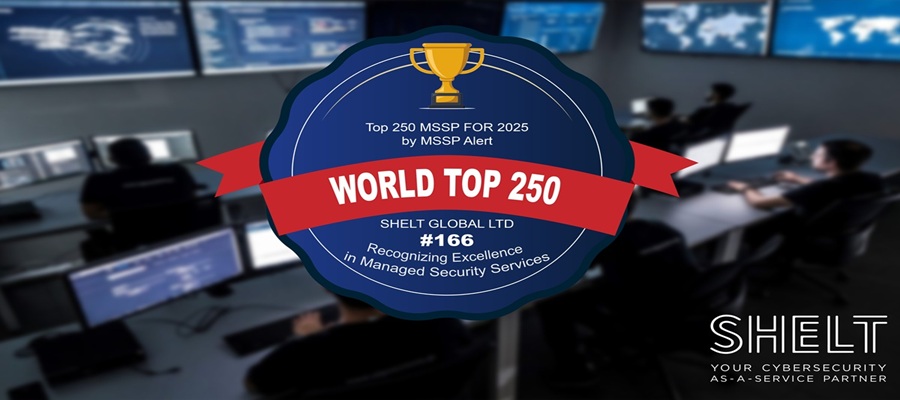
SHELT, a leading cybersecurity-as-a-service provider, has earned inclusion in the 2025 MSSP 250, the annual ranking of the world’s top 250 Managed Security Service Providers (MSSPs) by MSSP Alert, a CyberRisk Alliance publication.

SHELT
The list evaluates firms on business performance, service breadth, and industry impact, spotlighting those excelling in growth, operational excellence, and advanced managed security amid rising cyber threats. Selection criteria include annual recurring revenue, profitability, workforce expansion, business growth, and the depth of managed security offerings.
SHELT’s recognition underscores its investments in scalable security operations, threat intelligence, and tailored managed services across multiple regions, enabling clients to navigate complex risk landscapes effectively.
“Being recognised in the MSSP 250 is a meaningful milestone for our team,” stated Youssef Abillama, CEO of SHELT. “It validates our focus on building practical, resilient security services that help organisations manage risk and respond effectively to today’s evolving cyber threats.”
The company hailed the honour as testament to its teams’ dedication and expertise worldwide, reaffirming commitment to enhancing capabilities and delivering trusted cybersecurity solutions.

Meta Platforms, owner of Facebook, has appointed Dina Powell McCormick, a former adviser to President Donald Trump, as its new president and vice chairman, bolstering its leadership amid aggressive AI and infrastructure expansion.

Dina Powell McCormick
The announcement, made on Monday, positions Powell McCormick – who recently stepped down from Meta’s board after eight months – to guide overall strategy, including multi-billion-dollar investments in data centres and global partnerships.
A Goldman Sachs veteran with 16 years in senior roles and prior stints as deputy national security adviser under Trump and in the Bush administration, she brings deep finance and international ties to the role.
Meta CEO Mark Zuckerberg hailed her as “uniquely qualified” for the company’s next growth phase, while President Trump praised the move on Truth Social as a “fantastic choice”.
The hire signals Meta’s efforts to strengthen White House relations, following recent dinners with Trump and U.S. investment pledges worth hundreds of billions

Angst as FG Demands 7.5 Percent VAT on Mobile Bank Transfers, USSD

Glo Unveils Immersive Gaming Experience, Travel Saga

Half of Global Companies Build SOCs to Enhance Cybersecurity, with a Focus on Human Expertise

Moniepoint Launches Second Cohort of DreamDevs Initiative to Double Down on Africa’s Tech Talent Pipeline

NITDA DG Reaffirms Nigeria–U.S. Partnership on Data Privacy, AI and Cybersecurity

Banks quietly move to enforce new ₦50 transfer levy from Jan. 1

FIRS says NIN, CAC Numbers to Serve as Tax IDs from 2026

Nigeria Takes the Lead in the Global WSIS+20 Digital Agenda

Nigeria Police Arrest Okitipi, Nigerian Allegedly Linked to Microsoft 365 Hack

PalmPay Launches N400 Million World Travel Carnival, Rewarding Users with Free Global Trips




 E-Financial3 days ago
Wema Bank Upgrades ALAT Banking App

 General News3 days ago
Firm Launches AI-powered Platform to Simplify New Tax Laws

 Telecom3 days ago
X Suspends Twitter Account for Rules Violation

 General News2 days ago
PalmPay, Premier Cool to Reward 10,000 Nigerians with ₦100m in “10k for 10k Campaign”

 News2 days ago
Nigeria, Others Lag Behind as Egypt Tops Africa in AI Readiness

 E-Business3 days ago
Study Reveals 88.5% of Phishing Attacks Focus on Stealing Account Credentials

 E-Financial2 days ago
Ecobank Joins Trillion-naira Club for the First Time in 20 Years

 E-Business2 days ago
Kaspersky Warns Telecom Threats from 2025 will Carry into 2026 as New Technology Adds New Risk