

E-Financial
FXTM Analysis: Global Markets In State of Shock Over UK Referendum Outcome

The financial markets and spectators across the globe are in a complete state of shock following the unexpected outcome to the EU referendum that the UK has voted to leave the European Union.
Markets were completely reliant in the final lead up to the vote on following the bookmakers, who heavily favoured a one-sided remain and as such, were simply positioned for only a remain outcome.
Investors were guilty of ignoring the consistent opinion polls that repeatedly pointed out that the vote was going to be close and as a result, the possibility of a UK exit had been severely under-priced throughout the financial markets.
Make no mistake, around this time last year the markets were in complete pandemonium over what implications a “Grexit” could have on the global markets and the ramifications of a “Brexit” will carry far more severe risks.
What happens next? ‘Sell the news’ is going to become the name of the game.

Despite all of this historic movement in the British Pound overnight, this eventual outcome has not been priced into the equity markets, and the open to both the European and US session later today is going to be under the watchful eye of the world.
The GBPUSD itself dropped from a cliff overnight, and has recorded historic losses from 1.50 to 1.32 in a matter of hours.
It is important to point out that the reason for the GBPUSD falling to such extraordinary levels is not just limited to the UK voting to exit the European Union, investors have been very quick to also price in the uncertainty over the future of UK Prime Minister David Cameron and also the likelihood that this shocking news possibly opens the doors for another Scottish Referendum down the road.
There are also many other unanswered questions such as would this impact the UK’s credit rating and how will the Bank of England (BoE) react to such a shock.
There has also been an expected correlated move in the Eurodollar overnight, which itself has declined from 1.14 to just above 1.09 as a result of questions now lingering over the future of the European Union as a whole.
Headlines have circulated over the past hour alone around political parties in both Italy and France possibly planning on campaigning for their own referendums in the future.
I would personally not see this as a major threat for the time-being, but it could be interesting to monitor the possible reaction to Denmark and Sweden following the news that the UK has voted to leave the European Union.
It must also be made clear that the unexpected shock overnight must have implications on the Federal Reserve and their intention towards raising US interest rates later in 2016.
With so much uncertainty set to surround the global economy, US interest rate expectations must be pushed back and Federal Reserve Chair Janet Yellen was very explicit in stating the risks a Brexit outcome could provide to the global economy.
This possible correlation has not quite yet been priced into the Dollar and if US futures point as sharply lower as what the European futures are currently suggesting, there is a threat of a knock-on effect on the Dollar.
We saw the USD plunge sharply lower following the events of Black Monday in August and it is possible history could repeat itself if US markets enter trading under such heavy pressure.
Gold has reached its highest level since March 2014 as a result of safe-haven demand following the United Kingdom voting to leave the EU.
After reaching levels beyond $1350 earlier in trading, Gold is now consolidating somewhere around the $1320 region. If risk aversion sweeps across the financial markets as expected following diminished risk appetite from investors, Gold could continue to see further support due to its status as a safe-haven asset.
Of course, this would be even more possible if US interest rate expectations do get pushed back as a result of such a shock overnight.
Due to limited attraction towards risk from investors, the oil markets have dropped as expected because concerns over the global economy would naturally make investors question demand for the commodity.
What does this mean to the Bank of Japan? A UK exit outcome represents their worst nightmare. With risk aversion now likely to be a theme in the markets for a prolonged period following such a shock overnight, there is quite simply nothing the central bank can do to prevent Yen demand from traders.
Can they intervene? Yes they can, but it would not be a wise idea to even consider this until this outcome has been priced in across the financial markets.
If the BoJ are not patient in allowing investors to adjust to the outcome of the referendum and the possible ramifications, the BoJ simply risks entering a game of cat-and mouse. In times of uncertainty the Japanese Yen becomes the best friend for traders and despite all of the unbelievable gains for the Yen throughout the first six months of 2016, the outcome to the overnight referendum has just encouragement towards the Yen towards new levels.
Quite simply put, the reaction to Gold, the Japanese Yen and how heavy equity markets are at threat to falling is the simplest reflection of how unprepared traders were for this outcome.
By Jameel Ahmad, VP of Market Research at FXTM


Federal Ministry of Finance has halted enforcement of about N680 million in disputed fees imposed by the National Insurance Commission (NAICOM) on NICON Insurance Limited and Nigeria Reinsurance Corporation (Nig Re) as part of the ongoing insurance industry recapitalisation exercise.

The Ministry also directed NAICOM to suspend its demand that the two companies transfer their entire recapitalisation funds into an escrow account with the Central Bank of Nigeria (CBN), pending determination of a petition challenging the legality of the charges and the directive.
The intervention followed a July 27, 2026 petition by NICON and Nig Re over what they described as unlawful fees and regulatory demands arising from the implementation of the Nigerian Insurance Industry Reform Act (NIIRA) 2025.
In a letter to the Commissioner for Insurance, Raymond Omachi, permanent secretary, Federal Ministry of Finance, on behalf of Taiwo Oyedele, minister of Finance and coordinating minister of the Economy, requested that NAICOM provide a detailed response and legal justification for the disputed requirements.
The Ministry specifically directed the Commission to suspend enforcement of the contested processing and verification fees, the one per cent Capital Injection Fee, and the directive requiring the companies to transfer their full recapitalisation funds to a CBN escrow account.
The dispute centres on NAICOM’s assessment of a one per cent fee on capital injected by operators, alongside additional processing and verification charges prescribed under Appendix 2 of the Commission’s Minimum Capital Requirement Guidelines.
According to the petition, the combined assessments amounted to N305 million for NICON and N375 million for Nig Re, bringing the disputed charges to N680 million.
The companies are also challenging what they described as an unconstitutional requirement to transfer more than the statutory proportion of their recapitalisation funds to the CBN.
They contend that Section 16(3) of NIIRA 2025 provides for a 10 per cent statutory deposit, and not the transfer of the entire capital injection into an escrow account.
The companies told the Ministry that they had already met the July 31, 2026 recapitalisation deadline.
NICON said it injected N420 billion, while Nig Re injected N30 billion into Mudaraba Term Deposit accounts with Lotus Bank Limited. The companies maintained that the amounts exceeded their adjusted recapitalisation requirements of N16 billion and N28 billion, respectively.
They further stated that they had deposited N42.5 billion and N43.5 billion respectively with the CBN, in compliance with the statutory deposit requirement under Section 16(3) of the new law.
The companies also disclosed that they had made initial payments of N480 million and N75 million, respectively, in fees.
The Finance Ministry’s directive effectively places the disputed charges and escrow requirement on hold while NAICOM is expected to justify the legal and regulatory basis for its actions.
The intervention could have wider implications for the insurance industry’s recapitalisation programme, particularly as operators face regulatory deadlines to strengthen their capital base under the new insurance law.
The controversy also raises questions about the extent to which regulatory guidelines can impose additional financial obligations on operators beyond those expressly provided for under the enabling legislation.
NAICOM is now expected to respond to the Ministry’s request and explain the statutory basis for the one per cent capital injection fee, the additional processing and verification charges, and the requirement for the full capital injection to be transferred into a CBN escrow account.

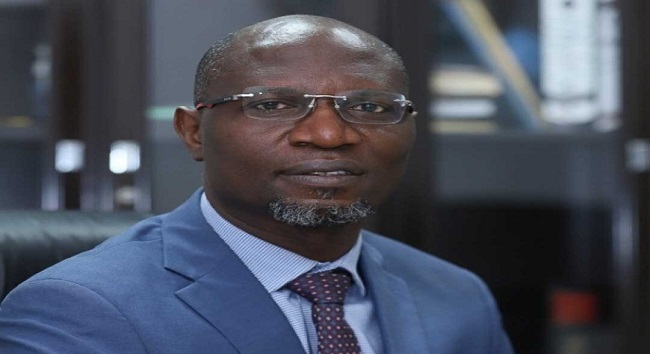
The Securities and Exchange Commission (SEC) has launched a nationwide awareness campaign aimed at helping investors and beneficiaries recover unclaimed dividends and inherited investments, as part of efforts to strengthen investor protection and reduce the volume of dormant assets in Nigeria’s capital market.

The initiative, unveiled in Abuja through the Probate/Unclaimed Monies Awareness and Investor Clinic, seeks to educate investors, beneficiaries and estate executors on probate procedures, estate administration and the processes involved in accessing financial assets left behind by deceased relatives.
Speaking at the event, Dr Emomotimi Agama, the Director-General of the SEC, said the Commission was addressing a long-standing challenge that had prevented many families from accessing investments belonging to deceased relatives.
Agama said many beneficiaries face difficulties obtaining probate, letters of administration, death certificates and other documents required to claim shares, dividends and other financial assets.
“For many Nigerian families, the death of a loved one who held shares, dividends or other investments marks the beginning of a long and often confusing journey,” he said.
According to him, the complexity surrounding estate administration often leaves beneficiaries unable to access legitimate investments and other financial assets inherited from deceased relatives.
He described unclaimed dividends and dormant assets as a major concern for the Nigerian capital market, noting that the funds represent money that should be benefiting families but remains idle because beneficiaries are unable to access them.
“Across our market, unclaimed dividends and dormant assets represent real money—money that belongs to real families, sitting idle, disconnected from the people it was meant to serve,” Agama said.
The SEC DG said the Commission was committed to bridging the gap through policy reforms, investor education and sustained engagement with investors, beneficiaries and other stakeholders in the capital market.
He stressed the importance of ensuring that investors and their families were adequately informed about the procedures for documenting, preserving and transferring financial assets to beneficiaries.
Agama said the awareness campaign would also provide an avenue for members of the public to better understand probate processes and the requirements for recovering unclaimed monies and inherited investments.
Also speaking, the Acting Chief Executive Officer of Meristem Registrars and Probate Services Limited, Ms Nkechinyelu Okoye, identified poor awareness and inadequate estate planning as major factors contributing to the accumulation of unclaimed financial assets.
Okoye said some beneficiaries were unaware that financial assets such as shares and dividends formed part of a deceased person’s estate, while others did not know that their deceased relatives had investments in the capital market.
She added that some beneficiaries were also unfamiliar with the documentation and legal procedures required to establish their entitlement and successfully claim the assets.
According to her, these challenges often result in financial assets remaining unclaimed for extended periods, even when legitimate beneficiaries are available.
The initiative is expected to improve public awareness of probate and estate administration procedures while helping more families identify and recover investments and other financial assets belonging to them.
It is also part of broader efforts to reduce the volume of unclaimed dividends and dormant assets in the capital market and ensure that funds belonging to investors and their beneficiaries are returned to their rightful owners.


United Bank for Africa (UBA) Plc, africa’s global bank, has partnered Mikano Motors to launch an auto financing scheme, themed: ‘Drive Your Dream Today’, specifically designed to ease the purchase of new vehicles by making them more accessible to Nigerians.

General Manager, Mikano Motors, Tarek Mostafa; Executive Director, Personal and Business Banking, United Bank for Africa, Chidi Okpala and National Operations Manager, Syam Abdulkadir, during a partnership signing between both parties, themed: ‘Drive Your Dreams Today’, a Flexible vehicle financing solutions, initiative at the Mikano Showroom in Victoria Island
The flexible Financing solutions Initiative, requires customers to make an initial payment of just 30 percent while the Bank finances the remaining 70 percent.
Unveiled at the Mikano Motors showroom in Victoria Island, Lagos, the scheme allows eligible customers to repay the financed amount in instalments over a period of 36 months at an interest rate of 23 percent.
The financing is available to a broad range of customers, including individuals who are not on a salaried income, providing entrepreneurs, and other eligible Nigerians with a structured pathway to vehicle ownership.
The process begins with a simple eligibility check. Interested customers can visit their nearest UBA branch or email [email protected] to confirm their eligibility. Once approved, customers can proceed to Mikano Motors to obtain a proforma invoice for their preferred vehicle and continue with the financing process.
Speaking at the launch, UBA’s Group Executive Director, designate, Personal and Business Banking, Chidi Okpala, said the partnership reflects the Bank’s commitment to making everyday aspirations more attainable while promoting a stronger credit culture and advancing financial inclusion.
“Owning a car should not be out of reach for hardworking Nigerians, and this partnership makes it far more achievable,” Okpala said. “A customer puts down 30 percent, we finance the rest, and they pay us back comfortably over a three years period. By removing the single biggest barrier to vehicle ownership where a customer just commits with an upfront cost, we are showing what customer-first banking looks like in practice, which is making their lives easier, by meeting our customers where they are and helping them get where they want to be.”
Also speaking, UBA’s Group Head, Consumer Lending, Frank Okoh, said the scheme was designed to make vehicle financing straightforward and accessible to both salaried and self-employed customers.
“We have kept the entry simple and the terms clear, whether you earn a salary or run your own business,” Okoh said. “A short eligibility check at any branch or by email is all it takes to begin, and our team guides the customer through every step to the moment they collect their keys.”
For Mikano Motors, the partnership provides an opportunity to extend its vehicle ownership proposition to a wider pool of Nigerians
The company’s General Manager, Tarek Mostafa, said the collaboration aligns with Mikano Motors’ vision of providing customers with a high-end ownership experience supported by reliable after-sales services.
“Mikano Motors was established to give Nigerians a high-end ownership experience, from the showroom to years down the road,” Mostafa said. “The backbone of any automotive business is not just the sale, but the after-sales service that follows. Every vehicle we sell is backed by genuine spare parts, reliable maintenance and quality service available anywhere in the country. Wherever you are we would come meet you at no extra cost”
“Partnering with UBA lets more customers enjoy that experience, and we are proud to build lasting relationships alongside a bank that shares our commitment to service,” he added.
Established in 2018 under Mikano International, Mikano Motors builds on more than 35 years of the group’s presence in Nigeria. The company offers a diversified portfolio of vehicles supported by nationwide sales and after-sales services.
The partnership further strengthens UBA’s consumer lending proposition, providing customers with structured financing solutions designed around accessibility, affordability and convenience. Through partnerships such as this, the Bank continues to expand access to credit while helping customers meet significant personal and lifestyle needs with ease.
United Bank for Africa is one of the largest employers in the financial sector on the African continent, with 25,000 employees group-wide and serving over 45 million customers globally. Operating in twenty African countries, the United Kingdom, the United States of America, France and the United Arab Emirates, UBA provides retail, commercial and institutional banking services, leading financial inclusion and implementing cutting-edge technology.

Affordable, Flexible Streaming Platforms May Kill PAYtv – Report

FG Suspends NAICOM’s N680m Insurance Recapitalisation Fees

FG Taps Indian, Chinese Technologies to Tackle $2.5Bn in Food Losses

MTN Nigeria Clocks 25, Connects over 90m People

Subscribers to Seek Legal Redress if Poor Quality of Service Continue in September

EFCC Busts NIS Visa Overstay Racket, Uncovers N700m in an Account

Fact-Check: Elon Musk’s “Tesla Pi Phone” is Internet Rumor

NBC Tasks Broadcasting Stations over 2028 DSO Global Deadline

NBC Scraps Annual Digital Access Fee on DSO

Glo Sponsored African Voices to Feature Netflix’s “The Polygamist” Stars




 E-Business2 days ago
X Replaces Revenue Sharing wit New Creator Rewards Programme

 Telecom2 days ago
MTN Alerts Subscribers over Fake 25GB Anniversary MTN Data Giveaway

 E-Financial2 days ago
Interswitch, Temenos Commit to Advancing Nigeria’s Digital Banking Technology

 General News2 days ago
Fake Agency: ICPC Indicts NITDA, Others over Inadequate Due Diligence

 E-Financial2 days ago
FG Spent N3.1 Trillion on Domestic Debt Servicing in Q1- DMO

 General News2 days ago
UNESCO Taps Oguamanam,Nigerian Scholar to Advisory Body on Science, Tech Ethics

 General News2 days ago
Tax Reform Built on Taxing Prosperity, Not Poverty– Adedeji

 Broadcasting2 days ago
Awba-Ofemili Unveils 2026 Health Campaign, Offers Free Medical Screening