

E-Financial
FXTM January Currency Roundup


Concerns over the resumption of selling in the commodity markets, China’s slowdown and the market’s adjustment to higher US interest rates led to volatility and losses in the international stock markets throughout January.
Downward pressure also remained on the EURUSD with the most popular currency pair falling as low as 1.0718 in the first week of January, before regaining ground by the end of the month and rising to 1.0989.
Commodities told a mixed story, with Oil dipping below $30 per barrel and Gold rising past 1120 USD per ounce.
The bearish trend in Oil continues to be dominated by an ongoing oversupply in the market, while there are also concerns over slowing demand for the commodity due to weak global growth.
The increase in the price of Gold signals that investors might be hedging towards safe-haven assets as investors continue to be alarmed by concerns over international market volatility and an acceptance that commodity prices are set to remain depressed for an extended period, which will also drive GDP prospects lower.
Emerging currencies were buffeted by these headwinds with the Malaysian Ringgit, Indian Rupee, Indonesian Rupiah and Nigerian Naira all returning close to milestone lows against the Dollar.
Losses in the emerging market currencies were also accelerated by fears over the weakening of the Chinese currency, with the USDCNY jumping from as low as 6.4805 to as high as 6.6048.
The emerging market currencies remain at heavy risk due to concerns over China’s economy, and their currencies did face punishment as the People’s Bank of China (PBoC) continued to set the reference rate for the USDCNY higher at the beginning of the year.
This is clearly being seen by many as an effort to reinvigorate economic momentum in China by making their exports more competitive, while also encouraging inflation pressures as importing into China becomes more expensive.
The USDINR went through peaks and valleys during January, moving from a low of 66.1253 to a high of 68.1619 towards the end of the month, pressured by the US Federal Reserve’s interest rate decision in the final days of January.
It has become a common trend for emerging market currencies to come under extreme selling pressure before the Fed’s monthly rate decisions, with anxieties ongoing that the Fed will raise interest rates once again in the upcoming months following the first interest rate rise in December 2015.
The Indian Rupee is still falling victim to a weak sentiment towards the emerging markets, and it is likely that the central bank are still having to intervene in the FX markets to defend the local currency. The positive news for India is that the economic data is looking strong and it appears that the lower interest rate environment has had a positive impact on consumption.
The negative news for the currency is that the robust GDP outlook is not yet having an impact on the Rupee, and that the local currency is still vulnerable to further gradual declines if the emerging market sentiment remains weak.
Indonesia’s currency – the Rupiah – was no exception to the volatility. The USDIDR was seen moving from 13590 to 14069 in dramatic fashion, impacted by the unfortunate explosions in Jakarta and an overall bearish sentiment for emerging currencies.
The underlying fundamentals don’t paint a pretty picture; Indonesia missed its GDP target of 5.7 percent for 2015, finishing the year at the lower-than-expected level of 4.73 percent. A widening deficit is also being eyed by investors as a sign of future economic risks.
The Indonesian Rupiah had a disappointing start to the year, with the local currency seeing its sentiment weakened by various different factors. Investor sentiment was obviously weakened by the tragic explosions in Jakarta, while the resumption of selling in the commodity markets also led to the USDIDR returning above 14000.
With Indonesia being seen as a heavy commodity exporter alongside strong trade links to China, GDP output is expected to continue slipping lower and I believe this may result in an interest rate deduction by the Bank of Indonesia.
Nigeria’s central bank is faced by a Naira weakened by low Oil prices and the global slowdown, but it has so far declined to lower the current interest rate of 11 percent or to devalue the currency.
The USDNGN moved between a low of 198.0000 and a high of 199.4097, and with the Oil prices set for a short-term bearish future, the volatility is likely to be making its presence felt in the coming months.
There might be some expectations that the Nigerian central bank will need to reduce interest rates, but I think that the weakening Naira will lead to higher inflation pressures and this means that reducing interest rates might not be an option for the central bank.
With the oil markets hitting further milestone lows and dropping below psychological support levels, it looks like depressed commodity prices will remain a trend for a prolonged period and this basically means that the Naira will also remain depressed. There is very little that the Nigerian central bank can do to combat this, and a potential rebound in the Naira can only be helped by an improved oil price.
Out of all the emerging currencies, the Malaysian Ringgit fared the best in January with the USDMYR moving in a range between 4.14 and a high of 4.43.
The clearing of Prime Minister Najib Razak from the 1MDB scandal and the hopeful conclusion to this saga should improve investor confidence.
The combination over the clearing of Prime Minister Najib from the 1MDB scandal and an improved rebound in the oil markets at the end of the month led to a positive conclusion to January for the Malaysian Ringgit.
We have seen a rebound for the Malaysian Ringgit, but I am wary that the currency has reached a “top” for now. I also expect for the revision to the budget to only have a short-term positive impact on the local currency.
What Malaysians need to focus on is the oil markets, because the failure of WTI oil to surpass $35 on Friday 29th January would have encouraged profit-taking from traders.
This will also increase the risk of WTI oil returning close to $30 in the opening trading days of February, which also means that the USDMYR is at risk to returning above 4.20.
The United Arab Emirates Dirham tracked the strong USD dollar to which it is pegged, with the USDAED moving in a narrow range of 3.6718 and 3.6733 throughout January.
The biggest factor that affected the AED was the strong USD and there may be some knock-on effect on tourism due to lower buying power.
With regard to other factors, oil revenues are expected to stay flat in 2016 given the accelerated selling in oil, with this likely having a negative impact on GDP growth.
I actually see the stronger Dirham as a positive for the UAE economy because it allows for the UAE to import from abroad at a cheaper price, which might also alleviate some of the possible pressure on GDP growth due to the depressed price of oil.
We do however expect for the milestone lows in the oil markets to continue adding pressure on local equity markets, which will also remain at risk to any potential increase in geo-political tensions around the region.
The combination between both the resumption of aggressive selling in the oil markets and the increased geo-political tensions between Saudi Arabia and Iran meant that local equity markets suffered throughout January.
Overall, it was a challenging first month for the emerging currency markets with renewed selling in the oil markets and the resumption of concerns over the China economy leading this currencies to losses.


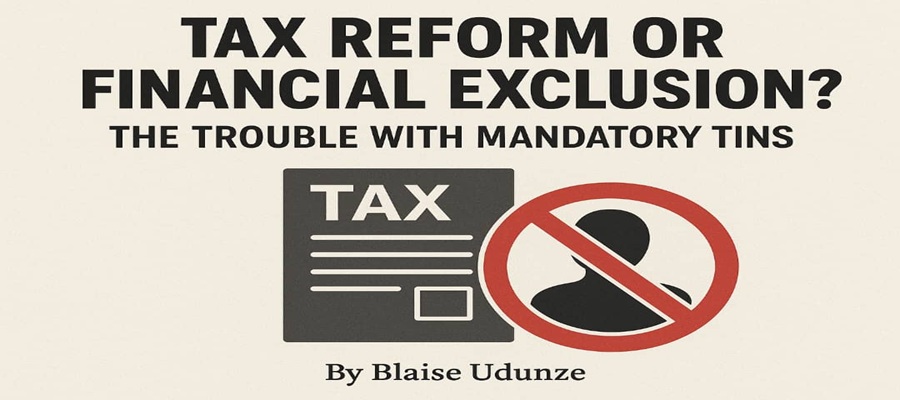
Majority Nigerians do not trust the government to properly utilise their tax payments for good use, according to a survey by SBM Intelligence across nine cities.

The survey highlighted why recent tax reforms have triggered widespread anxiety and resistance.
“Survey data from 200 respondents across nine cities indicate that 68.5 percent of Nigerians completely distrust the government’s use of tax revenues, whereas only 27.5 percent view the reforms as beneficial to the country, ” SBM intelligence said in its recent report titled Taxing Patience.
Nigeria’s 2025 Tax Reform Acts took effect in January, introducing the most comprehensive overhaul of the tax framework in decades. The reform has created more awareness among Nigerians than ever before, increasing their further distrust in the government’s use of tax revenues.
The distrust reflects years of poor service delivery and weak accountability, shaping public doubt toward the new tax system despite assurances that the reforms are designed to ease burdens and improve fairness.
“In the past, people avoided tax because they felt the government wouldn’t provide basic amenities,” businessday quoted Okanlawon Hakeem, a Lagos-based businessman, as saying.
“You drill boreholes yourself, pay for public transport yourself, and sometimes fix your local road yourself. So, you ask yourself what the government is doing with the tax money.”
The SBM Intelligence report noted that access to reliable electricity, improved security and better roads were the clearest signals that would make tax compliance worthwhile.
“46 percent of participants identified improvements in roads and security as their primary motivation for tax compliance,” SBM Intelligence noted, explaining that service delivery, rather than enforcement alone, is likely to shape taxpayer behaviour.
Government officials have defended the changes as necessary to improve public finances and reduce Nigeria’s dependence on oil revenue, pointing to the country’s historically low tax-to-GDP ratio.
With a tax-to-GDP ratio of less than 10 percent, Nigeria has lagged behind regional peers such as Ghana and Kenya. Taiwo Oyedele, chairman presidential fiscal policy and tax committee, hopes the reforms will lift the ratio toward 18 percent over the medium term.
Public sentiment, however, has not moved in step with these fiscal ambitions. According to the report, only 27.5 percent of people believe that the new tax laws are good for the country.
The report also suggests that greater awareness of the reforms often coincides with stronger skepticism rather than acceptance.
Distrust cuts across regions and occupations but is especially pronounced in major commercial centres.
The report mentioned that people in Lagos and parts of the Northeast have the strongest resistance and protest sentiment, reflecting concerns about enforcement, fairness and legislative integrity.
In its Year Ahead 2026 outlook, SBM Intelligence projects that protests are likely as the real impact of the new framework becomes clearer. The report points to the June 2024 youth-led protests in Kenya, which resulted in a reversal of the policy.
In Nigeria, where inflation is only just beginning to show signs of easing, the tolerance for perceived government excesses, including lavish convoys and budget padding, is at an all-time low.
Business owners, traders and informal workers expressed particular unease, fearing the reforms could deepen the problem of double taxation. Many worry that government levies will exist alongside rather than replace the fees already collected by unions and non-state actors.
“ Nearly a third of business respondents said they expect to pay both official taxes and union fees,” the report stated.
For informal workers such as market traders, drivers and artisans, this fear is grounded in experience. Many already make daily payments to unions or associations, often under pressure.
Without a clear plan to eliminate these parallel charges, new government taxes are widely viewed as an additional burden rather than a simplification of the system.
In Lagos, Kano and Onitsha, constant electricity emerged as the strongest trigger for compliance. In Abuja, Port Harcourt and Bauchi, respondents prioritized roads and security. Across cities, the message was consistent: willingness to pay is conditional on visible outcomes.
Analysts warn that without clear improvements in service delivery, stronger enforcement could harden resistance rather than improve compliance.
The report stated that without rapid, visible improvements in public services, the government risks collecting more money while winning.

Femi Otedola, group chairman, First Bank Holdings, has justified the company’s decision to write off N748bn in legacy non-performing loans, saying the move was a deliberate strategy aimed at securing long-term financial stability, even though it significantly reduced reported profits.

Femi Otedola, group chairman, First Bank Holdings,
Otedola made this known in a post on his X handle, where he explained that the large-scale provisioning led to a 92 per cent drop in the holding company’s profit figure.
According to the billionaire investor, the write-off was in line with the Central Bank of Nigeria’s directive encouraging banks to confront non-performing loans openly instead of postponing the issue.
“At First HoldCo we decided to clean house properly. We took a huge one-time hit of N748bn to admit old bad loans instead of pretending they do not exist. That is why profit looks like it crashed by 92 per cent. Painful headline, but it is a serious long-term move,” he wrote.
He noted that the decision was taken to finally address problematic loans accumulated over previous years and to strengthen confidence among stakeholders.
“Why do this now? Because the CBN is pushing banks to stop kicking problems down the road. So First HoldCo basically closed the chapter on messy loans from past years which sends a clear message that borrowing has consequences and it helps rebuild trust,” Otedola added.
Despite the scale of the write-off, Otedola maintained that the bank’s core business remained solid, stressing that strong earnings demonstrated the institution’s underlying financial strength.
He disclosed that the bank generated N2.96tn in interest income and N1.91tn in net interest income, figures he said were sufficient to absorb the clean-up while keeping operations stable.
“The key point is this: our business itself is STILL strong. It made N2.96tn in interest income and N1.91tn in net interest income, which gave it the strength to take the cleanup and still stay standing,” he stated.
Looking ahead, Otedola expressed confidence in the bank’s future, saying the balance sheet clean-up has positioned First Bank well for recapitalisation and sustained growth.
“Now at First Bank and beyond we go into 2026 lighter, cleaner and better prepared for the recapitalisation era and serious growth. Bad loans cleared + strong income engine + long-term thinking = real value creation,” he concluded.
Unity Bank Plc, Nigeria’s retail lender, has launched an upgraded version of its mobile banking platform, Unifi, as part of ongoing efforts to improve customer experience and reinforce its proposition in e-business.

Speaking on the upgrade, Adenike Abimbola, divisional head, Retail, SME, Digital Banking & Fintech Partnerships at Unity Bank, said the improvements were built on the back of continuous interrogation of the platform to be more responsive to customer feedbacks which are being received overtime in our interactions and engagements.
“Digital banking has become an integral part of everyday life, particularly for retail customers who expect speed, dependability, convenience, and security as standard. With the latest upgrade to Unifi, we are responding directly to these expectations by enhancing functionality, strengthening security, and simplifying key payment and transaction journeys. Our goal is to ensure that customers can carry out their banking activities seamlessly, confidently, and without friction, anytime and anywhere,” Abimbola said

Majority of Nigerians do not Trust Govt with Tax Revenue – SBM

NDPC Commits to Balancing Data Privacy, Protection Information

Why FirstBank Wrote off N748Bn Bad Loan – Otedola

Unity Bank Unwraps Mobile App to Deepen Digital Banking Experience

FG Partners World Bank, AfDB on Climate Action

19 Nigerian Banks Meet CBN Recapitalization Targets Ahead of March Deadline

Youth Talent Takes Center Stage as T2 Ignites High-Octane Rap Battles @ Carnival Calabar

Aig-Imoukhuede Foundation Wrapped Up 2025 with Real Change in Governance, Health, Media Across Africa

Showmax Unlocks Easier Payments for Nigerian Subscribers via Baxi

Nigerian Terra Industries Secures $11.8m for Expansion




 E-Financial3 days ago
Accidental Billionaire Opts for Jail Instead of Returning Money Credited Him by Mistake

 News3 days ago
US Set to Deport 79 Nigerians on Criminal List

 Telecom3 days ago
Airtel Nigeria Commits to Boosting Nigeria’s Digital Infrastructure

 News3 days ago
Ungoverned AI is Quietly Scaling Risk in Nigeria – Dr. Naiho

 E-Financial3 days ago
SEC Warns of Potential Ponzi-style Risks in AURUM BOT, ModMount

 News2 days ago
New Study Reveals How Moniepoint Powers Nigeria’s Downstream Oil Sector with Same-Day Settlements and Working Capital Boost

 E-Business2 days ago
OADC Lagos Reinforces Commitment to Local Data Hosting and Digital Transformation @ NDPC’s National Privacy Week Summit

 Telecom3 days ago
Google, African Partners Launch WAXAL to Empower 100m Africans in AI Era