

Telecom
Galaxy Backbone, KOICA Deepen Collaboration to Strengthen Government to Citizen Engagement Through Government Service Portal

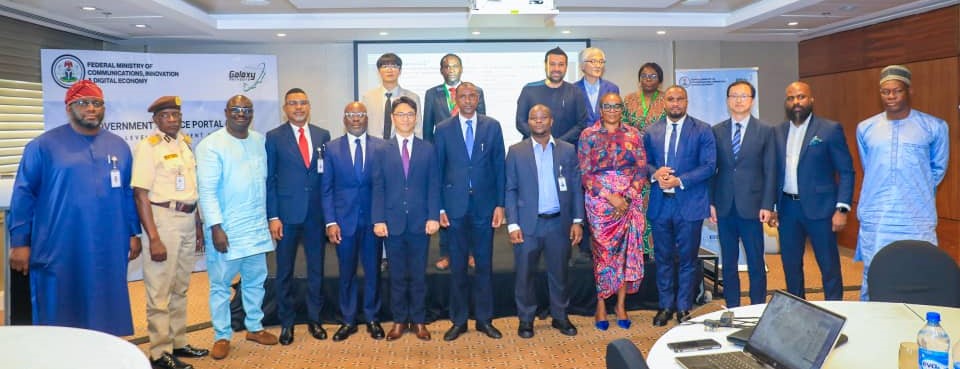
Galaxy Backbone, in collaboration with the Korea International Cooperation Agency (KOICA), yesterday hosted a high-level engagement workshop with the 12 key government agencies that will drive the first phase of this project.

This milestone marks a significant step forward in Nigeria’s ongoing digital transformation efforts, with the goal of improving Government-to-Citizen (G2C) interactions and enabling easier access to government services.
The Government Service Portal is a unified digital platform designed to enhance the delivery of public services by providing a seamless, secure, and accessible portal where citizens can interact with multiple government agencies.
Through this portal, citizens can access critical services such as NIN Registration, Immigration Services, healthcare services, and more—with little or no need to visit to physical offices.
Galaxy Backbone, a leading digital infrastructure and services provider for the Nigerian public sector, has played a pivotal role in championing e-government and in designing and deploying the GSP.
Through its partnership with KOICA, Galaxy Backbone has ensured that the platform leverages the latest technologies, prioritizing user experience, accessibility, and cybersecurity. KOICA has provided technical expertise, capacity-building support, and funding for the development of the portal, underscoring the shared commitment to Nigeria’s e-government strategy.
Key Highlights of the Government Service Portal:
- Accelerating Digital Transformation: The GSP supports the Federal Government’s commitment to digitize public services, enabling more efficient governance and ensuring that all Nigerians, regardless of location, can access essential services.
- Improving Government-to-Citizen Engagement: By reducing the need for face-to-face interactions and offering real-time service tracking, the portal fosters a more transparent and responsive government, enhancing citizens’ trust in public institutions.
- Secure and Accessible Services: The GSP is designed with robust cybersecurity features, ensuring that citizens’ data remains protected. It is also mobile-friendly and accessible in multiple languages, making it easy for citizens from all parts of Nigeria to interact with government services online.
- KOICA’s Role: KOICA has provided strategic support, leveraging its expertise in e-governance and technology-driven public service delivery. KOICA’s involvement ensures that the GSP aligns with international best practices and benefits from the lessons learned in similar successful projects globally.
Engagement Workshop with 12 Pilot Agencies:
The engagement workshop, which took place today, brought together senior officials from 12 pilot government agencies, including FMCIDE, NIMC, SMEDAN, NCC, NIPOST, FRSC, NAFDAC, NYSC, NPF, NIS, BPP and NEPC.
The goal of the workshop was to familiarize these agencies with the GSP’s features, capabilities, and integration process, and to ensure seamless service delivery as the portal goes live.
Speaking at the workshop, the Permanent Secretary Federal Ministry of Communications, Innovation & Digital Economy, who represented the Honourable Minister, highlighted the significance of this project and the need deepened collaboration and deeper citizen engagement.
‘The Government Service Portal has the potential to change lives and I believe that through and efficient and effective collaboration we will achieve a lot for our nation’. Prof. Ibrahim Adeyanyu, Managing Director/CEO of Galaxy Backbone, emphasized the significance of this initiative in transforming how government services are delivered to Nigerians.
He noted: “The Government Service Portal is a testament to Nigeria’s dedication to embracing digitalisation for improved governance. Galaxy Backbone is proud to lead this initiative, working alongside KOICA to make public services more efficient, transparent, and accessible to all. With the engagement of these pilot agencies, we are taking a major step toward a fully digitized public service ecosystem that will benefit every Nigerian citizen.”
From KOICA’s side, the Country Director, Mr. Sunjil SON, expressed the agency’s commitment to supporting Nigeria’s journey toward an inclusive digital economy, stating: “KOICA is delighted to partner with Galaxy Backbone and the Government of Nigeria in delivering a platform that will change how citizens interact with their government. This initiative aligns with our broader mission of promoting sustainable development through technology and innovation.”
Looking Ahead:
The successful integration of the 12 pilot agencies is a precursor to a broader rollout of the GSP across all government ministries, departments, and agencies. This initiative will serve as the backbone of Nigeria’s e-government strategy, reducing delays, improving transparency, and empowering citizens to engage more effectively with their government.



Bharti Airtel has announced a major milestone in its global operations, crossing 650 million mobile subscribers worldwide, a scale that now positions the company as the second-largest telecommunications operator on the planet by customer base.

Crossing this threshold reflects a network of immense scale, the capacity to reach customers across diverse markets with consistent quality, and the ability to deliver experiences shaped by sustained innovation.
In Nigeria, Airtel has continued to scale infrastructure at a pace unmatched in its recent history. Over the past three years, the company has increased its national site count from just above 13,000 to nearly 17,200 sites, including more than 1,560 added in the last twelve months. This expansion deepens capacity in high-demand corridors and extends high-speed coverage to previously underserved regions.
The latest industry data from the Nigerian Communications Commission (NCC) underscores the significance of this growth. As of December 2025, Nigeria recorded 145,141 base stations across 2G, 3G, 4G and 5G layers. Of this national infrastructure, Airtel accounts for 46,918 base-station layers, reflecting its substantial contribution to the country’s radio access network and its push to absorb rising data consumption.
Nearly 99 percent of Airtel Nigeria’s sites are now 4G-enabled, positioning the operator as one of the few with a near-ubiquitous high-speed broadband footprint. Thousands of sites have been upgraded for capacity in the past year alone, enabling improved speeds and more stable performance during peak usage.
That expansion underpins Nigeria’s rising internet adoption. According to the latest regulator figures, Nigeria’s internet penetration recently climbed above 50%, with Airtel recording among the largest monthly increases in new internet subscribers, driven by network upgrades across states and rural corridors.
Strategic Connectivity and Redundancy
Airtel is also tackling a critical infrastructure challenge for the Nigerian digital economy: reliance on a single international internet gateway. The company is advancing plans for its second submarine cable internet breakout point at Kwa Ibo in Akwa Ibom State, early in the 2Africa cable system rollout, to provide faster and more resilient national connectivity across regions. This significant investment aligns with global best practices in network diversity and redundancy, ensuring a more stable digital experience for consumers and enterprises alike.
Digital Finance at Scale: SmartCash
Airtel’s digital finance arm, SmartCash, has gained traction in Nigeria’s competitive mobile money ecosystem, now serving over 3 million active users. The platform is supported by an expansive agent network and digital services that lower barriers for everyday financial transactions and savings.
Outstanding Human Touch: Retail Reach
Across Nigeria, Airtel’s retail distribution network stands as one of the sector’s most extensive, with approximately 4,000 exclusive outlets bringing services, support, and products closer to customers in small towns, communities, and high-traffic urban hubs. That footprint drives both access and engagement in a market where localized presence remains a competitive differentiator.
As Nigeria’s digital economy continues to evolve, Airtel is committed to sustained innovation — from expanded fibre backbones and advanced mobile broadband to future-ready services that include satellite-enabled solutions and enterprise-grade digital platforms. These efforts help ensure that connectivity, commerce, and creativity thrive across Nigeria and beyond.

Nigerian Communications Commission (NCC) has said that compensation of subscribers for poor service quality, such as persistent network outages or failed calls is automatic.

This initiative aims to ensure fairness by mandating that operators provide automatic compensation, such as airtime credits, for failing to meet regulatory Quality of Service Key Performance Indicators (KPIs).
According to the NCC, operators are required and mandated to identify affected subscribers and provide compensation directly.
In a framework for compensation of consumers published on its website, NCC said that it has directed Mobile Network Operators (MNOs) to compensate subscribers affected by prolonged or repeated poor quality of service experience within specific Local Government Areas where operators fail to meet regulatory Quality of Service Key Performance Indicators (KPIs).
The NCC also stated that the directive does not replace existing consumer protection mechanisms.
The NCC, said the directive adds a direct compensation mechanism for affected subscribers and aligns with measures set in existing legislations such as the Consumer Code of Practice Regulations 2024 and the Quality of Service Regulations 2024.
This directive applies to only Mobile Network Operators licensed and operating in Nigeria that have failed to meet their Key Performance Indicators on Quality of Service. For Internet Service Providers (ISPs) operating in Nigeria, a compensation framework is already in place.
To be eligible to receive compensation
. You experienced poor network service in an affected Local Government Area; and
- You made at least one outgoing revenue generating event (billed call, SMS, or data session) during the relevant period.
The compensation covers service failures affecting voice, data, or SMS services.
Operators are required and mandated by existing regulations to monitor their network performance across locations and service disruptions against Quality of Service KPIs.
This enables them to identify affected subscribers without the need for individual complaints.
Only service failures that fall below the defined thresholds set by the Quality of Service Regulations issued by the NCC will qualify for compensation.
Short, isolated interruptions and immediately remedied interruptions may not qualify
Compensation will be provided in the form of airtime credits.
This airtime credit will not have utilisation restrictions, and subscribers will be able to use it for voice calls, USSD sessions, data subscriptions, etc on the operators’ network.

Federal Government has announced plans to deepen collaboration with private sector players and other stakeholders in a bid to strengthen Nigeria’s cybersecurity architecture and response systems.

NDPC
Minister of Communications, Innovation and Digital Economy, Bosun Tijani, disclosed this in a recent press statement, noting that the government is considering the establishment of a Cybersecurity Coordination Council.
According to the minister, the proposed council is aimed at enhancing national cyber resilience and ensuring a more coordinated response to emerging cyber threats across public and private institutions.
Tijani emphasised that cybersecurity must be treated as a collective responsibility involving government, industry, and civil society.
“Cybersecurity is a shared national responsibility. Protecting Nigeria’s digital economy requires strong partnerships, trusted collaboration, and collective vigilance across government, industry, and civil society,” he said.
He added that through sustained collaboration, Nigeria would strengthen its capacity to detect cyber threats early, respond effectively, and build a resilient and trusted digital ecosystem.
The minister also called for increased stakeholder participation in shaping a sustainable, partnership-driven cybersecurity framework capable of deterring cybercriminal activities and safeguarding citizens, businesses, and critical digital infrastructure.
Meanwhile, the Nigeria Data Protection Commission (NDPC) has commenced an investigation into an alleged data breach involving Remita Payment Services Ltd., Sterling Bank, and other entities.
In a statement signed by its Head of Legal, Enforcement and Regulations, Babatunde Bamigboye, the commission said notices of investigation were issued to relevant parties on April 1, 2026.
The NDPC noted that affected organisations and individuals are currently providing information to aid its inquiry into the incident.
“The aim of the investigation is to ensure that data subjects are protected with appropriate technical and organisational measures,” the statement read.
It added that the probe would examine the types of personal data involved, the scope and nature of the alleged breach, potential risks to data subjects, and mitigation steps taken where breaches are confirmed.
The commission further disclosed that its National Commissioner and Chief Executive Officer, Vincent Olatunji, has directed a broader review of organisations operating digital payment systems.
According to the NDPC, entities found to be non-compliant with provisions of the Nigeria Data Protection Act, 2023, particularly regarding technical and organisational safeguards, would be scrutinised as part of efforts to maintain the integrity of the nation’s data protection ecosystem.

NIBSS Says 28 Percent of Nigerians have Registered for BVN

NITDA DG Urges Stronger Collaboration to Drive Nigeria’s Digital Economy

Ogun Set for Direct London Flights as Gateway Airport Gains Momentum

Airtel Becomes World’s Second Largest Telco as Global Customer Base Surpasses 650 Million

Nigeria Cyberattacks: Stronger Collaboration as a Panacea

Spotify’s Loud & Clear Report Reveals Over ₦60Bn Revenue for Nigerian Artists in 2025

Madonna University Taps Tech Guru Adote for Strategic Board Role

China Threatens to Shut Nigeria’s Satellite Over $11.44m Unpaid Debt

Healthcare Under Attack: Why Cybersecurity is Now Critical Care

Why JustMarkets Is a Strong Choice for Gold Trading




 E-Financial3 days ago
N4.65 Trillion in the Vault, but is the Real Economy Locked Out?

 General News2 days ago
Union Bank Looted: How Former Directors Gambled with Billions and Nearly Destroyed a National Bank

 E-Business1 day ago
FG to Strengthen Cybersecurity Coordination as NDPC Probes Alleged Data Breach

 Telecom1 day ago
Compensation for Poor Service Quality is Automatic- NCC

 Telecom1 day ago
FG Moves to Strengthen Cybersecurity Coordination as NDPC Probes Alleged Data Breach

 General News1 day ago
Tinubu Approves N3.3 Trillion Payment Plan to Boost Power Supply

 News1 day ago
Beware of Fake Cerelac Products – NAFDAC

 E-Business1 day ago
Offset Communications Slams N50m Suit against Qore Technologies for Alleged Copyright Infringement