

Special Reports
GDP Growth in Nigeria Still Remains in Diversification – Otunuga

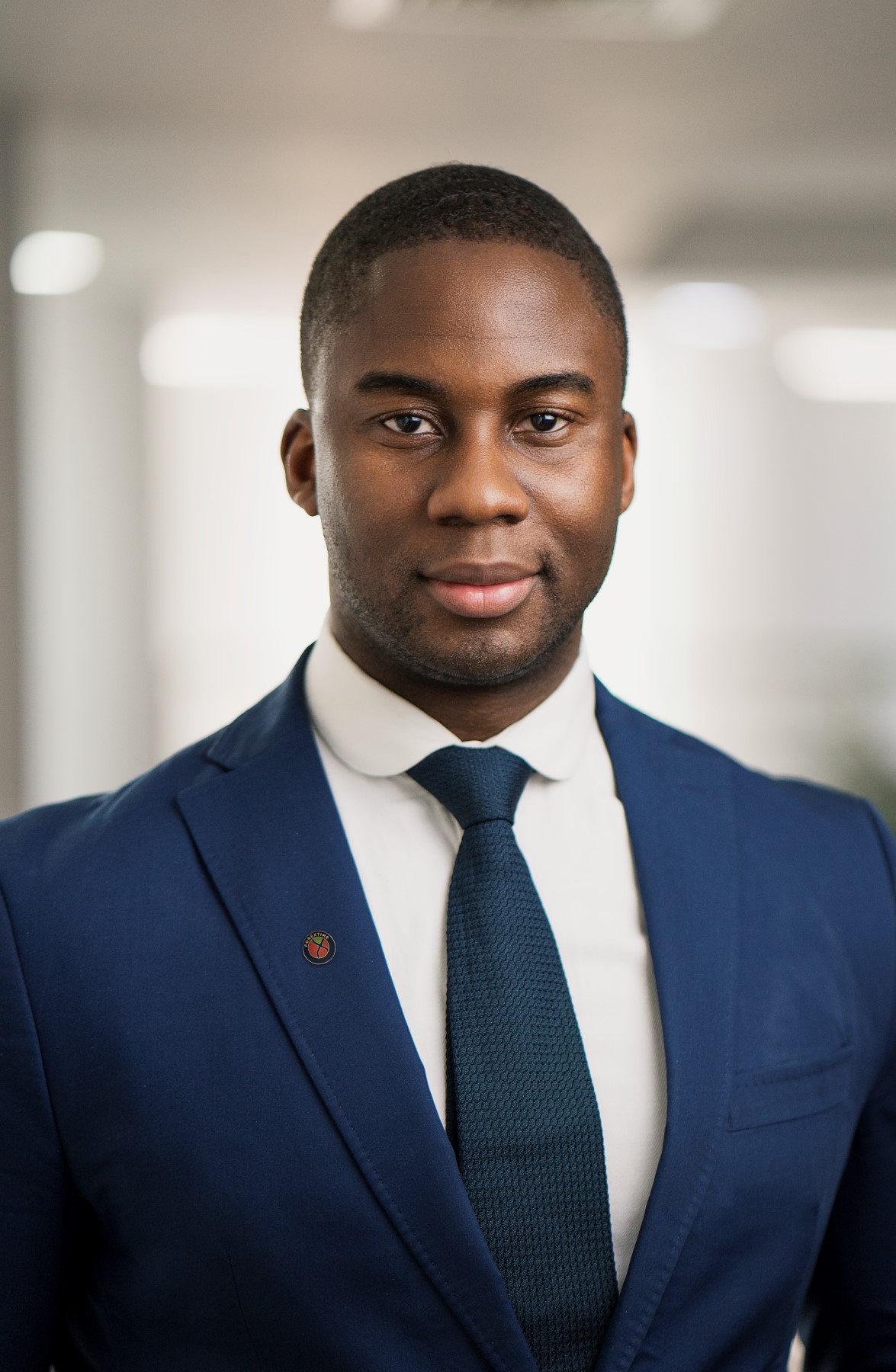
Lukman Otunuga is a research analyst at FXTM. A keen follower of macroeconomic events, with a strong professional and academic background in finance, He is well versed in the various factors affecting the currency markets.
Prior to joining FXTM, Lukman spent two years as a research analyst with international currency broker FXCM, where he focused on technical and fundamental analysis of the global currency, commodity and stock markets.
Lukman was also responsible for leading educational seminars for international and local high net worth individuals, and has published a series of educational articles on forex trading with City A.M.
In this interview with Ugo Onwuaso, Lukman shares his thoughts on the state of currency pairing in Nigeria and a whole lot of issues concerning global trade crisis.
What is your thought on the state of currency pairing in Nigeria (Naira/Dollar)?
That is every interesting question you’ve asked, right now before I share my thoughts, it’s good to just see what other currencies are doing, so we’ve seen the Turkish Lira crisis, we’ve seen global trade tensions, we’ve seen the uncertainties across the globe and this is spot risk aversion and reduced appetite for a lot of emerging market currencies but interestingly the naira has still witnessed stability, now the reason why the naira remained stable is because the central bank of Nigeria continues to intervene to support the local currency and the reason why the CBN continues to intervene is simply because of oil prices, as long as the oil prices remain at the elevated level the naira is likely to continue to remain stable.
Now my long term outlook for the naira is what we can see is a short fix to a longer term problem. If oil prices start to trade low due to oversupply concerns the CBN may not have as much reserve to support the local currency and this can actually end up weakening the naira.
You talked about globe trade tensions crisis, how could that impact on Nigeria?
There is a broad impact and there is direct impact. The broad impact is that we know that if the global trade tensions escalate to a full blown trade war, it has the ability to not only destabilize global growth but create instability.
Now this instability would create uncertainty and any type of uncertainty investors are likely to remove their capital away from emerging markets to more safe heavens stable economies. So Nigeria is going to be directly hit by that.
Now we know that the two biggest trading partners of Nigeria are the United States and China, so naturally if they get hit by trade war the impact will be felt in Nigeria.
Could you explain to us the implication of double digit interest rate in the country?
This is a big question, so for an extended period in Nigeria we have seen that interest rate has been on 14%, now at the 14% rate its quite high because at this level small businesses are not willing to borrow and in that case this is somewhat impacting growth.
Initially my thoughts was that the CBN will see this and cut interest rate to 12% at the end of the year but now the CBN’s decision is going to be impacted by domestic and external factors .
So domestically we know that elections are coming up by February so of what we’ve seen yesterday that inflation dropped to 11.14% which is a welcomed development for the CBN the cost push inflation situation may cause inflation to rebound.
Secondly I heard that in September there’s going to be a national minimum wage; if this actually becomes reality then Nigerians are going to have more money to spend and this is going to push consumer prices high.
Outside of Nigeria, look at the Federal Reserve, the Federal Reserve raised interest rate two more times, yes so we have a situation where there’s going to be the Fed raising rates and the CBN cutting rates, so this will simply widen the monetary policy divergent between the Fed and the CBN and ultimately this will accelerate capital out flows from Nigeria and this is a loss for Nigerian needs, so right now over 14% it’s a worrisome level for interest rates, CBN may eventually still try to take action at the end year.
Now for the CBN to take action three things need to come into place. Number one, GDP growth for Q2 which is going to be released at the end of the month needs to be very positive.
Number two, even though we’ve discussed about cost push inflation scenario we still need to see inflation in Nigeria moderate close to probably 10%, and finally oil prices, everything hangs on oil prices, unfortunately even though Nigeria continues in his quest to diversify ways for more reliance, its fortune still remains tied to oil.
So as long as oil prices remain at the elevated level and government has the revenues enough to support the naira, the CBN can cut the current interest rate to 12% at the end of the year.
What do you think the economic outlook will be with the election coming up next year?
We know how important Nigerian election is, it’s so big that the amount Nigeria uses on election is even more than the United Kingdom and Canada and these are more developed nations while Nigeria is still emerging market nation.
So naturally there’s election risks and uncertainty, this uncertainty may somewhat impact well, at the same time as we see at Nigerian stock exchange, shares are going down simply because of investors are hesitant to hold risk assets ahead of the election.
So we can see a situation where growth may be impacted until the election results.
Now it has become a pattern that stocks in Nigeria rebound after elections, it’s a pattern for the past ten years, every time there’s an election, the year before the election we see stocks trade low after the elections the stocks trade back higher but we can see something different this year.
Ten years ago Nigeria was not in recession; ten years ago oil prices were much higher than they were right now, ten years ago the Federal Reserve’s externally was not raising interest rates, so based on these things Nigerian stock market was able to rebound and we know that the stock market, is another form of showing how healthy the economy can be but we can see a situation next year where even after the elections the stock markets remains depressed based on the many negative external risk factors that continue to weigh on investors sentiment.
What do we need to do in order to grow our GDP?
That’s a very nice question you’ve asked, so right now what we can see is that last year there was strong push in diversification, everybody was speaking about diversification and we have seen some impact even though GDP growth in Q1 was 1.95% it’s slightly slow, we saw some impact in Agriculture output.
The growth of Nigerian GDP still remains in diversification but my worry is the fact that oil prices are trading where ever its trading right now, there could be some complacence that can come in, meaning that everything is looking ok right now simply because oil prices are trading where they are, the IMF has expressed their warning, the world bank has expressed their warnings, what Nigeria needs to do is explore this period the oil prices are trading where they are to push further to Agriculture, you know unemployment in Nigeria is 18% and youth unemployment is even higher, you know Nigeria is been blessed with fertile lands, a very very young working force, when you put these two things together, the answer to Nigeria expanding its GDP goes to Agriculture.
How can Nigeria move away from oil as major export commodity?
So what Nigeria can do, Nigeria could follow by example and see what other nations have done, we know that Nigeria’s infrastructure is quite weak and any nation that has a weak infrastructure naturally will have a weak GDP and this is what is with Nigeria.
What Nigeria needs to do is move away from commodity, move away from oil and look at other sustainable sources; for example Nigeria could gain GDP via tourism, tourism is a very very good GDP earner, if Nigeria is able to fix its infrastructure, able to fix these bumpy roads, able to ensure that electricity is stable this would attract tourists and this could be another form of growth for Nigeria.
If you have the opportunity to lead the economic team of this country, what would you do differently?
We know that diversification is a very long term thing, it doesn’t happen overnight, so that would be running in the back ground, then what I will do is that I will try to cut interest rate because even though cutting interest rate may create a situation where capital outflows are accelerated, cutting interest rates will help the people of Nigeria because small businesses, SMEs will be able to borrow, will be able to have that confidence to borrow and this is how domestic growth will be built.
Looking at the naira exchange, the naira exchange right now has witnessed stability and people have started to see that this stability is artificial, at the start of the year, it looked like Nigeria’s improving economic conditions was the reason why the naira remained stable but for the facts that other currencies are depreciated and the naira still remains around 360 against the dollar continues to show that the Central Bank of Nigeria continues to intervene.
So with the naira exchange, I will look for ways to actually abolish the multiple exchanges because it’s a bit confusing, and this confusion continues to repel foreign investments, so we have the official rate, we have the black market rate and we have the different rates other central banks are using. We should look for a way to have one exchange rate.
And for that to happen the naira needs to free float, now for the naira to free float of course naturally this may accelerate inflation pressures and this may naturally impact the common Nigerian but a times short term pain maybe needed to have long term pleasure.


Special Reports
IFC, Standard Chartered Partner on Supply Chain Finance to Support African Businesses

The World Bank Group, through its private sector arm – the International Finance Corporation (IFC) – and Standard Chartered today announced a new risk sharing facility aimed at strengthening supply chains and boosting business growth across Africa.

This partnership will introduce supply chain finance solutions in eight markets – Côte d’Ivoire, Egypt, Ghana, Kenya, Nigeria, South Africa, Tanzania, and Zambia – supporting companies in key sectors such as agriculture, healthcare, and manufacturing. By doing so, the facility will help ensure their suppliers get faster payments, freeing up the working capital they need to improve production, pay wages, and hire.
The risk-sharing facility will cover up to $300 million in supply chain and trade finance assets originated by Standard Chartered in Africa. It comprises a range of underlying supply chain financing instruments – such as payables finance, receivables discounting, and pre-shipment finance programs – which can help smaller businesses get paid earlier, reduce the cost of working capital, and invest in growth. This strengthens linkages between buyers and suppliers, improves delivery reliability, and ultimately supports job creation throughout the value chain.
IFC will provide guarantees for up to $150 million from its own account, with $100 million committed as the first tranche under the program, to support transactions in both U.S. dollars and selected local currencies.
Over the next three years, the partnership is projected to enable about $1.9 billion in supply chain finance transactions, providing access to finance for businesses across Africa. It aims to support more than 500 suppliers, including small and medium enterprises (SMEs), in both domestic and global value chains, with the potential to indirectly benefit over 1 million farmers.
“Supply chain finance is among the fastest ways to narrow the growing finance gap that businesses, particularly small and medium enterprises, are facing in emerging economies,” said Mohamed Gouled, IFC’s Vice President, Products & Clients. “By partnering with Standard Chartered to support companies at the center of strategic value chains, we can unlock much-needed working capital at scale for businesses across Africa, including smaller firms and farmers, making supply chains more competitive and boosting job creation.”
Dalu Ajene, Chief Executive and Head of Coverage, Standard Chartered Africa, said: “This $300 million facility with IFC underscores our shared commitment to strengthening Africa’s supply chains and enabling sustainable business growth.
“As a super-connector bank with deep expertise across key trade corridors linking Africa to Europe, Asia, the Middle East and the Americas, we are uniquely positioned to channel capital and innovation into the real economy.
By expanding access to supply chain finance, we are helping African companies unlock liquidity, manage risk, and invest with confidence. Our collaboration unites Standard Chartered’s cross-border expertise with IFC’s development mandate to empower businesses – from major corporations to smaller local suppliers – to engage more actively in regional and global trade, fostering job creation and promoting inclusive growth.”
Global demand for supply chain finance has surged – in 2025, the estimated volume reached about $2.7 trillion, showing an 8% increase year-on-year. Yet supply chain finance has not scaled at the same pace in emerging markets, especially in lower income and fragile contexts, largely because commercial banks tend to focus on developed markets. This facility aims to mitigate risk in portfolios of short-term trade and supply chain assets, expanding access in markets where capital is scarce.
This is IFC’s first project under the Global Supply Chain Finance Program and the Africa Trade and Supply Chain Recovery Initiative supported by the International Development Association (IDA) Private Sector Window Blended Finance Facility.

Tizeti, West Africa’s pioneer solar-based internet service provider, is set to host technology enthusiasts, IT innovators, startup executives, corporate business leaders, and digital thought leaders at the second edition of its futuristic Tizeti NeXTGEN conference themed “The Next Frontier”.

Tizeti’s NeXTGEN conference, which coincides with its 10th anniversary, will feature an exciting array of speakers, over 500 physical and virtual attendees and conversations on Africa’s digital environment, highlighting the role of digital transformation in empowering more Nigerians, stimulating economic activity, and providing a foundation for a robust and thriving ecosystem to enable digital leadership for Africa in, the 4.0 world.
Speaking ahead of the conference, Kendall Ananyi, founder and Chief Executive Officer of Tizeti, said Tizeti’s NeXTGEN conference will announce new digital innovations and products, explore new partnerships, and articulate strategies to accelerate Africa’s digitization.
According to him, the edition’s theme, ‘The Next Frontier’ reflects the company’s belief that the next source of digital growth in Africa, given the continent’s market of over 1 billion people, its vibrant entrepreneurial ecosystem, and the flurry of initiatives and investments launched to connect Africans to the internet.
“This NeXTGEN conference is particularly memorable for us because it’s our second event and coincides with our 10th anniversary.
“In 10 years, Nigeria has done significantly well in the tech space by attracting over $4b investments, building global brands, and emerging as the unicorn capital of Africa, all these with less than 40% internet penetration.
“With more connected states, improved broadband access, and strategic partnerships, Nigeria and Africa can accelerate tech development, empower more people, stimulate the economy, and widen the broadband envelope in Africa”, Ananyi said.
Ananyi notes that the technology conference will feature product launches on Tizeti’s plans around Next Generation Unlimited Wi-Fi and Customer Service, and expanding access to unlimited internet in Africa.
Tizeti’s NeXTGEN, which will hold on August 5, 2022, will provide an opportunity for stakeholders in African telecommunications, technology, and business communities to share their ambitions for Africa’s next frontier, while networking, discovering new opportunities and discussing breakthrough trends in the global and African telecoms and technology ecosystem.
Special Reports
All You Need to Know About Paradigm Initiative’s 3-day Digital Policy Workshop in Tanzania
Paradigm Initiative, a pan-African social enterprise working to advance digital rights and inclusion in Africa, has concluded a 3-day Digital Policy Workshop for Tanzanian Digital Rights Stakeholders from 7th-9th July 2020.
Over 100 people applied to attend the workshop with over 65 persons selected to participate.
The workshop was officially opened by Nnenna Paul-Ugochukwu, chief operating officer, Paradigm Initiative and took place over the course of three days, introducing participants to the basic concepts of digital rights and the existing policy, legal and institutional framework in Tanzania.
The workshop specifically examined Tanzania’s Cybercrimes Act and the Electronic and Postal Communications Act (EPOCA).
According to Ekai Nabenyo, program officer at Paradigm Initiative, “It is evident that there is an urgent need to create an empowered civil society and digital rights community for the Republic of Tanzania to be able to safeguard its citizens’ digital rights”.
“The civil society should be empowered to shape and dictate digital policy in the country,” Ekai further states.
Participants urged the government of Tanzania to respect the rights of its citizens and to provide the necessary platform for civil society to oversee government adherence to its human rights obligations as election dates draw closer.
They also expressed concerns that the current digital policy environment provides a fertile platform for human rights violations and a tendency for impunity on the part of state officials.
“As a digital rights advocacy organization, we endeavor to continue to closely monitor the state of digital rights in Tanzania.
“We shall continue to work with other stakeholders to build the capacity of civil society groups to be able to competently influence, protect and safeguard digital rights in Tanzania and in the region, through similar interventions” says Adeboye Adegoke, senior program manager at Paradigm Initiative.
The end goal of the workshop is to ensure that stakeholders in Tanzania that already understand and follow current trends in digital rights, Tanzania civil society groups, and others can leverage the expertise of Paradigm Initiative and its partners to be able to work together with the regulatory authority and the parliament in Tanzania towards improving the state of digital rights in the country.
Participants agreed to work together in order to present a united and formidable force in its advocacy engagements in Tanzania.

DSS Spyware Acquisition Enables Illegal Wiretaps, Detentions – The ICIR

Microsoft to Lay Off 4,800 Workers

Access Bank, Fifth Chukker and UNICEF Renew Commitment to Expanding Educational Opportunities for Nigeria’s Most Vulnerable Children

IHS Nigeria, FCT-HSES Concludes Clean Cooking Energy Campaign “Project Breathe Clean Air” in Abuja

Kaspersky Transforms Threat Intelligence Reporting into an Interactive Content Hub

Mobile Internet Gender Gap Widest in Africa – GSMA

Nigeria Launches FreeTV Nationwide

NASENI Moves to Digitize CCB’s 5m Assets Declaration and Operations

CANAL+ Partners Samsung to Pre-Load DStv Stream on New Samsung TVs In Nigeria, Other African Countries

UK, Nigeria Launch £15m Growth Programme to Accelerate Economic Transformation




 E-Financial2 days ago
Tokenization, Blockchain Technology will Transform Financial Institutions – IMF

 General News2 days ago
NIS Deploys Advanced Surveillance Masts, other Critical Infrastructure to Boost Border Security

 Broadcasting2 days ago
Obi, NDC Presidential Candidate Faces N50Bn Defamation Claim over Alleged Podcast Remark

 E-Business2 days ago
Weebly Websites to Shut Down for Nigeria, 66 Other Countries from September

 Telecom2 days ago
No Plans for Fresh Tariff Hike – MTN

 E-Financial2 days ago
FG Denies N8 Trillion ‘Shadow Budget’, Says IMF Quoted out of Context

 General News2 days ago
PufferPay CEO to Keynote Business Journal Fintech & Financial Inclusion Roundtable 2026

 Telecom2 days ago
Airtel Africa Foundation Equips 200 Young Women with Digital Skills to Drive Nigeria’s Tech Economy