

General News
GE Africa, ALA Plan $5m Investment in Developing Africa

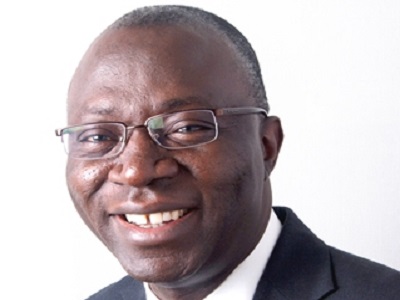
GE Africa in partnership with the African Leadership Academy (ALA) has announced a $5 million partnership which aims at identifying, developing and connecting the next generation of African leaders.
This is part of its multi-sectoral local content development initiative for Africa.
The academy, located in Honeydew Johannesburg admitted its first students in 2008, and has become the leading pan-African institution focusing on youth entrepreneurial leadership development.
ALA has about 550 young leaders in its network and its scholars have won bursaries/scholarships to study at leading global universities such as London School of Economics in the UK, Harvard, Stanford and Duke in the United States and the University of Toronto in Canada.’
“We are excited about this unique partnership with ALA. ALA’s mission is very much aligned with GE Africa’s commitment to developing leaders not just in Africa for Africa, but for GE (worldwide) and Africa. This initial investment is just the beginning. We will pilot this initiative first in Angola and plan to expand throughout Sub-Saharan Africa,” said Tamla Oates-Forney, Senior Executive –Human Resources.

In a statement by Jae Ireland President and CEO for GE Africa, he reiterated GE’s commitment to develop human capacity in the continent in order that resources on the continent can be better harnessed by Africans. “This is an investment in a future generation of African leaders and in skills development for this continent,” he said.
Continuing, the President stated, “These are bright young people who will have the opportunity to acquire the skills and academic qualifications to pursue long-term careers at General Electric.”
Frank Aswani, vice president and director of Strategic Relations, ALA, welcomed the partnership with GE saying “We thank GE for their commitment to Africa’s prosperity and for investing in Africa’s biggest asset; its youth. This will enable us to expand our operations, select and admit additional students, and support their lifelong growth and development. In so doing, we shall be fulfilling our mission of transforming Africa by identifying, developing and connecting the next generation of African leaders.”
GE’s investment includes funding participation in ALA’s flagship two-year pre-university programme, gap year programme, and further studies at approved tertiary institutions. GE will also provide internship and post-graduate employment for their scholars and other ALA graduates to give them much needed work experience.


NLNG and the Nigerian Content Development and Monitoring Board (NCDMB) have commenced the construction of a research and innovation centre at Rivers State University, aimed at strengthening indigenous capacity in computer and electrical engineering.

The NLNG Research and Innovation Centre for Computer and Electrical Engineering (RICCEE), which was inaugurated yesterday, is the company’s largest Human Capital Development Institutional Strengthening project to date.
The centre is expected to provide specialised training, advanced research facilities and technological solutions for challenges in Nigeria’s energy and industrial sectors.
It will also house a professorial chair and operate as a research and development centre where industry-focused solutions, particularly for NLNG, can be developed and potentially commercialised.
Speaking at the groundbreaking ceremony, NLNG’s Managing Director and Chief Executive Officer, Adeleye Falade, described the project as a strategic investment in the country’s future and evidence of the company’s commitment to sustainable human capital development.
Falade, who was represented by NLNG’s General Manager, External Relations and Sustainable Development, Sophia Horsfall, said the facility would improve the university’s ability to produce highly skilled professionals while ensuring that research responds to industry needs.
He said the centre would also help bridge the gap between academic knowledge and practical industry requirements by creating opportunities for researchers and professionals to work together on innovations with commercial and developmental value.
Felix Omatsola Ogbe, the Executive Secretary of NCDMB, represented by the Director, Capacity Building, Abayomi Bamidele, said the project marked an important step in advancing the Board’s Human Capital Development objectives.
According to him, the centre is part of the Board’s Institutional Strengthening Programme, which seeks to build lasting partnerships with higher institutions through infrastructure that supports teaching, research, innovation and practical skills development.
Ogbe challenged the centre to emerge as a hub for discovery, creativity and technological advancement, where students can develop innovative ideas, researchers tackle real-world problems and industry can find reliable research and development partners.
The Vice-Chancellor of Rivers State University, Prof. Isaac Zeb-Obipi, said the project aligned with the institution’s 2026–2030 strategic plan, particularly its focus on research collaboration, innovation and entrepreneurship.
“We envisage the Centre as a world-class hub where researchers and students can develop practical solutions to engineering and technological challenges, where university-industry collaboration can flourish, and where innovative ideas can be transformed into useful products, technologies and services,” he said.
The centre will occupy about 9,336 square metres within the university and include specialised laboratories for electronics and signal processing, robotics and embedded systems, software engineering, and digital forensics and cybersecurity.
The facility will also feature solar energy provisions, energy-efficient lighting and other environmentally responsible systems designed to reduce operating costs and support reliable research activities.
RICCEE is one of NCDMB’s Institutional Strengthening Projects designed to improve learning institutions through modern infrastructure, research facilities, technical equipment and training aligned with industry needs.
General News
NITDA Seals Strategic Deals with Goose FL and Fireflies AI to Power $1 Trillion Digital Economy Vision


In a significant step toward expanding Nigeria’s tech footprint on the global stage, the National Information Technology Development Agency (NITDA) has signed strategic Memoranda of Understanding (MoUs) with Canadian tech companies Goose FL and Fireflies AI.

The signings took place during the Nigeria–Canada Investment Forum and the Nigeria Investment Economic Conference in Toronto, Canada, witnessed by NITDA’s Director-General, Kashifu Inuwa Abdullahi.
The strategic partnership centers on three core pillars designed to accelerate the nation’s digital roadmap:
- Expanding Financial Inclusion: Developing innovative technology solutions to broaden access to digital financial services and create sustainable economic opportunities for underserved communities.
- Deploying Local AI Infrastructure: Establishing indigenous Artificial Intelligence infrastructure and services to strengthen Nigeria’s internal capacity to build, manage, and benefit from AI technologies locally.
- Building a Stronger Digital Economy: Driving long-term economic growth through strategic global partnerships, technology transfer, innovation, and digital capacity development.
This international collaboration directly aligns with President Bola Ahmed Tinubu’s vision to grow Nigeria into a $1 trillion economy by 2030, anchored by innovation, digital technology, and human capital development.
By forging key global ties, NITDA continues to position Nigeria as a rising leader in the digital economy, ensuring that emerging tools like AI deliver real, tangible value for local citizens and businesses.

Anambra State Government says it is exploring partnerships with the Federal Government and other stakeholders to extend digital connectivity to underserved rural communities across the state.

The Managing Director and Chief Executive Officer of the Anambra State ICT Agency, Mr Chukwuemeka Fred Agbata, disclosed this during a virtual media engagement with journalists on Thursday.
Agbata said rural connectivity remained a major challenge because telecommunications operators were often reluctant to invest heavily in communities where network deployment might not be commercially viable.
He said the state was willing to explore opportunities to leverage Federal Government infrastructure and the Universal Service Provision Fund (USPF) to extend connectivity to underserved communities.
“We understand what digital inclusion means because we are dealing directly with these communities,” Agbata said.
According to him, the objective is to ensure that rural residents are not excluded from the benefits of digital government and the wider digital economy simply because of where they live.
Agbata said the effort formed part of the state’s broader digital transformation agenda, which is targeting deeper digitalisation of government services and a more digitally enabled business environment by 2030.
He said the second phase of the agency’s digital transformation agenda would focus on e-governance, digital infrastructure, smart government and the use of emerging technologies to drive development.
“My core vision is that we would have digitised every single government entity in Anambra State,” he said.
The ICT boss said the digital transformation agenda would extend beyond government ministries, departments and agencies (MDAs) to businesses and residents across the state.
He said the agency was already developing websites for government MDAs and transforming them from mere information platforms into channels for delivering government services.
“We are building websites for all the MDAs. We are also automating them to be able to carry out services and give government support and government services through their websites,” he said.
Agbata said the initiative would reduce the need for citizens to physically visit government offices to access basic services.
He said the Smart Anambra platform had already demonstrated growing demand for remote access to government services.
According to him, the platform recorded about 14,000 visits between July 9 and July 29, averaging approximately 700 visits daily, despite limited publicity.
He said the data indicated that residents were interested in accessing government services online, including applications, permits and identification-related processes.
“What the data is already showing us is that we really need to build a system that allows people to actually get government services remotely,” Agbata said.
He explained that the objective was to allow residents to initiate processes online, complete forms remotely and only visit government offices where physical presence was eventually required.
This, he said, would reduce the time and cost citizens spend travelling to Awka or other government offices to access services.
Agbata said services in areas including hospitals, schools and other government processes were being connected to Smart Anambra.
Anambra Targets 2030 for Digital Government
Agbata said the state’s 2030 target was to deepen the digitalisation of government services and create an environment where businesses could increasingly operate within the formal digital economy.
He said the agency was working with the Ministry of Commerce to promote the formalisation of businesses, particularly SMEs and businesses operating in major markets.
“One of the biggest challenges that we have is that SMEs are not formalised enough,” he said, adding that the agency was exploring partnerships to address the challenge.
The ICT agency boss said the transformation would be gradual because major government initiatives required the necessary approvals and resources.
On the possibility of making Anambra completely paperless, Agbata disclosed that the State Executive Council was already operating a paperless system.
He, however, said the entire civil service might continue to operate a combination of digital and paper-based processes for some time because of the complexity of government operations.
“What might happen is a dual situation,” he said, adding that selected MDAs could be used as pilots for deeper digital transformation.
Agbata also disclosed that the Anambra State ICT Agency had commenced the deployment of a locally trained artificial intelligence (AI) system to automate its operations and explore applications in governance, revenue management and public-sector productivity.
He explained that the agency did not develop a frontier large language model from scratch because of the huge computing and financial resources required.
Instead, he said, it adopted an open-source model, modified it and was training it for specific local use cases.
“We have started doing our own local AI system. It is an open-source system, so we didn’t build our own frontier model. We basically looked at open source and modified it, and we are training it,” Agbata said.
He said the system had already been deployed to automate the agency’s operations end-to-end.
“We have used it to automate our agency end-to-end. Everything that we do now is currently automated,” he said.
Agbata said the agency was exploring how the model could be applied across other areas of government to improve productivity, address revenue leakages and strengthen governance.
He said the AI initiative formed a major part of what he described as the agency’s “2.0” phase following his reappointment by Gov. Chukwuma Soludo.
According to him, the second phase would build on achievements in infrastructure, capacity development, e-governance and smart government while placing greater emphasis on AI and emerging technologies.
Agbata also said the state’s free public Wi-Fi initiative remained operational, stressing that the programme was introduced before the electioneering period.
“The free Wi-Fi didn’t start as a political thing, a campaign thing. It started way before the campaigns,” he said.
He explained that the strategy was adjusted during the campaigns to enable residents to follow the governor’s activities and participate in live engagements while on the move.
According to him, existing Wi-Fi locations, including facilities at the state Secretariat, remain operational, although occasional downtime occurs, particularly during periods of adverse weather.
“There are downtimes now and then because with the rains and all of that, these things have their uptime and their downtimes, but it is still very much available,” he said.
He disclosed that there were currently no plans to establish additional Wi-Fi locations, noting that existing sites were still providing services.
Agbata said the state would continue to develop digital skills and education programmes, including Smart Schools and other capacity-development initiatives.
He also called for stronger collaboration among government, technology companies, telecommunications operators, local technology manufacturers and other stakeholders to accelerate the state’s digital transformation.
He cited the procurement of about 2,000 computers supplied by indigenous technology company, Zinox, as an example of the state’s engagement with local technology providers.
Agbata said the agency would remain open to partnerships capable of supporting Anambra’s technology agenda.
He said the ultimate objective was to build an Anambra where residents and businesses could increasingly interact with government digitally, while technology becomes a central driver of economic development across the state.

FG Seeks to Half Burkina Faso’s Internet Cost while Nigerians Pay more

Cyberthreat: New Malware, Turns Phones into Tools for Card Fraud- Report

SEC Clears Blockchain for Accelerated Regulatory Incubation Programme

Union Bank Secures Global Payment Data Security Certification

NLNG, NCDMB Boost Engineering Research with Innovation Centre

Fact-Check: Elon Musk’s “Tesla Pi Phone” is Internet Rumor

EFCC Busts NIS Visa Overstay Racket, Uncovers N700m in an Account

NBC Tasks Broadcasting Stations over 2028 DSO Global Deadline

Glo Sponsored African Voices to Feature Netflix’s “The Polygamist” Stars

Access Bank Debunks Shutdown Report, Vows Action against Perpetrators




 Telecom3 days ago
Airtel Nigeria Adds Over 1,000Cell Sites in Nationwide Expansion to Surpasses 17,000

 E-Financial3 days ago
Mastercard, TeamApt Collaborate to Expand Digital Payments Across Africa

 News3 days ago
Access Holdings Sets New Benchmark in Nigeria’s Finance Talent Pipeline

 E-Business3 days ago
MacOS Users Report More Cyber Threats than Windows Users – Survey Reveals

 Telecom3 days ago
Nigerian Startup Act: NITDA Calls for Stronger Inter-Agency Collaboration

 E-Financial3 days ago
SEC Orders Immediate Freeze of Assets Linked to Six Terrorism Financiers, Three Entities

 E-Business2 days ago
World Cup, AFCON, Blord saga top Nigeria’s Google searches in 2026

 General News2 days ago
NITDA Seals Strategic Deals with Goose FL and Fireflies AI to Power $1 Trillion Digital Economy Vision