

Telecom
Glo Offers Subscribers Airtime Overload, Allawee Promos

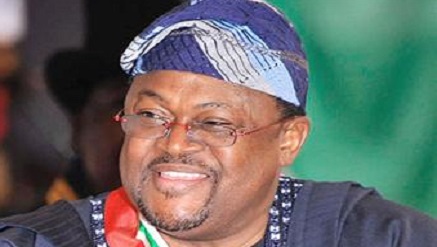
Globacom has unveiled two mega promos, Glo Overload and Glo Allawee as a way of rewarding its subscribers.
Glo Overload automatically credits subscribers with 200 percent airtime and data bonus and offers them an opportunity to be 100 times richer every time they recharge with N200 or more. Subscribers also stand a chance to win N120 million cash prizes during the promo. Glo Allawee, on its part gives every new customer N18,000 worth of free airtime for calls and text messages.
The two offers are part of a series of promos being unveiled by the company to create unprecedented excitement for millions of subscribers on the network.
Under Glo Overload promo, subscribers are guaranteed 200 percent bonus airtime automatically for every airtime recharge of N200 denomination and above.
For instance, a subscriber who recharges with N200 will automatically get N600 airtime; a N500 recharge will give the subscriber N1,500 airtime; a N1,000 recharge will give N3,000 airtime to the subscriber; N2,000 recharge will give N6,000 airtime and N5,000 recharge will give the subscriber a whopping N15,000 airtime. Subscribers are to dial *200# to signify interest in receiving the Overload bonus and subsequently get the bonus as many times as they recharge their airtime.
Additionally, Glo Overload gives subscribers 200 percent bonus data for new data plan or renewal from N2000 and above. Consequently, subscribers get 2GB of data for N2,000 worth of data they buy, 4.5GB for N3,000 data plan, 12GB for N5,000 data plan and 24GB for N8,000 worth of data plan they purchase.
Also, Glo subscribers stand a chance to become 100 times richer in cash every time they recharge with N200 and above or buy data bundles of N2,000 and above. The winners will emerge through lucky draws to be done electronically throughout the duration of the promo.
For instance, a subscriber who recharges with N5000 airtime or data bundle stands a chance to win N500,000 cash every time he or she recharges with that denomination.
Speaking on the Glo Overload promo, Mr. Ashok Israni, regional chief marketing officer, said this is Globacom’s way of rewarding its esteemed customers for their consistent loyalty, and also for thanking new customers for choosing the network.
He urged telecommunication subscribers across the country wishing to benefit from Glo Overload to dial *200# on their phones. They will consequently be admitted to the promo platform and be able to enjoy all the promised benefits.
The second promo, Glo Allawee, enables subscribers to get free airtime of N50 everyday when they use N50 or more on calls, text messages or data before 10pm. The bonus is credited the following day and can be used to make calls or send text messages to Glo lines only.
According to David Maji, Globacom’s national sales coordinator, “Glo Allawee was developed to encourage and empower teeming subscribers to join the network and begin to enjoy many other benefits which Glo provides on a daily basis.”
“Subscribers who activate a new SIM and achieve the usage target of N50 before 10pm on a day will get an additional N50 airtime and can earn up to N18,000 worth of free airtime in one year of activation,” said Maji.
To enjoy the benefits of Glo Allawee, customers are encouraged to buy a new Glo sim, dial *170*7# and use up to N50 on calls, data or sms.
Glo Allawee is one of the many innovations the Glo Network has introduced as part of its commitment to promoting friendship through efficient communications among Nigerians. “We will continue to provide innovative services to Nigerians at affordable rates. It is a commitment we have made in serving our subscribers better.” he concluded.
Globacom explained that these offers, among many others lined up for release, are coming after a massive nationwide network enhancement and modernization project that has seen major components of the network swapped with state-of-the-art equipment.
As a result of the expansion and modernization, Globacom said the capacity of the Glo network and quality of service have significantly been boosted, thereby guaranteeing Globacom subscribers enjoyable experience on the network during and after the promotions.



The International Rescue Committee (IRC) has announced the formation of Airbel Ventures, a new humanitarian impact investing fund aimed at accelerating the introduction and scaling of breakthrough technologies in crisis-affected communities.

The fund will invest in companies whose ideas have the potential to change humanitarian response, including digital infrastructure for frontline health systems and climate-resilient agriculture.
The launch of Airbel Ventures follows a period of rapid innovation at the IRC, despite the humanitarian sector facing record funding cuts.
In the past year, the IRC’s Airbel Impact Lab has advanced more than twenty Artificial Intelligence (AI) and technology initiatives—from anticipatory action tools powered by climate and vulnerability data, to frontline service delivery using safe, orchestrated AI systems, to breakthrough diagnostic tools for emerging diseases.
Airbel Ventures’ first impact investment is in Signalytic, a company delivering solar-powered computing devices that ensure reliable electricity and connectivity for remote health facilities.
Following the investment, the IRC will pilot Signalytic’s technology with its Nigeria Health team, demonstrating the viability of next-generation digital infrastructure in humanitarian settings.
“We know breakthrough solutions already exist—what’s missing is the path to scale in humanitarian contexts,” said Dr. Jeannie Annan, Senior Vice President for Research & Innovation at the IRC and head of the Airbel Impact Lab.


MTN Nigeria, the country’s largest telecommunications operator, recorded a historic surge in network disruptions in 2025, suffering 9,218 fibre cuts as of December 31, alongside 211 base station sites affected by theft and vandalism, incidents that disrupted mobile and data services relied upon daily by millions of Nigerians.

The data was revealed by Dr Karl Toriola, chief executive officer/managing director, MTN Nigeria via a social media post titled ‘MTN Nigeria 2025 Wrapped’.
The scale of the damage highlights the growing vulnerability of Nigeria’s telecommunications infrastructure, which has come under increasing pressure from road construction activities, cable theft and deliberate acts of vandalism.
MTN said 5,478 fibre cuts occurred within just the first seven months of 2025, with 760 incidents recorded in July alone, underscoring the intensity of the challenge.
Some of the incidents had wide-ranging consequences, knocking out connectivity across multiple states simultaneously and affecting voice calls, data services, digital payments and enterprise operations.
The company described the situation as a national infrastructure problem, rather than an isolated corporate issue, given the economy’s deep dependence on mobile networks.
“These gaps were shaped by real operational challenges such as fibre cuts, theft, and vandalism. Their impact is felt directly by customers and reflected in what they tell us,” Toriola,
The disruptions were reflected in customer feedback volumes, as MTN handled an unprecedented number of complaints during the year. The operator said it resolved 1,624,263 customer complaints in 2025, spanning call centres, social media platforms, emails and physical service centres nationwide.
Despite the setbacks, MTN pointed to signs of operational resilience. The company retained its ranking as Nigeria’s best network by Ookla, returned to profitability after a challenging period, declared an interim dividend, and expanded its subscriber base to over 85 million users by September 2025.
The figures show that while Nigeria’s telecom operators continue to invest heavily in network expansion and customer service, infrastructure sabotage remains a major drag on service quality and operating costs.
MTN acknowledged that performance improvements remain a work in progress. “We are not where we want to be yet. We see you. We hear you. We exist because of you. And we will get better,” Toriola said.
As the company enters its 25th year of operations in Nigeria, Toriola said MTN is doubling down on customer-centricity, treating every piece of feedback as a guide for improvement, while also stepping up engagement with government agencies.
The CEO renewed calls for stronger regulatory and legal protections for telecommunications infrastructure, urging policymakers to classify fibre cables, base stations and other critical assets as national infrastructure and criminalise vandalism to deter repeat attacks.

Nigerian Communications Commission (NCC) has granted operating licences to six new Internet Service Providers (ISPs), effective January 1, 2026, raising the total number of authorised ISPs in the country to 231 from 225 recorded in December 2025.

NCC
The newly licensed firms are Intellvision Technologies Limited, Granet Technologies Limited, Fiber Sonic Limited, Dasol Solution Services Ltd, Boost ISP Limited, and Amazon Kuiper Nigeria Limited.
Five of these companies are headquartered in Lagos, while Granet Technologies Limited operates from Owerri in Imo State, highlighting the persistent concentration of broadband infrastructure in major commercial hubs like Lagos, Abuja, and Port Harcourt.
This development intensifies competition in Nigeria’s broadband market, which faces pressure from dominant mobile network operators such as MTN and Airtel, alongside rapid expansion by satellite providers like Starlink.
Traditional ISPs continue to grapple with shrinking customer bases, aggressive data pricing from telcos, and satellite disruptions, even as NCC data from Q2 2025 showed Spectranet, Starlink, and FibreOne controlling about 65 per cent of the 313,713 active ISP subscribers.
The inclusion of Amazon Kuiper Nigeria Limited marks a significant entry of global satellite broadband competition, building on Nigeria’s recent approvals for other low Earth orbit providers to enhance connectivity in underserved areas.
Industry analysts view the licences as a strategic push to improve internet quality amid rising demand for digital services, though geographic clustering underscores ongoing infrastructure challenges outside urban centres.
NCC’s move aligns with broader efforts to foster a competitive telecoms sector critical to Nigeria’s digital economy ambitions.

New Investment Fund Targets Acceleration of Emerging Technology in Nigeria

Zenith Bank Gets Regulatory Approval for Full Takeover of Paramount Bank

Firm Detected a Fivefold Surge in QR Code Phishing Attacks in the Second Half of 2025

NITDA Commits to Digital Inclusion for Persons with Disabilities

MTN Nigeria Suffers 9,218 Fibre Cuts in 2025 as Vandalism, Theft Cripple Network

Banks quietly move to enforce new ₦50 transfer levy from Jan. 1

FIRS Declares NIN, CAC Numbers as Tax IDs from 2026

Jumia CEO says Black Friday Signals Nigeria’s E-Commerce Maturity

Galaxy Backbone Celebrates the Federal Government’s Paperless Civil Service Milestone

19 Nigerian Banks Meet CBN Recapitalization Targets Ahead of March Deadline




 Telecom3 days ago
Spacecoin Secures Licenses to Roll Out Satellite Connectivity in Nigeria, Kenya

 Telecom3 days ago
Google Report: Nigeria Leads Global AI Adoption in Learning, Entrepreneurship

 E-Business3 days ago
What the Retail and E-commerce Sector Should Expect in 2026 in Era of AI-driven Shopping and Privacy

 Telecom3 days ago
AVEVA Names Khaled Salah Vice President for Africa to Drive Growth

 E-Financial3 days ago
FG Shops for N900Bn from Domestic Market with High-Yield Bonds

 Telecom3 days ago
Netflix Switches Warner Bros. Bid to $27.75 Cash Offer as MultiChoice Secures HBO Future

 E-Financial3 days ago
CBN Raises Alarm over Loan Defaults by Households, Corporates

 General News3 days ago
Taraba Adopts Electronic Case Management System