

General News
Globacom Unveils “We Got People Talking” Campaign

Globacom has launched a new marketing communication campaign entitled We Got People Talking (WGPT).
Joachim Atunwa, director of Advertising, Globacom, said WGPT, captures the company’s positive impact on the telecom industry and on the lives and businesses of Nigerians in the last five years of its operation. He stated that the theme "We Got People Talking" was used as a soundtrack in Glo submarine cable television commercial entitled "Glo goes Global". The commercial which went on air some months ago celebrates the multimillion-dollar submarine cable being laid by Globacom from Nigeria to Europe and U.S. The facility which will provide the much required bandwidth for Africa is the first such project by any individual company on the continent.
Atunwa recalled Globacom’s initiatives in the industry which have ensured that Nigerians are able to communicate seamlessly with one another at very low costs. These, he said, included the introduction of Per Second Billing (PSB), the crashing of SIM cost from around N25,000 before Globacom launched services to as low as N200, the lowering of call tariffs from N50 to as low as N10 per minute as well as the introduction of several value added services.
"As a concept, WGPT was motivated by Globacom’s founding philosophy of empowering Nigerians of all walks of life and spheres to effectively communicate with each other; to reach out to the world and be reached. We began a demonstration of our empowerment philosophy with our 2.5G infrastructure and per second billing, all with a view to ensuring that Nigerians enjoyed what their counterparts in the developed parts of the world enjoyed at that time," Atunwa stated.
According to him, as the world recently ascended to 3G platform, we became the first to give it to Nigerians, with a plus – Glo 3G Plus. "When we hit the 20 million subscriber base recently, which coincided with our 5th year Anniversary, we felt we had an obligation to celebrate a dream realised – the dream of empowering Nigerians of all strata and across geography, to talk," he noted.
He added that the WGPT encapsulated Globacom’s mission and vision statements as well as its accomplishments and helps in reinforcing the positioning of the Glo brand as world-class, daring and highly innovative. This, he explained, was three-dimensional: functional, emotional and socio/political.
For the functional element, Atunwa said Globacom’s core business is centred on "talking". Elements on the emotional level include Globacom’s vision of "Building Africa’s biggest and best telecommunication network" which is so grand that people are talking about it, Globacom’s heavy investment in hardware infrastructure which people are talking about, the brand’s rapid expansion in West Africa and spreading of affordable telecommunication services in West Africa. Others are the optic fibre and the submarine cables being laid in Nigeria and across Africa to Europe and USA by Globacom, the fact that Globacom launches its network in all the countries it goes to with "per second billing, offers multiple value added services to West Africans, is highly rated globally due to its rapid network growth and expansion, the brand has won lots of awards locally and internationally and people are talking, that Globacom has made it easy and simple for people to talk in West Africa and that Globacom is empowering a lot of people in the region.


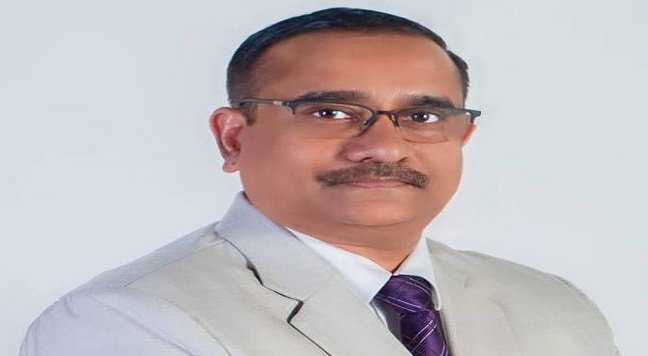
Dr. Krishnan Ranganath, the hitherto Regional Executive – West Africa at Africa Data Centres (ADC), Africa’s largest network of interconnected, carrier- and cloud-neutral data centre facilities, has moved on from the company after half a decade of record growth.

This was confirmed in a LinkedIn post, where he noted that after more than five years of transformative leadership, he is signing off to embark on a new professional chapter.
Reflecting on his tenure, Dr. Ranganath noted that the journey was defined by resilience and a commitment to building infrastructure designed for the future.
“What started as a mission to navigate the complexities of a new market has evolved into a chapter of immense growth. We didn’t just build data centres; we built the foundation for West Africa’s digital future. I am immensely proud of the culture of operational excellence we’ve fostered and the milestones we have achieved together,” Dr. Ranganath said in a message to our inquiry.
Dr. Ranganath joined ADC during a pivotal era, tasked with establishing the brand as a formidable challenger in the competitive West African market. Under his guidance, the region evolved from a bold experiment into a definitive powerhouse of digital infrastructure, moving from the installation of its first rack to becoming a trusted, well-established partner in the colocation and cloud services space.
During his five-year leadership, Dr. Ranganath managed several key strategic pillars. He led market entry and expansion by navigating complex regulatory and environmental landscapes to turn regional challenges into competitive advantages. He also drove infrastructure excellence by scaling operations from foundational setups into a high-capacity, well-established powerhouse. Finally, he provided cultural leadership by building a high-performance team from the ground up that balanced strategic breakthrough with a collaborative, human-centric work environment.
In the emotionally-laced message, Dr. Ranganath extended his gratitude to the ADC team, describing them as the heartbeat of the company’s success in West Africa. “To my team and colleagues: thank you for the late nights and the strategic breakthroughs that fueled our progress. I leave with great memories and a sharp focus on what’s next.”
While Dr. Ranganath has not yet revealed his next destination, he encouraged his professional network and industry stakeholders to stay tuned for the announcement of his upcoming ventures.

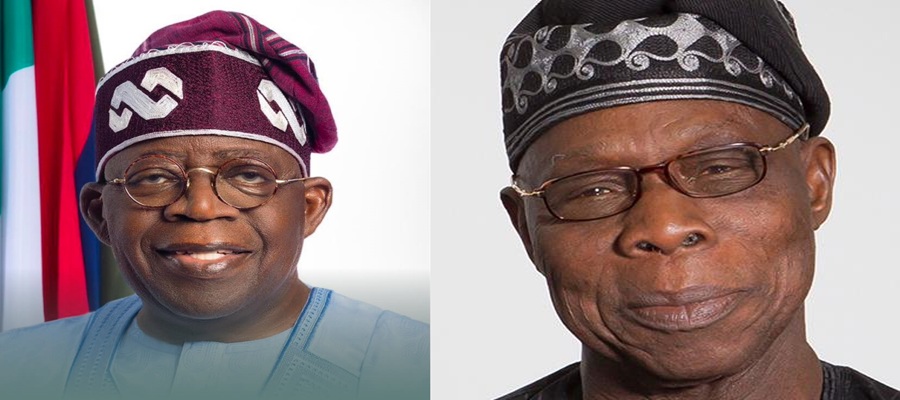
Leo Stan Ekeh, Chairman of Zinox Group and Africa’s foremost digital disruptor, has expressed gratitude to President Bola Ahmed Tinubu, and former President and African statesman, Chief Olusegun Obasanjo, for their goodwill messages and prayers on his birthday.

Ekeh, who turned 70 on Sunday, February 22, also extended gratitude to governors; former governors, including Babatunde Raji Fashola, former governor of Lagos state; National Assembly members; captains of industries, members of the global tech community, some of whom sent delegations to his house aside virtual goodwill messages sent from across the globe; royal fathers and the media.
In a post-birthday prayer and thanksgiving meeting with some members of the ICT media in his Ikoyi residence at the weekend, Ekeh said he was overwhelmed by the deluge of good wishes from Nigerians of all tribes and tongues.
Ekeh reflected on his relationship with President Tinubu over the past decades, describing Tinubu as a trustworthy and loyal friend who does not hesitate to make sacrifices for the good of the people he leads.
“President Tinubu has been my supporter long before I launched Zinox. He has always shown brotherly love,” he recalled.
He mentioned Mr. Sam Amuka, publisher of Vanguard newspapers; Lt. General T.Y Danjuma (retd), Founder, South Atlantic Petroleum; and Pa Obafemi Awolowo’s family as some of the many Nigerians with established companies who “experienced me and trusted me in the early days of my business life, and I didn’t disappoint”.
Recounting how Nigerians celebrated him on his birthday, he said: “In all my years, I have never seen such a show of love from Nigerians via different communications channels, from calls to social media. I was deeply touched by the kindred spirit of Nigerians. It tells me one thing: Nigerians are caring and loving people, and they appreciate quality and value-driven impact.
“I want to use this medium to say ‘thank you’ to those who sent me messages of goodwill, prayers through different communication platforms that I could not immediately acknowledge. I appreciate you all,” he said.
It will be recalled that President Tinubu while celebrating Ekeh on his birthday described him as one of “Nigeria’s pioneering innovators in the information technology sector.”
The President also commended Ekeh for his “commitment to promoting the Nigerian brand and creating opportunities for young Nigerians,” amongst his other achievements in the tech sector.
President Obasanjo, accompanied by his wife, Chief (Mrs.) Bola Obasanjo, who visited Ekeh to pray for him, described Ekeh as a “very kind man and an achiever who inspired many youths at a critical point in Nigeria’s information technology history.” He also prayed for the Zinox Group boss to live for 100 years and beyond.
As a sitting President, Obasanjo honoured Ekeh as an Icon of Hope and a role model for Nigerian youths on October 1st, 2001, and subsequently with the national honour of the Officer of the Federal Republic (OFR).
Others who joined Obasanjo in honouring Ekeh were former Lagos state governor, Babatunde Raji Fashola and his wife, former INEC Chairman, Professor Maurice Iwu and his wife, Chairman of MTN, Dr. Ernest Ndukwe and his wife; Mr. Atedo Peterside, Founder of Stanbic IBTC Bank and his wife; Chairman of Fidelity Bank, Mrs. Amaka Onwughalu and her husband; Managing Director Fidelity Bank, Dr. Nneka Onyeali-Ikpe; Mr. Udoma Udo-Udoma, Chairman Seplat Energy and his wife; Mr. Sam Amuka; Prof Anya O. Anya; Mr. Chris Uwaje, tech policy expert and his wife; Mr. John Momoh, Chairman of Channels Media Group and his wife; Mr and Mrs Walter, CEO of Providus bank, Mr. Roosevelt Ogbonna, group CEO of Access bank, Mrs. Victoria Ajayi, CEO of TVC Communications and her husband; Mrs. Nkeiru Anumudu, CEO of Globe Motors, secondary school mates of Ekeh including Charles Oputa (Charly Boy) who came with his wife; Leo Stan’s elder brother HRM Eze George Ekeh (aka Saint George), the traditional ruler Ishi Ubomiri Autonomous Community in Imo state; representatives of multinationals with whom he has partnered all through the years; among


Joint Admissions and Matriculation Board (JAMB) has said it has uncovered criminal syndicates that are deploying artificial intelligence tools to impersonate its officials and defraud candidates preparing for the Unified Tertiary Matriculation Examination (UTME).

Is-haq Oloyede, registrar of the board, disclosed this on Saturday in Abuja, warning that candidates and parents involved in the scheme would face severe consequences.
Mr Oloyede also said three top officials of the board have been found to have collaborated in sabotaging the system and have been recommended for dismissal.
He added that two other officials and a member of staff of Ahmadu Bello University, Zaria, are currently undergoing criminal prosecution for involvement in activities inimical to the integrity of the examination body.
Mr Oloyede said investigations revealed that more than 100 candidates were linked to the scheme, with 83 confirmed to have made payments to the syndicates.
He added that those involved cut across 25 states with three school proprietors in custody for aiding and abetting examination malpractice.
He further said the board had made recommendations to the Minister of Education for the cancellation of the affected registrations.
“What is important for us to emphasise here is that the students themselves and their parents are willing collaborators and cannot be regarded as innocent,” he said.
Mr Oloyede also expressed concern about the involvement of underage candidates, noting that about 38,000 underage candidates have registered for the 2026 UTME.
He said many of the candidates who patronised the syndicate are underaged, who have been pushed by their parents beyond their academic capacity.
While noting that JAMB’s mandate is limited to conducting examinations, he urged parents to refrain from encouraging malpractice.
“Parents must understand that paying for fraud does not secure a child’s future. It destroys it. You are teaching them that cheating is a strategy, that deception is acceptable, and that merit is optional,” he said.
Mr Oloyede rejected suggestions that the board should negotiate with suspects, including some who allegedly fled the country after last year’s examination.
He added that some computer-based test (CBT) centres had already been sanctioned.
He warned that paying for examination fraud or belonging to online groups offering such services would attract sanctions.
“Let it be clearly understood by all Nigerians that paying for examination fraud is a crime. Receiving illegal assistance is a punishable offence. Being a willing member of a WhatsApp group where these fake services are offered will no longer be condoned. Ignorance will not be accepted as a defence,” he said.
Mr Oloyede said the board is working with security agencies to tackle the fraud schemes.
He thanked the Office of the National Security Adviser, the Directorate of State Services, the Nigerian Police Force and the Nigeria Security and Civil Defence Corps for their support.
“As for capacity, we have the capacity to deal with all these issues. If we did not have the capacity, we would not be able to stay ahead of them. As they are planning, we are planning,” he said.
He added that JAMB has strengthened its technical systems, including the ability to detect prohibited devices during examinations.

Sunil Bharti Mittal Conferred GSMA Lifetime Achievement Award for Transforming Global Telecommunications

Jumia Tech Week 2026 Begins with Tech Deals on Smartphones, Electronics, and Everyday Technology

AfDB Supports Francophone Africa Start-ups with €6.5M

Krishnan Exits Africa Data Centre to Embark on Professional Chapter

House Probes Fintech Regulation via Public Hearing on New Commission Bill

Accidental Billionaire Opts for Jail Instead of Returning Money Credited Him by Mistake

New Horizons Nigeria Breaks Ground: First to Fuse Mandarin into ICT Curriculum

Kaspersky Brings more Transparency to Threat Detection with New Hunt Hub

Dr. Cairo Ojougboh Foundation Bolsters Nigeria’s Education Drive with ₦2.7m Student Support

NDPC Commits to Balancing Data Privacy, Protection Information




 E-Financial2 days ago
Iran-Israel-US Conflict and CBN’s FX Gains: A Stress Test for Nigeria’s Monetary Stability

 E-Financial2 days ago
Mutual Benefits Assurance Reaffirms Full Regulatory Compliance, Enhanced Governance

 General News2 days ago
JAMB Uncovers AI-Driven Fraud Targeting UTME Candidates, Warns Parents

 General News2 days ago
SERAP Asks FCCPC to Investigate Google, Meta, Others over Alleged Rights Abuses

 News2 days ago
TeamApt, Awabah Partner to Boost Pension Drive for Nigerians

 News2 days ago
FlashChange CEO, Bidemi Oke, Urges Startups to Build Strong Governance Structures Early

 E-Financial2 days ago
Reps Mull Commission to Regulate Fintech Operations

 General News2 days ago
Capelli Institute Commits to Advancing Trichology in Nigeria