

General News
Global Air Freight Slowed To 2.2% in 2015- IATA Report


The International Air Transport Association (IATA) released figures for global air freight markets showing cargo volumes measured in freight tonne kilometers (FTKs) expanded 2.2% in 2015 compared to 2014.
This was a slower pace of growth than the 5.0% growth recorded in 2014. The weakness reflects sluggish trade growth in Europe and Asia-Pacific.
After a strong start, air freight volumes began a decline that continued through most of 2015, until some improvements to world trade drove a modest pick-up late in the year.
Cargo in Asia-Pacific, accounting for around 39% of freight traffic, expanded by a moderate 2.3%.
The key markets of Europe and North America, which between them comprise around 43% of total cargo traffic, were basically flat in 2015.
Latin America suffered a steep decline (-6.0%) while the Middle East grew strongly, up 11.3%. Africa also saw modest growth of 1.2%.
The freight load factor (FLF) was at times the lowest for some years, falling to an average 44.1% compared to 45.7% in 2014, driven down by weak demand and capacity expansion.
“2015 was another very difficult year for air cargo. Growth has slowed and revenue is falling. In 2011 air cargo revenue peaked at $67 billion. In 2016 we are not expecting revenue to exceed $51 billion. Efficiency gains are critical as the sector adjusts to shortening global supply chains and evermore competitive market conditions. We have to adjust to the ‘new normal’ of cargo growing in line with general rates of economic expansion. The industry is moving forward with an e-freight transformation that will modernize processes and improve the value proposition. The faster the industry can make that happen, the better,” said Tony Tyler, IATA’s Director General and CEO.
The industry’s key challenges will be discussed in detail at the World Cargo Symposium (WCS) in Berlin, 15-17 March.The world’s largest gathering of air cargo professionals, the 10th WCS will bring together 1,000 delegates under the theme of ‘The Value of Air Cargo’ to debate solutions for strengthening air cargo and the vital service it performs for the world economy.
Regional Analysis In Detail
The global freight growth rate in December was 0.8% compared to December 2014. Within that range there were considerable regional fluctuations.
African airlines FTKs declined by 8.4% in December although for 2015 as a whole the region grew by 1.2%. The FLF in 2015 was 29.7%, the lowest of any region.
The underperformance of the Nigerian and South African economies was a challenge throughout the year, but trade growth to and from the region was sufficient to drive a modest expansion in FTKs.
Asia-Pacific carriers were basically flat in December, expanding just 0.1%. For the whole of 2015, the region grew 2.3%.
The FLF for 2015 was 53.9%, the highest of any region. Cargo expansion in the region has been hampered by a shift in Chinese economic policy to favour domestic consumption.
A mid-year fall of 8% in trade to/from emerging Asia also led to declines but this appears to have bottomed out, with a rebound in the second half of the year.
European airlines grew by 1.2% in December but the performance for 2015 in total was a fall of 0.1% compared to 2014.
The FLF in 2015 was 44.9%. Economic conditions in the Eurozone have been subdued, leading to suppressed demand for air freight, but imports have improved in recent months.
Latin American carriers continued the weak performance of recent months, declining by 6.2% in December and by 6.0% for 2015 as a whole. This was the weakest performance of any region.
The average FLF for 2015 was 38.3%. Economic and political conditions in Brazil have worsened, and regional trade activity has been volatile.
Middle Eastern carriers grew 4.0% in December and for 2015 in total the region expanded 11.3% compared to 2014. The FLF was 42.8% for 2015.
The region enjoyed a strong year as network expansion into emerging markets was supported by economic growth in local economies.
Political instability and the fall in the oil price may impact on some economies in the region but growth as a whole remains robust enough to support further expansion in 2016.
North American airlines saw FTKs expand 1.4% in December compared to December 2014. For the year as a whole, North America grew just 0.1%.
The 2015 FLF was 34.3%. Growth in 2015 faded after a strong start that was flattered by the West Coast ports strike.
Recently there have been mixed signals from economic data, indicating an uncertain outlook for air freight in the coming months.



Goodnews Naija Podcast has been identified as one of Nigeria’s podcast platforms to watch, gaining attention for its consistent focus on positive storytelling and uplifting narratives from across the country.

Launched on 1 October 2024, the podcast spotlights inspiring stories, progress-driven conversations, and everyday Nigerian wins often overlooked in mainstream media. With a weekly release schedule and a values-led editorial approach, Goodnews Naija has built a growing audience within and outside Nigeria.
“At a time when negative headlines dominate global perceptions, we believe positive Nigerian stories deserve global visibility,” said Host, Damilola Kehinde. “Goodnews Naija exists to balance the narrative by highlighting hope, resilience, and progress.”
According to Producer, Memunat Olayemi Oladepo, the platform was intentionally created to reshape how Nigerian stories are told. “Goodnews Naija was built as a counter-narrative,” she said. “We are deliberate about amplifying stories that reflect the resilience, innovation, and optimism thriving across the country.”
As global interest in African creators grows, Goodnews Naija Podcast is positioning itself as a platform contributing to a more balanced and human narrative about Nigeria.


By Blaise Udunze
The Central Bank of Nigeria’s recapitalisation exercise, which is scheduled for a March 31, 2026, deadline, has continued to reignite optimism across financial markets and is designed to build stronger, more resilient banks capable of financing a $1 trillion economy. With the ongoing exercise, the industry has been witnessing bank valuations rising, investors are enthusiastic, and balance sheets are swelling. However, beneath these encouraging headline numbers, unbeknownst to many, or perhaps some troubling aspects that the industry players have chosen not to talk about, are the human cost of consolidation and the infrastructure deficit.

CBN
Recapitalisation often leads to mergers and acquisitions. Mergers, in turn, almost always lead to job rationalisation. In Nigeria’s case, this process is unfolding against an already fragile labour structure in the banking industry, one where casualisation has become the dominant employment model.
One alarming fact in the Nigerian banking sector is the age-old workforce structure raised by the Association of Senior Staff of Banks, Insurance and Financial Institutions (ASSBIFI), which says that an estimated 60 percent of operational bank workers today are contract staff. This reality raises profound questions about the sustainability of Nigeria’s banking reforms and the credibility of its economic ambitions.
A $1 trillion economy cannot be built on insecure labour, shrinking institutional knowledge, and an overstretched financial workforce.
Recapitalisation and the Hidden Merger Trap
History is instructive. Referencing Nigeria’s 2004-2005 banking consolidation exercise, which reduced the number of banks from 89 to 25, and no doubt, it produced larger institutions, while it also triggered widespread job losses, branch closures, and a wave of outsourcing that permanently altered employment relations in the sector. The current recapitalisation push risks repeating that cycle, only this time within a far more complex economic environment marked by inflation, currency volatility, and rising unemployment.
Mergers promise efficiency, but efficiency often comes at the expense of people. Speaking of this, duplicate roles are eliminated, technology replaces frontline staff, and non-core functions are outsourced. The troubling part of it is that this is already a system reliant on contract labour; mergers could accelerate workforce instability, turning banks into balance-sheet-heavy institutions with shallow human capital depth.
ASSBIFI’s warning is therefore not a labour agitation; it is a macroeconomic red flag.
Casualisation as Structural Weakness, Not a Cost Strategy
It has been postulated by proponents of job casualisation that it is a cost-control mechanism necessary for competitiveness. Contrary to this argument, evidence increasingly shows that it is a false economy. In reaction to this, ASSBIFI President Olusoji Oluwole, who kicked against this structural weakness, asserted that excessive reliance on contract workers undermines job security, suppresses wages, limits access to benefits and blocks career progression while affirming that over time, this erodes morale, loyalty, and productivity.
More troubling are the systemic risks. Casualisation creates operational vulnerabilities, higher fraud exposure, weaker compliance culture, and lower institutional memory.
One of the banking regulators, the Nigeria Deposit Insurance Corporation (NDIC), has not desisted from repeatedly cautioning that excessive outsourcing and short-term staffing models increase security risks within banks. On the negative implications, when employees feel disposable, ethical commitment weakens, and reputational risk grows.
Banking is not a factory floor. It is a trust business. And trust does not thrive in insecurity.
Inside Outsourcing Web of Conflict of Interest
Beyond cost efficiency, Nigeria’s casualisation crisis is also fuelled by a deeper governance problem, conflicts of interest embedded within the outsourcing ecosystem.
In many cases, bank chief executives and executive directors are reported to own, control, or have beneficial interests in outsourcing companies that provide services to their own banks. Invariably, it is the same firms supplying contract staff, cleaners, security personnel, call-centre agents, and even IT support. Structurally, this arrangement allows senior executives to profit directly from the same outsourcing model that strips workers of job security and benefits.
The incentive is clear. Outsourcing enables banks to maintain lean payrolls, bypass strict labour protections associated with permanent employment, and reduce long-term obligations such as pensions and healthcare. But when those designing outsourcing strategies are also financially benefiting from them, the line between efficiency and exploitation disappears.
This model entrenches casualisation not as a temporary adjustment tool, but as a permanent business strategy, one that externalises social costs while internalising private gains.
Exploitation and Its Systemic Consequences
The human impact is severe because the contract staff employed through executive-linked outsourcing firms often face poor working conditions, low wages, limited or no health insurance, and zero job security, which is demotivating. Many perform the same functions as permanent staff but without benefits, voice, or career prospects.
ASSBIFI has warned that prolonged exposure to such insecurity leads to psychological stress, declining morale, and reduced productive life years. Studies on Nigeria’s banking sector confirm that casualisation weakens employee commitment and heightens anxiety, conditions that directly undermine service quality and operational integrity.
From a systemic standpoint, exploitation feeds fragility. High staff turnover erodes institutional memory. Disengaged workers weaken internal controls. Meanwhile, this should be a sector where trust, confidentiality, and compliance are paramount; this is a dangerous trade-off if it must be acknowledged for what it is.
Why Workforce Numbers Tell a Deeper Story
It is in record that as of 2025, Nigeria’s banking sector employs an estimated 90,500 workers, up from roughly 80,000 in 2021. The top five banks today, such as Zenith, Access Holdings, UBA, GTCO, and Stanbic IBTC, account for about 39,900 employees, reflecting moderate growth driven by digital expansion and regional operations.
At face value, truly, these figures suggest resilience. But when viewed alongside the 60 percent casualisation rate, they paint a different picture, revealing that employment growth is without employment quality. A workforce dominated by contract staff lacks the stability required to support long-term credit expansion, infrastructure financing, and industrial transformation.
This matters because banks are expected to be the engine room of Nigeria’s $1 trillion economy, funding roads, power plants, refineries, manufacturing hubs, and digital infrastructure. Weak labour foundations will eventually translate into weak execution capacity.
Nigeria’s Infrastructure Financing Contradiction
Nigeria’s infrastructure deficit is estimated in the hundreds of billions of dollars. Power, transport, housing, and broadband require long-term financing structures, sophisticated risk management, and deep sectoral expertise. Yet recapitalisation-induced mergers often lead to talent loss in precisely these areas.
As banks consolidate, specialist teams are downsized, project finance units are merged, and experienced professionals exit the system, either voluntarily or through redundancy. Casual staff, by design, are rarely trained for complex, long-term infrastructure deals. The result is a contradiction, revealing that larger banks have bigger capital bases but thinner technical capacity.
Without deliberate workforce protection and skills development, recapitalisation may produce banks that are too big to fail, but too hollow to build.
South Africa Offers a Useful Contrast
South Africa offers a revealing counterpoint. As of 2025, the country’s “big five” banks, such as Standard Bank, FNB, ABSA, Nedbank, and Capitec, employ approximately 136,600 workers within South Africa and about 184,000 globally. This is significantly higher than Nigeria’s banking workforce, despite South Africa having a smaller population.
More importantly, South African banks maintain a far higher proportion of permanent staff. While outsourcing exists, core banking operations remain firmly institutionalized compared to the Nigerian banking system. For this reason, South Africa’s career progression pathways are clearer, labour regulations are more robustly enforced, and unions play a more structured role in workforce negotiations.
The result is evident in outcomes. South Africa’s top six banks are collectively valued at over $70 billion, with Standard Bank alone boasting a market capitalisation of approximately $30 billion and total assets nearing $192 billion. Nigeria’s top 10 banks, by contrast, held combined assets of about $142 billion as of early 2025, even with a much larger population and economy, and its 13 listed banks reached a combined market capitalisation of about N17 trillion ($11.76 billion at an exchange rate of N1,445) in 2026.
Though this gap is not just about capital. It is about institutional depth, workforce stability, and governance maturity.
Bigger Valuations, But a Weaker Foundations?
Nigeria’s 13 listed banks reached a combined market capitalisation of about N17 trillion in 2026. It is no surprise, as it is buoyed by investor anticipation of recapitalisation and higher capital thresholds. Yet market value does not automatically translate into economic impact. Without parallel investment in people, systems, and long-term skills, valuation gains remain fragile.
South Africa’s experience shows that strong banks are built not only on capital adequacy, but on human capital adequacy. Skilled, secure workers are better risk managers, better innovators, and better custodians of public trust.
Labour Law and its Regulatory Blind Spots
ASSBIFI’s call for a review of Nigeria’s Labour Act is timely, and this is because the current framework lags modern employment realities, particularly in sectors like banking, where technology and outsourcing have blurred traditional employment lines. Regulatory silence has effectively legitimised casualisation as a default model rather than an exception.
The Central Bank of Nigeria cannot afford to treat workforce issues as outside its mandate. Prudential stability is inseparable from labour stability. Regulators must begin to view excessive casualisation as a risk factor, just like liquidity mismatches or weak capital quality.
Recapitalisation Without Inclusion Is Incomplete
If recapitalisation is to succeed, it must be inclusive; therefore, the industry must witness the enforcement of career path frameworks for contract staff, limiting the proportion of outsourced core banking roles, and aligning capital reforms with employment protection. It also means recognising that labour insecurity ultimately feeds systemic fragility.
South Africa’s banking sector did not avoid consolidation, but it managed it alongside workforce safeguards and institutional continuity. Nigeria must do the same or risk building banks that look strong on paper but crack under economic pressure.
True Measure of Reform
Judging by the past reform in 2004-2005, it has shown that Nigeria’s banking recapitalisation will be judged not by the size of balance sheets, but by the resilience of the institutions it produces. As part of the recapitalisation target for more resilient banks capable of financing a $1 trillion economy, it demands banks that can think long-term, absorb shocks, finance infrastructure, and uphold trust. None of these goals is compatible with a workforce trapped in perpetual insecurity.
Casualisation is no longer a labour issue; it is a national economic risk. If mergers proceed without deliberate workforce stabilisation, Nigeria may end up with fewer banks, fewer jobs, weaker institutions, and a slower path to prosperity.
The lesson from South Africa is clear, as it shows that strong banks are built by strong people. Until Nigeria’s banking reforms fully embrace that truth and the missing pieces are addressed, recapitalisation will remain an unfinished project. and the $1 trillion economy, an elusive promise.
Blaise, a journalist and PR professional, writes from Lagos, can be reached via: [email protected]

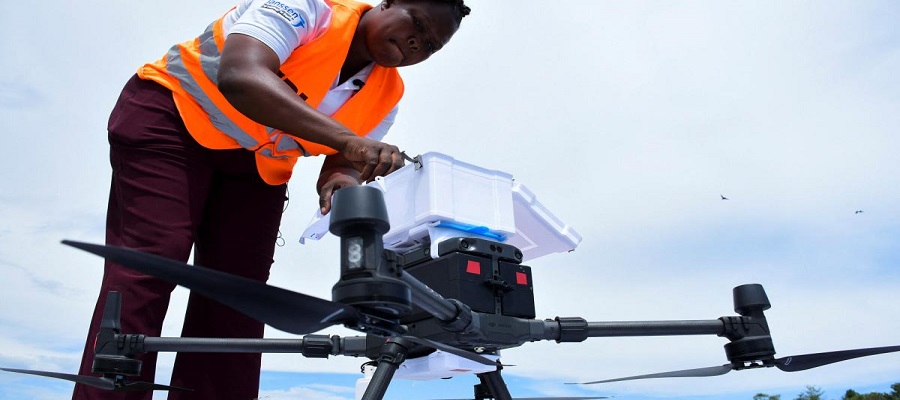
The military high command at the weekend said it has commenced a full investigation into the use of drones by terrorists to carry out attacks.

This is part of ongoing efforts to end insurgency in the country.
Major-General Michael Onoja, director of Defence Media Operations (DDMO), , disclosed this in Abuja while briefing defence correspondents on the achievements of troops of the Armed Forces of Nigeria and other security agencies across various theatres of operation nationwide.
He said the investigation is being conducted in collaboration with other relevant security agencies to identify the sources of the drones and halt their deployment by non-state actors.
According to him, concrete actions are expected to emerge in the coming days or months, as agencies with the technical capacity to counter drone deployment have been fully engaged.
“We have reached an advanced stage in taking measures, in conjunction with other federal government agencies, to trace where these drones are coming from. I believe that in the next couple of days or months, concrete action will emerge on what we intend to do,” Onoja said.
In recent months, terrorists operating in the North East have increasingly deployed sophisticated drones in attacks on civilians and security personnel, raising concerns over the evolving tactics of insurgent groups.
The development has also generated questions among security experts and the public over how the drones are being sourced and the channels through which they enter the country.
Responding to allegations circulating on social media that soldiers manning checkpoints in Bauchi State were being compelled to remit weekly sums to their commanders, Onoja said the claims remained mere allegations.
He stressed that the military is a transparent institution and assured that investigations would be conducted if verifiable details were provided.
On the return of Nigerian refugees from Cameroon, Onoja said the development reflects the success of military operations in restoring security to affected communities.
“The military, in conjunction with the Federal Government, has done everything within its capacity to ensure the necessary security in those areas. The return of refugees is a clear measure of operational success,” he said.
On operational achievements, Onoja disclosed that within the month of January 2026 under review, troops across various theatres killed several terrorists, arrested 452 suspected terrorists, kidnappers and other criminal elements, rescued about 284 kidnapped victims, while 124 terrorists and their family members surrendered to troops.
He added that troops also recorded major successes against oil theft, recovering 210,300 litres of crude oil, 66,725 litres of diesel, 660 litres of kerosene and 5,000 litres of petrol.
In addition, 53 illegal refining sites were discovered and destroyed during the period under review.
Providing updates from various theatres, Onoja said that in the North East, troops under Joint Task Force Operation HADIN KAI sustained operational momentum by denying Boko Haram, Islamic State West Africa Province (ISWAP), and Jama’atu Ahlis Sunna Lidda’awati wal-Jihad terrorists freedom of action.
He said ground troops, working alongside the Air Component, hybrid forces and local security groups, conducted aggressive operations, neutralising terrorists, arresting informants and logistics suppliers, recovering weapons, and dismantling terrorist networks.
“During the month, troops conducted operations in Gwoza, Damboa, Mobbar, Askira Uba and Konduga Local Government Areas of Borno State. Similar operations were carried out in Michika and Damaturu LGAs of Adamawa and Yobe States, respectively. During these encounters, scores of terrorists were neutralised, 17 were arrested, and 12 kidnapped victims were rescued. Recovered weapons and suspects are in custody for further action,” he said.
In Plateau State, Onoja said troops of Operation ENDURING PEACE responded to distress calls on terrorist activities, conducting offensive operations across Plateau and parts of Kaduna State.
According to him, several extremists were neutralised during firefights, 86 other criminals were arrested, and 24 kidnapped victims rescued, while arms and ammunition were recovered.
In the South-South, Onoja said troops of Operation DELTA SAFE intensified operations against crude oil theft, sea piracy and militancy.
“They dismantled 53 illegal refining sites, arrested 81 oil thieves and other criminals, and recovered assorted arms and ammunition. Air reconnaissance missions also led to the interception and destruction of vessels involved in the illegal syphoning of petroleum products across the Niger Delta,” he said.
He added that troops of Operation UDO KA recorded notable gains across Abia, Anambra, Ebonyi, Enugu and Imo States, with over 80 militants surrendering, 72 arrests made, and 11 kidnapped victims rescued.
Eight Cameroonian nationals were also rescued during cross-border patrols along the Bakassi waterways, while a significant reduction in crime was recorded across the region.
Reaffirming the Armed Forces’ resolve to sustain pressure on criminal elements, Onoja said the military would continue to strengthen inter-agency collaboration and work closely with local communities to ensure lasting peace and stability.
He reiterated the Chief of Defence Staff’s mantra, “See something, say something,” urging Nigerians to provide timely and credible information to security agencies.
“With the continued support of the media and the Nigerian public, the Armed Forces of Nigeria remain confident of defeating all threats to national security,” he said.

Accidental Billionaire Opts for Jail Instead of Returning Money Credited Him by Mistake

US Set to Deport 79 Nigerians on Criminal List

SEC Warns of Potential Ponzi-style Risks in AURUM BOT, ModMount

Airtel Nigeria Commits to Boosting Nigeria’s Digital Infrastructure

Ungoverned AI is Quietly Scaling Risk in Nigeria – Dr. Naiho

19 Nigerian Banks Meet CBN Recapitalization Targets Ahead of March Deadline

Youth Talent Takes Center Stage as T2 Ignites High-Octane Rap Battles @ Carnival Calabar

Aig-Imoukhuede Foundation Wrapped Up 2025 with Real Change in Governance, Health, Media Across Africa

Showmax Unlocks Easier Payments for Nigerian Subscribers via Baxi

Nigerian Terra Industries Secures $11.8m for Expansion




 Telecom1 day ago
Telecom Operators Invest Over $1Bn on 2,850 New Sites in 2025 – NCC

 E-Financial1 day ago
If Capital is the Answer, What Exactly is the Problem with First Holdco

 E-Financial1 day ago
Amaanah Finance to Unveils Non-Interest Banking Services Today

 General News1 day ago
First Trustees to Host 8th Islamic Estate Planning Clinic in Abuja

 News1 day ago
NSCDC Hands over Fake Crypto Currency Trader to EFCC

 News1 day ago
Alakija’s Flourish Africa Provides N300m Grants for Women Entrepreneurs

 General News1 day ago
Security Forces Probe Use of Drones by Terrorists

 Broadcasting1 day ago
New Horizons Nigeria Breaks Ground: First to Fuse Mandarin into ICT Curriculum