

E-Business
Global Reboot: 75% Complete

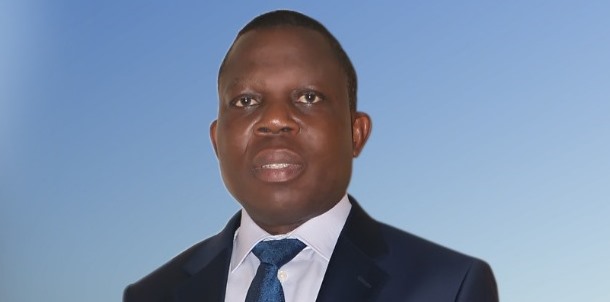
Tim Akano
Do you understand what is really happening and what lies on the road ahead?
The world tilted slightly on 9/11/2001 when inferno descended on the World Trade Centre, killing 2,977 people. Today, the world is moving at full tilt.

America fell into a big ditch in Iraq and a moat in Afghanistan while chasing the masterminds of the 9/11 terror attacks.
Invading Iraq and Afghanistan was perhaps the greatest strategic military gamble in America’s history, just as the 1956 invasion of Suez Canal in Egypt became Britain’s Achilles’ heel that ultimately condemned it to a ‘’second tier ex-King’’ status.
Punishing the whole for the sin of a few is expensive, unwise and counterproductive. To avenge the 9/11 terror act, America could have targeted the ‘Centre of Gravity’ (the fingers that sinned) in both Iraq and Afghanistan and clinically cut them off. Why kill a fly with a sledgehammer?
The invasion led to the de-legitimisation of the American Empire arising from haemorrhaging military expenditure, humongous debt profile and radical de-industrialization. Thus, the evolution of America as a sole Super Power froze.
Today, America is undeniably weaker, looking like a self-disrobed King in a decaying empire. As the twin-goals of enthroning democracy and peace remained elusive and Afghanistan increasingly became human meat-grinder, America’s mystic vanished.
Consequently, the Taliban became more emboldened when they discovered that the red comb on the head and neck of America’s chicken was not, after all, the burning, hot fire it was assumed to be, but fleshy red meat.
Every Empire is 50% transcendental. The fear-factor is part of the myth, and thisAmerica has lost.
According to Watson Institute of International Public Affairs at Brown University, the war on terrorism has cost a whopping $6.4 Trillion of America’s tax payers money, total death of 801,000 people out of which 335,000 were civilians and 21 million displaced due to violence.
Twenty years after, the P&L balance sheet of the war venture shows America made a big loss. Just like the Afghan people. The world, too, lost. Then who gained? Terrorism has gone global. It used to be as scarce as hen’s teeth, but has since become flesh dwelling among us, growing by leaps and bounds, and defying the law of gravity.
We are at a very dangerous moment in history. The ship of ‘a world- in-change’ faces a wicked wave in the middle of a deep ocean, making navigation a nerve-racking ordeal. Everywhere, there are blinking red lights.
How will the emerging geopolitical superstructure stack up after the reboot? And where is the Africa action- plan in the redrawn world?
The triumph of the totalitarian Taliban in Afghanistan after decades of back-to-back wars with two super powers; the circular crises in the Middle East; North Korea’s new nuclear threat; Nigeria’s rapidly collapsing House; growing numbers of failed, failing and fragile states; China’s unhealthy monopoly of the global supply chain; a jejune Europe; a jittery Japan; a rascally Russia; a bullish China; NATO’s on-going tango over the Black Sea; Taiwan-Hong Kong impending forceful occupation at a time when the world’s sole Super Power’s influence is going south. These are some of the blinking red lights, signalling frightening impending danger.
Nature, too, is angry. Her eyes are hot red. The biggest red light is Climate imbalance. The UN Secretary General, Antonio Guterres, in the report titled ‘’a code red for humanity, noted ‘the 1.5-degree threshold is perilously close, as the world’s presently 1.1 degrees Celsius is higher than pre-industrial levels. The average surface temperature of the Earth has increased by about 1.0F degree. While specific humidity is on the increase, the relative humidity is decreasing. Some places are witnessing unprecedented rainfall, a preliminary warning to another biblical ‘’Noah- flood’, while others are getting hotter and drier, accelerating desert encroachment, yet some are getting abnormally cold.
You can’t cheat nature and get away with it!
Overpopulation is yet another blinking red light. Population experts have warned with a tone of finality that the world has reached its maximum capacity of almost 8 billion people. The 81 million people annual top up amounts to excess luggage which comes with interest and default charges from Nature’s Bank.
True, 100 years ago, the world’s population stood at 1.9 billion, today it is 7.9 Billion, whereas the world’s land (149 million sq.km) and water (361 million sq.km.) areas are fixed.
As Americans will say ‘’something’s gotta give”. However, the Globalists’ proposal, ‘’eliminate a few to save the rest’’ is stomach-churning. Author Dan Brown, in ‘’Inferno’’, speaks on their behalf: Population growth is an exponential progression occurring within a system of finite resources.
“The end will arrive very abruptly. Our experience will not be that of slowly running out of gas. It will be more like driving off a cliff Now I understand why Da Vinci said 500 years ago that, the infinite works of Nature are woven together in a unity filled with marvellous but sometimes dangerous patterns”.
President Bill Clinton has warned of possible aliens invasion of the world, which is another blinking red light that regular people don’t pay attention to. Our scientists’ persistent communication with aliens, who are reported to be more technologically advanced than we are, can backfire.
What if the aliens also decide to visit our world to have dinner in our living rooms or worship in our churches and mosques or take a nap on our family bed someday?
According to the serial entrepreneur, Elon Musk, something in the universe is killing everything’’.
Professor Robin Hanson earlier came up with the Great Filter theory, somewhere along the trajectory of life’s development, there are massive and common challenges that end life before it becomes widespread in the universe.’’ Elon Musk adds, Hopefully, there will never be a WW3, but the probability of creating a self-sustaining city on Mars after World War 3 is low’’. Musk concludes that, in future there are filters that should concern us. Maybe we will be hit by an asteroid, an earthquake, a pandemic, or maybe robots could rise and destroy us or maybe it is just impossible to make a star ship’.
The world is severely pressed for time in turning red to green! Worse still, America that used to serve as the World’s Inspector General of Police (WIGP) is presently nursing a severe psychological trauma following the recent ‘August Embarrassment’ of ‘’two own-goals’’ scored in Afghanistan.
Departing hurriedly on 31st of August 2021 without achieving its goals did incalculable psychological damage to America’s image, and losing 13 solders to suicide bombers on the eve of her departure amounts to ego-crushing! Of what use then is the 20 years experience when America did not foresee that the 300,000 Afghan Horses she backed cannot withstand 48 hours of challenge from the 75,000 Taliban Horses? It speaks volume about the size of decay in the US that despite the fundamentally flawed evacuation project in Kabul, no heads rolled.
String of military losses sustained against external enemies is one of the signs of a collapsing empire. Rome went through this phase. Ditto UK. America has had Vietnam, Somalia, Iraq, Syria, Libya, and now Afghanistan!
There is an irreversible seismic shift occurring – the geopolitical traditional powerhouses are ghastly losing their edge to new players. For instance, Europe, faced with an atrophying population, innovation, vision and cohesion, is up against some indomitable state actors: economically from China, militarily from Russia, politically from America and religiously from the Islamic world of Arabia. All these while, America, as a result of self-inflicted ’imperial overstretch’, is gasping for air.
The global balance of power is falling apart as the balance of terror holds sway!
On the 31st of August, the Taliban declared themselves winners and on 1st of September, 2021, held a parade with dozens of abandoned American armoured vehicles in Kabul.
The biggest dilemma facing the world today is how best to tackle the Kabul chaos: leave Taliban to its fate or engage them? Meanwhile, some of the Afghans and Taliban fighters possess unique skill-set in explosive belt and vest production.
Add these to the abandoned American and Russian military and civil infrastructure, estimated to be in excess of $100billion at their disposal. Clearly, the world needs to think perpendicularly whilst dealing with Taliban 2.0, so that the CIA-M16-KGB trained Taliban do not metamorphose into a 21st century Frankenstein Monster.
The saying whatever happens in Las Vegas stays in Las Vegas’’ is not going to hold true of Afghanistan. Whatever happens in Kabul in the months ahead will not stay in Kabul but have a ricocheting effect worldwide
It will probably require the services of a “Tesseographer”, those versed in the art of identifying symbols and messages found in the shape and configurations of tea leaves, in decoding where the world is headed.
In computing, especially after system or power failure, rebooting is the process by which a running computer is reconfigured either intentionally or unintentionally.
This could happen when the software applications powering the operating system are outdated and the computer begins to work sluggishly. Sometimes crashes can happen leading to an irretrievable loss of personal files and photos that are not backed up.
In the same vein, the World’s Computer Operating System (WOS) is obsolete and the made-in-America ’software applications’ like Capitalism, Democracy, Globalisation, etc. running on it are failing and causing global friction.
Unfortunately, unlike computers, the world has no BACKUP, no duplicate!
The three musketeers of space travel – Richard Branson, ElonMusk and Jeff Bezos – told us that only one million people can possibly be accommodated in space by 2050. The cost is $55million per ticket! Here is the major concern: for every weapon man has made, man has always used it
The World has to pray that no nation with nuclear capability will be tempted or provoked to nuke another as a way of unilaterally resolving the complicated geopolitical logjam since the second-strike-nuclear-capabilities in the hands of the Big7 nuke nations are capable of destroying the entire world seven times over.
The world is moving as it should? Or is it?
Tim Akano is the President, One Africa Initiatives .


E-Business
Offset Communications Slams N50m Suit against Qore Technologies for Alleged Copyright Infringement


Offset Communications Advisory Ltd has dragged Qore Technologies Ltd before a Federal High Court in Lagos, demanding the sum of N50 million as damages for the alleged infringement of its copyright.

Pic credit….https://copyrightalliance.org
Offset, in the suit marked: FHC/L/CS/1994/2025, is claiming that Qore used content from a proposal it submitted in December 2022, without formal engagement, attribution, or a licensing agreement.
“The Defendant’s execution of the content of the proposal submitted to it by the Plaintiff without any formal engagement, attribution or a licensing arrangement… amounts to an infringement of the Plaintiff’s copyright,” Offset stated in its writ of summon.
The suit filed on September 29, 2025, by Jimoh Bamigbola and Omobolaji Idris, on behalf of the plaintiff has Qore as sole defendant.
Plaintiff, a Lagos-based communications firm, in its statement of claim said it a had previously worked with Qore on Public Relations (PR) projects and was later asked to prepare a communications strategy for the company, adding that the said proposal contained ideas on employee engagement, branding, and stakeholder management.
Offset however, alleged that Qore implemented elements of the proposal, including internal communication initiatives and branding concepts, without payment or agreement.
“The Defendant executed and integrated the propositions into its Public Relations and Communication Strategy without any formal engagement… with the Plaintiff,” the statement of claim read.
The plaintiff said it discovered the alleged infringement in April 2025 and subsequently notified the defendant, but efforts to resolve the dispute failed.
It is seeking, among other reliefs, a declaration that the defendant’s actions amount to copyright infringement, N50 million in general damages, N5 million in litigation costs, 29 percent post-judgment interest, and “an order of perpetual injunction, restraining the Defendant… from further infringing on the Plaintiff’s copyright.”
Qore Technologies, however, denied the allegations in its statement of defence, arguing that the plaintiff was only engaged for limited Public Relations support services on a project basis and was paid for those services.
“The Plaintiff merely provided routine and secondary Public Relations support services… for which the Plaintiff was remunerated,” the defendant stated.
Qore further argued that the ideas referenced by the plaintiff are not protected under copyright law.
“The alleged ‘ideas’… consist of generic corporate communication practices widely used by companies… and cannot constitute original copyrightable works under Nigerian law,” it said.
The company also maintained that no binding agreement existed regarding the proposal and that its branding and communication strategies were developed internally and by its consultants.
In addition, Qore challenged the competence of the suit, stating that “the Statement of Claim discloses no reasonable cause of action” and that the court lacks jurisdiction to entertain the matter.
The defendant also filed a counterclaim, seeking N6.35 million as reimbursement for legal fees incurred in defending the suit, as well as N2 million in costs.
At the hearing on March 23, 2026, counsel to the parties identified their processes, and the court adjourned the matter to June 22, 2026, for further proceedings.
The case is expected to test the boundaries of copyright protection in Nigeria’s Communications and Public Relations industry, particularly regarding the ownership of proposals and business ideas.

Nigeria Data Protection Commission (NDPC) said it is carrying out an investigation into alleged data breaches involving Remita Payment Services Ltd., Sterling Bank and other entities.

A statement on Sunday issued by Babatunde Bamigboye, head, Legal, Enforcement & Regulations, NDPC, said in line with the Commission’s procedure, Notice of Investigation was duly served on the 1st of April, 2026.
Bamigboye said relevant parties and individuals have been providing information for the purpose of addressing the incident.
“The aim of the investigation is to ensure that data subjects are protected with appropriate technical and organisational measures.
“The investigation by NDPC covers, among others, the types of personal data involved, the nature and scope of the alleged breach, the risk to data subjects and the mitigation measures carried out where a breach is confirmed,” he explained.
Vincent Olatunji, Commission’s National Commissioner/CEO, has directed that organisations that employ digital payment systems without putting in place appropriate technical and organisational measures as mandated under the Nigeria Data Protection Act, 2023 (NDP Act), will also be examined as part of a wider effort to ensure the integrity of the ecosystem.
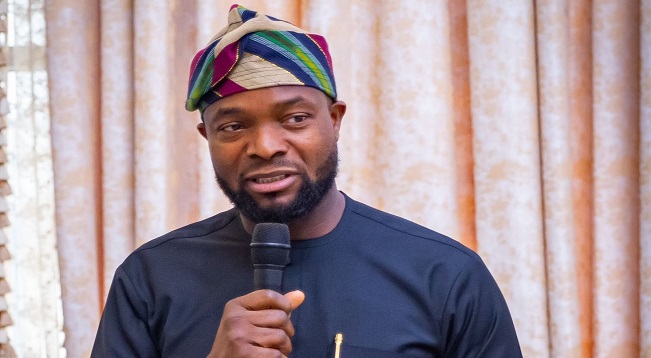
Federal Government has unveiled plans to establish a National Cybersecurity Coordination Council, signaling a shift toward a more unified, intelligence-driven approach to defending the country’s rapidly expanding digital economy.

Conceived as a non-statutory, multi-stakeholder body, the proposed Council will enhance coordination, enable trusted information sharing, and guide government strategy on cybersecurity, risk management, and national response amid increasingly complex cyber threats.
The initiative, championed by Bosun Tijani, minister of communications, innovation and digital economy, is designed to bring together government institutions, private sector players and technical experts into a single collaborative platform to strengthen the country’s cyber resilience.
Tijani noted that this initiative comes in response to a wave of recent cyber incidents that have disrupted operations across key private institutions and public sector.
In recent times, Nigeria’s financial system has faced mounting cyber pressure, reflecting global trends as cybercrime is projected to cost the world over $10.5 trillion annually, according to Cybersecurity Ventures.
Analysts say these attacks are increasingly coordinated and sophisticated, prompting the government to recognise that fragmented, institution-specific approaches can no longer manage systemic cyber risks effectively.
Under the new framework, the government aims to promote a “collective defence” model, an approach widely adopted in advanced digital economies where threat intelligence is shared in real time across institutions.
The Council is expected to include chief information security officers, cybersecurity associations, the Nigerian Computer Society, global technology providers, researchers, law enforcement agencies and civil society groups, ensuring a broad-based and technically grounded response architecture.
Key priorities will include developing national threat intelligence-sharing systems, harmonised cyber defence protocols, and coordinated incident response, while strengthening capacity to close Nigeria’s cybersecurity talent gap.

Offset Communications Slams N50m Suit against Qore Technologies for Alleged Copyright Infringement

Compensation for Poor Service Quality is Automatic- NCC

SERAP Sues CCB over Electoral Act, New Tax law

Tinubu Approves N3.3 Trillion Payment Plan to Boost Power Supply

NDPC Investigates Remita, Others over Alleged Data Breaches

Spotify’s Loud & Clear Report Reveals Over ₦60Bn Revenue for Nigerian Artists in 2025

Madonna University Taps Tech Guru Adote for Strategic Board Role

China Threatens to Shut Nigeria’s Satellite Over $11.44m Unpaid Debt

Healthcare Under Attack: Why Cybersecurity is Now Critical Care

Why JustMarkets Is a Strong Choice for Gold Trading




 General News2 days ago
FG, Others Say Nigeria Wastes 38m Tonnes of Food Annually

 E-Financial2 days ago
CBN, Banks, Fintechs Launch PSPC to Boost Nigeria’s Payment System

 News2 days ago
NITDA Strengthens Collaboration with NIPSS to Drive Digital Innovation, Orange Economy Growth

 E-Financial2 days ago
CycleFlow, IFC Launch Supply Chain Finance Platform in Nigeria

 E-Financial2 days ago
Anchor Gets Nigerian, Canadian Licences as Transactions Crosses $2.5Bn

 E-Financial2 days ago
Ecobank Assures of Seamless Easter Banking Services

 News2 days ago
NRS Takes Over Mineral Royalties Collection Under New Tax Laws

 E-Financial2 days ago
N4.65 Trillion in the Vault, but is the Real Economy Locked Out?