

News
Heineken Lagos Fashion Week Returns, Over 40 African Designers Expected


Everyone is gearing up for yet another exciting experience, as premium beer brand, Heineken prepares to deliver the 2019 edition of the Lagos Fashion Week this October. Heineken has been title sponsor for this event for the last three years and is set to give Nigerians a splendid showcase of the best of African fashion.
This year, the event is slated to hold from October 23 to October 26, 2019 at the Federal Palace Hotel, Lagos, Nigeria.
The Heineken Lagos Fashion Week is a platform that drives the Nigerian and ultimately the African fashion industry, by bringing together buyers, consumers and the media to view the latest collections of top African designers at a 4-day event in Lagos, Nigeria.

Over the years, the event has attracted the best and most talented designers across Nigeria, giving them a wider reach by projecting them to the rest of the world.
Starting off in 2012, the event has grown to include the Fashion Business Series, the Visual Makers Fellowship, Fashion Focus Africa and Green Access, which are talent discovery opportunities; alongside its signature runway shows, presentations and the Heineken Live Your Music after party.
Speaking on this year’s Heineken Lagos Fashion Week, Emmanuel Oriakhi, marketing director, Nigerian Breweries Plc, said that, every year, many people travel down to Lagos just to witness this spectacle of African fashion and Heineken is always excited to deliver a well designed experience.

According to him “Lagos Fashion Week has always provided an avenue for Heineken to connect with its consumers. With unmatched experiences every year, we on the Heineken team are sure that this year will be no exception.”
Heineken has a long history of hosting key events across sports, fashion, music, film, and many other aspects of pop culture.
The brand often stands itself out with it consumer-centric delivery of these events, and has done that over the years in Nigeria, through the Lagos Fashion Week and UEFA Champions League sponsorships.
Last year, designers such as Orange Culture, Meena, Ugo Monye, Tokyo James, Mai Atafo, Gozel Green, and Adama Paris, all had their outfits on the runway; with stars like Seyi Shay, BamBam and Tobi Bakre of Big Brother Naija fame all walking the runway.

A good number of designers from across the continent are expected to have their collections on the runway this year.
The likes of DZYN, Andrea Iyamah, Style Temple, Emmy Kasbit, JZO, Maxivive, Maki Oh, Odio Mimonet are all on the list of designers who will be showcasing at the fashion week.
With a presence in over 192 countries, Heineken remains one of the most international brands on the planet. The brand prides itself on delivering premium experiences across various touch points such as fashion, sports, and music to its millions of consumers across the world.


By Naeemah Junaid
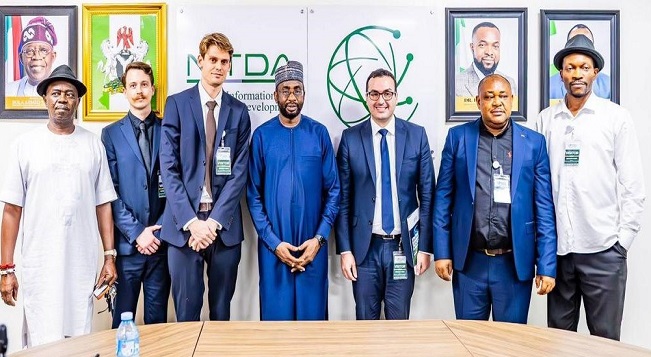
The National Information Technology Development Agency (NITDA) has held strategic discussions with representatives of Trust Stamp, a NASDAQ-listed global technology company, to explore potential areas of partnership aimed at strengthening Nigeria’s digital trust framework and advancing innovation within the digital economy.

The meeting, chaired by NITDA Director General, Kashifu Inuwa Abdullahi, focused on identifying collaborative opportunities aligned with Nigeria’s digital transformation agenda and the Agency’s strategic priorities for building a secure, inclusive, and innovation-driven digital ecosystem.
Inuwa emphasised that trust remains a critical foundation for the growth of the digital economy, noting that secure systems and strong cybersecurity frameworks are essential for driving innovation, economic growth, and national development. He stated that building trust in digital platforms and services is key to accelerating adoption and unlocking opportunities across sectors.
He reiterated NITDA’s mandate as a regulator to create an enabling environment through forward-looking policies and regulatory frameworks that support innovation rather than promote specific technologies. According to him, government interventions are designed to stimulate markets, create opportunities, and empower both businesses and citizens to participate fully in the digital economy.
The Director General further reaffirmed Nigeria’s openness to investments that strengthen digital infrastructure and enhance digital services, stressing that sustainable national development is best driven by private sector participation under supportive regulatory and policy frameworks. He called for continued engagement to ensure alignment with national priorities and effective integration into Nigeria’s digital ecosystem.
In his remarks, Trust Stamp Vice President, Jonathan Pasha, highlighted the company’s global experience in secure verification and trust technologies, describing its approach as partnership-oriented and focused on delivering long-term value within local ecosystems. He noted that the company prioritises collaboration with governments and private sector stakeholders to address local challenges and expand access to secure digital services.
Pasha referenced Trust Stamp’s ongoing operations in Nigeria, including its collaboration with a telecommunications provider to enhance SIM swap prevention and fraud detection capabilities. He also outlined the firm’s biometric tokenisation technology, which converts biometric data into secure, privacy-preserving representations, enabling verification processes without exposing sensitive information.
He explained that the technology supports secure verification, fraud prevention, financial inclusion initiatives, and the tokenisation of real-world assets, while being designed to function effectively in low-connectivity environments and on low-specification devices to expand access to digital services.
Both parties expressed interest in advancing technical-level discussions to identify specific areas of collaboration aligned with national priorities and Nigeria’s digital transformation objectives.
NITDA reaffirmed its commitment to fostering a secure and trusted digital economy through strategic partnerships, robust regulatory frameworks, and initiatives that promote innovation, inclusion, and sustainable growth.
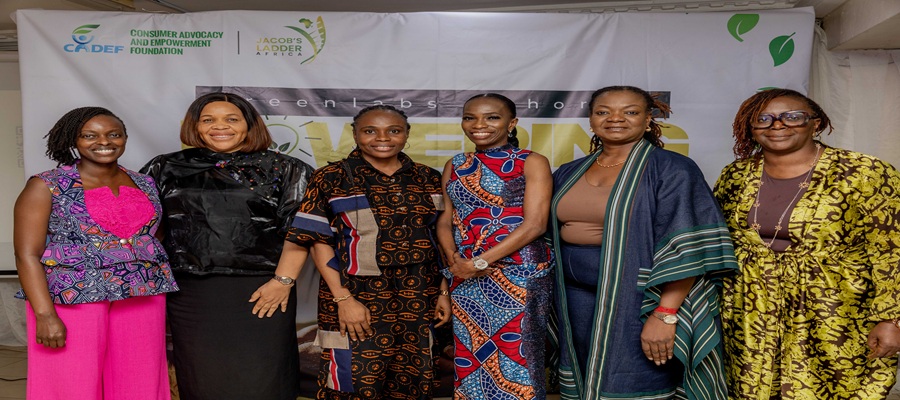
Three youth-led startups — Geocycle, Ecobag Mart and Leovia Farms — have emerged top winners at the Greenlabs Cohort 2 “Powering Food Systems” Demo Day, securing pre-seed funding to scale solutions targeting Nigeria’s food insecurity, post-harvest losses and climate pressures.

CADEF
The Demo Day, hosted under the Greenlabs Incubation Programme powered by the Consumer Advocacy and Empowerment Foundation (CADEF) in partnership with Jacobs Ladder Africa (JLA), spotlighted 16 innovators selected through a nationwide call and intensive mentor-guided screening process.
Organisers said the winning solutions stood out for their scalability, environmental sustainability and potential to strengthen fragile agricultural value chains. The pre-seed support will fund prototype refinement, business registration, market validation and early commercial deployment.
Other finalists showcased at the event included Agricool and Dry Heat Solutions, with all participants advancing into a structured nine-month incubation programme focused on enterprise development, expert mentorship and access to growth resources aimed at transforming early-stage ideas into viable green businesses.
Delivering the keynote on behalf of the Permanent Secretary, Ministry of Agriculture and Food Systems, Emmanuel Audu Fatai described the emergence of the winners as proof that youth innovation is becoming central to Africa’s food future.
According to him, the continent’s vast agricultural potential continues to coexist with food shortages, climate stress and weak value chains, making technology-driven and energy-efficient solutions critical to achieving sustainable food security.
Executive Director of CADEF, Prof. Chiso Ndukwe-Okafor, said the selection of the three winners reflects the programme’s shift from ideas to impact-driven enterprises capable of creating jobs and delivering measurable community value.
She added that beyond funding, the incubation framework is designed to instil financial discipline, integrity and long-term business sustainability among participating founders.
Chief Innovation Officer at Jacobs Ladder Africa, Karen Chelang’at, noted that the winning solutions directly address real food-system failures through renewable-energy integration, loss reduction and productivity improvement across sectors such as poultry, aquaculture and agricultural logistics.
She emphasised that the ultimate measure of success will be the ability of the startups to achieve market readiness, scale operations and generate tangible economic and environmental impact.
Organisers stressed that while policy support remains important, cross-sector collaboration and youth-driven enterprise will play a decisive role in building resilient food systems and advancing Nigeria’s transition to a green economy.
With incubation now underway and funding secured, the emergence of Geocycle, Ecobag Mart and Leovia Farms marks a significant step toward translating youth innovation into practical solutions for Nigeria’s food and climate challenges.

The Nigeria Deposit Insurance Corporation (NDIC) has reaffirmed its commitment to safeguarding the nation’s financial system, announcing that its recent upward review of the maximum deposit insurance coverage now protects about 99% of depositors in the Country.

Kabir Katata, Executive Director (Operations), NDIC, stated this on Wednesday at the Corporation’s 2025 Stakeholders’ Town Hall Meeting held in Enugu.
Katata, while speaking on the theme, “Deepening Stakeholder Engagement,” said the policy to expand deposit insurance coverage was deliberately designed to protect small savers, promote financial inclusion and strengthen public confidence in the banking sector.
He explained that the town hall meeting was aimed at engaging stakeholders across various sectors, including academia, market associations and civil society groups.
“The essence of this town hall meeting is to interact with our stakeholders, tell them what we do and listen to their questions so they can better understand the role NDIC plays in society. We guarantee depositors’ funds and supervise banks to ensure that depositors are protected”, he said.
Katata noted that following the 2024 review of deposit insurance coverage, depositors in Deposit Money Banks (DMBs), Mobile Money Operators (MMOs) and Non-Interest Banks (NIBs) are now insured up to N5 million per depositor.
Similarly, depositors in Microfinance Banks (MFBs), Primary Mortgage Banks (PMBs) and Payment Service Banks (PSBs) now enjoy insurance coverage of up to N2 million per depositor.
“This means that in the event of a bank failure, depositors are promptly paid up to the insured limit,” he said.
He added that depositors with balances exceeding the insured limit would receive the initial insured sum, while the outstanding balance would be paid as liquidation dividends upon realisation of the failed bank’s assets and recovery of debts.
Highlighting improvements in the payout process, Katata referenced the recent resolution of defunct institutions, including Heritage Bank Limited, Union Homes PLC and Aso Savings and Loans PLC.
He said that the Corporation successfully leveraged the Bank Verification Number (BVN) as a unique identifier to trace depositors’ alternative accounts and transfer insured sums within days of bank closures.
“I urge all depositors to ensure that their BVN is properly linked to their bank accounts and identity records. This greatly facilitates seamless and timely access to insured deposits in the event of bank failure,” he advised.
Katata emphasised that although the NDIC works closely with the Central Bank of Nigeria (CBN) to ensure sound corporate governance and regulatory compliance in banks, financial system stability remains a shared responsibility.
“While the CBN and NDIC continue to strengthen oversight, depositors also have a responsibility to remain vigilant and well-informed,” he said.

IGP Designates Banks National Security Asset, Orders Crackdown on Cyber Frauds

NCC Orders Telcos Inform Subscribers of Data Breach within 48 Hours

Cybersecurity Firm Warns Against Gift Card Scams @ Saint Valentine’s Day

Globacom Promotes Valentine Gifting with Huge Discounts on Smartphones

Rashidat Adebisi Unveils Strategic Roadmap for Nigeria’s Insurance Sector under NIIRA 2025

Firm Detected a Fivefold Surge in QR Code Phishing Attacks in the Second Half of 2025

Nigeria Targeted with 4,622 Cyber-attacks Per Week in December 2025
Nigeria’s 9 Top FinTech Firms Valued at $10.6Bn in January 2026

Firm Detected a Scam Exploiting OpenAI’s Teamwork Features

DG NCC Tasks University Dons on Research Commercialization, IP Management to Build Global Competitive Ecosystems




 E-Financial2 days ago
NDIC Intensifies Failed Banks Debt Recovery to Accelerate Depositors Payout

 News2 days ago
Open Access Data Centres Acquires Seven NTT Data Centres Across South Africa

 Telecom2 days ago
NIMC Flags Nationwide Ward-Level NIN Enrollment Drive from February 16

 Telecom2 days ago
FG Seeks Private Sector Partnership to Bridge Broadband Gap

 E-Business2 days ago
Kaspersky Brings more Transparency to Threat Detection with New Hunt Hub

 General News2 days ago
Nigeria Market Powers Jumia’s Momentum as E-commerce Platform Demand Accelerates

 Broadcasting2 days ago
Dr. Cairo Ojougboh Foundation Bolsters Nigeria’s Education Drive with ₦2.7m Student Support

 E-Business2 days ago
Cybersafe Foundation Partners Google to Strengthen Cybersecurity Among CCIs in Africa