

News
Heineken Shows Support For African Fashion With Lagos Fashion Week

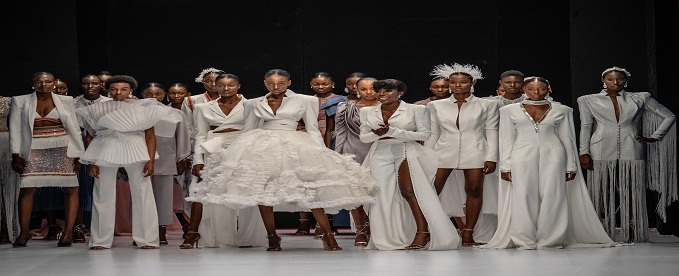
Heineken recently gathered over 40 talented designers for the Lagos Fashion Week, to showcase the best of African fashion to the world. The fashion designers drawn from different African countries including Senegal, Mali, Ghana and more, had their collections showcased to buyers as well as the media at the 4-day event.
Running from the 23rd of October, until the 26th of October at Federal Palace Hotel, Lagos, the event brought together fashion enthusiasts and experts to project Africa’s new fashion trends to the rest of the world.

The Lagos Fashion Week has been an annual platform for the promotion of the African fashion industry since 2012, and this year, with the fourth sponsorship from international beer brand Heineken, the event attracted even more people who are keen on African fashion, and the media to view the current collections of top designers from the continent.
As headline sponsor for the fashion show, Heineken once again delivered a premium consumer experience and pulled off what could be described as their best showcase yet. For the last three years, the brand has played the role of headline sponsor and has always gifted participants and guests, that little extra.

Emmanuel Oriakhi, marketing director Nigerian Breweries Plc, said he was excited their goal for this year was met, as the Heineken team sought out to not just maintain the event’s standard as a leading fashion event on the African fashion calendar, but also show the world new innovations African designers are deploying to meet changing consumer demands.
“Over the years, we have gone beyond just the runway experience to provide a more wholesome feel to all the people who gather annually to share in what our fashion industry is becoming, and this year was no different,” he said.

The runway show had the likes of Studio 189, Maxivive, Ugo Monye, Idma Nof, Selly Raby Kane, Yutee Rone, Sunny Rose, Sisiano, Odio Mimonet, Christie Brown, Mai Atafo, Adama Paris, Nkwo and Maki Oh, all displaying their new collections and sharing a few new trends.
Here in Nigeria, Heineken has earned a stellar record of delivering super exciting experiences for its consumers by supporting things the brand is passionate about. Through the years, it has supported the football community with top-notch UEFA Champions League experiences and has gradually carved a strong niche in the minds of fashion lovers, not just in the country, but across the continent by celebrating the originality of African fashion designers.


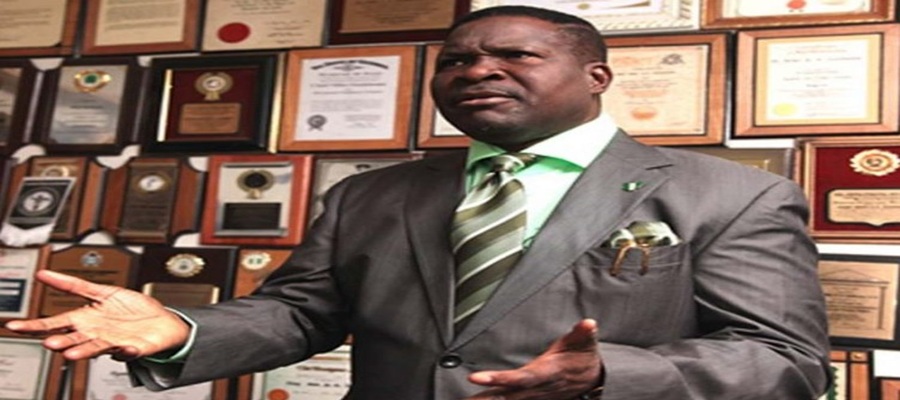
Independent Corrupt Practices and Other Related Offences Commission (ICPC) has filed a criminal charge against Chief Mike Ozekhome, SAN, alleging his involvement in a corruption scheme connected to a London property.

Chief Ozekhome
The ICPC filed a three-count charge before the Abuja High Court through its Head of High Profile Prosecution Department, Osuobeni Akponimisingha. The charge, marked FCT/HC/CR/010/26 and dated 16 January, names Ozekhome as the sole defendant in the case.
In the first count, the commission alleged that Ozekhome, aged 68 and residing at No. 53 Nile Street, Maitama, Abuja, received a property described as House 79, Randall Avenue, London NW2 7SX, around August 2021. The ICPC stated that the property was purportedly given to him by one Mr. Shani Tali and that the act amounted to a felony contrary to Section 13 and punishable under Section 24 of the Corrupt Practices and Other Related Offences Act 2000.
In the second count, the senior lawyer was accused of making a false document with a Nigerian passport bearing the name “Mr. Shani Tali” around the same period. The commission alleged that the passport, marked A07535463, was intended to support a fraudulent claim of ownership of the London property. The alleged offence contravenes Section 363 and is punishable under Section 364 of the Penal Code CAP 532 Laws of the Federal Capital Territory (FCT), Abuja, 2006.
The third count alleged that Ozekhome dishonestly used the same passport to support claims over the property despite allegedly knowing the document was false, an offence said to violate Section 366 and punishable under Section 364 of the Penal Code.
Supporting documents attached to the charge include an extra-judicial statement allegedly made by the defendant on 12 January 2026, a judgment referenced as REF/2023/0155 dated 11 September 2025, interim forfeiture proceedings relating to the London house, a data page for “Shani Tali,” a letter dated 18 December 2025, and other expected materials.
The ICPC also listed several individuals expected to testify, including investigators Wakili Musa and Tosin Olayiwola, a representative of the Nigerian Immigration Service, and investigators Ebenezer Nduo and Blessing Monokpo, alongside any additional witnesses the commission may call. As of the time of reporting, the case had not yet been assigned to a judge.
The development follows an earlier investigation by the ICPC sparked by a petition from Olanrewaju Suraj, head of the Human and Environmental Development Agenda (HEDA), citing a judgment from a London property tribunal.
The tribunal’s ruling had linked Ozekhome and others to alleged forgery and fraudulent claims of ownership of the North London building. The petition accused several individuals of conspiring with corrupt Nigerian officials to procure forged identity documents for the purpose of “fraudulently claim[ing] ownership” of the property.
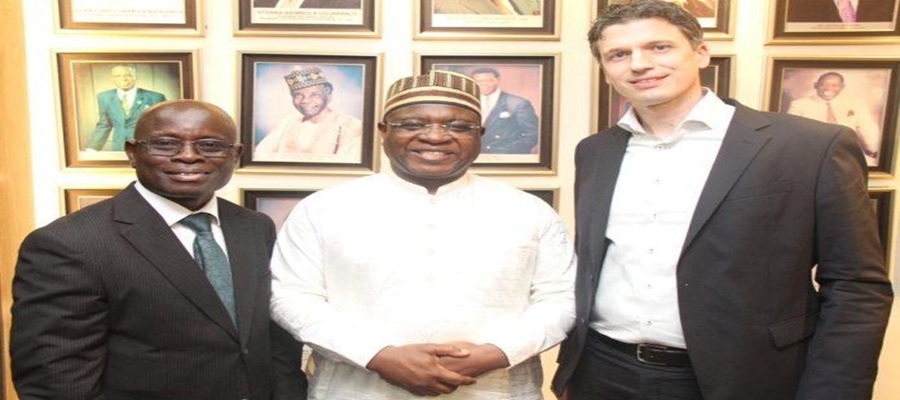
Nigerian Exchange Limited (NGX) has launched the NGX Net-Zero Programme to guide listed companies toward clear carbon reduction pathways and enhanced climate disclosures aligned with global investor standards.

NGX
The high-level launch engaged chief executives of quoted firms alongside development partners including German Investment Corporation KfW, DEG, and African Foresight Group (AFG), NGX’s implementation partner. Issuers and investors discussed financing decarbonisation, sustainability practices, and attracting climate-aligned capital.
NGX Group Chairman Dr Umaru Kwairanga described the initiative as concrete climate action, commending partners for two years of groundwork. “Today marks leadership and decisive action. Climate change has become a core business imperative, with capital markets mobilising capital and setting standards,” Kwairanga said.
He positioned NGX Net-Zero to support emissions measurement, disclosure, capacity building, and sustainable finance access, urging CEOs to embrace it strategically rather than as compliance. Kwairanga reaffirmed NGX’s goal to make Nigeria’s capital market Africa’s green finance hub.
Group CEO Temi Popoola called climate action a business imperative, noting sustainability-embedded firms attract capital, manage risks, and stay competitive. DEG Management Board Member Monika Beck highlighted partnerships scaling impactful, commercially viable climate solutions.
The event closed with a ceremonial gong marking the programme launch and send-off for outgoing DEG Regional Director Bernd Telemann.
Nigerian Financial Intelligence Unit (NFIU) has hailed Nigeria’s removal from the European Union’s list of high-risk third countries for Anti-Money Laundering and Countering the Financing of Terrorism (AML/CFT) as a landmark achievement endorsing the nation’s reform efforts.

Nigerian Financial Intelligence Unit (NFIU)
NFIU CEO Hafsat Abubakar Bakari said the delisting, contained in European Commission Delegated Regulation (EU) C (2025) 8460 adopted December 4, 2025 and effective January 29, 2026, affirms sustained AML/CFT and Counter Proliferation Financing (CPF) reforms.
The move follows Nigeria’s exit from the FATF Jurisdictions under Increased Monitoring after addressing strategic deficiencies, alongside Burkina Faso, Mali, Mozambique, South Africa and Tanzania.
Bakari noted the European Commission recognised Nigeria’s strengthened AML/CFT effectiveness, closed technical gaps, and fulfilled FATF Action Plan commitments leading to grey list removal in June and October 2025.
The delisting eliminates enhanced due diligence requirements for EU financial transactions, easing compliance, boosting cross-border flows, and enhancing Nigeria’s appeal for European trade, investment and partnerships.
The NFIU attributed success to President Bola Ahmed Tinubu’s political will and collaboration among National Assembly, law enforcement, regulators, judiciary, private sector and development partners.
The agency reaffirmed commitment to ongoing FATF, GIABA, EU engagement and domestic framework resilience to maintain international confidence in Nigeria’s financial system.

Lebara Launches Agent Registration Portal

Nigeria Processed $92.1Bn Crypto Transactions in 12 Months — PwC

Zenith Bank Top Nigerian Bank Pick Ahead of GTCO, AccessCorp

Here Are Nigerian Banks That Have Secured Their Licences

ICPC Charges Ozekhome with Forgery, Corruption Over London Property

Banks quietly move to enforce new ₦50 transfer levy from Jan. 1

FIRS says NIN, CAC Numbers to Serve as Tax IDs from 2026

FIRS Declares NIN, CAC Numbers as Tax IDs from 2026

US Begins Partial Visa Ban on Nigerians January 1

Galaxy Backbone Tops FG’s Website Performance Ranking




 E-Financial2 days ago
SEC Hikes Minimum Capital Requirements for Market Operators After a Decade

 News2 days ago
Nigeria Off EU High-Risk Money Laundering List in Major Financial Win

 Telecom2 days ago
Study Shows Blocks in Telegram are Pushing the Underground Out

 News2 days ago
NGX Unveils Net-Zero Plan for Greener Capital Market

 Telecom2 days ago
Vodacom Crowned Africa’s Top Employer 3rd Year Running on Innovation, Ethical AI

 Telecom2 days ago
Galaxy Backbone Marks Two Decades of Powering Nigeria’s Digital Evolution

 Telecom2 days ago
Galaxy Backbone Marks 20 Years, Tops FG Website Scorecard
 News8 hours ago
ICPC Charges Ozekhome with Forgery, Corruption Over London Property