

News
Heirs Holdings Acquires 45% Per Cent of OML 17 from Shell, Total and ENI

Heirs Holdings (“HH”), the leading African strategic investor, in partnership with affiliated company Transnational Corporation of Nigeria Plc (“Transcorp”), Nigeria’s largest publicly listed conglomerate, announced the unconditional acquisition of a 45% participating interest in Nigerian oil licence OML 17 and related assets, through TNOG Oil and Gas Limited (a related company of Heirs Holdings and Transcorp), from the Shell Petroleum Development Company of Nigeria Limited, Total E&P Nigeria Limited and ENI.

Tony O. Elumelu
In addition, TNOG Oil and Gas Limited will have sole operatorship of the asset.
The transaction is one of the largest oil and gas financings in Africa in more than a decade, with a financing component of $1.1 billion, provided by a consortium of global and regional banks and investors.
OML 17 has a current production capacity of 27,000 barrels of oil equivalent per day and, according to our estimates, 2P reserves of 1.2 billion barrels of oil equivalent, with an additional 1 billion barrels of oil equivalent resources of further exploration potential.
The investment demonstrates a further important advance in the execution of Heirs Holdings’ integrated energy strategy and the Group’s commitment to Africa’s development, through long term investments that create economic prosperity and social wealth.
Heirs Holdings’ heritage and approach to business fundamentally underscores its commitment to inclusive development and shared prosperity with its host communities. Heirs Holdings is fully invested in the development of the Niger Delta region.
Heirs Holdings’ strategy of creating the leading integrated energy business in Africa is executed through a series of strategic portfolio holdings.
Transcorp is one of the largest power producers in Nigeria, with 2,000 MW of installed capacity, through ownership of Transcorp Power Plant and the recent acquisition of Afam Power Plc and Afam Three Fast Power Limited. Transcorp closed the US$300 million Afam acquisitions in November 2020.
Transcorp supplies electricity to the Republic of Benin, as part of an emphasis on promoting regional integration and delivering robust power supply to catalyse development in Africa.
Transcorp also operates OPL281, under a production sharing contract with the Nigerian National Petroleum Corporation (“NNPC”).
Similarly, Heirs Holdings’ subsidiary, Tenoil is the operator of OPL 2008, under a production sharing contract with NNPC. Tenoil also owns the Ata Marginal Field, which will commence production in Q2, 2021, with 3,500 barrels of oil per day.
Tony Elumelu, chairman of Heirs Holdings, stated: “We have a very clear vision: creating Africa’s first integrated energy multinational, a global quality business, uniquely focused on Africa and Africa’s energy needs. The acquisition of such a high-quality asset, with significant potential for further growth, is a strong statement of our confidence in Nigeria, the Nigerian oil and gas sector and a tribute to the extremely high-quality management team that we have assembled.
“As a Nigerian, and more particularly an indigene of the Niger Delta region, I understand well our responsibilities that come with stewardship of the asset, our engagement with communities and the strategic importance of the oil and gas sector in Nigeria. We see significant benefits from integrating our production, with our ability to power Nigeria, through Transcorp, and deliver value across the energy value chain.”
Speaking further, he said “I would like to thank Shell, Total and ENI, for the professionalism of the process, the Federal Government of Nigeria, the Ministry of Petroleum Resources, and the NNPC for the confidence they have placed in us.”
Speaking on the investment, Owen Omogiafo, president/GCEO of Transcorp, said “This deal further demonstrates Transcorp’s integrated energy strategy and our determination to power Africa.”
Heirs Holdings was advised by Standard Chartered Plc, as Global Coordinator, and United Capital Plc, with a syndicate of lending institutions including Afreximbank, ABSA, Africa Finance Corporation, Union Bank of Nigeria, Hybrid Capital, and global asset management firm Amundi. The deal also involves Schlumberger as a technical partner, as well as the trading arm of Shell as an offtaker.
Heirs Holdings has created one of Africa’s largest, indigenous owned, oil and gas businesses, headquartered in Lagos, Nigeria and led by a board and management team with significant regional and global experience in production, exploration, and value creation in the resources sector.
The HH Group is committed to the highest standards of safety, health, and community relations, together with best practice in governance and accountability.


Microsoft has announced plans to cut about 4,800 jobs, representing roughly 2.1 percent of its global workforce, with Xbox, its gaming division, expected to bear the largest share of the layoffs.

The company said more than 1,600 positions at Xbox would be eliminated immediately, while another 1,600 jobs would be phased out over the next year as part of a major restructuring of the gaming business.
In a memo to employees, Amy Coleman, executive vice president, Microsoft, said the company was streamlining its operations to focus on areas that deliver greater value to customers in a rapidly changing technology industry.
Asha Sharma, chief executive officer, Xbox, described the move as “the most significant restructure in Xbox history,” saying the changes are intended to position the gaming business for long-term growth rather than downsizing.
News
Access Bank, Fifth Chukker and UNICEF Renew Commitment to Expanding Educational Opportunities for Nigeria’s Most Vulnerable Children

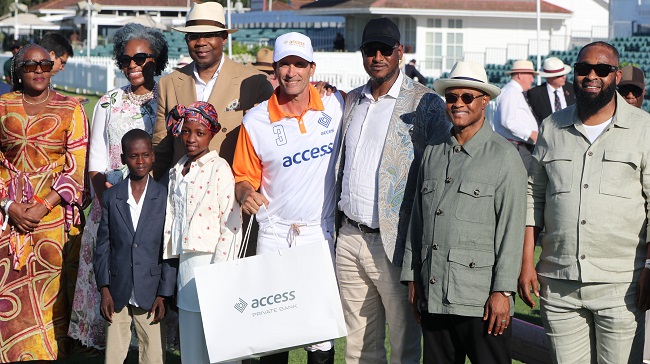
The transformative power of collective action in expanding access to education took centre stage in London as Access Bank UK, Fifth Chukker, UNICEF and the Kaduna State Government reaffirmed their shared commitment to creating brighter futures for Nigeria’s most vulnerable children.

Hosted by Access Bank UK, Access UK Polo Day celebrated more than 15 years of impact driven by a shared vision to expand educational opportunities for underserved children. What began as a modest initiative has evolved into one of Africa’s most impactful education programmes, with the Access Bank Fifth Chukker School in Kaduna State and its associated interventions positively impacting more than 14,000 children across underserved communities in Northern Nigeria.
At the heart of this transformation is the Access Bank Fifth Chukker School, where investments in educational infrastructure, learning resources and student support have created lasting opportunities for thousands of children.
Between 2018 and 2026 alone, the school recorded 2,538 graduates, with female pupils accounting for more than 54 per cent of the total, underscoring the programme’s contribution to advancing girls’ education and promoting inclusive access to learning.
More than 1,000 pupils benefit from the school’s internationally recognised foundational learning programme each year, contributing to improved literacy and numeracy outcomes and a reported 15 per cent increase in learning performance. Students continue to secure admission into leading secondary schools, while teachers receive ongoing professional development and digital learning support.
Enhanced infrastructural facilities and expanded learning resources have further strengthened the overall learning environment, helping to sustain the programme’s long-term impact.
This year’s event reinforced a compelling message: Every pledge should lead to a classroom, every classroom should empower a child, and every child should have the opportunity to shape a brighter future.
Speaking at the event, the Managing Director and Chief Executive Officer of Access Bank Plc, Roosevelt Ogbonna, reflected on the remarkable growth of the initiative and the unwavering commitment of its supporters.
“What began as a dream to transform the lives of 100 children has grown into a movement that has positively impacted more than 14,000 young people. We want to return next year talking about 28,000 children. Education remains the greatest leveller, giving every child a genuine opportunity to realise their potential and contribute meaningfully to society.”
Ogbonna expressed appreciation to donors and partners whose support has sustained the initiative, noting that investment in education creates lasting intergenerational impact.
Kaduna State Governor Uba Sani described education as one of the most valuable investments any society can make. He praised the longstanding alliance between Access Bank, Fifth Chukker and UNICEF, noting that it has restored hope and opportunity to thousands of children from underserved communities.
Highlighting Kaduna State’s ongoing education reforms, the Governor revealed that approximately 300,000 out-of-school children had been returned to classrooms over the past year through partnerships with organisations including UNICEF and other development partners.
He also announced plans to construct an additional 120 classrooms at the Fifth Chukker Access Bank UNICEF School, enabling even more children to access quality education.
“What we are doing here is about humanity. By giving children access to quality education, we are empowering them to dream, to lead and to build a better future for themselves and their communities.”
Governor Sani also paid tribute to the late Herbert Wigwe, acknowledging his vision, leadership and enduring commitment to improving educational outcomes for underserved populations.
For Aigboje Aig-Imoukhuede, Chairman of Access Holdings, the true success of the initiative is reflected in the lives being transformed.
“The most meaningful measure of success is not the number of buildings we construct, but the opportunities we create. Every child who receives an education, every young person who discovers their potential, and every community strengthened through learning represents the lasting impact of this partnership. Together, we are proving that when purpose meets collaboration, we can create opportunities that change lives for generations.”
Welcoming guests, Jamie Simmonds, Chief Executive Officer of The Access Bank UK, described the gathering as polo with purpose, a celebration not only of sport but of a shared mission to create opportunity through education.
He highlighted the institution’s commitment to supporting initiatives that deliver sustainable social impact and broaden access to learning for underserved children.
The event concluded with a renewed commitment from all stakeholders to deepen investment in education as a catalyst for national development and social progress.
The Access Bank Fifth Chukker School continues to demonstrate the impact of sustained collaboration among the private sector, government and development partners, delivering measurable outcomes for vulnerable children in Northern Nigeria.
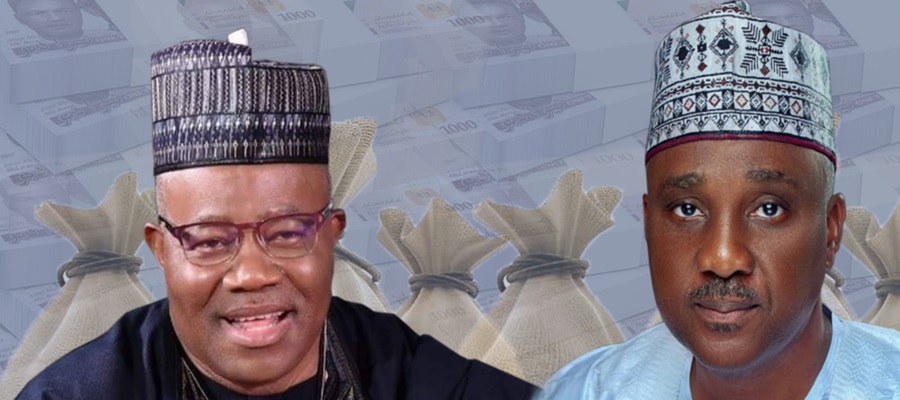
Socio-Economic Rights and Accountability Project (SERAP) has given Godswill Akpabio, Senate President, and Tajudeen Abbas, speaker of the House of Representatives, seven days to explain how over N1.3 billion was allocated in the 2026 Appropriation Act to a presidential council that the Presidency has described as fictitious.

In a Freedom of Information (FoI) request dated July 4, 2026, SERAP asked the National Assembly leadership to release certified copies of all documents related to the approval of the N1,302,978,784 allocation to the Presidential Foreign Intervention Promotion Council (PFIPC)/Presidential Economic Advisory Council.
The rights group also called on the National Assembly to invoke its investigative powers under Sections 88 and 89 of the 1999 Constitution to probe the circumstances surrounding the allocation and identify those responsible for what it described as apparent irregularities in the budget process.
SERAP further requested records identifying the lawmakers and committees that considered the allocation, as well as the public officials or representatives who defended the budget proposal before the committees.
The civil organisation also sought clarification on whether the allocation originated from the Executive’s 2026 Appropriation Bill or was introduced during the legislative appropriation process.
It equally demanded to know whether any lawmaker questioned the legal status or operational mandate of the council before approving the allocation.
The FoI request follows a July 1 statement by the Presidency denying the existence of the Presidential Foreign Intervention Promotion Council and insisting that the Federal Government never created the body.
Describing the conflicting claims as alarming, SERAP said they raised “serious concerns regarding the integrity of Nigeria’s appropriations process, legislative oversight, public financial management, and accountability.”
The FoI request, signed by Kolawole Oluwadare, deputy director, SERAP, stressed that Nigerians have a constitutional right to know whether public funds were appropriated to an entity that does not legally exist.
SERAP said, “Nobody has a more sacred obligation to obey the law than those who make the law, and that the National Assembly has a constitutional responsibility not merely to approve the Executive’s budget proposals but to rigorously scrutinise them before authorising public expenditure.”
The organisation argued that disclosure of the requested documents would enable Nigerians to determine whether the National Assembly fulfilled its constitutional obligations under Sections 80, 81, 88, and 89 of the Constitution in approving the allocation.
SERAP warned that if the requested information is not released within seven days of receipt or publication of the letter, it would initiate legal proceedings to compel the National Assembly to disclose the documents.
The organisation further maintained that making the records public would strengthen confidence in the National Assembly’s credibility, enhance transparency in the appropriation process, and promote accountability in the management of public funds.
It also cited the Freedom of Information Act, the Nigerian Constitution, the African Charter on Human and Peoples’ Rights, the International Covenant on Civil and Political Rights, and the Tshwane Principles as legal bases for its demand for full disclosure.

DSS Spyware Acquisition Enables Illegal Wiretaps, Detentions – The ICIR

Microsoft to Lay Off 4,800 Workers

Access Bank, Fifth Chukker and UNICEF Renew Commitment to Expanding Educational Opportunities for Nigeria’s Most Vulnerable Children

IHS Nigeria, FCT-HSES Concludes Clean Cooking Energy Campaign “Project Breathe Clean Air” in Abuja

Kaspersky Transforms Threat Intelligence Reporting into an Interactive Content Hub

Mobile Internet Gender Gap Widest in Africa – GSMA

Nigeria Launches FreeTV Nationwide

NASENI Moves to Digitize CCB’s 5m Assets Declaration and Operations

CANAL+ Partners Samsung to Pre-Load DStv Stream on New Samsung TVs In Nigeria, Other African Countries

UK, Nigeria Launch £15m Growth Programme to Accelerate Economic Transformation




 General News1 day ago
NIS Deploys Advanced Surveillance Masts, other Critical Infrastructure to Boost Border Security

 E-Financial1 day ago
Tokenization, Blockchain Technology will Transform Financial Institutions – IMF

 Broadcasting1 day ago
Obi, NDC Presidential Candidate Faces N50Bn Defamation Claim over Alleged Podcast Remark

 E-Business1 day ago
Weebly Websites to Shut Down for Nigeria, 66 Other Countries from September

 Telecom1 day ago
No Plans for Fresh Tariff Hike – MTN

 E-Financial1 day ago
FG Denies N8 Trillion ‘Shadow Budget’, Says IMF Quoted out of Context

 General News1 day ago
PufferPay CEO to Keynote Business Journal Fintech & Financial Inclusion Roundtable 2026

 Telecom1 day ago
Airtel Africa Foundation Equips 200 Young Women with Digital Skills to Drive Nigeria’s Tech Economy