

E-Business
HID Global Offering Biometric Authentication for Nigerian Bank Security- Sarrail


As the Nigerian banks and the counterparts across the globe continue in search of solutions to identity theft and to reduce waste, fraud and abuse, HID Global has expressed willingness to partner with local integrators to aid the banking sector in making a real commitment to biometric authentication and intelligent identity management.
HID Global, a worldwide leader in secure identity solutions, recently announced a partnership with Media Concepts of Lagos, Nigeria to deploy mobile IDs on Nigerian citizens’ smartphones using the new HID goID™ platform.
Mobile IDs will be issued through the Nigerian Police Biometric Central Motor Registry (BCMR) vehicle registration card program, which provides real-time access to vehicle/vehicle owner information via credentials and mobile readers powered by Seos®.
However, in a Skype chat with Nigeria CommunicationsWeek, Mr. Greg Sarrail, vice president, Solutions Business Development at HID Global, focused on the biometric authentication solutions that HID has to offer. He said that fingerprint biometrics has received a boost in usage at a number of ATMs across the world as a PIN replacement to improve access and authenticate transactions.
He said that, in some instances, traditional card plus PIN authentication has been replaced by a fingerprint and an account number, enabling true card-less transactions.
Thus, fraud is commonly committed by the use of stolen PINs or cards, whereas, with the use of fingerprint biometrics, people can now keep their money safe and access their bank accounts with their fingers.
Biometrics does not discriminate by literacy, age, or ethnicity which has made this technology a good choice for financial inclusion programs.
Speaking to Nigeria CommunicationsWeek on the Nigerian Banks’ Verification Numbers (BVN), he scored the process high, adding that a growing number of banks around the world are deploying biometric solutions as part of their next-generation ATM roll-outs.
Speaking further on the BVN, he said that HID Global is vested with the expertise to work with Nigerian banks to ensure secured BVN and other banking biometric systems. Adding that, “The requirements for the Nigeria’s BVN system are known. We have the most widely deployed biometric fingerprint sensors deployed in bank ATMs across the world. We are currently looking to extend our biometric authentication solutions to banks in Nigeria.
“In Nigeria, things are getting started on good note. All five major banks in South Africa are using our biometric solution. The time is right to accelerate discussions in Nigeria to provide a similar level of convenience and security to Nigerians locally.”
He said, although, the company may not be the cheapest in terms of up-front affordability, however, “When you deploy security with high level performance and reliability, adoption will increase along with customer satisfaction ensuring that you obtain the desired results with a good return on investment.”
He warned that most cheap biometric solution providers are giving the industry a bad name hence several deployed solutions have failed the banks in the past.
“How do we deploy? We work with each bank to understand their processes, because each institution has its own culture and back-end requirements. Through these discussions we determine the right security model for the bank to ensure a secure communication and endpoint in their environment. We don’t just sell an off the shelf solution to businesses, which may not provide the results they desire in their system”.
On how HID Global devices use ‘Liveness’ detection to help curb fraud, he said, “With considerable effort, a criminal can conceivably “lift” a legitimate user’s fingerprint off of some surface such as a countertop and make what we in the industry call a ‘spoof’ — a fake finger — from materials such as latex or glue.
“While this is fun to watch in movies, new commercial-grade biometric solutions have a technology known as liveness detection that uses several variables to instantly determine that the finger used to access the system is real — and still attached to a living human being.
“HID Global’s multispectral imaging is a sophisticated technology specifically developed to overcome the fingerprint-capture problems that conventional imaging systems have in less-than-ideal conditions.
“This more effective technology is based on the use of multiple spectrums of light and advanced polarization techniques to extract unique fingerprint characteristics from both the surface and subsurface of the skin.
“Subsurface capability is important because the fingerprint ridges seen on the surface of the finger have their foundation beneath the surface of the skin, in the capillary beds and other sub-dermal structures.
“Unlike surface fingerprint characteristics, which can be obscured during imaging by moisture, dirt or wear, the “inner fingerprint” lies undisturbed and unaltered beneath the surface”.
The use of multispectral imaging enables HID Global biometric sensors to authenticate enrolled individuals reliably in uncontrolled environments, even though the individual finger may be dirty, wet, dry or aged. Reliability ensures the highest level of adoption. HID’s multispectral biometric sensors also provide banks with assurance combining liveness detection to remove the threat of fake fingers with secure endpoint technology to ensure all communications from the sensor are valid and secured from the sensor to the back-end system.
HID Global is driving leadership with an expanding portfolio of NFC and HID Trusted Tag Services for securing IoT applications that are opening new opportunities across numerous markets. At the core of HID Global’s NFC continuum are visionary solutions that fuel a broad range of “proof of presence,” brand protection, secure transactions and asset tracking use cases.


Nigeria has taken a major step toward strengthening its digital governance framework as the National Information Technology Development Agency (NITDA) officially assumes control of the Nigeria Government Enterprise Architecture (NGEA) infrastructure.

The handover ceremony held in Abuja, marks the culmination of a high-level partnership with the Korea International Cooperation Agency (KOICA).
This transition signals a shift from fragmented IT projects to a unified, disciplined approach to national digital investment.
The NGEA initiative forms a core part of the e-Government Masterplan 2.0 (Ne-GMP 2.0), aimed at establishing a unified and structured approach to managing government IT investments and digital resources.
The framework is designed to ensure that technology deployment across public institutions aligns with national priorities while improving efficiency and accountability.
With the system now operational, government agencies are expected to adopt more integrated digital processes, allowing seamless data sharing and interoperability.
This is anticipated to reduce duplication, strengthen risk management, and translate policy objectives into measurable digital outcomes.
Over the past two and a half years, Nigerian technical experts worked closely with their Korean counterparts to develop the architecture framework, create reference models, and execute pilot programmes in key institutions.
These include the National Identity Management Commission, Nigeria Customs Service, Nigeria Immigration Service, and NITDA.
Officials say the NGEA represents a shift from fragmented digital efforts to a more coordinated, citizen-focused system.
The infrastructure is hosted by Galaxy Backbone Limited, providing a secure and reliable platform for nationwide deployment.
Looking ahead, NITDA is expected to work with government stakeholders to expand and sustain the system, while the Federal Ministry of Communications, Innovation and Digital Economy will provide policy guidance to ensure its adoption across the country.
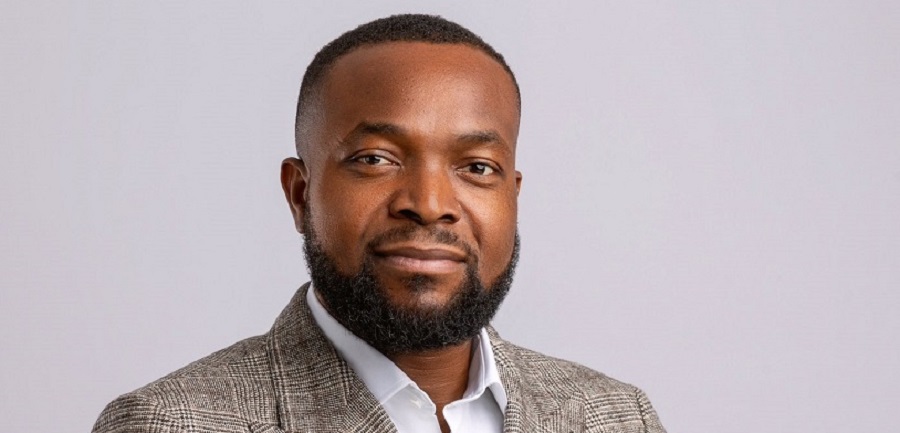
Bosun Tijani, minister of Communications, Innovation and Digital Economy, has said the government is shifting focus from expanding access to ensuring “meaningful connectivity” that drives economic growth and inclusion.

Bosun Tijani, minister of Communications, Innovation and Digital Economy
The minister made the statement on Friday while addressing stakeholders at the inauguration of board members of the Universal Service Provision Fund (USPF) in Abuja.
He said that although Nigeria had made significant progress since the introduction of GSM services, millions of people, particularly in rural and underserved communities, remain either unconnected or unable to fully benefit from digital services.
Dr Tijani highlighted ongoing investments in digital infrastructure, including plans to deploy 90,000 kilometres of fibre optic network and nearly 4,000 telecom towers nationwide.
He said initiatives under the USPF had improved access through projects such as rural connectivity and digital facilities in schools but stressed that the next phase must prioritise effective usage.
“It is not enough to connect a community. We must ensure that schools can teach with digital tools and that small businesses can access market opportunities,” he said, citing a pilot project in the Kura community where connectivity has enhanced access to communication, education and healthcare.
Aminu Maida, executive vice chairman, Nigerian Communications Commission (NCC) also called for a shift towards meaningful connectivity, noting that while data usage had grown significantly, it remained concentrated in urban areas.
According to him, recent data shows that telecom usage has increased by about 160% over the past two years, largely driven by urban demand.
“When we drill down, we see that a lot of that growth is actually in urban centres. So, the gap between those who are not connected or not meaningfully connected is growing,” he said.
Dr Maida added that the trend underscored the need for the USPF board to intensify efforts to bridge both access and usage gaps across the country.
Both officials emphasised the importance of collaboration, sustainable investment models and improved digital literacy to ensure that connectivity translates into real economic benefits for Nigerians.

A jury in Los Angeles has found technology companies, Meta and Google liable for contributing to a young woman’s social media addiction, in a case being described as a landmark ruling.

The 20-year-old woman, identified only as Kaley, argued that she became addicted to Google’s YouTube and Meta’s Instagram from an early age due to their attention-driven design features.
According to her testimony, she began using YouTube at the age of six after downloading the app on her iPod Touch to watch videos about lip gloss and online games.
Kaley told the court that she joined Instagram at nine, bypassing parental restrictions put in place by her mother, and spent extended periods on social media.
The trial, which lasted about a month, with arguments and evidence from both sides.
Jurors also heard testimony from Mark Zuckerberg, chief executive, Meta and Adam Mosseri, Instagram head.
However, Neal Mohan, YouTube chief executive, did not testify.
The jury found that the companies were negligent in the design of their platforms and failed to adequately warn users about potential harms. Meta and Google were ordered to pay the woman $3 million in damages.
Jurors also recommended additional punitive damages, including $900,000 against YouTube and $2.1 million against Meta, according to company spokespersons.
The jury apportioned 70 per cent of the responsibility to Meta and 30 per cent to YouTube.
Kaley was present in the courtroom when the verdict was delivered, alongside parents of other teenagers who say they were harmed by social media use. Both companies said they plan to appeal the decision.
“We respectfully disagree with the verdict and will appeal. Teen mental health is profoundly complex and cannot be linked to a single app. We will continue to defend ourselves vigorously as every case is different, and we remain confident in our record of protecting teens online”, a Meta spokesperson said.
José Castañeda, Google spokesperson, said the case misunderstands YouTube, which is a responsibly built streaming platform, not a social media site.

EFCC Waxes Worriedly over $160Bn Crypto Crime Losses

Dangote Refinery Debunks Speculations on IPO

FG Awards N50m Each to 45 Students under S-VCG

NGX REGCO Fines 5 Firms N291m for Market Manipulation

FG Launches Cross-Border Digital Payments Report

Spotify’s Loud & Clear Report Reveals Over ₦60Bn Revenue for Nigerian Artists in 2025

Madonna University Taps Tech Guru Adote for Strategic Board Role

China Threatens to Shut Nigeria’s Satellite Over $11.44m Unpaid Debt

Jumia Tech Week 2026 Begins with Tech Deals on Smartphones, Electronics, and Everyday Technology

FCCPC Bans Lagos ‘No Refund’ Policy, Vows Fines and Shutdowns for Traders



 General News3 days ago
Anti Graft Agencies Raise Alarm over Rising Crypto-Linked Financial Crimes

 E-Business3 days ago
NITDA Takes Over National Digital Architecture System

 E-Financial1 day ago
CBN bars large‑ticket loan defaulters from banking services in tough new crackdown

 General News1 day ago
ARN Rejects Medical Bill over Attempt to ‘Scrap’ Profession

 Telecom1 day ago
NIGCOMSAT Supports Startups Growth with the Launch of Accelerator 3.0

 News1 day ago
Meningitis Kills a Quarter Million People a Year -Study

 Telecom1 day ago
FG Unveils Digital Economy Research Fund Scheme

 News1 day ago
Stakeholder says AI is Crucial to Nigerian Data Centres Amid Persistent Grid Collapse