

General News
How Inside Jobs and Policy Shocks Trigger Nigeria’s Rising Loan Crisis


By Blaise Udunze
The latest in the Nigerian banking sector, as banks grapple with the recapitalization compliance deadline, is confronted with a familiar yet unsettling problem that stems from rising loan defaults amid expanding credit. Data from the Central Bank of Nigeria’s (CBN’s) latest macroeconomic outlook of 2025 showed that the banking industry’s Non-Performing Loans ratio climbed to an estimated 7 percent, pushing the sector above the prudential ceiling of 5 percent.

This deterioration has occurred even as banks report improved credit availability and strong loan demand across households and corporates. At first glance of the development, the narrative seems to defy logic in a real sense. However, below this lies a deeper story of macroeconomic strain, policy-induced shocks, and, most worryingly, persistent corporate governance abuses that continue to erode asset quality from within.
To be clear, Nigeria’s current wave of loan defaults cannot be blamed on reckless borrowers alone. The operating environment has become unusually hostile. Inflation, as reported by the National Bureau of Statistics (NBS), recently suggests that headline inflation is cooling and growth indicators show tentative improvement; regrettably, more Nigerians are slipping below the poverty line, eroding household purchasing power and raising operating costs for businesses.
Especially in the small and medium-sized enterprises, though, the economic growth appears positive, but has been uneven and insufficient to offset cost pressures in this space. This has heralded weak consumer demand that has squeezed revenues across retail, manufacturing and services, causing shrinking cash flows and also loan obligations remain fixed or, in many cases, rise. In such conditions, repayment stress is inevitable.
Tight monetary policy has compounded the problem. The CBN’s aggressive rate hikes, aimed at restoring price and exchange-rate stability, have significantly raised lending rates. Variable-rate loans have become more expensive mid-tenure, and businesses that borrowed under lower-rate assumptions now face repayment shocks. Even otherwise viable firms have found themselves pushed into distress as interest expenses consume a growing share of income. Going by the official survey for the last quarter of 2025, it shows that financial pressure on borrowers has intensified as more borrowers are failing to repay loans across all major categories for both secured loans, unsecured loans and corporate loans.
Exchange-rate volatility has delivered another blow. The naira’s depreciation and FX reforms have sharply increased the burden on borrowers with dollar-denominated loans but naira income. Import-dependent businesses have seen costs surge, while FX scarcity continues to disrupt production and trade cycles. For many firms, the problem is not poor management but currency mismatch. Loans that were sustainable under a more stable exchange regime have become unserviceable almost overnight.
Layered onto these macro pressures is Nigeria’s weak business environment, which has further worsened the situation, alongside chronic power shortages forcing firms to rely on costly alternatives, logistics challenges and insecurity disrupting supply chains, and regulatory uncertainty complicates planning. More on the burner that has continued to heighten the challenges is the multiple taxation and compliance burdens, further compressing margins. In survival mode, businesses naturally prioritise payrolls, energy, and raw materials over debt service. Defaults, in this context, are often a symptom rather than the disease.
Yet while these systemic pressures explain much of the stress, they do not tell the whole story. A critical and often underemphasised driver of rising loan defaults lies within the banks themselves, most especially corporate governance abuse, which emanates particularly from insider-related lending. This is the uncomfortable truth that Nigeria’s banking sector has struggled to confront decisively.
Corporate governance, at its core, is about discipline, accountability, and oversight. In the banking context, it determines how credit decisions are made, how risks are assessed, and how early warning signs are addressed. Where governance is weak, loan quality inevitably suffers. Nigeria’s history offers painful lessons, especially the banking failures of the 1990s to the post-2009 crisis clean-up, insider lending and boardroom abuses have repeatedly emerged as central culprits.
Recent evidence suggests that the problem has not disappeared. Industry estimates indicate that a significant portion of bad loans remains linked to insider and related-party exposures. Former NDIC officials have disclosed that, historically, directors and insiders accounted for as much as 40 per cent of bad loans in deposit money banks, with a handful of institutions holding the majority of insider-related NPLs. It would be said that governance frameworks have improved since then, but enforcement gaps still persist.
Insider abuse manifests in several ways. Loans are extended to directors, executives, or connected parties with inadequate due diligence. Credit decisions are influenced by relationships rather than repayment capacity, and this has been one of the critical problems as collateral is overvalued, covenants are weak, and stress testing is often superficial. When early signs of distress emerge, enforcement is delayed, restructuring is repeated without fundamental improvement, and recoveries are treated with undue caution to avoid internal embarrassment or exposure.
The result is predictable. These loans default faster and are harder to recover. Worse still, they distort bank balance sheets by crowding out credit to productive sectors. When insiders default, the signal to the wider market is corrosive. Here, credit discipline is optional, and accountability is selective, and it further fuels moral hazard, encouraging strategic defaults even among borrowers who could otherwise repay.
Governance failures also weaken loan recovery processes. Poorly empowered risk and audit committees miss warning signs or fail to act decisively because the system has been built to fail. Legal remedies are pursued slowly, if at all. In an environment where judicial delays already undermine contract enforcement, such reluctance turns manageable problem loans into fully impaired assets. Over time, NPLs accumulate not because recovery is impossible, but because it is poorly pursued.
Compounding these internal weaknesses are government policy shifts and fiscal stress, which have become major external shock absorbers for bank balance sheets. Policy inconsistency has made cash flow planning increasingly difficult for borrowers. For instance, the sudden tax changes or aggressive enforcement drives will definitely alter cost structures overnight. Delays in government payments to contractors starve businesses of liquidity, and this will surely push otherwise solvent firms into default. In theory, although removing fuel subsidies, while economically justified, have often occurred without adequate transition buffers, transmitting immediate cost shocks across energy, transport, and consumer goods sectors.
The banking sector, heavily exposed to government-linked projects and regulated industries, absorbs these shocks directly. Loans tied to this sector showed that the banks are hugely exposed to oil and gas, power, and infrastructure; they are particularly vulnerable when fiscal pressures delay receivables or alter contract economics. For instance, a total of 9 banks’ exposure to the Oil & gas sector increased to N15. 6 trillion in 2024, representing about 94.4per cent increase from N10. 17 trillion reported in 2023 financial year. It is therefore no coincidence that NPL concentrations remain high in these sectors. In effect, fiscal stress is being intermediated through bank balance sheets.
When the CBN ended the special leniency measures known as forbearance in 2025, the real extent of loan stress in the banking industry became much clearer. For a longer time, pandemic-era reliefs allowed banks to renegotiate stressed loans without immediately classifying them as non-performing. While this helped preserve surface stability, it also masked underlying vulnerabilities. With the end of forbearance, many restructured facilities have crystallised as bad loans, pushing the industry NPL ratio above the prudential ceiling. This does not mean risk suddenly increased; it means it is now being recognised.
To the CBN’s credit, transparency has improved as the industry witnessed stricter classification rules and reduced forbearance have forced banks to confront economic truth rather than regulatory convenience. And, despite the challenges, the financial system appears to be generally sound because banks have enough cash to meet obligations and sufficient capital buffers that still exceed regulatory floors, while these buffers are under pressure. Though the ongoing recapitalisation efforts are expected to provide additional buffers.
However, stability should not be confused with health. Rising NPLs, even in a liquid system, carry real consequences. Banks must set aside provisions, eroding profitability and capital. Credit supply tightens as lenders grow cautious, starving the real economy of funding. One known fact is that the moment governance and transparency concerns grow, investors, particularly foreign ones, become less willing to commit capital and this loss of confidence eventually slows down overall economic growth.
The policy response, therefore, must go beyond macroeconomic management. While stabilising inflation and the exchange rate is essential, it is not sufficient. Governance reform within banks must be treated as a systemic priority, not a compliance exercise. Insider lending rules must be enforced rigorously, with real consequences for violations. Boards must be strengthened, not merely in composition but in independence and courage. Risk and audit committees must be empowered to challenge management and act early.
Equally important is addressing the fiscal-banking nexus. The government must recognise that policy volatility and payment delays are not costless. They translate directly into higher credit risk and weaker financial intermediation. A more predictable policy environment, timely settlement of obligations, and credible transition frameworks for major reforms would significantly reduce default risk without a single naira of direct intervention.
The Global Standing Instruction framework, which the CBN continues to promote, can help improve retail and MSME recoveries. But frameworks cannot substitute for culture. Credit discipline begins at the top. When banks lend to themselves without consequence, the entire system pays the price.
Nigeria’s rising loan defaults are not merely an economic statistic; they are a governance signal. They reflect a system under stress, yes, but also one still wrestling with old habits. If recapitalisation is to be meaningful, it must be accompanied by recapitalisation of trust, through transparency, accountability, and consistent policy. Otherwise, the cycle will repeat the same strong balance sheets on paper, weak loans underneath, and another reckoning deferred, but not avoided.
Blaise, a journalist and PR professional, writes from Lagos and can be reached via: [email protected]



Federal government has said that it is evaluating potential policy approaches for the protection of children online, including age restrictions.

In a statement by Bosun Tijani, minister of Communications, Innovation, and Digital Economy, said that, while the internet offers significant opportunities for learning, creativity, and communication, it also exposes children to risks such as cyberbullying, harmful content, online exploitation, misuse of personal data, and emerging challenges linked to artificial intelligence tools.
“As Nigeria evaluates potential policy approaches for protection of children online, including age restrictions, improved age verification systems, platform accountability measures, and enhanced regulatory oversight, public input is essential to ensure that any framework adopted reflects national priorities, respects children’s rights, and responds to the realities of Nigeria’s digital landscape”, Tijani said in the statement.
He encouraged parents, educators, young people, digital professionals, and all stakeholders to share their perspectives on the critical issue by completing a survey, which he noted would shape evidence-based policies.
“As Nigeria evaluates possible policy options, it is important that any approach reflects national priorities, respects children’s rights, and responds effectively to the realities of the country’s digital landscape,” the Ministry stated in a policy note accompanying the survey.
Nigeria has witnessed rapid growth in internet and social media usage over the past decade, driven largely by increased smartphone adoption and expanding mobile broadband networks.
According to Dr. Vincent Olatunji, national commissioner, Nigeria Data Protection Commission (NDPC), more than 40 million Nigerians spend an average of six hours daily on social media.

NIVEA’s landmark ₦3 Billion National Consumer Promotion has successfully completed its ninth weekly draw, sustaining nationwide excitement as thousands of Nigerians continue to win instant and life-changing rewards across the country.
At the Week 9 draw, held on Thursday, March 5, another group of lucky consumers joined the growing community of winners created by the campaign.
Among the standout winners were Ruth Stephen from Enugu and Ayomide Oriola from Ibadan, who each received ₦1,000,000, further demonstrating the campaign’s reach and credibility across diverse regions of Nigeria.
Reacting to her win, Ruth Stephen described the experience as overwhelming and unforgettable.
“I was very happy when I got the call and was smiling throughout the day because I’ve never been this lucky. I will just pay my tithe from the prize money and save the rest until I know what to do with it,” she said.
For Ayomide Oriola, the surprise million-naira reward turned an ordinary purchase into a life-changing moment.
“I was surprised to hear from Nivea that I’d won the one million. And it was a very pleasant surprise for me. I will invest in my kiddies’ wear business to expand more than it is already,” she shared.
With nine successful draws now completed, the ₦3 billion promotion has produced well over 550,000 winners nationwide. So far:
- 90 consumers have won and redeemed ₦1 million each
- Over 450,000 winners have received ₦50,000 Jumia shopping vouchers
- Approximately 550,000 participants have enjoyed ₦1,000 instant airtime rewards
Despite these impressive milestones, NIVEA emphasizes that the promotion is still ongoing, with several weeks of rewards, including major grand prizes, yet to be won.
Participation remains simple:
- Purchase any NIVEA 400ml Body Lotion variant – Cocoa, Rich Nourishing, Even Glow, Advanced Care, Perfect & Radiant, or Deep
- Locate the unique code on the pack
- Scratch and dial 7022*code# and follow the prompts
- Receive ₦1,000 instant airtime and automatic entry into weekly draws
The “Double the Care, Double the Glow” campaign continues to combine everyday skincare with tangible consumer rewards, steadily building anticipation toward the grand finale of the twelve-week promotion.
At the end of the campaign, participants stand a chance to win ₦5 million, ₦3 million, ₦2 million, three brand new SUVs, and ten all-expense-paid trips to Spain to watch Real Madrid live at the Santiago Bernabéu Stadium – a benefit tied to NIVEA’s global partnership with Real Madrid CF.
Speaking on the ninth draw milestone, Fiyin Toyo, Marketing Director for Central, East & West Africa (CEWA) at Beiersdorf, highlighted the growing trust consumers are placing in the campaign.
“Reaching the ninth draw is a powerful reminder of what happens when a brand consistently delivers on its promise. Every week, Nigerians across different cities and communities are seeing real people win, and that transparency continues to strengthen confidence in the promotion. As we move closer to the grand finale, our message remains simple – every purchase still holds opportunity, and the biggest rewards are still ahead.”
She reiterated that every eligible purchase guarantees instant value while offering multiple chances to win before the promotion concludes.
The ₦3 Billion Consumer Promotion is fully approved and regulated by the National Lottery Regulatory Commission (NLRC), Lagos State Lotteries and Gaming Authority (LSLGA), and the Federal Competition and Consumer Protection Commission (FCCPC), ensuring a transparent and credible process.
As the campaign advances beyond its ninth draw, NIVEA encourages consumers nationwide to keep participating, reminding Nigerians that the promotion remains live, accessible, and rewarding every week.
Through this initiative, NIVEA continues to reinforce its leadership in skincare while delivering on its enduring promise of Double Care, Double Glow, and Double Value for consumers across Nigeria.
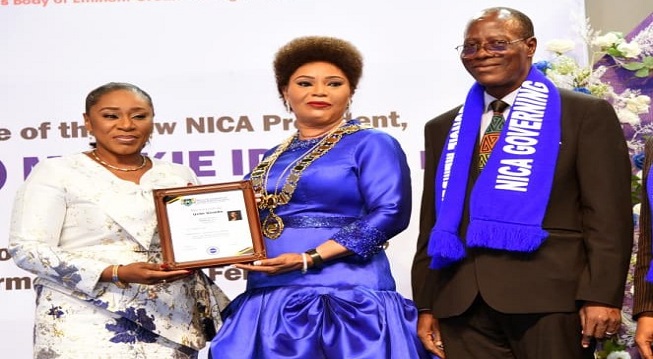
The National Institute of Credit Administration (NICA) has conferred its Professional Fellowship on Mrs. Uche Uzoebo, Managing Director of Shared Agent Network Expansion Facilities (SANEF).

The recognition was announced in Lagos during the investiture of Dr. (Mrs.) Markie Idowu as the Institute’s new President.
In his welcome address, Prof. Chris Onalo, Registrar/CEO of NICA, noted that the National Institute of Credit Administration distinguishes itself from other professional bodies through its unwavering commitment to advancing credit management, promoting professionalism, and empowering Nigerians with credit literacy.
“Unlike many other institutes, NICA recognizes that credit management is a lifeline of commerce, influencing every aspect of business, social, and economic life. Through this commitment, the Institute continues to shape Nigeria’s economic future towards sustainable growth,” he stated.
The Fellowship represents the Institute’s highest professional distinction and is conferred on individuals whose leadership has significantly strengthened Nigeria’s credit environment, institutional governance frameworks, and the integrity of the financial system.
This recognition also comes at a significant moment globally as the world commemorates International Women’s Day, underscoring the growing recognition of women’s leadership and contributions across industries, particularly in finance, governance, and economic development.
The ceremony brought together senior financial sector executives, policymakers, regulators, and distinguished guests to celebrate excellence in credit administration and professional practice.
The Institute described Mrs. Uche Uzoebo as a seasoned business executive and financial services leader with over two decades of professional experience spanning banking, digital payments, and financial services.
A proven change agent, she brings deep expertise across digital payments, financial inclusion, agency banking, product and business development, merchant acquiring, as well as corporate, commercial, and retail banking.
Her leadership has been instrumental in advancing secure and inclusive digital financial services, strengthening payment systems, and expanding last-mile access to financial services across underserved communities in Nigeria.
Through SANEF and related initiatives, she has supported economic empowerment and financial inclusion by expanding agent networks, promoting financial literacy, and championing innovative technology-enabled solutions.
Passionate about gender inclusion and women’s economic empowerment, Uzoebo is also a gender specialist and advocate with a strong focus on supporting women entrepreneurs and breaking structural economic barriers.
As a certified trainer, she designs and delivers high-impact capacity-building programmes for individuals, youth, women, and organizations, enabling sustainable growth and improved performance.

Meta to Charge Location Fees on Ads to Six Countries from July 1, 2026

Tizeti Tests Ad-Funded Internet Access Model in Nigeria and Ghana

Court Orders Final Forfeiture of N81.1m Sterling Bank Fraud Funds

NCC Orders Telcos to Report Cyberattacks Within 4 Hours from 2027

FG Mulls Age Restriction for Kids on Social Media

Dr. Cairo Ojougboh Foundation Bolsters Nigeria’s Education Drive with ₦2.7m Student Support

Kaspersky Brings more Transparency to Threat Detection with New Hunt Hub

Kaspersky Discovers New Phishing Campaign Exploiting Google Tasks Notifications to Steal Corporate Credentials

esentry 2025 Report Shows Healthcare, Financial Services and Telecoms as Staging Grounds for Increased Cyberattacks in Africa

AfDB, UNDP Launch $10Bn AI Initiative for Africa




 Telecom2 days ago
Dimension Data Nigeria Seals N20bn Bond Deal to Bridge Digital Infrastructure Gap

 Telecom2 days ago
First Batch of Nigerian Undergraduates Emerged in Airtel Africa Foundation Scholarships Programme

 E-Business2 days ago
CBN Affirms Alpha Morgan Bank’s Capitalisation

 E-Financial2 days ago
Polaris Bank Marks IWD2026 with Renewed Pledge to Women’s Empowerment

 General News1 day ago
Zedvance Hits ₦96bn Lending Milestone, Eyes ₦250bn Target in 2026

 General News2 days ago
Mojisola Sayo-Kazeem Reflects on Leadership, Opportunity, Women in Tech @ IWD

 General News2 days ago
Experts Weigh Blockchain Option for Nigeria’s Elections Process

 Broadcasting1 day ago
Madonna University Taps Tech Guru Adote for Strategic Board Role