

E-Business
How to Fund Merrybet Account: Money Deposit Options

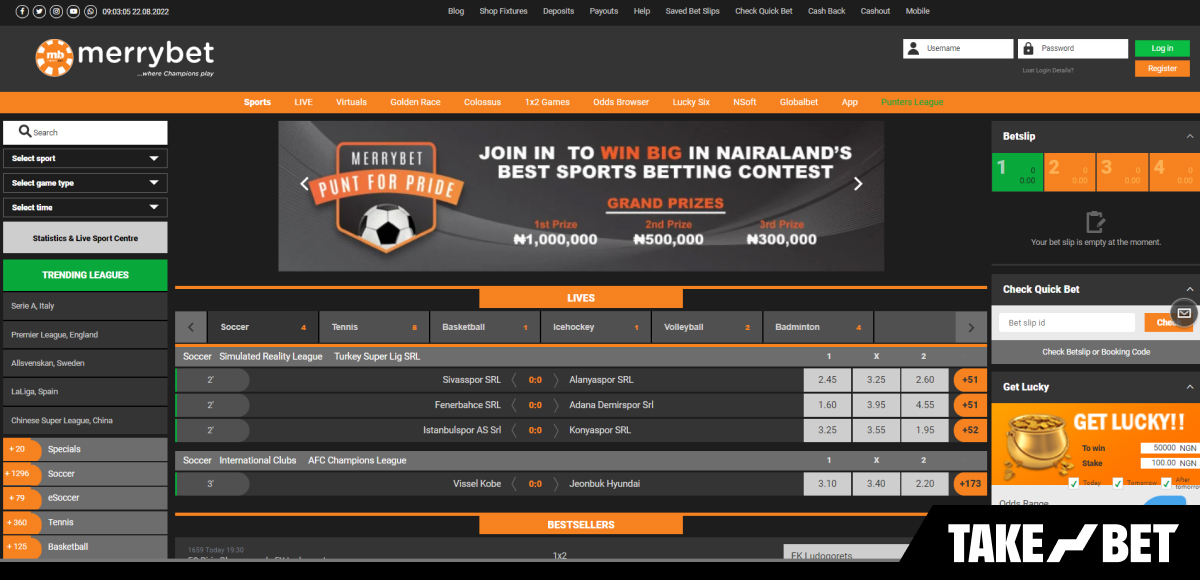
How to Deposit Money to Merrybet: Guide on Account Funding
A regular punter in Nigeria would have come across Merrybet as it continues to be one of the top betting sites in Nigeria. Established in 2013, the betting site has successfully been a figure in the country’s betting industry. The online bookmaker is a legitimate place to wager as it is fully licensed and regulated by the Lagos State Lotteries Board.
Merrybet sportsbook furnishes its clients with different techniques to support their accounts through their mobile site or the desktop version. It offers one of the best user interfaces in the Nigeria betting industry too.
“Merrybet provides their users different sorts of competition such as the punters league where you can win major cash prizes. Surprisingly, that’s not all: they offer a colossal jackpot where bettors predict a few sporting events and win prizes. The bettings site has a live betting option as well as a cash-out feature. All you need to enjoy all this is to just create an account and take part in the competition”, comments Dipo Lukman, a sports betting expert at Takebet Nigeria.
Let’s examine the different choices to deposit to the Merrybet account in this article!
What are deposit methods in Merrybet?
One special thing about Merrybet is they offer different options for funding their wallets. This set them truly apart from other betting sites in the industry. Bettors can either fund their wallets online or visit the nearest bank. Some of the options available are described below.
Instant Bank Transfer. This deposit strategy expects punters to go to specific banks suggested on the Merrybet store page. Customers ought to then demand a bank deposit slip and fill the deposit slip appropriately. The customer’s Merrybet account deposit will be acknowledged when their details are checked.
Pay direct Nigeria Deposit. This deposit strategy helps Merrybet customers to deposit money to their Merrybet account straightforwardly from their local banks. Customers ought to pay into Merrybet’s account on the Pay direct platform. Deposit into the customer’s Merrybet account will be finished when their deposit into the Pay direct account is effective and checked.
GlobalPay Deposit. This Merrybet deposit method expects clients to be signed into a Merrybet account and afterwards make a deposit with their credit card. This deposit technique must find success assuming the name on the credit card matches the name enlisted to the Merrybet account.
Quickteller ATM Nigeria Deposit. This is another Merrybet deposit strategy that expects customers to sign in on to quickteller.com/merrybet or by depositing a Quickteller on an ATM. The customer’s ID number and bank card are the prerequisites for this Merrybet deposit technique.
Bettors should insert their bank cards into the ATM and then provide their PIN.
- Put your card into an ATM and enter your pin
- Choose “Quickteller”
- Select pay bill and then press “Other.”
- Input your Customer ID and verify the recipient’s name.
- Click on “accept amount due”.
- Enter your phone number with which you’ll receive a confirmation message.
- Click on “proceed”. Your funds will enter your wallet and you can wager with it.
GTCollections Nigeria Deposit. This sort of Merrybet deposit strategy empowers Merrybet customers to deposit into their Merrybet account through GTBank’s Internet platform. GTBank’s web-based store strategy is likewise referred to as GTCollections. It is one of the astonishing features that was recently added to the Merrybet platform. It assists bettors with putting funds into their Merrybet account effortlessly. For this deposit method, a token device is required before transactions are finished.
Paystack Card Deposit. This deposit technique expects bettors to sign in to their Merrybet account and the amount they desire to deposit. The following page will take you to Paystack’s page where you can deposit to your Merrybet account. Input the expected information to finish the deposit process.
Paystack Bank Deposit. This Merrybet store technique expects bettors to pay to the Merrybet account on the Paystack stage. Punters ought to give fundamental identification details and the amount they would like to deposit to their Merrybet account. For security check, an OTP (One Time Password) will be sent to conclude the transaction.
Agent Deposit. This deposit method on the Merrybet platform expects clients to put aside instalments using a licensed Merrybet Agent. The procedure to follow is to go to any certified Merrybet agent and inform them that you might want to deposit to your Merrybet account. Furnish them with the necessary data and a few individual information will be required to confirm the transaction. In practically no time, the transaction will be finished and your Merrybet account will be credited.
Funding your wallet is a big step towards wagering on the betting site. Sadly, Merrybet does not offer any sign-up bonus so after funding your wallet you can just wager on your favourite sport. There are other competitions such as the Merrybet punters league. To take part in the competition, all you need to do is to place a stake with 200 NGN on an accumulator with three or more games and you stand a chance to win.
Do you need to finish KYC verification before funding?
Verification assists Merrybet with making a one-of-a-kind profile for each Merrybet client. Before clients can effectively set up their Merrybet account, a check strategy is taken to stay away from any type of misrepresentation. Any type of doubt of malignant movement will expose the client’s record to suspension.
The KYC (Know Your Computer) is another type of confirmation that is embraced to assure the security of Merrybet clients’ assets. This safety measure makes it simple for Merrybet to sort out any false movement.
For completion of your KYC, there is address verification and identity verification. The latter requires either a passport, an identification card or a driver’s licence. Address verification is also required which needs you to confirm your address of residence. You can either submit your bank statement or utility bill that’s not less than six months.
Are there terms and conditions when funding an account?
Yes, there are Terms and Conditions bettors must follow to deposit their funds easily. Some of the Terms and Conditions punters must follow include:
- Punters should deposit cash to their Merrybet account before they can stake.
- Punters can’t set aside instalments and make solicitations to pull them out.
- Punters ought to guarantee they follow the prescribed deposit methods to try not to be defrauded.
- Punters ought to guarantee that their security information is kept classified. Neither deposit details nor withdrawal data ought to be unveiled for any reason.
- Clients are urged not to utilise any Automatic Password Memory to not uncover their security details from an outsider. Merrybet won’t be considered answerable for any type of abuse of data.
What are the commissions and timelines of deposits?
Deposits on the bookmaker are quite fast as it takes minutes for it to reflect. The Commission depends on the option you are using for your payment. For Quickteller transactions whether through ATM or online are mostly free although the minimum amount for transactions is 500 NGN.
Instant bank payout commission is mostly the transaction fee charged by the bank which can vary. Pay Direct on the other hand has a service charge of 100 NGN. Before making use of any of the options, make sure you go through their terms and conditions to see if they charge additional fees for deposition. Be smart and bet safe!


Nigeria Data Protection Commission (NDPC) has joined sixty (60) other Data Protection Authorities (DPAs) in endorsing the “Joint Statement on Al-Generated Imagery and the Protection of Privacy.”

NDPC
The Joint Statement was coordinated by the International Enforcement Cooperation Working Group (IEWG) of the Global Privacy Assembly.
This underscores the growing concerns regarding the privacy risks posed by Artificial Intelligence tools capable of generating realistic images and videos of identifiable individuals.
The Joint Statement highlights concerns over the misuse of Al-powered tools to create non-consensual imagery, defamatory content, and other harmful materials, particularly affecting children and vulnerable groups.
It calls on organisations to implement strong safeguards, ensure transparency, provide effective content removal mechanisms, and comply fully with applicable data protection laws.
The current effort forms part of a continuum of steps being taken by Nigeria to ensure the responsible use of Al. It will be recalled that the Honourable Minister of Communications, Innovation and Digital Economy, Dr ‘Bosun Tijani, led the initiative for the development of the National Al Strategy.
The NDPC also issued the General Application and Implementation Directive (GAID), which, amongst others, mandates privacy by design and privacy by default in the development and deployment of Al tools.
The National Commissioner/CEO of the NDPC, Dr Vincent Olatunji, has directed that the Nigeria Data Protection Act (NDP Act) Compliance Audit Returns (CAR) by data controllers and processors of major importance will serve as a yardstick for monitoring and evaluating responsible use of Al for data processing in Nigeria.
E-Business
Jumia Tech Week 2026 Begins with Tech Deals on Smartphones, Electronics, and Everyday Technology

Jumia Nigeria has announced the launch of Jumia Tech Week 2026, a two-week campaign offering customers access to discounted technology products across key categories, including smartphones, computing, home entertainment, and wearable devices.

Starting from March 2 to March 15, Jumia Nigeria’s Tech Week 2026 is themed ‘Tech Products for Less’ – a deliberate commitment by the e-commerce giant to drive down the cost of technology products for Nigerian consumers. The campaign offers significant price reductions across key product categories, enabling more Nigerians to access the devices they need at prices that reflect the company’s dedication to affordability and consumer value.
Jumia Tech Week will feature deals across a wide range of product categories, including mobile phones, computer systems and accessories, televisions and audio equipment, gaming products, home appliances, portable power solutions, health technology,, and wearable devices.
Customers will also have access to curated recommendations, including top smartphone deals, must-have accessories, gaming essentials, and home technology upgrades.
According to Temidayo Ojo, CEO of Jumia Nigeria, the campaign reflects Jumia’s broader commitment to making everyday technology more accessible to Nigerians.
“Technology has become an essential part of everyday life, and access to the right devices enables more people to participate fully in the digital economy,” said Ojo. “At Jumia, we remain focused on expanding access and improving the shopping experience as we continue to build Nigeria’s everyday retail destination.”
The campaign will include a range of customer engagement initiatives such as flash sales, brand days, anchor deals and interactive activities designed to enhance the online shopping experience.
Special highlight periods, described as Explosion Days, will take place on March 6 and March 13, featuring limited-time offers across selected technology categories. Customers will also be able to participate in interactive activities, including product-based games, treasure hunts,, and live shopping sessions during the campaign period.
The campaign will feature participation from leading brands including Oraimo, Silver Crest, Samsung, Ecoflow, Nivea and Aeon, offering customers a wide selection of technology, household and lifestyle products. Early access promotions already begun during the teaser period from February 16 to March 1, allowing customers to preview selected deals ahead of the official launch.
Jumia Tech Week forms part of the company’s broader strategy to expand e-commerce adoption by improving access to essential products and enhancing the customer experience across its platform. As Nigeria’s e-commerce market continues to grow, Jumia remains focused on strengthening its product assortment, logistics capabilities, and digital experience to serve customers better nationwide.
Customers can participate in the campaign by using the Jumia mobile app or visiting the Jumia website and following the conversation online using #JumiaTechWeek.

Nigeria Deposit Insurance Corporation (NDIC) pays between ₦2 million and ₦5 million as deposit insurance to customers of liquidated banks, Managing Director Thompson Oludare Sunday told the House Committee on Insurance and Actuarial Matters during 2026 budget defence.

NDIC
House Spokesperson Akin Rotimi Jr sought details on depositor entitlements, citing Heritage Bank’s June 2024 collapse and public concerns over financial confidence.
Sunday explained NDIC’s mandate: banks pay risk-based premiums (now under 1%, down from 15/16 of 1%) to guarantee deposits. Coverage is ₦5 million for deposit money banks, primary mortgage banks (PMBs), and microfinance banks (MMOs); ₦2 million for other financial institutions.
Using BVN, NDIC auto-pays guaranteed sums without visits for amounts up to the limit. For Heritage, post-revocation, NDIC liquidated assets—selling buildings, recovering loans, realizing investments—and paid a second ₦24.63 billion dividend on January 6.
“Anything above ₦5 million or ₦2 million depends on recoveries,” Sunday said, noting ongoing asset sales and debt chases.
Committee Chairman Ahmed Jaha Babawo commended the clarity, noting the limit rose from ₦500,000 to ₦5 million recently. Over 90% of Heritage depositors got insured sums in under four days, meeting International Resolution Deposit (IRD) standards.
Babawo added liquidation dividends would be discussed in executive session.

SEC Revokes Registration of Kensington Agro Trading Limited

NCDC Raises Alarm over Lassa Fever Ravaging 18 States in Nigeria

Lagos Deploys Drones, AI to Boost Traffic Response

Purple Woman 3.0 Is Back, to Empower Women in Tech this IWD 2026

NRS Targets N40trillion in Tax, Royalty Revenue in 2026

Accidental Billionaire Opts for Jail Instead of Returning Money Credited Him by Mistake

Kaspersky Brings more Transparency to Threat Detection with New Hunt Hub

Dr. Cairo Ojougboh Foundation Bolsters Nigeria’s Education Drive with ₦2.7m Student Support

NDPC Commits to Balancing Data Privacy, Protection Information

OADC Lagos Reinforces Commitment to Local Data Hosting and Digital Transformation @ NDPC’s National Privacy Week Summit




 E-Financial3 days ago
Iran-Israel-US Conflict and CBN’s FX Gains: A Stress Test for Nigeria’s Monetary Stability

 E-Financial3 days ago
Mutual Benefits Assurance Reaffirms Full Regulatory Compliance, Enhanced Governance

 General News3 days ago
JAMB Uncovers AI-Driven Fraud Targeting UTME Candidates, Warns Parents

 Telecom2 days ago
Sunil Bharti Mittal Conferred GSMA Lifetime Achievement Award for Transforming Global Telecommunications

 General News3 days ago
SERAP Asks FCCPC to Investigate Google, Meta, Others over Alleged Rights Abuses

 News3 days ago
TeamApt, Awabah Partner to Boost Pension Drive for Nigerians

 News3 days ago
FlashChange CEO, Bidemi Oke, Urges Startups to Build Strong Governance Structures Early

 Telecom2 days ago
Why Digital Trust Matters: Secure, Responsible AI for African SMEs?