

General News
How to Make ChatGPT a Cybersecurity Co-Pilot – Sophos

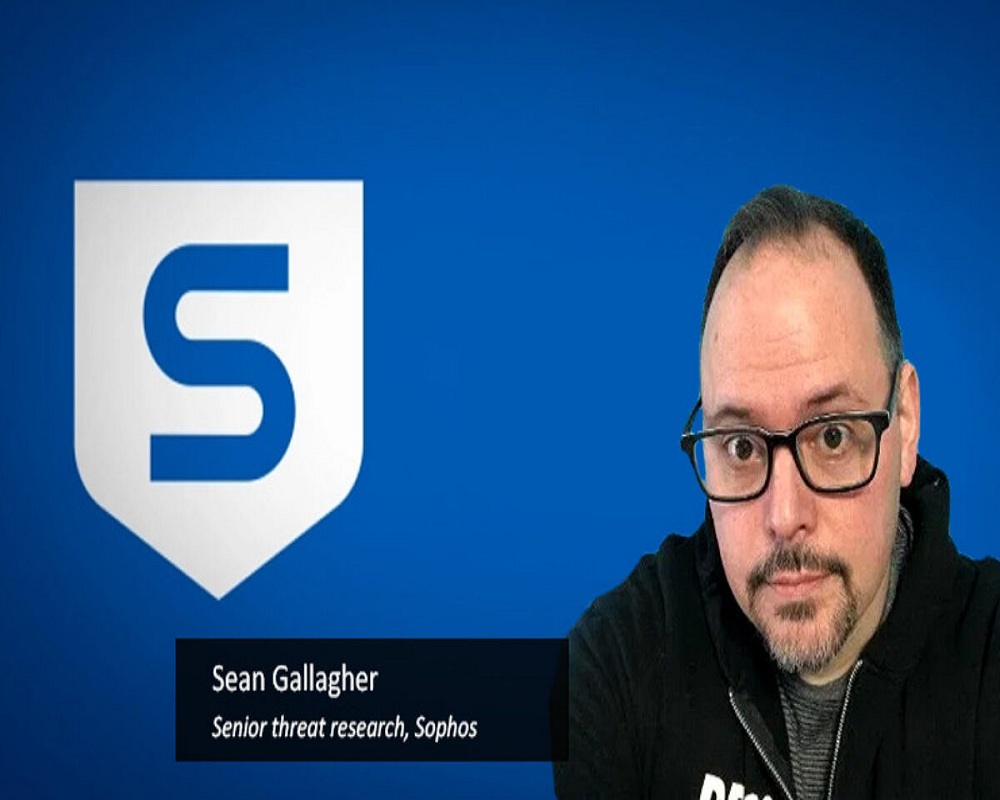
Sophos, a global leader in innovating and delivering cybersecurity as a service, has on Monday released new research on how the cybersecurity industry can leverage GPT-3, the language model behind the now well-known ChatGPT framework, as a co-pilot to help defeat attackers.

The latest report, “Applying AI Language Processing to Cyber Defenses,” details projects developed by Sophos X-Ops using GPT-3’s large language models to simplify the search for malicious activity in datasets from security software, more accurately filter spam, and speed up analysis of “living off the land” binary (LOLBin) attacks.
“Since OpenAI unveiled ChatGPT back in November, the security community has largely focused on the potential risks this new technology could bring. Can the AI help wannabee attackers write malware or help cybercriminals write much more convincing phishing emails? Perhaps, but, at Sophos, we’ve long seen AI as an ally rather than an enemy for defenders, making it a cornerstone technology for Sophos, and GPT-3 is no different.
“The security community should be paying attention not just to the potential risks, but the potential opportunities GPT-3 brings,” said Sean Gallagher, principal threat researcher, Sophos.
Sophos X-Ops researchers, including SophosAI Principal Data Scientist Younghoo Lee, have been working on three prototype projects that demonstrate the potential of GPT-3 as an assistant to cybersecurity defenders. All three use a technique called “few-shot learning” to train the AI model with just a few data samples, reducing the need to collect a large volume of pre-classified data.
The first application Sophos tested with the few-shot learning method was a natural language query interface for sifting through malicious activity in security software telemetry; specifically, Sophos tested the model against its endpoint detection and response product.
With this interface, defenders can filter through the telemetry with basic English commands, removing the need for defenders to understand SQL or a database’s underlying structure.
Next, Sophos tested a new spam filter using ChatGPT and found that, when compared to other machine learning models for spam filtering, the filter using GPT-3 was significantly more accurate.
Finally, Sophos researchers were able to create a program to simplify the process for reverse-engineering the command lines of LOLBins. Such reverse-engineering is notoriously difficult, but also critical for understanding LOLBins’ behavior—and putting a stop to those types of attacks in the future.
“One of the growing concerns within security operation centers is the sheer amount of ‘noise’ coming in. There are just too many notifications and detections to sort through, and many companies are dealing with limited resources. We’ve proved that, with something like GPT-3, we can simplify certain labor-intensive processes and give back valuable time to defenders.
“We are already working on incorporating some of the prototypes above into our products, and we’ve made the results of our efforts available on our GitHub for those interested in testing GPT-3 in their own analysis environments. In the future, we believe that GPT-3 may very well become a standard co-pilot for security experts,” said Gallagher.


General News
PalmPay Strengthens Data Protection Culture with Employee Privacy Workshop and Privacy Champions Programme

PalmPay has reinforced its commitment to responsible data governance and customer information protection through a specialised two-day data protection workshop for employees and the launch of its internal Privacy Champions Programme, an initiative designed to strengthen awareness, accountability, and responsible data handling across the organisation.

The initiative comes at a time when data protection is increasingly critical following recent reports of recorded 281,500 compromised user accounts in the first quarter of 2026, ranking 34th among the world’s most breached countries, according to a new quarterly data breach analysis by cybersecurity firm, Surfshark.
Facilitated by the Nigeria Data Protection Commission (NDPC) and leading Data Protection Compliance Organisation (DPCO) TechHive Advisory, the two-day workshop equipped employees with practical knowledge on privacy governance and data protection obligations, incident awareness, and the role each employee plays in protecting personal data.
The initiative forms part of PalmPay’s ongoing efforts to advance compliance with the Nigeria Data Protection Act (NDPA) 2023. It also reflects the company’s continued investment in safeguarding customer information and fostering a culture where privacy remains everyone’s responsibility.
The Privacy Champions Programme establishes a network of employee representatives across business functions who will support awareness, promote best practices and help strengthen the organisation’s privacy culture. By integrating privacy considerations into day-to–day activities the initiative aims to further enhance accountability and reinforces customer trust.
Speaking on the initiative, Managing Director of PalmPay, Chika Nwosu, stated: “At PalmPay, protecting customer information is fundamental to maintaining the trust our customers place in us everyday, and remains central to our operations. Statistically, 10 out of 100 Nigerians have been affected by data breaches.
Hence, we have a greater responsibility to ensure that personal information is collected, processed, stored, and protected responsibly. This specialised training reflects our continued investment in strengthening internal awareness and ensuring our teams remain equipped to uphold the highest standards of data privacy and protection.”
As a digital financial services platform serving millions of users, PalmPay reaffirmed that privacy and data protection remain embedded in its operational culture, with continuous investments in data governance practices.
PalmPay also encourages customers to remain vigilant and adopt safe digital practices, including protecting account credentials, exercising caution when sharing personal information online, and reporting suspicious activities promptly. The company maintains that building a secure digital ecosystem requires a shared commitment from organisations, regulators, and users alike.

President Bola Tinubu has appointed Dr Obi Adigwe as the National Coordinator of the newly established National Health Technology and Data Analytics Office (NHTDAO).

President Bola Tinubu
The appointment was announced in a statement issued on Friday.
The office, which will be domiciled in the Office of the Coordinating Minister of Health and Social Welfare, is expected to serve as the national coordination platform for Nigeria’s digital health system.
According to the statement, the NHTDAO will complement the work of existing health institutions by promoting coordination and interoperability across public and private healthcare systems, rather than replacing existing agencies.
It said the office would also drive the implementation of the National Digital Health Architecture approved by the National Council on Health in November 2025.
The statement said the initiative formed part of the Federal Government’s efforts to strengthen a secure, technology-driven and data-enabled healthcare system capable of improving service delivery nationwide.
Adigwe, who currently serves as the Director-General of the National Institute for Pharmaceutical Research and Development (NIPRD), has led several initiatives in science, pharmaceutical research, technology transfer and artificial intelligence.
He also coordinated major research funding initiatives, including a ¥300 million nanotechnology grant and an €18 million European Union research grant, while supporting the establishment of Africa’s first Active Pharmaceutical Ingredient (API) training facility through support from Afreximbank.
The statement said the new office would be guided by a steering committee co-chaired by the Coordinating Minister of Health and Social Welfare, Prof. Muhammad Ali Pate, and the Chairman of the Nigerian Economic Summit Group, Mr Olaniyi Yusuf.
Other members of the committee include the Minister of State for Health, Dr Iziaq Adekunle Salako; senior officials of the Federal Ministry of Health and Social Welfare; representatives of the National Information Technology Development Agency (NITDA); and heads of key health agencies, including the National Primary Health Care Development Agency (NPHCDA) and the National Health Insurance Authority (NHIA).
The committee will also include representatives of state commissioners for health from the six geopolitical zones, as well as industry and community stakeholders.
The Federal Government expressed optimism that the office would strengthen coordination across the health sector, accelerate digital transformation and improve healthcare delivery in line with the Renewed Hope Agenda.

The Gathering on 100 made its latest stop in Enugu over the weekend, bringing together hundreds of young Nigerians for a day of networking, fun, entertainment, and business opportunities.

The event, previously held in Lagos and Aba, arrived in Enugu as the city gains recognition as one of Nigeria’s emerging innovation and startup hubs. Recent ecosystem reports rank Enugu among the country’s leading startup cities. The South-East region now accounts for more than half of identified startups across the South-East and South-South, highlighting the region’s growing role in Nigeria’s entrepreneurial landscape.
A major highlight of the Enugu edition was the Pitch-a-thon competition, where three entrepreneurs received a combined ₦5 million in grants to support their business growth. More than 100 entrepreneurs applied for the competition, with 10 finalists selected to pitch before a panel of judges. At the end of the contest, Velas Global Nutrition Limited emerged as the overall winner, securing ₦2.5 million. Werxio, founded by Donatus Prince, received ₦1.5 million, while Whipcare Company was awarded ₦1 million.
These grants address a persistent funding challenge. According to the Small and Medium Enterprises Development Agency of Nigeria (SMEDAN), the country is home to over 39 million MSMEs, contributing nearly half of Nigeria’s Gross Domestic Product and accounting for about 84 per cent of employment nationwide. Despite this, access to finance remains a significant obstacle to business growth.
For Chizoba Osuji, founder of Velas Global Nutrition Limited, the funding facilitates the expansion of a business built on years of research. Her company processes indigenous crops into shelf-stable blends, supporting nutrition and local women smallholder farmers. “This is motivation to keep making Nigerians healthier through better food,” she remarked, noting the grant will fund semi-automated equipment to increase production capacity to 20 tonnes monthly.
She added that the ₦2.5 million grant would be used to acquire semi-automated equipment capable of increasing production capacity to about 20 tonnes monthly. Beyond increasing output, the expansion is expected to create additional opportunities for women smallholder farmers across the South-East who supply many of the raw materials used by the company.
Speaking on the initiative, MTN’s Regional General Manager (Sales), Callima Inino, represented by Peter Kajovo, said The Gathering on 100 was designed to provide young Nigerians with platforms to connect, learn, showcase their talents and access opportunities that can help them grow.“We want to encourage youths to live their best lives and have fuller expressions of themselves,” he said.
As the Enugu edition concludes, the energy of the South-East’s startup scene remains evident. The Gathering on 100 continues its nationwide tour, connecting more young founders with the visibility and support they need. Stay tuned to discover where the tour will land next as it moves to its next exciting location.

FCMB Turns Normal Banking into Rewards with New Mobile App Upgrade

Despite Warnings, FG Draws Down $1.5Bn as First Tranche of FAB $5Bn Loan Deal

PalmPay Strengthens Data Protection Culture with Employee Privacy Workshop and Privacy Champions Programme

Paystack Unveils AI-powered Payments Tools

NRS, CITN Deepen Partnership to Strengthen Tax Awareness

CBN Extends PoS Geo-Fencing Enforcement Deadline to August 2026

London Strengthens Global Investment Ties with Africa @ First Ever London-Africa Business Summit

FG Targets Alleged N3tn Capital Flight, Opens Airtime Credit Market to Nigerian Fintechs

Mobile Internet Gender Gap Widest in Africa – GSMA

Japan, UNESCO Boost Digital Learning in 15 CoEs with Donation of ICT Equipment




 E-Business3 days ago
Privacy Crisis May Undermine Local Hosting of Data by Banks, Fintechs

 Telecom3 days ago
NITDA Unveils Bold Vision to Make Nigeria an AI Powerhouse

 Telecom3 days ago
GSMA Launches Global Satellite Regulatory Playbook to Help Policymakers Build Future-Ready Connectivity Frameworks

 Telecom2 days ago
6 Easy Ways to Enjoy the 2026 World Cup with Google and Gemini

 General News3 days ago
Nestlé Commits to Boosting West Africa Solar Rollout Through Partnership

 E-Business3 days ago
How to Build a Safer Cyberworld for People, Business, and Society

 E-Business3 days ago
AI-Powered Scams are Biggest Payment Fraud Threat -Visa Report

 Telecom3 days ago
Airtel Africa Foundation Launches Airtel Green Schools to Promote Sustainability Education in Nigeria