

E-Financial
ICIJ Fingers Western Union, MoneyGram as Conduits to Launder Criminal Cash


International Consortium of Investigative Journalists (ICIJ) has uncovered how companies like Western Union and MoneyGram play a hidden role in laundering cash from around the globe.

In May, the International Criminal Court ruled that Jean-Pierre Bemba Gombo, former vice president of the Democratic Republic of Congo, will not be compensated for spending more than a decade in detention on war crimes and other charges mostly overturned on appeal.
He will not be reunited with his planes, villas and river cruiser, nor will he receive the $77 million he asked for in compensation.
After 12 years and more than 100 witnesses, history now records just one judgment of guilt: that Bemba bribed witnesses using Western Union and MoneyGram International, the world’s largest money transmitters.
Bemba and his allies, the court found, offered soldiers and civilians $100 or more — and in some cases relocation to Europe — to lie in Bemba’s trial.
In 2002 and 2003, Bemba commanded 1,500 Congolese soldiers who intervened in a conflict in the neighboring Central African Republic.
His forces killed civilians and raped women and girls as young as 10, victims and other witnesses later claimed.
The ICC found Bemba guilty of war crimes, crimes against humanity and witness tampering in 2016. The first two charges were overturned on appeal in 2018.
The bribery conviction held up.
A leak of U.S. government banking records reveals new details about the alleged payoffs — and the role Western Union played in them.
Bemba and four aides, also convicted of bribing witnesses, sent more than $429,000 through Western Union from 2005 to 2015, according to a suspicious activity report submitted by Western Union to the Financial Crimes Enforcement Network, a division of the U.S. Treasury Department. It is unclear how much of this money was used for bribes.
The suspicious activity report cites hundreds of recipients in 23 countries and names three people who have not been identified before, including one of Bemba’s key allies, Narcisse Arido, who received nearly $30,000 through Western Union, according to the report.
The Western Union report is also notable for its timing.
Financial institutions are required to regularly examine transactions and accounts for signs of money laundering and other types of financial crime.
Western Union didn’t file the suspicious activity report, or SAR, describing the payments until 2015 or later — at least seven years after Bemba’s arrest.
The undated Western Union document is one of more than 2,600 records obtained by BuzzFeed News and shared with the International Consortium of Investigative Journalists as part of the FinCEN Files investigation.
The reporting team found that banks, money transmitters like Western Union and other financial institutions have moved vast amounts of money for people accused of corruption and other crimes, often long after allegations were first made public
Bemba’s money flows are among suspicious transfers worth at least $150 million that went through Western Union and MoneyGram between 2005 and 2017, according to an ICIJ analysis of transactions from the FinCEN Files.
The two companies filed or were cited by other financial institutions in 236 suspicious activity reports, according to ICIJ’s analysis. Suspicious activity reports reflect the views of banking professionals and are not themselves evidence of criminality.
Payments through money transmitters, while often small, are central to modern crime. The FBI counts such payments as the third most common method to launder money, after bank transactions and payments in hard cash.
Recent cases in which money transmitters allegedly played a central role include several involving opioid trafficking rings and the crime rampage of a violent Eurasian mobster.
“Certain money transfer companies have repeatedly demonstrated a readiness to provide essential support to criminals and terrorists,” said David Pressman, an attorney suing Western Union, MoneyGram and two Russian banks on behalf of families of victims killed by Ukrainian separatists who shot down Malaysian Airlines flight MH17 in 2014.
“The business model is predicated on moving cash fast, at a global scale, even when it means moving cash to those intent on carrying out murderous acts.”
Big guys and little guys
The amount of money that Western Union, MoneyGram and other money transmitters send worldwide in a year exceeds the gross domestic product of Switzerland or Saudi Arabia. More than $689 billion was sent in 2018, the last year for which figures are available.
While remittances — especially transfers to relatives — are a crucial source of income for many people, especially in poorer countries, crime agencies say drug and human traffickers, fraudsters and arms smugglers push money around the world through the same companies.
The Financial Action Task Force, an international network of government anti-money-laundering agencies, found that many criminals avoid banks because they see money transmitters “as offering less risk of detection.”
Money transmitters are hard to monitor; there are 23,968 companies in the United States alone that fall under the technical term “money service business.” They are based at post offices, banks, liquor stores, Walmarts and gas stations. They range from behemoths like Western Union to a three-person outfit in Pago Pago, American Samoa.
Like banks, American money transmitters must report suspicious activities to FinCEN, the U.S. agency that oversees the fight against financial crime. Yet officials acknowledge that they catch little of the illicit money that passes through money transmitters.
Criminal exploitation of money transmitters is one of the “most significant vulnerabilities” in the United States, according to the Treasury Department’s 2020 report on the national strategy to counter illicit finance. There are simply not enough auditors to monitor the industry, the strategy paper said.
In the vast money transmission sector, the FBI calls MoneyGram and Western Union the “Big Guys.”
The big guys have a big rap sheet.
In 2012, the U.S. Justice Department agreed not to prosecute Dallas-based MoneyGram, the world’s second-largest money transmitter, after its agents conspired with fraudsters to trick victims into sending money with false promises of lottery winnings and bargains.
“MoneyGram Agents knowingly entered false addresses, telephone numbers, and personal identification” and took fees for processing the frauds, the company admitted in a statement of facts filed in federal court.
To escape prosecution, MoneyGram agreed to create a system to spot and stop potential frauds, tie executive bonuses to compliance with the law and require every MoneyGram office worldwide to follow U.S. anti-money-laundering rules, among other conditions.
MoneyGram broke the agreement when its new anti-fraud system failed to prevent a substantial number of criminal transactions, according to the Justice Department. MoneyGram paid a $125 million penalty.
Citing MoneyGram’s “environment of fraud,” the Justice Department in 2014 took the unusual step of suing a senior executive. It accused the company’s chief compliance officer, Thomas Haider, of allowing criminals to use MoneyGram “to defraud innocent consumers and then launder the proceeds.” Haider settled and paid $250,000.
Western Union, headquartered in Colorado, operates in more than half a million locations worldwide, compared with MoneyGram’s more than 350,000 outlets.
In 2010, the company agreed to upgrade its anti-money-laundering systems and paid $94 million to settle charges that drug, human and weapons smugglers misused the company to move vast sums of money across the U.S.-Mexico border.
Seven years later, Western Union agreed to pay $586 million after a U.S. investigation found that the company enabled scammers to defraud hundreds of thousands of Americans who paid to claim prizes or job offers that didn’t exist. “Various Western Union agents were complicit in these fraud schemes, often processing the fraud payments in return for a cut of the fraud proceeds,” the Justice Department said in a news release.
A year later, New York state fined the company $60 million for, among other things, waving through cash for criminals in China. And in 2019, French officials fined the company for failing to alert regulators to suspicious customers in Afghanistan, Iran and Turkey.
Western Union told ICIJ that it would respond to questions. It never did; the company’s communications chief, Claire Treacy, did not return subsequent emails or phone calls.
MoneyGram proposed a phone conversation with ICIJ to “potentially help” with research. MoneyGram canceled the call and sent a written response in which the company declared that it had found “several statements to be completely baseless.” The company did not explain what it considered “baseless.”
“MoneyGram takes financial crime very seriously and does not tolerate unethical or illegal conduct,” the company said in a statement. MoneyGram “has invested tens of millions of dollars in our state-of-the-art compliance program” and “has among the lowest fraud rates in the industry,” it said.
‘Exploitation’
Jean-Pierre Bemba’s detention in 2008 made global headlines after police in Brussels arrested him and the ICC asked African and European capitals to seize villas, cars, bank accounts and a Boeing 727-100.
The ICC, which was created to bring the world’s worst war criminals to justice, whisked Bemba to The Hague, where his trial opened in November 2010. He was charged with witness tampering three years later.
“Whiskey” was Bemba’s code name for Western Union and “Mike” for MoneyGram, according to wiretaps obtained by ICC prosecutors. “Never, never, never” should payments pass through a bank account, Bemba told one aide.
Bemba conspired with aides – all of whom were also convicted, including his defense lawyer and a member of the DRC parliament – to coach witnesses to pretend that they were soldiers and testify in Bemba’s favor.
During his trial, prosecutors alleged that Narcisse Arido, an expert witness for Bemba’s defense, lured Central African witnesses with the hope of asylum in Europe and “exploited the precarious personal situations of these witnesses, selling them the illusion that by testifying falsely for Bemba they would have a better future.”
Sometime after Oct. 12, 2015, Western Union filed a suspicious activity report to FinCEN saying an employee had “identified” news about Bemba on the ICC’s website. Western Union reported almost 2,000 transfers from 2005 to Oct. 12, 2015, that involved Bemba and accomplices.
Arido, for example, received $28,732 from 30 Western Union branches in seven countries, according to the suspicious activity report. The ICC had issued a warrant for Arido’s arrest at least a year and 10 months before Western Union submitted its report to FinCEN.
The Western Union report indicates that Arido sent payments to three people in Cameroon and France: Arlette Josiane Tongui Bengue, Louis Kotys and Sylvie Ngo Manding. The average transaction was worth less than $300. It is unclear whether the payments were part of the bribery scheme.
Kotys and Ngo Manding could not be reached. Tongui Bengue, who now lives in Quebec, refused to answer questions when contacted.
You don’t need Western Union or banks to “go around and threaten a witness with a monkey wrench,” said Robert Cryer, a law professor at the University of Birmingham in England. “But money is central to other forms of witness intimidation.”
In a WhatsApp call with ICIJ, Bemba denied bribing witnesses. “No, that is absolutely false,” Bemba said. “I was not in a position to do it.” He has appealed the rejection of his compensation request.
From drug dealers to the godfather
From bustling metropolises like Tokyo to the world’s smallest capital city, Ngerulmud in Palau, Western Union’s black and yellow logo or MoneyGram’s white arrow can be found almost everywhere. For a fee, the companies offer an easy way to wire money to a loved one in a panic or to seal a business deal on a deadline. They play an essential role in the lives of tens of millions of people who use their services, from vice presidents to journalists.
While a bank-to-bank transfer can take days, both companies claim to make cash available “within minutes.”
There’s no stopping all illicit money transfers, especially those involving small dollar amounts and people not known to law enforcement.
But financial institutions are supposed to be on the watch for people like Anthony Gomes and his cronies.
Gomes and others helped introduce the potent opioid fentanyl to the U.S., routing the drug from Chinese laboratories to American dealers and users through the postal system. More than 36,000 Americans died last year from overdoses of fentanyl and similar synthetic drugs.
His trafficking ring hid transactions through offshore accounts and wired money through Western Union, according to court documents.
The records show that he and others sent $17,600 to China in one month alone via the money remitter.
“I have the guy on the way to wu [Western Union] now give me a few,” Gomes emailed another dealer, according to court records. “Ok good stuff,” the fentanyl dealer replied. “New batch is even stronger than [the] last.”
At least four Americans, including 19-year-old Daniel Latjerman in North Dakota, were killed by fentanyl imported by Gomes’ ring, prosecutors said. Gomes pleaded guilty in 2018 to conspiracy charges related to drug trafficking and money laundering.
Gomes and eight others appear in a spreadsheet included with a suspicious activity report in connection with more than $403,000 in payments made via MoneyGram from 2012 to 2017. Also named in MoneyGram’s undated report was Darius Ghahary, a northern New Jersey man charged in 2014 with manslaughter after Latjerman died. Ghahary died in custody. It is unclear why MoneyGram filed the report when it did.
MoneyGram helped move money for Ghahary despite his well-publicized conviction for internet fraud more than a decade earlier.
Money transmitters are one of “two key payment systems which support illicit procurement of opioids,” the assistant director of the U.S. Immigration and Customs Enforcement told Congress in 2018. Just a few months earlier, an undercover agent of the U.S. Drug Enforcement Administration told a federal court that he received fentanyl in a box marked “peanuts” after wiring $80 to China via MoneyGram.
Last year, the Treasury Department alerted financial institutions to the potential abuse of money transmitters in fentanyl and synthetic opioid trafficking.
The FinCEN Files show that one of America’s most dangerous Eurasian mafia dons built his empire with help from money transmitters.
In 2018, Razhden Shulaya, a Brooklyn tow-truck-leasing company manager, was convicted in New York of masterminding “a vast and violent criminal enterprise” involving gambling, credit card fraud, contraband cigarettes and stolen chocolates. Authorities said he also had plans to defraud casinos with rigged slot machines.
Shulaya was a “thief-in-law” the Russian equivalent of a godfather, U.S. prosecutors said. “He used his power to steal, defraud, extort and disfigure.” They cited occasions when Shulaya pistol-whipped his nephew and battered the face of a lieutenant after a perceived insult. Members of his gang beat enemies with pool cues. Others, to curry favor, gave Shulaya a Mercedes and a crossbow as gifts.
Shulaya is serving a 45-year prison sentence in West Virginia. He has appealed his conviction.
Two years before Shulaya’s conviction, FinCEN reported that an “associate” named George Meskhishvili sent $12,600 from Western Union locations in New York City to eight people, including Shulaya.
The agency’s report called Meskhishvili one of the possible “central facilitators” in the financial networks of Eurasian crime gangs. Meskhishvili has not been criminally charged.
FinCEN said the transactions were suspicious because many amounts were below the $10,000 threshold that banks must report in currency transactions, or were sent on the same or consecutive days.
In May 2014, Meskhishvili wired $1,200 from Brooklyn to Shulaya at the Bellagio hotel and casino in Las Vegas weeks before the U.S. launched its investigation. By the time Western Union approved Meskhishvili’s payment to Shulaya, the thief-in-law had previously been arrested in Europe during a high-profile anti-mafia crackdown. Shulaya was also wanted in Russia on unspecified charges, according to U.S. prosecutors.
ICIJ was unable to reach Meskhishvili for comment through social media or his last listed address in Brooklyn.
Asked five times why it approved payments to Shulaya, Western Union never replied.



Wale Edun, minister of Finance and Coordinating Minister of the Economy, has raised concern over Africa’s mounting revenue losses, warning that the continent forfeits an estimated $88 billion annually to illicit financial flows (IFFs), a development he described as a critical threat to sustainable growth.

Speaking at the 5th Session of the Sub-Committee on Tax and Illicit Financial Flows of the African Union, in Abuja, Mr Edun said the persistent outflows continue to deprive African countries of vital resources required for infrastructure, healthcare, and overall economic development.
The high-level meeting, held at Transcorp Hilton Abuja, brought together policymakers, tax administrators, and development partners to examine strategies for strengthening fiscal systems amid evolving global economic uncertainties.
Mr Edun stressed the need for African countries to reduce reliance on external financing sources such as debt, aid, and foreign investment, noting that these options are becoming increasingly unpredictable. He maintained that domestic resource mobilisation must serve as the foundation for long-term economic sustainability.
“Our ambition is to finance up to 90 per cent of Africa’s development needs from domestic resources,” he said, referencing the continent’s Agenda 2063 development framework.
He identified structural challenges, including tax evasion, weak institutional capacity, and limited economic diversification, as key impediments, while emphasising that curbing illicit financial flows remains central to unlocking Africa’s fiscal potential.
Highlighting ongoing reforms under President Bola Tinubu, Mr Edun noted that measures such as tax system reforms, fuel subsidy removal, and exchange rate unification are beginning to improve revenue performance and boost investor confidence.
He added that initiatives like the National Single Window are helping to reduce trade-related leakages, while enhanced international tax cooperation is supporting efforts to recover lost revenues. He also cited Executive Order 9 as a key policy aimed at strengthening transparency in the oil and gas sector.
Calling for broader continental action, Mr Edun urged African nations to expand their tax base, strengthen public financial management systems, and deepen financial inclusion. He listed institutional strengthening, digital infrastructure investment, and cross-border collaboration as critical reform priorities.
“The question is no longer whether we must reform, but how urgently and how boldly we act,” he said, warning that failure to act could leave African economies exposed to external shocks.
On his part, Mr Zacch Adedeji, executive chairman of the Nigeria Revenue Service (NRS), called for urgent steps to safeguard domestic resources and address widening financing gaps across the continent.
Mr Adedeji noted that illicit financial flows ranging from tax evasion and trade mispricing to aggressive tax avoidance continue to weaken Africa’s capacity to fund critical sectors such as infrastructure, healthcare, and education.
“Every year, billions meant for development are lost through illegal financial transfers. These are lost hospitals, lost schools, and lost opportunities,” he said.
He stressed that the cross-border nature of illicit flows requires coordinated responses at both national and continental levels, adding that Nigeria is pursuing reforms to modernise revenue administration through expanded tax coverage, improved compliance, and digital innovation.
According to him, efficient and transparent tax systems are essential not only for revenue generation but also for strengthening public trust in government institutions.
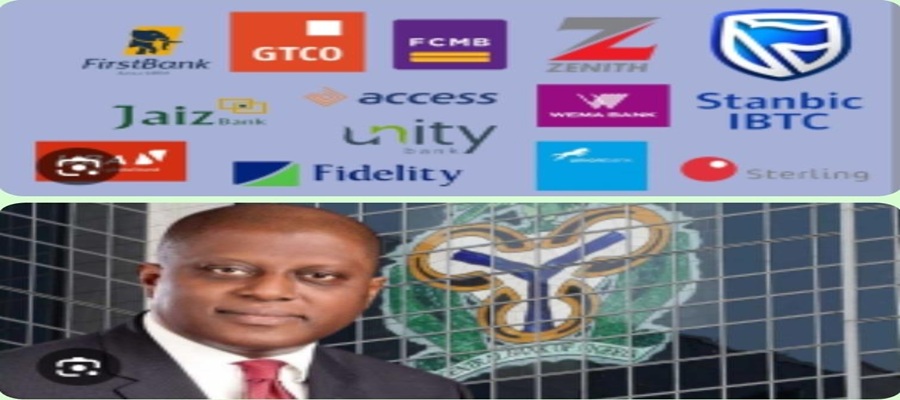
Central Bank of Nigeria (CBN) has announced the successful conclusion of the banking sector recapitalisation programme initiated in March 2024.

Over the 24-month period, Nigerian banks raised a total of N4.65 trillion in new capital, strengthening the resilience of the financial system and enhancing its capacity to support the economy, according to a statement that was issued by CBN on Wednesday.
The programme recorded strong participation from both domestic and international investors, with 72.55 per cent of capital sourced locally and 27.45 per cent from international markets, reflecting sustained confidence in the Nigerian banking sector.
Olayemi Cardoso, governor, CBN, said: “The recapitalisation programme has strengthened the capital base of Nigerian banks, reinforcing the resilience of the financial system and ensuring it is well-positioned to support economic growth and withstand domestic and external shocks.”
The CBN confirmed that 33 banks have met the revised minimum capital requirements established under the programme. A limited number of institutions remain subject to ongoing regulatory and judicial processes, which are being addressed through established supervisory and legal frameworks.
All banks remain fully operational, ensuring continued access to banking services for customers.
The apex bank stated that the programme has strengthened capital adequacy ratios (CAR), with the sector maintaining levels above international Basel benchmarks.
Minimum CAR thresholds remain at 10 per cent for regional and national banks and 15 per cent for banks with international authorisation.
The recapitalisation, implemented alongside an orderly exit from regulatory forbearance, has improved asset quality, reinforcing balance sheet transparency and overall financial system stability.
To safeguard the gains, the CBN said it has strengthened its risk-based capital adequacy framework, requiring banks to conduct regular stress testing across defined scenarios and maintain appropriate capital buffers.
It stated that key regulatory measures, including prudential guidelines and the supervisory framework, are subject to periodic review to support ongoing strengthening of governance, risk management and sector resilience.
The recapitalisation programme was carried out without disruption to banking services, ensuring continuous access for individuals and businesses throughout the process.
The successful completion of the programme establishes a stronger and more resilient banking system, better positioned to support lending, mobilise savings, and withstand domestic and global shocks, the CBN said in the statement that was issued by Olubukola A. Akinwunmi, director, banking supervision, and Hakama Ali, acting director, corporate communications.
“The Central Bank of Nigeria remains committed to maintaining a stable, transparent, and resilient financial system that inspires confidence among depositors, investors, and the broader public, and to advancing the sustainability of the nation’s financial architecture,” the statement read in part.


Nigeria’s fast-growing digital banking ecosystem is facing increasing scrutiny over consumer safety, as rising fraud cases and weak redress mechanisms threaten to erode public trust in the sector.

Over the past decade, Nigeria has witnessed a remarkable shift from cash-based transactions to digital financial services, driven by mobile banking applications, instant transfers and Unstructured Supplementary Service Data (USSD) platforms.
Industry data show that Point-of-Sale (POS) transactions rose to a record N18 trillion in 2024, representing a 69 per cent increase year-on-year, while the number of deployed POS terminals more than doubled to 5.5 million nationwide.
Mobile banking has also emerged as the most widely used digital financial channel, with about four in five Nigerians reportedly accessing such services within a 90-day period.
Analysts say the growth reflects significant progress in financial inclusion and technology adoption, but warn that the expansion has exposed gaps in consumer protection.
According to a 2024 Nigeria Consumer Protection Survey by Innovations for Poverty Action, nearly one in four users of digital financial services reported experiencing unexpected charges, hidden fees or fraud attempts within the past year.
The report further indicated that only about half of affected users pursued formal complaints, a trend experts attribute to declining confidence in dispute resolution processes.
Data from the Nigeria Inter-Bank Settlement System (NIBSS) also highlight growing risks, with fraud-related losses rising to N52.26 billion in 2024.
Although the number of reported fraud cases declined, stakeholders note that the scale of losses per incident has increased significantly, suggesting more sophisticated and high-impact attacks.
Experts identify social engineering as the most prevalent fraud method, relying on deception rather than complex technology to exploit unsuspecting customers.
They also warn that insider involvement remains a critical concern, with cases of internal compromise posing systemic risks to the integrity of financial institutions.
The development, according to analysts, underscores a widening gap between the rapid expansion of digital banking infrastructure and the pace of consumer protection frameworks.
“Convenience and security must evolve together. When one outpaces the other, it creates vulnerabilities that fraudsters can exploit,” a financial analyst said.
Regulators, however, have taken steps to address the challenges.
Nigeria’s exit from the Financial Action Task Force (FATF) grey list in 2025 signalled improvements in the country’s financial safeguards.
In addition, the Central Bank of Nigeria (CBN) introduced risk-based cybersecurity frameworks for deposit money banks in 2024, setting stricter standards for managing digital risks.
Industry-wide enforcement has also intensified, with regulatory penalties reportedly exceeding N15 billion in 2024, reinforcing compliance with consumer protection rules.
Within the banking sector, institutions are increasingly investing in advanced security systems designed to monitor transactions in real time, detect anomalies and prevent fraud before it occurs.
Analysts note that such proactive measures, though largely invisible to customers, play a critical role in safeguarding digital transactions.
The experience of Union Bank of Nigeria illustrates this approach, with the bank reporting strong customer satisfaction across its digital platforms, including mobile banking, USSD services and enterprise solutions.
Observers attribute this performance to sustained investment in backend security infrastructure, proactive fraud monitoring systems and a corporate culture that prioritises customer protection.
Industry stakeholders agree that trust remains the cornerstone of banking, particularly in a digital environment where transactions are increasingly intangible.
They warn that without sustained improvements in security, transparency and accountability, the gains recorded in financial inclusion could be undermined.
As Nigeria continues to expand its digital financial ecosystem, experts say the next phase of growth must prioritise safety alongside convenience to ensure long-term sustainability.
“Digital banking has transformed access to financial services in Nigeria, but its future will depend on how well institutions protect the people who rely on it,” an industry stakeholder said.

Nigeria, Others Lose $88bn Yearly to Illicit Flows —Edun

Oracle Sacks 12,000 in India, Begins Shift to AI

CBN Says 33 Banks Raise Fresh N4.65 Trillion in Recapitalisation Exercise

NCC Insists Telcos Must Compensate Subscribers for Poor Quality of Service

NITDA Urges Joint Action to Drive Nigeria’s Digital Innovation

Spotify’s Loud & Clear Report Reveals Over ₦60Bn Revenue for Nigerian Artists in 2025

Madonna University Taps Tech Guru Adote for Strategic Board Role

China Threatens to Shut Nigeria’s Satellite Over $11.44m Unpaid Debt

FCCPC Bans Lagos ‘No Refund’ Policy, Vows Fines and Shutdowns for Traders

EFCC Arraigns Two FSDH Bank Officials Over $307k, €50k Fraud




 E-Financial2 days ago
NGX REGCO Fines 5 Firms N291m for Market Manipulation

 E-Financial2 days ago
FG Launches Cross-Border Digital Payments Report

 News2 days ago
Dangote Refinery Debunks Speculations on IPO

 News2 days ago
Descasio Launches “Give to Gain” Leadership Insights Report, Hosts Executive Brunch for Women in Leadership

 E-Financial2 days ago
Interswitch Deepens Strategic Partnership with KCB Group to Advance Digital Payments and Financial Inclusion

 News2 days ago
World Backup Day: Research Reveals 84% of Users Store Sensitive Data Digitally

 General News2 days ago
Moniepoint Launches Sixth Edition of Women in Tech Internship with “There Is Space for You” Campaign

 General News2 days ago
FG Awards N50m Each to 45 Students under S-VCG