

Telecom
ICT Stakeholders @ PIAFO Conference Harps on Benefits of ‘Dig Once Policy’

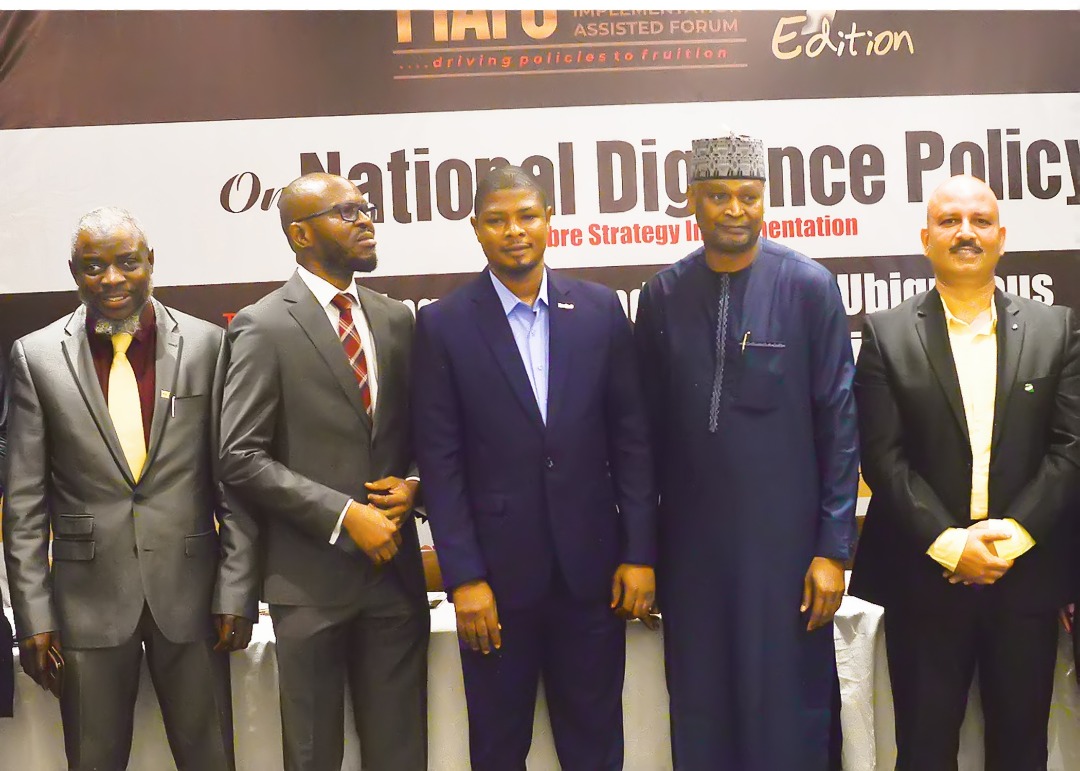
Stakeholders in the Information and Communications Technology (ICT) sector on Tuesday highlighted the benefits of Dig Once Policy to the economy, saying that it would promote and ensure ubiquitous broadband penetration across the country.

L-R: Adewale Sulaiman, GM, Network Enterprise Services, MTN Nigeria; Chidi Ajuzie, Group Chief Operating Officer, WTES Projects Limited; Omobayo Azeez, Convener PIAFo and Publisher, Business Metrics Nigeria; Engr Usman Aliyu, Sec. BISC and Head, Wireless Network, NCC, (Rep. Minister of Communications and Digital Economy) and Ashwani Mishra, Director of ICT Strategy and Marketing, Huawei Technologies at the fourth edition of PIAFo held in Lagos.
Prof Isa Ali Pantami, Minister of Communications and Digital Economy, speaking at the 4th edition of Policy Implementation Assisted Forum(PIAFO) on National Dig Once Policy, said the policy would promote and encourage collaboration between the private and public sectors.
Pantami who was represented by Engr Usman Ali, Deputy Director, Technical and Network Integrity, Nigeria Communication Commission (NCC) stated this in his keynote address with the theme ‘Laying the Foundation for Ubiquitous Broadband for Nigeria’s Economic Breakthrough’.
He said that Dig Once Policy would promote synergy and collaboration among private partners participation.
The minister said that the synergy would encourage infrastructure sharing and joint installation of fibre duct to avoid future digging.
He said that the Dig Once Policy which is still in the draft form would promote installation of fibre duct for effective broadband, reduce the barriers for Internet Service Providers.
According to him, Dig Once Policy promotes safety of citizens reduces traffic congestion on line, promotes comprehensive planning and inclusion of all telecoms infrastructure.
Prof Umar Danbatta, Executive Vice Chairman, NCC, also represented by Engr Usman Ali in his keynote address ‘Unlocking the Full Potential of the Telecoms Sector as an Economic Enabler with Dig Once Policy ‘.
The EVC said that NCC as a coordinating agency to will foresee the Dig Once Implementation Council (DOIC) and ensure that the policy is obeyed to the later.
Danbatta said that hopefully, by the end of the year, the Dig Once Policy which is in the draft form would be unveiled.
Mr Olabode Ojo, Director, Fiber Operations, IHS Nigeria said that the many benefits of Dig once cannot be overemphasized.
Ojo said that a Dig Once approach that encourages cooperation but does not prevent excavation when needed is most recommended for federal, state, and local agencies.
He said that Operators’ participation should also be non-exclusive thereby enabling the desired rapid broadband penetration for the country.
According to him, the benefits of Dig once policies include protecting newly and recently paved roads and sidewalks and enhancing the uniformity of construction.
He said that the benefit of Dig Once Policy also includes ensuring efficient, non-duplicative placement of infrastructure in the Public Right of Way (Row).
According to him, the benefits also includes environmentally friendly and enhances a greener planet, partnership in capacity building programmes such as training of contractors, skilled construction workers and site supervisor.
Also speaking at the occasion, Mr Chidi Ajuzie, Group Chief Operating Officer, WTES Project Limited in his paper presentation Public -Private Collaboration as a catalyst for Dig Once Policy Implementation emphasized on public private vector Collaboration.
Ajuzie said that the collaboration develops an ecosystem of trust with connectivity providers considering them as partners in improving the lives and livelihoods of citizens in line with commercial sensitivity.
He said that Dig Once Policy support digital inclusion initiative, internet speed increases, price per data unit decreases, increase data traffic competition.
Also, in his opening remarks, Mr Omobayo Azeez, Lead Executive, PIAFO said that the summit was considered a necessity to boosting Nigeria’s digital economy drive.
Azeez said which would ride on availability of high-speed internet to the nooks and crannies of the country.
He said this explains the choice of the Theme of this Summit which is: Laying the Foundation for Ubiquitous Broadband for Nigeria’s Economic Breakthrough.
It may interest you to know that the National Dig Once Policy that forms the central point of this summit is not yet operational in Nigeria.
‘’In fact we are setting the pace with this summit as the Pioneer stakeholder consultative forum dedicated to Dig Once in Nigeria.
‘’This speaks volume to the enormity of the task ahead of us today.’’
According to him, “we have positioned this forum to make invaluable contributions for proper formulation of the policy and its effective implementation after it is drafted.
He said in a simple term, Dig Once” policies include being alert to the potential to install or obtain fiber and conduit along rights-of-way on major infrastructure such as roads.
Azeez said that the Policy is imperative to deal with the bitter reality of telecoms sector anywhere in the world, the reality is that network expansion is often constrained by high cost of deploying infrastructure;
He said that fiber optic is the backbone infrastructure for network expansion and high Quality of Service (QoS).
He noted that achieving these and the ultimate 70 per cent broadband penetration targets by 2025 requires an ecosystem of willing and united stakeholders.
Azeez said that the stakeholders including various agencies of governments, operators, equipment manufacturers, and internet service providers.
He said that it is believed that all relevant stakeholders should be part of formulating this policy to ensure that the implementation is seamless.
According to him, it should be prevented from being revolted against in some quarters, just as the case with Right of Ways Charges in some states.
According to him, PIAFo is committed to building a strong midpoint platform for policy dialogue between the public and private divides of our ecosystem.
He said that this initiative is built on the three pillars of Policy Advocacy, Policy Implementation and Policy Assessment.
According to him, “we believe in more dialogue that leads to clear policy direction which is a prerequisite for seamless policy execution”.
Mr Ashwani Mishra, Director, ICT Strategy and Marketing, Huawei, enumerated important recommendations for Dig Once implementation in Nigeria.
According to him, “DOIC (Dig Once Implementation Council) as SPV should clarify the fiber strategy, boundary and scope of work of each stakeholder and publish quarterly progress reports. A mechanism description clarifying the cooperation between DOIC and NGF in adopting the policy in different states.
“Stimulate demand by making provision of ICT infrastructure a standard requirement for new building to drive extension of fiber everywhere in the country.
“Make Duct a standard specification for road reconstruction and new buildings.
” Uniform RoW charges and have SLA’s for each department / Ministry who are involved in the process of approval or else penalty.
“Protection of telecoms infrastructure by law enforcement agencies. Standard and specifications Redundancy and protection mechanisms should be unpacked, considered and included, especially with relation to national and regional routes.
“Imposition of penalties on construction companies for any arbitrary damage of fiber infrastructure. Establish a normative, technical and institutional framework for the pre-cabling of buildings in fiber optics for access to very high-speed broadband.
“Clearly define the property rights, and right of use of the new ducts/ conduits in the implementation of the policy, especially to those within the buildings and private sectors.
“Promote shared Fiber Infrastructure to avoid duplication of asset and CAPEX by each Player.
“Allow state utility like electrical poles to be used for the fiber rollout to expedite same.”



Bureau of Public Service Reforms (BPSR) has named the Nigerian Communications Commission (NCC) among the top three Ministries, Departments and Agencies (MDAs) of the Federal Government with the Best Ranking in Website Performance for 2025.

L-R: Head Special Projects, Nigerian Export Promotion Council (NEPC), Salamatu Andu; Executive Commissioner, Technical Services, Nigerian Communication Commission (NCC), Engr. Abaraham Oshadame; Director General Bureau of Public Service Reforms (BPSR), Head Customer Support Service, Galaxy Backbone, Rosemary Ehize; Secretary to the ES. Nigerian Content Development and Monitoring Board, Tahir Aminu at the BPSR award ceremony for top four MDAs in BPSR Website Performance and Ranking 2025 at the BPSR office on Tuesday, 23rd December, 2025.
This is coming barely three weeks after the telecom regulator was recognized as one of the top five best-performing Federal Government agencies for 2025 by the Presidential Enabling Business Environment Council (PEBEC) – a testament to the Commission’s consistency in investment in technology for ensuring efficient service delivery.
In the BPSR 2024/2025 scorecard ranking of agencies’ websites, the NCC came second in the ranking, trailing behind Galaxy Backbone Limited, which came first while the Nigeria Export Promotion Council (NEPC) clinched the third position, from a pool of 235 MDAs, whose website were evaluated.
BPSR deployed 14 evaluation criteria in include MDA’s website compliance with .gov.ng domain name, appearance and aesthetics (look and feel) of the website, content, relevance to MDAs mandate/government policy and the website’ structure.
Others include website’s responsiveness (device compatibility), security, load time, usability/ease of navigation, availability/uptime, functionality, interactivity, accessibility and capacity building.
The recognition was announced at the official release of Federal Government 2024/2025 Scorecard Ranking for MDAs’ Website held at the Federal Ministry of Finance Auditorium in Abuja on Monday (December 22, 2025) while the award presentation took place at BPSR’s Office on Tuesday (December 23, 2025).
The award, which is an important index metric of the National e-Government Masterplan for determining the Nigeria e-Government Status, was received by the Commission in recognition of its commitment to maintaining a world-class website that enhances service delivery to the citizens.
Receiving the award on behalf of the Executive Vice Chairman of the NCC, Dr. Aminu Maida, the NCC’s Executive Commissioner, Technical Services, Abraham Oshadami, appreciated the BPSR for the recognition, describing the award as “another encouragement for the Commission to be a better public service institution leveraging digital platforms such as our web presence to enhance public service delivery to our various stakeholders, thereby implementing the Federal Government’s Ease of Doing Business policy direction.”
While presenting the award to the NCC, alongside other two agencies, BPSR’s Director-General, Mr. Dasuki Arabi, commended the top three for their proactive decisions in maintaining world-class websites, which are compliant with the Federal Government’s policy direction in effective and efficient service delivery to the citizens.
According to the DG, the 2024/2025 MDA’s websites’ ranking represents a collective effort of federal public institutions in Nigeria to be transparent, accountable and open in governance, as well as a confirmation to align with global best practices in service delivery to the citizens.
Developed about six years ago, Arabi said as a result of the annual ranking, more public institutions have indicated readiness to embrace reforms, and align with the policy direction of the current administration’s Renewed Hope agenda on improve governance for effective service delivery, as introduced by His Excellency President Bola Ahmed Tinubu.
“The ideals of harnessing and deploying technological tools for service delivery has become imperative following the COVID pandemic, and distortions of socio-economic system of nations, culminating in the evolution of competitiveness, cost effectiveness, and agile governance.
“As engine room of governance, it behoves on us in the public service to perform our statutory duties and we must put in place technological innovations and standardized websites to operate services as well as deliver service needs to citizens,” he said.
The Scorecard exercise, he said, is part of the BPSR reform broader function of conducting research on reform implementation efforts and presenting ‘best practice’ models to the entire Public Service, and to among others, improve access to government information, facilitate seamless financial transaction, eliminate corruption and cyber theft, as well as facilitate access to government services.
Speaking on the rigorous nature of the exercise that produced the top three winners, the DG said “in the past few weeks members of the Scorecard Jury drawn from inter-Ministerial Agencies, had worked tirelessly to mill websites of selected MDAs through a rigorous process of enduring criteria for the ranking and the outcome had also passed through a quality assurance mechanism to validate the outcome.”

Taiwo Oyedele, Chairman of the Presidential Committee on Fiscal Policy and Tax Reforms, has dismissed reports that bank accounts not linked to a Tax Identification Number (TIN) will be frozen or automatically debited from January 1, 2026.

Taiwo Oyedele
Oyedele described the claims as false and misleading, warning Nigerians against panic over misinformation surrounding recent tax and financial reforms.
In a post on his X handle Tuesday morning, he wrote: “Don’t let anyone manipulate you. Your bank account is safe. Misinformation makes you panic and fear a reform that is designed to help you.
“When they tell you that your account will be frozen or automatically debited from January 2026, ask them for the evidence in the new law. Be wise.”
He stressed that no provision in the new tax laws authorises the freezing of bank accounts, adding that the rumours are part of widespread misrepresentation of the reforms.
The committee chairman reiterated that the reforms are intended to simplify Nigeria’s tax system and ease the burden on ordinary citizens, not to impose punitive measures on bank customers.

US tech giant, Amazon has disclosed that it blocked more than 1,800 North Koreans from applying for jobs, amid growing concerns that Pyongyang is deploying large numbers of IT workers overseas to earn and launder funds.

Amazon
In a LinkedIn post, Amazon’s Chief Security Officer, Stephen Schmidt, said North Korean nationals have been attempting to secure remote IT roles with companies around the world, particularly in the United States.
He noted that the company recorded nearly a one-third increase in such applications over the past year.
According to Schmidt, many of the applicants operate through so-called “laptop farms” — computers physically located in the US but remotely controlled from abroad.
He warned that the issue is not unique to Amazon and is likely occurring at scale across the tech industry.
He added that common red flags include incorrectly formatted phone numbers and questionable academic credentials.
The issue has previously drawn the attention of US authorities. In July, a woman in Arizona was sentenced to more than eight years in prison for running a laptop farm that helped North Korean IT workers obtain remote jobs at more than 300 US companies.
Officials said the scheme generated over $17 million in revenue for both the woman and North Korea.
Last year, South Korea’s intelligence agency also warned that North Korean operatives were using LinkedIn to pose as recruiters, approaching South Koreans working at defence companies in an attempt to steal sensitive technological information.
“North Korea is actively training cyber personnel and infiltrating key locations worldwide,” Hong Min, an analyst at the Korea Institute for National Unification, told AFP.
He added that, given Amazon’s business model, the motivation behind such operations is largely economic, with a high likelihood of attempts to steal financial assets.
North Korea’s cyber warfare programme dates back to at least the mid-1990s and has since expanded into a cyber unit of about 6,000 personnel known as Bureau 121, according to a 2020 US military report.
In November, Washington announced sanctions against eight individuals accused of being state-sponsored hackers, alleging their illicit activities were carried out to fund North Korea’s nuclear weapons programme.
The US Treasury has also accused North Korea-linked cybercriminals of stealing more than $3 billion over the past three years, primarily through cryptocurrency-related crimes.

World Bank Reveals Obstacles to Growth of Mobile Money Accounts in Sub-Saharan Africa

NCC Ranked Among Top 3 MDAs for Best Website Performance in 2025

FIRS Declares NIN, CAC Numbers as Tax IDs from 2026

Woherem Proposes Pragmatic Roadmap to End Terrorism and Banditry in Nigeria

AfDB Group Mobilises Global Private Capital to Close Africa’s Financing Gap

Nigeria Records Highest Weekly Cyberattacks in Africa — Report

Cyber Tsunami Hits Nigeria as Breaches Surge 1,047%, esentry Q3 Report Reveals

Minister Claims Bandits Exploit Poor Network, Bounce Calls Off Multiple Towers

GenAI Adoption Among African workers Outpace Global Peers

Jumia’s Data Shows Nigerians Turning to Digital Retail to Navigate Inflation Pressures




 News3 days ago
US Begins Partial Visa Ban on Nigerians January 1

 E-Financial2 days ago
FIRS says NIN, CAC Numbers to Serve as Tax IDs from 2026

 News3 days ago
Glo Extends Christmas Greetings, Urges Unity and Care for Others

 News3 days ago
DPLAN Threatens NDPC with Legal Action for Setting aside $32.8m Meta Fine

 Telecom2 days ago
Oyedele Dismisses Claims Bank Accounts Without TIN Will Be Frozen
 E-Financial2 days ago
AfDB Group Mobilises Global Private Capital to Close Africa’s Financing Gap

 E-Financial3 days ago
NOVA Bank Opens Regional Office in Owerri

 E-Financial2 days ago
Fidelity Bank Bolsters Ikoyi Fire Station with Hoses, Pumps for Safer Communities