

Broadcasting
I’ve Never Met Benjamin Joseph, My Alleged Blackmailer – Ekeh, Zinox Boss

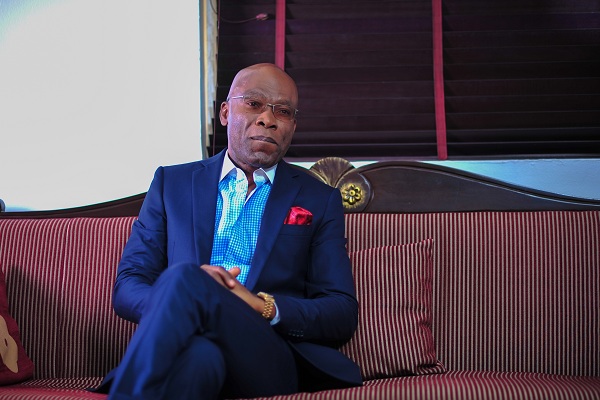
Chairman, Zinox Group, Leo Stan Ekeh has cautioned contemporary African entrepreneurs to guard against a rising wave of corporate blackmail, even as he disclosed that he has never met one Benjamin Joseph, a fellow Igbo and owner of Citadel Oracle Concepts, a small Ibadan-based retail firm who has been in the news recently as standing prosecution for allegedly falsely accusing Mr. Ekeh and others as well as one of Ekeh’s companies of a N170m fraud.

Ekeh made this submission while addressing participants at the end of his final virtual mentorship project for 2022 with the theme – The Last Card – involving a cross-section of budding African entrepreneurs and post graduate scholars drawn from select foreign universities last Thursday. He had altered the earlier listed case study –“The emerging corporate miracle” to “ The Last Card” based on his current experience.
The Zinox Chairman’s comment comes even as lawyers from various backgrounds have continued to debate how Femi Falana, a popular Senior Advocate of Nigeria (SAN) could have taken on a brief without carrying out due diligence into a case in which his client, the said Benjamin Joseph, has continued to sponsor a series of potentially defamatory media reports against Ekeh, despite having a subsisting N20m fine awarded against him by an Abuja court of competent jurisdiction for giving the Federal Government false information, while also facing another criminal charge for false petitioning before an FCT High Court in Abuja filed by the Inspector General of Police (IGP) in which the Attorney General of the Federation, Abubakar Malami had instructed the IGP and the courts to prosecute Mr. Benjamin Joseph to logical conclusion.
Also featuring at a recent discourse on the subject among the lawyers is how Falana failed to advise his client on the difference between a corporate and personal transaction. In law, there is a separation of personalities between corporations and their individual owners. The law separates two of them as different persons. So, a contract entered into by a company in its normal course of business cannot become the responsibility of a shareholder, especially when that shareholder is not in any way involved in the day-to-to running of the company. Anyone mixing up the two is only acting mischievously to achieve an ulterior motive, which includes embarrassing and blackmailing the shareholder.
Of great concern to the participating lawyers is a perceived attempt to destroy the reputation of a distinguished and humble African and one of Nigeria’s prides identified by President Obasanjo and honoured on October 1st 2001 as an Icon of Hope and a model for Nigerian youths.
Correspondingly, while addressing his audience on Thursday, October 6, 2022, Ekeh stated that today’s entrepreneurs must remain alive to the growing threat of blackmail in professional circles which he described as the fifth highest revenue earner globally. In addition, he added that in a case of corporate blackmail, there is often a ‘small masquerade’ involved.
‘‘This challenge is a good case study for upcoming African entrepreneurs. As businesses in Africa continue to take a hit from global economic crises – due to the lack of provisioning for tough times – the threat of corporate blackmail will increase for those of you in business. Doing business in Nigeria or Africa is not for cowards. You must prepare like someone going to the war front. If you have the will and capacity to succeed as an entrepreneur, you must be always aware and take measures to protect your business from corporate blackmail. Most times, it is the work of small competitors who wish to see you go down or who have a desire to rubbish your credit rating or public image.’’
Referencing his experience in the earlier mentioned case involving Benjamin Joseph, Ekeh added: ‘‘Corporate blackmail has grown exponentially in recent years and often, the end purpose is extortion. I can confirm to you that there is no court case or indictment against me or any of my colleagues or my wife either with the Police, EFCC or any court in Nigeria or abroad. I decided from the first day I started business to be a child of trust economy and delete passion for money but instead, hold on to my passion for technology and that informed me in seeing myself as an only child even though I have other five successful siblings.
‘‘I am my greatest adviser and never had a privilege of a mentor outside my tough British-trained mother and humble father who was an only child of his parents. I concentrate more on why brilliant, good and hardworking persons fail in business in Africa but succeed in civilized countries. This informed why I stayed with tech business 360 degrees as I am in total control and the business does not lie. It’s either you are right or wrong. Never concede to blackmailers. Be humble but launch out with confidence as far as you have content to deliver. Blackmailers don’t last in the business.
‘‘This is why my blackmailer failed because there is digitally undisputable proof. I run a tech family – my wife and all my five kids are in tech and comfortable. If you are in the tech business, wealth becomes a right, no matter how old we are. Rich guys in tech all over the world don’t make noise because there is no reason to do so. Successful entrepreneurs don’t make noise because they worked for it. It is not an inheritance,’’ Ekeh stated.
When asked by one of the participants on how to prevent or guard against corporate blackmail, Ekeh submitted that entrepreneurs must remain above board in their dealings, while also putting in efforts to investigate and understand where the threat is coming from.
‘‘It is your right to know and in future, I will tell the full story. You must embrace integrity and have well-defined processes and procedures guiding your business. It saves you a lot of headaches. But even when you have done your best in these areas, you may still be targeted. Therefore, you must investigate your accuser or blackmailer to fully understand what is at play. It could cost you some money, but technology has made it easier and could be a great lesson. I can tell you that staff of our Group learned a lot from this experience.
‘‘My blackmailer had claimed first that no computers were supplied to FIRS by my company on his behalf and in seconds, we produced original serial numbers and delivery note and they tallied with what FIRS received. Zero mistake. Later, he claimed he was not aware of the contract, and in seconds FIRS produced a letter of authority he issued to his partner, Princess Kama physically with a copy of his passport and he now agreed under oath.
‘‘He now claimed the account opened was forged and a forensic analysis report conducted by Police SFU confirmed that he indeed signed the Board resolution. My staff had nothing to do with opening of his bank account, but our system dictates that you do a Board resolution including two of our staff as majority signatories until we are paid and after the transaction is complete and we are paid, they will resign. We instituted this after few of such companies we funded defrauded us. We have a team of first-class lawyers and the tech to back up our structures and systems and we have done these for over 30 years. This Citadel case is the only blackmail we are tolerating. TD is the largest company in my Group and possibly in the IT Distribution sector in Africa and industry players know this. The N170m in question is an insult to TD and I am sure he knew before trying his luck with us.
‘‘We have enough to run all our companies globally. We may be a local company, but I have tried my little best based on some defined principles. I have never applied for overdraft in any bank, nor has any of my companies, not to talk about loan, so we are technically not desperate financially to cheat. When you are a child of trust economy, integrity is everything, so why do you have to borrow if you are trusted by your global partners and they extend any amount of credits to you? African entrepreneurs cannot scale in business pledging houses and share certificates as collateral to raise cash to do business. The financial institutions are ready to help but you have to earn their trust. When you make commitments, sweat and keep to them as your past transaction records have a lot to do with the decision to support you.
‘‘I have not taken alcohol or smoked from childhood and frankly I don’t know why, so, I don’t have bad dreams. I don’t have a single enemy in my life but you must run into storm sometimes, but never contain blackmailers. Even Benjamin Joseph shall become a born again soon and one of my best friends and I shall be glad to assist him in any little way. Life is very simple. But you must work hard to earn.
‘‘I only became aware of this particular case involving Benjamin Joseph and his company, Citadel Oracle Concepts two years after it started. It was a business transaction with Technology Distributions (TD) and did not, in any way involve Zinox. Yet, each time he goes to press, he mentions Leo Stan Ekeh and Zinox. TD is the pioneer and biggest distributors of tech products in Sub-Saharan Africa representing the biggest global brands in Africa. His mandate was to destroy my global credit rating so that our multinational partners could terminate relationships, but he failed. This is why I always advise entrepreneurs to build themselves as personal collateral during their incubation period and then their business as corporate collateral. In summary, be a child of trust economy and keep your word, and trust me, no person or financial institution can mess around with you. I am a living testimony and this is why I never sued Benjamin Joseph.
‘‘To start with, I have never met this man in my life. Neither has my wife met him in person. Even when he made attempts to meet with me, I rebuffed him because by that time, I had investigated him and discovered where he was headed. In tech business, we do not pay blackmailers because technology does not lie and that is the biggest mistake he has made in his life. Every lie he has told has been substantiated against him.
‘‘When he pressed on with his media campaign against me, I took the pains of hiring local and foreign detectives which cost me huge amount of money to investigate first my staff who handled the transaction, and then Benjamin Joseph, his company and his relationship with his partner, Princess Kama and her uncle, Chief Igbokwe and the discovery further strengthened my resolve not to engage him. Yes, it cost me big money, but it was money well spent. Remember, I mentioned there is often a small masquerade involved in such cases. I say small masquerade because someone bigger than you cannot spend his time blackmailing you for extortion.
‘‘If you have made up your mind to be a successful entrepreneur in Africa, you must be knowledge packed to alter your destiny positively, be ready to take pains before pleasure, implement auditable financial and legal structures backed with strong technology and most importantly, be spiritually strong. Most digital entrepreneurs in Africa fast more than most pastors in Africa. It is creative war like this that delays progress, but you will get there. These inconveniences shall gradually be deleted in the next ten years with the power of technology.
‘‘Blackmailers have, with the backing of some innocent press successfully destroyed our politicians, public office holders and their families as heads of criminal gangs, no matter how decent they are, and now they are gradually destroying wealth creators. Africa would be gone if they are allowed to succeed with our corporates,’’ the Zinox Chairman warned.
Furthermore, Ekeh shared some insights into the saga which has seen Benjamin Joseph facing an ongoing criminal trial for giving the Federal Government false information.
‘‘Benjamin Joseph’s company was among 13 others which TD Africa extended a credit facility to for supply of laptops to the FIRS. To guard against creditors making away with funds extended to them, TD insists on opening a joint account with each creditor so that they are fully aware of when the fund for the contract is paid. After he was paid, Joseph attempted to divert TD’s money but his partner, one Princess Kama refused. From my investigations, he (Joseph) had wanted to marry her but they could not agree.
‘‘However, when she objected to his attempt to divert the funds, Joseph petitioned the Police and EFCC, initially claiming that his company was fraudulently used to execute the contract without his knowledge and that nothing was supplied. This was despite the fact that he gave his partner a duly signed letter of authority and his passport to act on his behalf in executing the FIRS contract. But investigations revealed that the FIRS confirmed that all the laptops were supplied with the serial numbers intact.
‘‘He later fell out with his partner over profit sharing for the contract which Afe Babalola SAN, his lawyer at the time intervened but could not resolve. According to Princess Kama, Mr. Benjamin Joseph demanded all the profit from the business and the lady refused. If he was not aware and his company was fraudulently used to execute the contract and his signature was forged as he claimed, why was he later asking for a larger share of the proceeds?’’ Ekeh queried.
In conclusion, while advising his audience to learn from his experience and never give in to cheap blackmail, he stated that cowards don’t succeed in Africa as entrepreneurs, even as he expressed confidence that the course of justice would eventually be done in the matter.



Dr.Shaibu Husseini, the Executive Director/Chief Executive Officer of the National Film and Video Censors Board (NFVCB), has called for stronger distribution frameworks within Nigeria’s film industry to ensure that locally produced content achieves global visibility.

He urged film festivals across the country to evolve beyond networking platforms into active marketplaces where filmmakers could secure distribution deals. He stressed that festivals must attract distributors, exhibitors, streaming platforms, and marketers to create tangible opportunities for filmmakers.
Husseini made this call while delivering the keynote address at the opening ceremony of the 2026 edition of the Coal City Film Festival held in Enugu.
“Film festivals must become gateways to distribution where filmmakers leave not just with applause, but with real opportunities,” he said.
Husseini expressed personal delight at hosting the event in Enugu, his birth state, noting the city’s rich cultural heritage and longstanding contribution to Nigeria’s creative landscape.
He commended the festival organisers, particularly the Festival Director, Uche Agbo, for their resilience and commitment in sustaining the
initiative. According to him, the Coal City Film Festival has grown into a significant cultural platform and a must-attend cinematic event in South East Nigeria.
Speaking on the festival’s theme, “Local Stories, Global Screens,” Husseini emphasised the importance of authenticity in storytelling. He noted that films rooted in local realities, languages, and cultural truth often resonate more strongly with global audiences.
He cited notable Nigerian productions such as King of Boys by Kemi Adetiba, The Wedding Party by Mo Abudu, Anikulapo by Kunle Afolayan,
“Black Book” by Editi Effiong, and “Lionheart” by Genevieve Nnaji as examples of culturally grounded stories that have gained international recognition on platforms such as Netflix and at global film festivals.
While acknowledging the growth in film production across Nigeria, the NFVCB boss identified distribution as a major bottleneck in the industry. He observed that many high-quality films struggle to reach audiences both locally and internationally due to limited distribution channels.
Reaffirming the Board’s commitment to industry development, Husseini stated that the NFVCB has continued to reposition itself as a partner in progress by engaging stakeholders, improving classification processes, and promoting a balance between creative freedom and social responsibility.
However, he raised concerns over increasing non-compliance with regulatory requirements, noting that some filmmakers bypass the Board by releasing unclassified films or operating without proper licensing.
He said all films and video works must be submitted to the NFVCB for classification and registration before being released on any platform, including digital platforms such as YouTube.
“This is a legal obligation, and the Board will not hesitate to take decisive action against defaulters,” he warned, adding that regulation is essential for protecting the industry, audiences, and national values.
Looking ahead, Husseini assured stakeholders of the Board’s continued collaboration with filmmakers and festival organisers to build a structured, sustainable, and globally competitive Nigerian film industry.
He concluded by commending the organisers of the Coal City Film Festival for their vision and contribution to Nigeria’s cultural economy, urging filmmakers to continue telling authentic stories that can resonate across global screens.


Mr. Charles Ebuebu, director General of the National Broadcasting Commission (NBC), has called on Nigerian content creators to actively participate in the country’s Digital Switchover (DSO), describing the transition as a major opportunity for visibility, revenue growth, and industry collaboration.

Mr. Charles Ebuebu, DG, NBC
Speaking as Special Guest of Honour at the induction ceremony of the Electronic Media Content Owners Association of Nigeria (EMCOAN) in Lagos, Ebuebu stressed that the success of the DSO depends on engaging content to populate the nation’s new digital channels.
“Without content, the DSO’s success would be incomplete. We are urging content owners to collaborate with the Commission to ensure Nigeria’s digital future is rich, diverse, and sustainable,” he said.
The NBC boss highlighted that the upcoming FreeTV Direct-to-Home (DTH) platform, along with its mobile applications, would provide content creators with nationwide reach, advanced analytics, and brand partnership opportunities.
Nigeria’s DSO, which marks the shift from analogue to digital broadcasting, is being implemented by the NBC using the Nigcomsat satellite infrastructure. The programme aims to deliver over 100 nationwide channels and expand access to Nigerians in remote areas via hybrid decoders, addressing long-standing infrastructure and funding challenges. The project, which has experienced delays since 2012, now has strong government backing and is scheduled for launch in April 2026.
Ebuebu commended EMCOAN members for their contributions to strengthening Nigeria’s creative economy and encouraged them to leverage the opportunities offered by the DSO to promote local stories, culture, and creativity on both national and global stages.
During the ceremony, EMCOAN honoured its distinguished members, naming Wale Adenuga, MFR, as Grand Patron and Mr. Yinka Adebayo as Patron.
Prominent figures in the broadcasting content industry, including Wale Adenuga, Opa Williams, Agatha Amata, Jibe Ologeh, High Chief Emeka Ossai, Debbie Odetayo, Amina Mohammed, and Frank Elaboya, attended the event.
Representing the NBC at the event was Mr. Ralph Akpan, director of the Lagos Zone, while EMCOAN president, Mr. Adeniji Omirin, MD of ADNOM Media, urged members to fully engage in the digital switchover.

Canal+ is to cut jobs at MultiChoice as part of a sweeping restructuring plan aimed at stabilising the African pay-TV operator, following years of operational and financial pressure.

The move comes alongside a planned $115 million capital injection, underscoring the urgency of efforts to revive the business after the French media group took control.
The planned layoffs are expected to form a core element of a broader cost-cutting and efficiency drive, as Canal+ seeks to streamline MultiChoice’s operations and improve profitability.
The restructuring signals a shift toward leaner operations, with a focus on eliminating redundancies and optimising the company’s cost base.
MultiChoice has struggled in recent years with declining subscriber numbers across key African markets, weighed down by macroeconomic pressures, currency volatility, and changing consumer behaviour.
The rise of global streaming platforms has intensified competition, chipping away at the company’s traditional pay-TV dominance.
Canal+’s intervention marks a pivotal moment for MultiChoice, reflecting a more aggressive approach to repositioning the business.
By combining fresh capital with structural reforms, the new owners are aiming to both stabilise short-term performance and lay the groundwork for longer-term growth.
The $115 million injection is expected to provide immediate financial relief, supporting operations and potential strategic initiatives.
However, the accompanying job cuts highlight the depth of the challenges facing the company and the scale of transformation required to restore competitiveness.

Nigeria, Others Lose $88bn Yearly to Illicit Flows —Edun

Oracle Sacks 12,000 in India, Begins Shift to AI

CBN Says 33 Banks Raise Fresh N4.65 Trillion in Recapitalisation Exercise

NCC Insists Telcos Must Compensate Subscribers for Poor Quality of Service

NITDA Urges Joint Action to Drive Nigeria’s Digital Innovation

Spotify’s Loud & Clear Report Reveals Over ₦60Bn Revenue for Nigerian Artists in 2025

Madonna University Taps Tech Guru Adote for Strategic Board Role

China Threatens to Shut Nigeria’s Satellite Over $11.44m Unpaid Debt

FCCPC Bans Lagos ‘No Refund’ Policy, Vows Fines and Shutdowns for Traders

EFCC Arraigns Two FSDH Bank Officials Over $307k, €50k Fraud




 E-Financial3 days ago
NGX REGCO Fines 5 Firms N291m for Market Manipulation

 News3 days ago
Dangote Refinery Debunks Speculations on IPO

 E-Financial3 days ago
FG Launches Cross-Border Digital Payments Report

 News3 days ago
Descasio Launches “Give to Gain” Leadership Insights Report, Hosts Executive Brunch for Women in Leadership

 E-Financial3 days ago
Interswitch Deepens Strategic Partnership with KCB Group to Advance Digital Payments and Financial Inclusion

 News2 days ago
Microsoft Revamps Copilot in Workplace AI Push

 News3 days ago
World Backup Day: Research Reveals 84% of Users Store Sensitive Data Digitally

 E-Business2 days ago
Kaspersky Warns of a New Phishing Technique Leveraging Bubble, a no-code AI Platform