

E-Business
Jumia Sees Growth in First Quarter 2022 Results

Jumia Technologies AG (“Jumia” or the “Company”) announced its financial results for the first quarter ended March 31, 2022.

“We kicked off 2022 with very strong growth momentum, closing the first quarter with the highest GMV and Order growth rates of the past 9 quarters, up 27% and 40% year-over-year respectively.
“In parallel with accelerating usage growth, we continued driving platform monetization, with revenue growing by 44% year- over-year, which was also a 9-quarter high,” commented Jeremy Hodara and Sacha Poignonnec, Co-Chief Executive Officers of Jumia.
“We remain focused on taking the business forward on our path to profitability, driving faster usage growth with improved levels of marketing efficiency. Sales & Advertising expense per Order and as % of GMV decreased sequentially, both reaching their lowest levels in the past 4 quarters, at $2.0 per Order and 7.5% of GMV respectively. We are executing on our strategy with discipline and consistency. Our focus continues to be on making Jumia a compelling destination for the everyday needs of African consumers and a growth engine for sellers and businesses in Africa and beyond.”
First Quarter 2022- Business Highlights
- Growth Acceleration Initiatives
In the first quarter of 2022, we continued executing on our growth acceleration strategy building upon the momentum of the second half of 2021, continuing to scale the business towards profitability.
The key levers of our growth acceleration plan remain consistent:
Sustained marketing investments on a multi-channel basis, to drive consumer awareness, adoption and retention.
Enhanced assortment relevance with a focus on everyday product categories.
Improved pricing and shipping policy.
Improved customer experience and convenience through platform enhancements.
We have outlined below relevant developments in the first quarter of 2022 with respect to each one of these levers.
Marketing
- Brand awareness and consideration are core pillars of our marketing strategy and key to foster customer trust. We were pleased to see Jumia ranked #6 in the 2021 Most Influential Brands survey in Egypt released by Ipsos in March 2022. The ‘Most Influential Brands Survey’ is a global Ipsos initiative, covering 14 markets and close to 800 brands worldwide.
2021 was the second edition of the survey in Egypt with 118 brands assessed across 14 categories. In 2021, Jumia progressed from the 7th to the 6th position of the ranking, maintaining its leadership within the digital and e-commerce category of the survey.
Assortment, pricing and shipping
As part of our efforts to become the digital destination in Africa for everyday needs, we are expanding our assortment in the everyday categories and further enhancing our partnerships with sellers and brands.
Between December 31, 2021 and March 31, 2022, we added almost one million SKUs in the FMCG category, the highest number of SKU adds in this category in the past 8 quarters. We also established pan-African partnerships with each of Coca-Cola and Danone across both our e-commerce and food delivery platforms.
Price competitiveness is a key component of the Jumia value proposition for consumers, particularly in a more challenging macro environment that drives increased consumer price sensitivity. We are upgrading our price benchmarking tool into an automated system covering the full product assortment of Jumia, incorporating data from both online and offline channel checks.
The new system leverages machine learning algorithms to match images and product features enhancing the speed and accuracy of screening and matching. It also allows for real-time price adjustment with dedicated modules for margin optimization.
We are rolling out a free shipping program in select countries allowing consumers living in the main cities to benefit from next-day free shipping on Jumia Express items and basket sizes exceeding a minimum threshold. Jumia Express is an end-to-end logistics service provided to sellers where items are stored in our warehouse and picked and packed by Jumia.
We expect the free shipping initiative to drive consumer adoption and overall usage growth. While we will be foregoing consumer shipping fees – booked under Fulfillment revenue – we expect to better monetize the Jumia Express service – booked under Value Added Service revenue – as we expect sellers to benefit from sales uplift as a result of the free shipping roll-out.
Technology: Platform enhancements
We continue to invest in our technology backbone and front-end projects in particular, to make our platforms even more easy-to-use and engaging.
During the first quarter of 2022, we continued working on an overhaul of our homepage and product pages to simplify navigation and product discovery. Key developments included creating stronger hierarchy of content on the homepage and more informative product pages with larger pictures and additional information such as available stock quantity for flash sales and promotions.
We intend to further enhance user experience with incremental improvements to our product search algorithms and filtering modules, while increasing personalization throughout the stages of the user journey.
- JUMIA PAY UPDATE
In April 2022, JumiaPay was granted the Payment Service Solution Provider (“PSSP”) license by the Central Bank of Nigeria, which allows us to process payments on behalf of third-party businesses in Nigeria.
In parallel, we continued expanding the range of everyday digital and financial services available to consumers on the JumiaPay app.
In Nigeria, JumiaPay is working with the CGAP, Consultative Group to Assist the Poor, which is a global partnership of more than 30 leading development organizations, focused on financial inclusion to improve the lives of lower income populations.
As part of this partnership, we are piloting an e-doctor service on the JumiaPay app in collaboration with a third-party service provider, “Meeting Doctors”. The objective of this service is to help workers, sellers and consumers in general access doctors remotely for a monthly subscription fee of around $1. The experiment will help validate the value delivered to our customers and workers and identify a sustainable model to achieve this.
- MONETIZATION UPDATE
Logistics services to third parties
- We are making significant progress on the roll-out of our logistics services to third parties. Packages shipped during the first quarter of 2022 reached a new record of 3.5 million, on behalf of over 1,250 clients, an increase of more than 200 clients compared to the fourth quarter of 2021.
Advertising
Our advertising activity experienced strong momentum during the first quarter of 2022, with 484 advertising campaigns, up 55% year-over-year, on behalf of almost 9,000 advertising clients, a 24% year-over-year increase. Advertising clients during the quarter included high profile brand partners such as Unilever, L’Oréal, Adidas, Danone, Xiaomi, Coca-Cola, Krispy Kreme, Burger King and many more.
We are constantly improving the efficiency of our campaigns to enhance the returns on investment for our advertising clients, through better audience targeting, enhanced personalization and campaign management tools. As a result, advertising campaign performance, measured by the click-through rate on our ads, increased by 56% year-over-year in the first quarter of 2022, supporting sales and return on ad spend for our advertisers.
- IMPACT
Earlier in May 2022, we launched our inaugural ESG report highlighting our sustainability strategy and key themes in alignment with the Sustainability Accounting Standards Board (“SASB”) and the United Nations Sustainable Development Goals (“UN SDGs”). The first edition of this report has been designed as an overview of our sustainability strategy with a mapping of our current sustainability practices.
Our sustainability strategy is fully aligned with our corporate mission and has three main objectives:
– Living our mission: Our mission to “leverage technology to improve everyday lives” holds sustainability at its core. As we execute on this mission, we create jobs, reduce inequality and positively impact our communities.
– Embedding sustainability in our business operations: We aim to make business decisions and conduct our operations with sustainability guidelines and objectives in mind.
– Amplifying our impact through our ecosystem: Our impact is further amplified as we expand our sustainability practices to our ecosystem of partners and stakeholders.
Our sustainability practices today can be grouped under five material themes outlined below. These themes have been developed in line with our understanding of how our business impacts our key stakeholder groups: consumers, partners, employees, investors and our communities.
Environment
- Minimizing environmental impact through the reduction of carbon emissions, waste and offering customers pre-owned and refurbished goods.
Social
Providing convenience, accessibility and affordability to consumers.
Empowering sellers, partners, and communities by lowering the barriers to entry, providing training, access to funding and participating in initiatives to drive economic and social development.
Building an engaged, inclusive, and diverse workforce.
Governance
- Operating with strong governance and ethical standards.



The 2025 Kaspersky Security Bulletin provides a review of the major cybersecurity trends of the year and offers a look towards the future of cybersecurity, including within the financial sector.

According to the report, in 2025, the financial sector navigated a rapidly evolving cyber landscape, with malware spreading through messaging apps, AI-assisted attacks, supply chain compromises, and NFC-based fraud.
Based on Kaspersky Security Network statistics for the year (from November 2024 to October 2025), 8.15% of users in the finance sector globally faced online threats and 15.81% faced local (on-device) threats. 1,338,357 banking trojan attacks were detected by the company’s solutions. 12.8% of B2B finance sector companies faced ransomware this year – that marks a 35.7% increase in unique users in 2025 compared to the same period of 2024.
The company’s experts highlight the following cybersecurity trends and cases shaping the financial sector in 2025:
Large-scale supply chain attacks: the financial sector faced a series of unprecedented supply chain attacks, which are incidents that exploit vulnerabilities in third-party providers to reach their primary targets. The breaches demonstrated how vulnerabilities in third-party providers can cascade through national payment networks, affecting even central systems.
Organised crime converging with cybercrime: organised crime is increasingly combining physical and digital methods, creating more sophisticated and coordinated attacks. Financial institutions faced threats that blend social engineering, insider manipulation, and technical exploitation.
Old malware, new channels: cybercriminals increasingly exploit popular messaging apps to spread malware, shifting from email phishing to social channels. Banking trojans are being rewritten to use messaging platforms as a new distribution vector, enabling large-scale infections.
AI scales malware to new heights: this year, AI-enabled malware has increasingly incorporated automated propagation and evasion techniques, allowing attacks to spread faster and reach a larger number of targets. This automation also shortens the time between malware creation and deployment.
Mobile banking attacks and NFC fraud: Android malware using ATS (Automated Transfer System) techniques automate fraudulent transactions, altering transfer amounts and recipients in real time without the user noticing. NFC-based attacks have also emerged as a key trend, enabling both physical fraud in crowded places and remote fraud via social engineering and fake apps mimicking trusted banks.
Blockchain-Based C2 Infrastructure is on the rise: crimeware attackers increasingly embed malware commands in blockchain smart contracts, targeting Web3 to steal cryptocurrencies.
This method ensures persistence and makes the infrastructure extremely difficult to remove. Using blockchain for C2 operations allows attackers to maintain control even if conventional servers are shut down, highlighting a new level of resilience in cyberattacks.
Ransomware presence: these types of attacks remained a persistent threat for the financial sector with 12.8% of B2B finance organisations globally affected in November 2024 through October 2025. The figure for Africa is similar, with 12.9% of B2B finance organisations affected by ransomware from November 2024 through October 2025.
Disappearance of certain malware families: some malware families are likely to disappear, as their activity depends directly on the operations of specific criminal groups.
“In 2025, financial cyber threats evolved into a complex landscape, with attacks hitting businesses and end users alike. Criminal groups increasingly combined digital tools, insider access, AI and blockchain to scale operations, forcing organisations to secure not only their systems but also the human networks that support them,” said Fabio Assolini, Head of the Americas & Europe units at Kaspersky GReAT.
Kaspersky’s predictions for what finance cybersecurity might face in 2026, include:
Banking Trojans will be rewritten for WhatsApp distribution: criminal groups will increasingly rewrite and scale banking trojans distribution and abuse messaging apps like WhatsApp to target corporate and government organisations that still rely on desktop-based online banking. These environments are where Windows-based banking trojans thrive.
Growth of deepfake/AI services for social engineering: the trade in realistic deepfakes and AI-powered campaigns is expected to expand even more, fueling scams around job interviews and offers, driving underground demand for tools that fully bypass Know Your Customer (KYC) verification.
Appearance of regional info stealers: as Lumma, Redline and other stealers are still active, we expect to see the appearance of regional info stealers, targeting specific countries or regions, expanding the use of malware-as-a-service model.
More attacks on NFC payments: as a key technology used in payments, we’ll see more tools, more malware and attacks directed against NFC payments, in all types.
The advent of Agentic AI malware: agentic AI malware is characterised by its ability to dynamically alter behaviour mid-execution. Unlike conventional malware that relies on pre-defined instructions, agentic variants are designed to assess their environment, analyse their impact, and adapt their tactics on the fly.
This means that a single piece of malware could exhibit a range of behaviours, from initial infiltration to data exfiltration or system disruption, all in response to the specific defences and vulnerabilities it encounters.
Classic fraud will obtain new delivery: fraud will remain a major threat to end users, but its delivery methods will keep evolving. As new services and messaging platforms emerge, attackers will continue to adapt their tactics to the channels where their target audience is most active.
The persistence of ‘out of box’, pre-infected devices: the threat of counterfeit smart devices sold already infected with trojans (such as Triada) will continue to evolve.
These trojans often come with extensive capabilities, including the ability to steal banking credentials, and affect not only “gray” Android smartphones but also other smart devices such as TVs.

Kaspersky’s latest research reveals that the majority of compromised passwords not only violate password-safety guidelines but also remain unchanged for extended periods, which drastically reduces their security.

To provide users with access to more sophisticated and modern ways to log in, Kaspersky’s Password Manager has been enhanced with Passkey technology, enabling users to securely access their accounts while enjoying seamless cross-device synchronisation.
Although passwords still remain one of the major authentication methods, they no longer top the security charts. Often crafted by users themselves, passwords are heavily influenced by human factors, which makes them potentially vulnerable. Kaspersky experts analysed major password leaks from 2023 to 2025 and identified several recurring patterns:
- Users frequently append predictable elements like numbers, dates, and personal identifiers to their passwords. For example, 10% of passwords in datasets analysed contain a number resembling a date (from 1990 to 2025), 0.5% of all leaked passwords end with the number 2024, which is every 200th password!
- The most commonly occurring password combination is ‘12345’, which drastically reduces cryptographic strength and shortens the time required for brute-force attacks to succeed. Among other popular password components are the word ‘love’ and users’ names, as well as countries’ names which are also often included in passwords.
- Moreover, the majority of leaked passwords remain unchanged for years. In 2025, 54% of leaked passwords had already been part of prior data breaches, underscoring widespread reuse of outdated passwords. According to data analysis the average lifetime of the password found in these leaks is 3.5-4 years.
What makes Passkeys more secure?
All these findings highlight the critical vulnerability of password-based authentication when protocols for creation, management, and storage are not rigorously followed. In response to the growing need for robust security, the industry is increasingly shifting its focus toward next-generation solutions like Passkeys, which offer stronger protection against evolving threats.
Passkey technology is based on cryptographic keys and biometrics and is not subjected to threats like phishing or data leaks. A passkey is created for a particular account on a particular platform and is stored directly on the user’s device or in a password manager.
New Passkey feature in Kaspersky Password Manager
When a user registers on a platform that supports Passkey, the device creates a private key and shares a public key with the service. The private key is stored directly on the device, which is good from a security point of view, but complicates authorisation from other devices.
Now Passkeys can be created and stored directly in Kaspersky Password Manager, which allows users to not only sign in to supported services with a single tap, but also access Passkeys on all their devices owing to secure synchronisation.
“From our own experience, we’ve seen how constantly juggling logins and passwords for work, study and even leisure can erode both time and security. Kaspersky Password Manager has long streamlined this process with tools like our secure password generator and auto-fill functionality – ensuring users never sacrifice safety for speed.
In addition to that, we are happy to offer to our customers a new Passkey feature – an enhanced level of accounts protection which makes authentication even simpler and, most importantly, more secure,” comments Marina Titova, Vice President for Consumer Business at Kaspersky.
Passkey functionality is now available on all platforms in the latest version of Kaspersky Password Manager. To create a passkey in Kaspersky Password Manager, first update the app to the latest version and grant it all necessary permissions. Then, open the website where you want to create the passkey and simply follow the in-app guidance to register and save it.

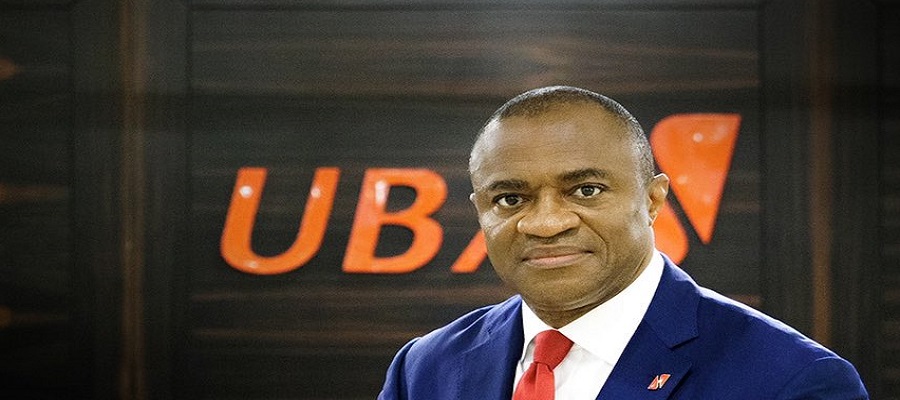
Africa’s Global Bank, United Bank for Africa (UBA) Plc, has once again, reaffirmed its leadership as one of the continent’s most innovative and resilient financial institutions, as the bank has, for the third time in five years, been named the African Bank of the year 2025 by the Banker.com.

UBA
UBA also won the Best Bank of the Year awards in nine of its 20 African subsidiaries, bringing its total awards this year to ten as UBA Benin, UBA Chad, UBA Republic of Congo (Congo-Brazzaville), UBA Liberia, UBA Mali, UBA Mozambique, UBA Senegal, UBA Sierra Leone, and UBA Zambia, all came out tops as the best banks in their respective countries, underscoring the bank’s strength across West, Central and Southern Africa and highlighting the depth of its Pan-African franchise.
The Banker.com, a leading global finance news publication published by the Financial Times of London, organises the annual Bank of the Year Awards, and this year’s edition was held at a grand ceremony at the Peninsula, London, on Wednesday.
The Chief Executive Officer, UBA UK, Deji Adeyelure, received the awards on behalf of the bank, representing the Group Managing Director/CEO, Oliver Alawuba, and was accompanied by the bank’s Head Business Development, Mark Ifashe, and Head, Financial Institutions, Shilpam Jha.
The Banker’s awards are widely regarded as the most respected and rigorous in the global banking industry, celebrating institutions that demonstrate outstanding performance, innovation and strategic execution.
In its remarks on UBA’s winnings, the banker.com said, “For the third time in five years, UBA Group has won the coveted Bank of the Year award for Africa. UBA Group time after time punches above its weight against its larger African rivals. The bank this year also takes home nine separate country awards (one more than it gained for its last continental win in 2024), equivalent to around a quarter of the awards for the continent, and more than any of its continent-wide rivals.”
Continuing, it said, “Perhaps even more impressive is the fact that the awards were won across a broad geographic spread, going to lenders based in the Economic Community of West African States (Benin, Liberia, Senegal, Sierra Leone, and former member Mali), the Central African Economic and Monetary Community (Chad, Republic of Congo) and the Southern African Development Community (Mozambique, Zambia). Its award wins were particularly notable in the highly competitive categories for Benin and Mozambique.”
The Banker also highlighted UBA’s strong financial performance and commitment to future growth. In 2024, the Group recorded a 46.8 per cent increase in assets and a 6.1 per cent rise in pre-tax profits in local currency terms, while continuing to invest significantly in talent and technology. West Africa remains UBA’s heartland, with operating revenue and profit increasing by 87 per cent and 89 per cent respectively in H1 2025.
The bank’s digital and innovation leadership was equally recognised. During the year under review, and launched its Advance Top-Up buy-now-pay-later feature on the *919# USSD platform, expanding financial access for customers, while the bank’s chatbot Leo continued its strong growth trajectory, with transaction volumes rising by 29 per cent year-on-year in H1 2025. Notably, in August, Leo became the first African banking chatbot to enable cross-border payments via the Pan-African Payment and Settlement System (PAPSS).
UBA’s Group Managing Director/Chief Executive Officer, Oliver Alawuba, while reacting to the achievement, said the recognition affirms the bank’s long-term strategy and customer-first philosophy.
“This honour reflects the strength of our Pan-African network, the trust of our customers, and the dedication of our people. Winning Africa’s Bank of the Year for the third time in five years is not by chance; it is a testament to disciplined execution, innovation, and a deep understanding of the markets we serve,” Alawuba said.
“Our nine country awards across diverse regions of Africa show that UBA is not just growing, but growing with impact. We remain committed to driving financial inclusion, supporting economic development, and deploying technology that makes banking simpler, faster, and more accessible to Africans everywhere,” he added.
United Bank for Africa is one of the largest employers in the financial sector on the African continent, with 25,000 employees group-wide and serving over 45 million customers globally. Operating in twenty African countries, the United Kingdom, the United States of America, France and the United Arab Emirates, UBA provides retail, commercial and institutional banking services, leading financial inclusion and implementing cutting-edge technology.

Union Bank Clinches Top Workplace Practice Honour at Sustainability Awards

Preventing Financial Crimes Amid Mounting Insecurity: Why Following the Money is Now a Survival Imperative

NITDA Charts Path for Kano as Innovation Hub

NCC Blocks Piracy Sites as Nollywood Faces Rising Digital Theft

Minister Claims Bandits Exploit Poor Network, Bounce Calls Off Multiple Towers

Nigeria Records Highest Weekly Cyberattacks in Africa — Report

Hackers Breach Phones of Dangote and Otedola, Demand Ransom

Cyber Tsunami Hits Nigeria as Breaches Surge 1,047%, esentry Q3 Report Reveals

MTN Nigeria Has Invested Over ₦32.23 Billion in National Priorities Through Its Foundation

FG Lists Bank Charges Nigerians Will Stop Paying from January 2026



 Telecom2 days ago
Minister Claims Bandits Exploit Poor Network, Bounce Calls Off Multiple Towers

 E-Financial2 days ago
FIRS says MOU with DGFIP Won’t Compromise Nigeria Tax Data Sovereignty

 General News2 days ago
Top Nigerian Startups Secure Funding Boost @ iHatch Demo Day Awards

 Telecom2 days ago
Google.org Backs CyberSafe’s Resilio Africa to Shield 2m People from Cyber Threats

 Telecom2 days ago
CBN, NCC to Launch Short Code for Swift Consumer Complaint Resolution
 Broadcasting2 days ago
NCC Blocks Piracy Sites as Nollywood Faces Rising Digital Theft

 Broadcasting2 days ago
Four Must-Watch African Films Debut Free on Glo TV

 Telecom2 days ago
NASENI Launches FutureMakers to Inspire Innovation in Young Nigerians