

Broadcasting
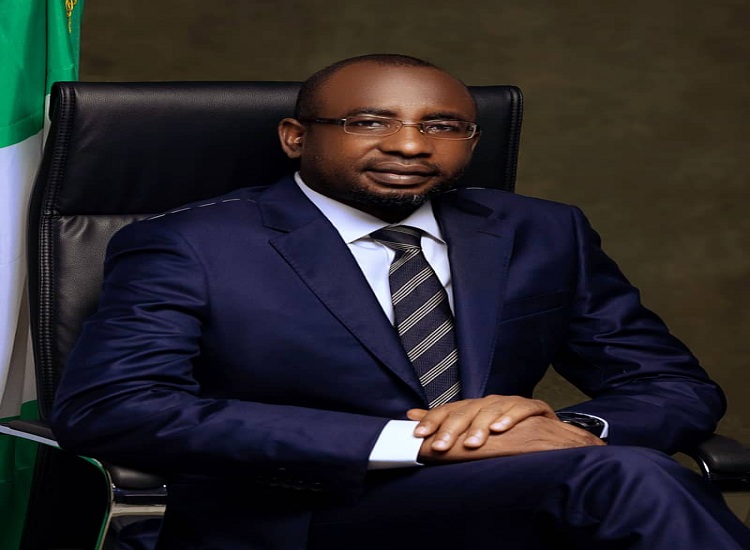
Kashifu Inuwa’s Extraordinary Two Years As DG NITDA

By Mubarak Umar
Two years have gone, and it was just like yesterday, President Muhammadu, GCFR, approved the appointment of Malam Kashifu Inuwa Abdullahi, a Massachusetts Institute of Technology (MIT, USA) – trained IT expert, as the Director General, National Information Technology Development Agency (NITDA), following the elevation of the then Director General, Dr Isa Ali Ibrahim (Pantami) FNCS, FBCS, FIIM, to the position of Minister of Communications, which was his ministry later re-designated to Ministry of Communications and Digital Economy.

With his appointment, it is heartwarming to note that growing corps of well-educated, world class technocrats are coming to the public domain to help change the narrative in public service.
Kashifu Inuwa Abdullahi, the current Director General of (NITDA, has equipped himself with leadership and management courses at Harvard University (USA) and IMD Business School, Switzerland before his appointment as DG, NITDA on 20th August, 2019.
He is one of the growing numbers of leaders appointed by the present administration many Nigerians are proud of.
In these two years, Abdullahi proved to the world that he knows the ICT global terrain deeply and he is very aware of the challenges, limitations and constraints keeping Nigeria – a nation of about 200 million lagging behind in the evolving world of digital economy. Against all odds that face Nigeria’s IT sector, Kashifu has an indefatigable vision and passion to take the nation into the comity of nations running on digital economy.
Tough, it is a herculean task considering six month after his appointment, the entire world found itself fighting an invisible enemy – COVID-19, but that does not stop him from looking outside the box to find out the lasting solutions of the economic challenge posed by the deadly virus.
Abdullahi has already made it to a stage where he plays pivotal roles in Nigeria’s quest to be Africa’s largest digital economy. Since ascending leadership of NITDA, there has been a steady and impressive implementation of the Strategic Roadmap for the Development of Nigeria’s IT sector envisioned by Dr Isa Ali Ibrahim Ibrahim (Kashifu’s predecessor at NITDA who is now Minister of Communication and Digital Economy), as well as implementation of President Muhammadu Buhari’s core vision of Economic Recovery and Growth Plan (ERGP) through Information Technology.
For Nigeria to effectively operate a digital economy, NITDA mapped out a Strategic Roadmap and Action Plan (SRAP 2021-2014), pillars identified by the Agency as the fulcrum for the Roadmap are: 1) Developmental Regulation; 2) Digital Literacy and Skills; 3) Digital Transformation; 4) Digital Innovation & Entrepreneurship; 5) Cybersecurity; 6) Emerging Technologies and; 7) Promotion of Indigenous Content.
SRAP has been broken down into strategic initiatives that speak to its goal. The resultant initiatives were further fragmented into activities and an implementation plan which was in turn developed for these initiatives. Also, a result monitoring framework was developed for identified key performance indicators of each of the initiatives.
The Agency set out strategies to digitize government functions and processes and it successfully created over 150 user accounts to enable Ministries, Departments and Agencies (MDAs) submit their IT projects through the agency’s IT projects clearance portal, licensed of 94 Data Protection Compliance Organizations (DPCOs), and of Nigeria Government Enterprise Architecture/Nigeria e-Government Interoperability Framework (NGEa-Ne-GIF).
Under Kashifu’s watch, NITDA has developed several regulatory frameworks for information technology development, which most of them have been published both on soft copy and hard copy by the Agency.
The Standards, Guidelines and Frameworks developed by NITDA include: Nigeria Government Enterprise Architecture (NGEA); Public Private Partnership regulatory framework for ICT and eGovernment projects; Government Digital Service Framework (GDSFrame); National Block Chain Adoption Strategy Document; Nigeria Digital Agriculture Strategy (NDAS-2020-2030); Business Process Management Guide for Federal Public Institutions (FPIs); Management System Guidelines for Federal Public Institutions (FPIs); Government Digital Transformation Performance (Readiness) Assessment Toolkit (GDT-PAT); and eGovernment Masterplan and Digital Transformation for Jigawa, Nasarawa and Ogun States, to mention a few.
To drive these initiatives, the Agency set up an ICT Technical Working Groups in MDAs to enable the adoption of Ne-GIF, NGEA and other related initiatives to drive ICT, e-Government and made a mandatory ICT Capacity Building for staff of MDAs. It organised Capacity Building and Certification of 442 Digital Transformation Technical Working Group (DT-TWGs) members drawn from different Federal Public Institutions (FPIs).
Furthermore, during these two years, Kashifu continues from where his predecessor stopped in unfolding potential Nigerian farmers through Federal Government initiative of National Adopted Village for Smart Agriculture (NAVSA), to change the face of agric sector in the country.
National Adopted Village for Smart Agriculture is an ecosystem-driven digital platform envisioned for the transformation of the agriculture sector in Nigeria. It is designed to help farmers and other agricultural ecosystem players navigate their journey across the agriculture value chain. This journey cuts across farm production to management, processing, harvesting, storage, marketing and consumption. 565 farmers were trained and empowered with digital devices and N100, 000 seeds funding, which also created jobs direct and indirect jobs in the country.
NITDA also launched the National Adopted School for Smart Education (NASSE) to promote digital literacy and skills among students with 500 students and 30 teachers at Junior Secondary School Karshi benefited from the pilot scheme. The Agency supervised training of a total number of 1,858 Artisans across the 6 Geo-Political Zones on digital literacy and phone repairs.
The Agency also conducted training for 200 women on ICT and Entrepreneurship, each provided with Laptops (pre-installed e-learning & graphics Software), Internet Dongles & Bag-Packs, 1200 direct jobs and 3000 indirect jobs were created; it further graduated 300 Nigerians on Software, Mobile App & Web Development, and Entrepreneurship. People Living with Disabilities were also not left behind, as NITDA trained 30 and 52 persons in Kano and Enugu respectively, and laptops were giving to them as working tools.
In addition to making an effort in IT development as well as enhancing the IT capacity of the citizenry, hundreds of IT Hubs, IT Parks, and Community ICT Centres were either deployed, furnished or equipped with world class facilities across the states of the country.
On cybersecurity, NITDA conducted five (5) incidents analysis affecting National ICT infrastructure, handled 34 hacking of MDAs’ websites, 15 ENDSARS hacking attempts resolved, 10 defacement of MDAs’ websites handled, and dark web monitoring 15 incidents handled.
The Agency, under the supervision of its mother Ministry, launched NITDA Academy for Research and Training (NART) with 67 plus active courses, 58227 plus active students and 55,539 plus active training sessions.
To ensure Nigeria’s fool of talents was not left behind, the Agency Establishment National Centre for Artificial Intelligence and Robotic (NCAIR), NITDA aims through NCAIR, to drive and support the research, development, and adoption of Emerging Technologies in Nigeria.
The Centre is creating the required environment for Nigeria’s teaming youths; encourage innovation and indigenisation of technologies to help address the continuous reliance on foreign products and services which has negative impact on the country’s economy. It serves as a bridge between the Government, industry, and the academia in providing research environment for creativity, idea integration, collaborative environment, development of ICT policies, processes and strategies.
As a result of Kashifu’s commitment, Nigeria made history when it received Public Key Infrastructure (PKI), during the handover ceremony of Root Certification Authority (RCA) for Country Signing Certification Authority (CSCA) and Country Verification Certification Authority (CVCA) of the Federal Republic of Nigeria.
With the strategy already in place, the Agency has succeeded in programming, developing and mapping out digital process to cushion the effect of Coronavirus since it is outbreak globally; Nigeria COVID19 Innovation Challenge, an online innovation challenge that was set up to meet the challenges our society was, and still facing as a result of COVID-19 pandemic. Developers, entrepreneurs and other creative minds joined to experiment and build software solutions to help address this crisis, received overwhelming applicants in Nigeria.
Though, considering the vast technology expertise possessed by the DG, Nigerians always ask why Kashifu Inuwa has such intellectual prowess which makes him an extraordinary Chief Executive in discharging his duties in the last two years as Director General, NITDA.



Canal+ is to cut jobs at MultiChoice as part of a sweeping restructuring plan aimed at stabilising the African pay-TV operator, following years of operational and financial pressure.

The move comes alongside a planned $115 million capital injection, underscoring the urgency of efforts to revive the business after the French media group took control.
The planned layoffs are expected to form a core element of a broader cost-cutting and efficiency drive, as Canal+ seeks to streamline MultiChoice’s operations and improve profitability.
The restructuring signals a shift toward leaner operations, with a focus on eliminating redundancies and optimising the company’s cost base.
MultiChoice has struggled in recent years with declining subscriber numbers across key African markets, weighed down by macroeconomic pressures, currency volatility, and changing consumer behaviour.
The rise of global streaming platforms has intensified competition, chipping away at the company’s traditional pay-TV dominance.
Canal+’s intervention marks a pivotal moment for MultiChoice, reflecting a more aggressive approach to repositioning the business.
By combining fresh capital with structural reforms, the new owners are aiming to both stabilise short-term performance and lay the groundwork for longer-term growth.
The $115 million injection is expected to provide immediate financial relief, supporting operations and potential strategic initiatives.
However, the accompanying job cuts highlight the depth of the challenges facing the company and the scale of transformation required to restore competitiveness.

Nigeria has ranked first globally in the ownership of the two largest stablecoins, Tether (USDT) and USD Coin (USDC), reflecting the country’s growing reliance on dollar-linked digital assets.

USDT, USDC
Stablecoins such as USDT and USDC are designed to maintain a fixed value against the U.S. dollar, allowing users to store money digitally while avoiding the price volatility associated with cryptocurrencies like Bitcoin.
According to the 2026 Stablecoin Utility Report released by BVNK, about 59 percent of Nigerian crypto users hold USDT, while 48 percent own USDC, giving the country the highest combined ownership rate among all nations surveyed.
The report placed Nigeria ahead of several major economies, including Australia and India, highlighting the country’s strong adoption of dollar-denominated digital assets. Australia ranked second with 34 percent USDT ownership and 29 percent USDC, while India placed third with 30 percent USDT and 27 percent USDC holdings.
The study also examined adoption levels across other regions. Countries such as Colombia and Singapore showed strong usage of both stablecoins, while adoption levels were also notable in South Africa and the United States.
Other markets included in the analysis were Philippines, Thailand and Argentina, where stablecoin ownership has also increased significantly. Among European economies, the report said France and Germany showed moderate levels of adoption, while Latin American markets such as Mexico and Brazil recorded smaller but growing usage rates.
The United Kingdom also appeared in the ranking with modest levels of stablecoin ownership. The report noted that USDT ownership exceeds USDC in many countries, including Nigeria, Australia, India, Singapore, the Philippines, Thailand, Argentina and France.
However, USDC is often viewed as a more compliance-focused stablecoin because of its stronger transparency and regulatory alignment. In some markets, including South Africa, Colombia, Germany and Brazil, the report found that USDC adoption slightly exceeds USDT.
More broadly, the data suggests that stablecoin adoption is being driven largely by emerging economies rather than advanced financial markets. According to the report, countries such as Nigeria, Argentina and the Philippines are among the biggest users of stablecoins, where people increasingly rely on dollar-pegged digital assets to protect savings from currency volatility and facilitate cross-border payments.

Spotify has unveiled Nigeria-specific data from its annual Loud & Clear report, highlighting how Nigerian artists generated more than ₦60 billion in revenue from the platform alone last year, amid explosive growth in streams, local consumption, and global discovery.

The report, which analyzes millions of data points to illuminate music streaming economics, shows Nigerian artists’ revenue surged over 140% in the past two years.
This boom stems from rising global appeal and stronger domestic engagement, with 30.3 billion streams and 1.6 billion listening hours on Spotify in 2025. First-time discoveries of Nigerian music hit 1.3 billion, up 26% from 2024.
Locally, Nigerian tracks dominated Spotify Nigeria’s Daily Top 50, accounting for over 80% of features, while consumption of homegrown artists jumped 170% year-on-year.
“Nigeria’s music scene thrives on creativity, innovation, and global influence,” said Jocelyne Muhutu-Remy, Spotify’s Managing Director for Africa. “Loud & Clear spotlights how artists are forging sustainable careers and deepening local ties.”
Key highlights include:
55% year-on-year growth in local streams for Nigerian female artists.
75% surge in streams for independent Nigerian artists.
Independents and indie labels earning 58% of all royalties from Nigerian artists on Spotify.
Spotify’s editorial playlists featured nearly 2,000 Nigerian artists in 2025, boosting visibility. Nigerian music appeared in 320 million global user playlists and over 12 million in Nigeria, totaling more than 60 million playlists worldwide.
The report also notes evolving tastes, with top-growing genres in Nigeria over five years including pop urbaine, alternative pop, anime, emo, and drill.
For full details, visit spotify.com/loudandclear.

Court Remands Hacker for Allegedly Stealing N3.09Bn from FCMB

CBN Directs IMTOs to Open Naira Settlement Accounts

Nigerians Lose N12.5Bn to AI-Driven Scams- PwC

SEDC Launches SEVCP to Expand Access to Capital for Startups

Kaspersky, AFRIPOL Conduct Joint Cybersecurity Training for African law Enforcement

Kaspersky Discovers New Phishing Campaign Exploiting Google Tasks Notifications to Steal Corporate Credentials

esentry 2025 Report Shows Healthcare, Financial Services and Telecoms as Staging Grounds for Increased Cyberattacks in Africa

AfDB, UNDP Launch $10Bn AI Initiative for Africa

MultiChoice Suspends Yearly DStv Price Hike as Canal+ Pushes Growth

MTN Nigeria Posts Record N1.70 Trillion Pre‑Tax Profit, Declares N20 Dividend for 2025




 E-Financial2 days ago
DLM SPV PLC Lists ₦9.00bn AAA-Rated Medium-Term Notes on FMDQ Exchange, Sets Benchmark in Corporate Bond Market

 E-Financial3 days ago
CBN Wins Central Bank of the Year Title @13th Global Awards

 General News3 days ago
Tech Firms Sack over 45,000 so Far in 2026

 News2 days ago
Metaverse Collapses, Horizon Worlds Shuts Down on Quest

 News3 days ago
Morney Launches in Nigeria as E-invoicing Drives Finance Digitisation

 Telecom3 days ago
FG Taps Quest Merchant Bank for Advisory on 90,000km Fibre Project

 General News3 days ago
Jury Finds Elon Musk Liable for Misleading Twitter Investors

 News3 days ago
TEF-Backed Entrepreneurs Generate $4.2Bn, Create 1.5m Jobs across Africa