

Broadcasting
Kiddwaya Becomes BBNaija All Stars Second Head of House as Angel Secures Black Envelope Immunity


New Monday, new HOH game, Black Envelope search and nomination show, culminating into the ultimate drama showdown.

This week, Biggie switched up the game, going from one housemate per round last week to four teams of five housemates each. At the end of the first round, each team had two people qualify for the second and final round.
Team Fantastic Five, consisting of Ike, Pere, Kidd, Cross, and TolaniBaj, faced the HOH challenge first, with Kidd and Ike emerging as their qualifiers. In the first round, there were five basins filled with many plastic balls and opposite the filled bowls were seesaw beams. The housemates had to walk on the seesaw beams to transfer the balls from the basins to the shallow container at the end of the beam. The housemates were not allowed to use their hands to touch any part of the beam except the start point, which was clearly marked.
Biggie also noted that if any housemate touches any other part of the beam, it is considered a failed attempt, and they must start all over. He added that if the plastic balls fall out of the shallow container at the beam’s end, they must be returned to the basin, and the housemates must start again.
They were allotted 30 minutes to move the balls from the bowl to the end of the beam. The first two housemates to successfully transfer four balls and then return to the starting point would automatically qualify for the next round of the game. In the absence of the challenge completion by any housemate, the housemate with the most balls in their beam bowl will be declared the qualifier. Big Brother would decide on a sudden-death game if there was a tie. There were no sudden death games.
Team Veto Five – Whitemoney, Neo, Doyin, Princess and Ilebaye – went second. Neo and Ilebaye qualified after successfully transferring all four balls. Mercy, Frodd, Angel, Venita and Cee-C were a part of Team Five Star, which saw Frodd and Venita qualify for the next round after 30 gruelling minutes. Adekunle, Alex, Soma, Seyi, and Uriel’s Team Blizzard also struggled to finish the game in 30 minutes. Still, Soma and Adekunle qualified for the final round.
After the 4 teams had taken a turn, Big Brother announced that the Head of House game would pause for a while, introducing the black envelope challenge. The rule is simple – find the black envelope hidden in the house. One housemate can only have one envelope, but the search has to start after Biggie’s signal. Kidwaya, Neo and Angel found the envelopes. While Angel’s noted that she was immune from the week’s nomination, Kiddwaya and Neo had a message to have better luck next time.
Luck would come to play as the HoH game continued. Ike, Kiddwaya, Neo, Ilebaye, Frodd, Venita, Adekunle, and Soma, who passed the first challenge, headed to the final round. Big Brother announced a little twist in the game, explaining that the housemates are to put five balls in the shallow container in ten minutes, while other rules remain unchanged. After an intense round that saw Neo and Kiddwaya successfully transfer five balls in 10 minutes, the housemates had to head back into the lounge.
Afterwards, Big Brother announced Kiddwaya as the new head of the house. He received the chance to choose four BFFs who would share his lounge. He chose Tolanibaj, Uriel, Pere and Neo to be his BFFs for the week.
The HoH announcement led to the nominations. Big Brother announced that the nominations are taking a new turn until he says otherwise. He called the game ‘Pardon Me Please’. The voting style will see the housemates list who they want to give possible immunity for the week. They are not allowed to state their names, the HOH name or that of the Black Envelope winner’s. There will only be one winner. If there is no clear winner, Big Brother will declare the game inconclusive as Biggie will not recognise the tie.
Soma received the most nominations with eight nods. Ilebaye received two. The housemates nominated Ike, Venita, Cross, Neo Energy, Doyin, Mercy, Ceec, Uriel, Tolanibaj and Adekunle once. Big Brother announced that an emotional Soma is immune from possible eviction since he won the first-ever PMP game.
Every other housemate apart from Soma, Angel and Kiddwaya is up for possible eviction. Their continuity in the game depends on the viewers’ votes, and voting portals are now open until 9 pm on Thursday. Viewers can vote via the MyDStv and MyGOtv apps, mobile or website. Depending on their subscription, all DStv subscribers are liable to up to 10,000 votes (Prestige subscribers) or as little as 200 votes. GOtv subscribers, on the other hand, get between 200 and 750 votes (GOtv Supa+) based on their subscription.
Until the eviction show on Sunday, viewers can enjoy BBNaija All-Stars on the 24/7 channel – DStv ch. 198 and GOtv ch. 49. Remember, if you are away from home and don’t want to miss a minute of the action, you can catch up with your favourite All-Star housemates on the DStv app or Showmax.
Moniepoint Nigeria is the headline sponsor for the BBNaija All-Stars Edition and HFM – forex and commodities broker is the associate sponsor.


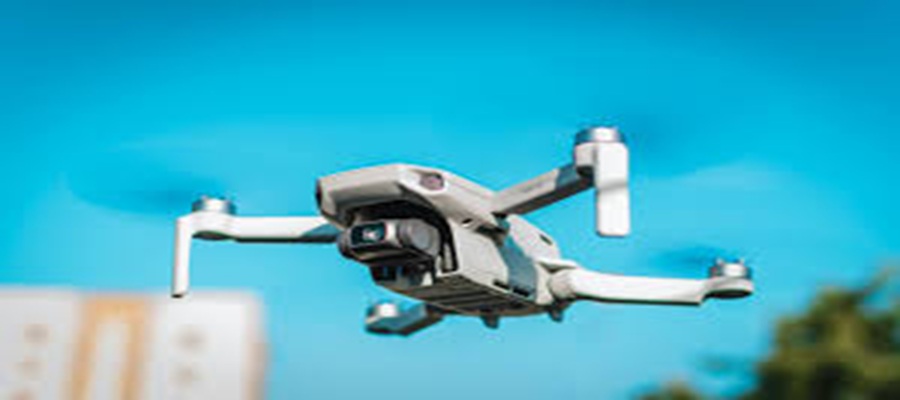

Drone
The US Department of Homeland Security (DHS) will invest $115 million in counter-drone technology to safeguard the 2026 FIFA World Cup and events marking America’s 250th independence anniversary, creating a dedicated office for rapid drone system deployment.
Homeland Security Secretary Kristi Noem described drones as “the new frontier of American air superiority,” stressing the need to counter threats from drug cartels using unmanned aircraft for smuggling and surveillance, alongside incidents like a 2025 NFL stadium drone flight and 2024 New Jersey sightings.
The funding supports 11 World Cup host cities expecting over one million visitors, building on FEMA’s $250 million grants to those states and addressing risks heightened by cartels’ advancing tech, including a reported FBI tracking plot in Mexico.
DHS has conducted over 1,500 counter-drone missions since 2018, with the new Program Executive Office accelerating acquisitions amid President Trump’s border security push.
Broadcasting
Youth Talent Takes Center Stage as T2 Ignites High-Octane Rap Battles @ Carnival Calabar

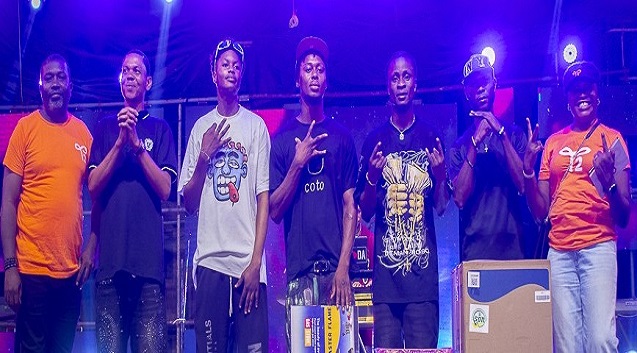
The energy at the Carnival Calabar Music Concert reached a new high as T2 introduced a first-ever rap battle platform, giving young Nigerians an electrifying stage to showcase their talent, creativity, and self-expression while competing for exciting prizes.

Held at the U.J. Esuene Stadium, the activation blended pulsating music, vibrant culture, and youthful energy into a dynamic celebration that kept thousands of carnival-goers fully engaged from start to finish.
Eight fearless contestants stepped into the spotlight, going bar for bar in an intense lyrical showdown. Rappers fused local languages, pidgin, and sharp punchlines, creatively weaving the T2 brand into their verses.
Anchored by the energetic hosting duo MC Double I and MC Princess, the rap battles thrilled over 16,000 attendees, including the Governor of Cross River State, Senator Bassey Otu, delivering an unforgettable showcase of youth talent and cultural expression.
With prizes including fridges, gas cookers, sound systems, and airtime top-ups, the competition remained fierce throughout the night. After two high-energy rounds narrowed the field to a five-man final duel, Emmanuel Eye emerged as the overall winner, taking home the grand prize — a fridge.
“I never expected this at all,” Emmanuel said. “I came to the concert like anyone else, and hearing about the T2 rap battle was a surprise. When I got the chance to perform, I just went for it. Being named the overall winner is amazing, and I’m grateful to T2 for creating this platform to showcase our talent.”
Beyond the stage performances, T2’s presence added a digital layer to the carnival experience. As part of its role as Digital Technology Partner of Carnival Calabar, the brand introduced the MyT2 App as a lifestyle companion, while also enabling line reactivations, airtime top-ups, and instant rewards for hundreds of attendees, blending technology seamlessly into the live celebration.
Commenting on the activation, Chinelo Manefo, Specialist, Events and Sponsorship at T2, said:
“The energy from both the rappers and the crowd was incredible. This platform reflects exactly what T2 aims to create — a celebration of youth, creativity, and culture, enhanced by technology that connects people and experiences. Seeing the audience so immersed shows how music and performance can empower the next generation.”
The Carnival Calabar Music Concert, headlined by Tiwa Savage, Timaya, and top local performers, was further energized by T2’s interactive rap battle platform. By blending music, culture, youth expression, and digital innovation, T2 reinforced its commitment to championing Nigeria’s next generation, giving young creatives a stage to shine while enriching how they experience the festival.
Broadcasting
Aig-Imoukhuede Foundation Wrapped Up 2025 with Real Change in Governance, Health, Media Across Africa
Aig-Imoukhuede Foundation has announced its 2025 achievements, marking a year of accelerated impact, systemic reforms and innovation in public leadership and service delivery across Africa.

Aig-Imoukhuede Foundation
A statement issued on Wednesday in Lagos said the foundation strengthened governance, improved primary healthcare, drove digital transformation and elevated media’s role in promoting public sector accountability.
It said the AIG Public Leaders Programme (PLP) trained 72 public sector leaders from Nigeria, Egypt, Tanzania, Cameroon, Zambia, Malawi and Kenya—its fastest growth to date—bringing the alumni network to 309.
These alumni are driving 237 reform projects to enhance public institutions, from faster decision-making to greater transparency, with nine promoted to higher roles for their contributions.
On civil service modernisation, the foundation accelerated digitalisation at the Office of the Head of the Civil Service of the Federation (OHCSF), streamlining 19 processes and achieving a 75 per cent increase in work speed through automated workflows.
It also trained over 400 officials from the Federal Ministry of Justice, Federal Civil Service Commission and Federal Ministry of Innovation, Trade and Investment in digital skills to support the FCCSIP 25 initiative and ongoing digital rollouts.
In healthcare, the Adopt-A-Healthcare-Facility Programme renovated four primary healthcare centres in Edo State, boosting antenatal visits by 73 per cent, immunisation coverage over 100-fold and fully vaccinating 554 children, while supporting 6,788 patients.
The foundation recognised 18 outstanding public servants with ₦500,000 each via the Emily Aig-Imoukhuede Endowment Awards and received a partnership award from the OHCSF for civil service reform efforts.
To empower media, it trained 50 journalists from top Nigerian media houses in impact storytelling, data analysis, visual and ethical reporting to better inform citizens on public sector changes.
Over five years (2021–2025), the foundation invested £2.6 million in PLP, saved ₦2.38 billion for the public sector through capacity building, trained 1,500+ civil servants, upskilled 660 digitally, trained 40 permanent secretaries and awarded 33 scholarships driving seven policy changes.
Other milestones include digitising 5,000 files, automating 333 processes, a 61 per cent efficiency gain, 60 per cent digital file creation at OHCSF, 128 excellence awards, 116 process reforms, 23 advocacy projects, 25 capacity initiatives, 18 podcasts, four healthcare articles, three policy papers, 23 adopted PHCs (four renovated) and 878+ fully immunised children aged 0–9 months.
Executive Vice Chair, Mr Aigboje Aig-Imoukhuede, said: “2025 was a year of real, measurable impact. From training hundreds of public servants to improving healthcare, helping ministries go digital, and equipping journalists to tell stories that matter, our work is making governments work better for citizens and communities across Africa.”

How Crypto Criminals Stole $700m from People – often Using Age-Old Tricks

Lebara Launches Agent Registration Portal

Nigeria Processed $92.1Bn Crypto Transactions in 12 Months — PwC

Tax Ombudsman will Save Nigerians Money, Time – CEO

Elon Musk Seeks $134Bn from OpenAI, Microsoft for ‘Wrongful Gains’

Banks quietly move to enforce new ₦50 transfer levy from Jan. 1

FIRS says NIN, CAC Numbers to Serve as Tax IDs from 2026

FIRS Declares NIN, CAC Numbers as Tax IDs from 2026

US Begins Partial Visa Ban on Nigerians January 1

Galaxy Backbone Tops FG’s Website Performance Ranking




 E-Financial2 days ago
SEC Hikes Minimum Capital Requirements for Market Operators After a Decade

 Telecom2 days ago
Study Shows Blocks in Telegram are Pushing the Underground Out

 News2 days ago
Nigeria Off EU High-Risk Money Laundering List in Major Financial Win

 News2 days ago
NGX Unveils Net-Zero Plan for Greener Capital Market

 Telecom2 days ago
Galaxy Backbone Marks Two Decades of Powering Nigeria’s Digital Evolution

 Telecom2 days ago
Vodacom Crowned Africa’s Top Employer 3rd Year Running on Innovation, Ethical AI

 Telecom2 days ago
Galaxy Backbone Marks 20 Years, Tops FG Website Scorecard

 E-Financial11 hours ago
Here Are Nigerian Banks That Have Secured Their Licences