

News
Lagos GDP Hits $136Bn

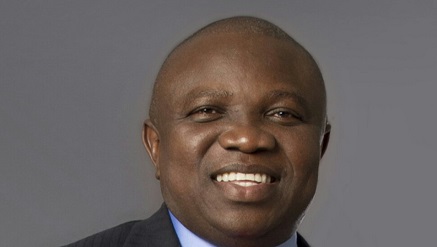
Lagos State governor, Akinwunmi Ambode, has described the state as the fastest growing mega city in the world, just as he revealed that its Gross Domestic Product GDP has hit $136 billion.
He also said the state accounts for over 90 per cent of Nigeria’s foreign trade flow, which invariably contributes 30 per cent to the country’s GDP and also accounts for 65 per cent of its manufacturing activity.
The governor who spoke through his Special Adviser on Overseas Affairs and Investment , Professor Ademola Abass, in Alausa, Ikeja, yesterday added that it attracted over 293 investors in a year.
Even with economic recession, he said, government had attracted more foreign direct investments in the first two years of the present administration than it did in the past 15 years.
His words:” Lagos, as the economic capital of Nigeria and the West African sub region with a 136 billion USD GDP, accounts for over 90 per cent of Nigeria’s foreign trade flow, contributes 30 per cent to the country’s GDP and also accounts for 65 per cent of its manufacturing activity”.
“It is our desire to see a prosperous Lagos that we will all be proud of, in terms of investment, open for business for the benefit of all.”
Since inception, Office of Overseas, Affairs and Investment has encouraged investor’s confidence in Lagos, as a place to conduct business and live in, he said.
Meanwhile the state has raked in N20.774 billion on land related transactions in the past one year. This is against the 2015 revenue of N9.2 billion.
The Special Adviser (Urban Development), Mrs. Yetunde Onabule, made the disclosure in Alausa, Ikeja.
She also revealed that a total sum of N2, 022 billion was paid as compensation to individuals and groups whose lands and property were acquired for overriding public interest.
The beneficiaries of the compensation according to her include, the Abule Egba Link Bridge, Oko Baba Sawmill, Isale Igangan Regeneration Project, Olorunsogo Market (Shops), Epe Road Expansion and Mosafejo Community/Olorunsogo Ultra-Modern Market.
The governor’s aide also said that since the inception of the Governor Akinwunmi Ambode-led administration, a total of 4, 445 Electronic Certificate of Occupancy (E-C of O) had been signed by the governor.



EFCC


The African Development Bank Group last week approved an investment of €6.5 million in the Saviu II fund in order to support technology start-ups through their seed phase and first institutional fundraising, mainly in French-speaking Central and West Africa.

The Bank will invest €4.5 million as equity and €2 million as a first-loss hedging tranche on behalf of the European Commission, under the Boost Africa Programme.
This participation of the Bank Group will enable the Saviu II fund to give priority to companies with a strong technological or digital component.
Saviu II, the second investment vehicle of Saviu Partners, plans to invest between €500,000 and €3 million in about 20 technology or technology-oriented business-to-business start-ups in the seed phase or carrying out first institutional fundraising.
The Saviu II venture capital fund aims to make at least 60% of its commitments in the French-speaking countries of West and Central Africa: Côte d ‘Ivoire, Cameroon, Benin, Senegal, Togo, Burkina Faso and Mali.
The fund can also co-invest in promising technology companies in East Africa that have a strong team and business model, and whose strategy includes entering the market in French-speaking West African countries and establishing a strong presence there.
In addition, the fund will devote a dedicated envelope to pre-seed investments, focusing on minority equity investments, usually in co-investment with studios, incubators or other ecosystem partners.
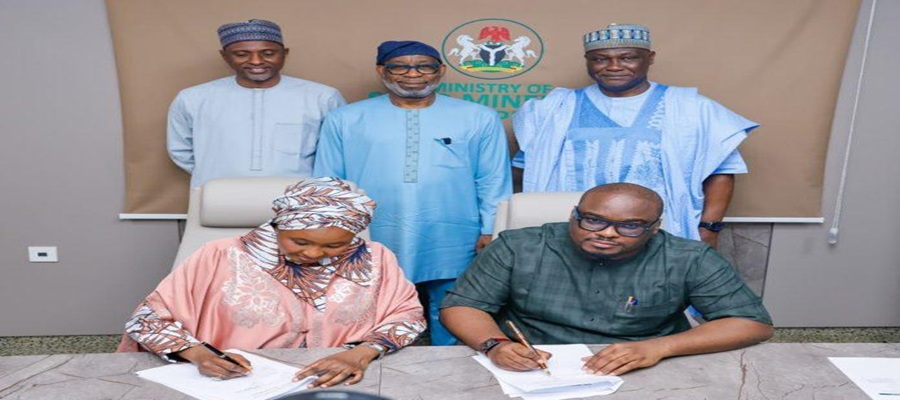
Nigerian Government has signed a $1.3 billion Memorandum of Understanding (MoU) with Africa Finance Corporation (AFC) via the Solid Minerals Development Fund (SMDF) to fund an alumina refinery, national geoscience mapping, and a strategic investment vehicle for mining growth.

Special Assistant to the Minister of Solid Minerals Development, Segun Tomori, said the refinery will process one million tonnes of bauxite yearly using a modern Bayer process, powered by an on-site gas-fired cogeneration plant.
Minister Dele Alake called it a transformative milestone boosting GDP, aligning with reforms that improve investment climate, regulations, and licensing to attract private capital. He directed agencies to fast-track permits.
The 20-year project at 95% utilization eyes 19 million tonnes total output, $1.2 billion annual GDP addition, $25 billion economic impact, and $8 billion forex earnings, per feasibility studies.
SMDF Executive Secretary Fatima Shinkafi termed it the agency’s biggest funding deal, supporting value-addition policy.
The partnership extends to geoscience mapping for mineral data, de-risking exploration, and a joint vehicle for mining assets.
Permanent Secretary Engr. Farouk Yabo praised the reforms. Shinkafi signed for government; AFC’s Franklin Edochie for the corporation, witnessed by AFC CEO Samaila Zubairu.
Tomori positioned it as Nigeria’s largest private mining investment and FDI magnet.

SEC Revokes Registration of Kensington Agro Trading Limited

NCDC Raises Alarm over Lassa Fever Ravaging 18 States in Nigeria

Lagos Deploys Drones, AI to Boost Traffic Response

Purple Woman 3.0 Is Back, to Empower Women in Tech this IWD 2026

NRS Targets N40trillion in Tax, Royalty Revenue in 2026

Accidental Billionaire Opts for Jail Instead of Returning Money Credited Him by Mistake

Kaspersky Brings more Transparency to Threat Detection with New Hunt Hub

Dr. Cairo Ojougboh Foundation Bolsters Nigeria’s Education Drive with ₦2.7m Student Support

NDPC Commits to Balancing Data Privacy, Protection Information

OADC Lagos Reinforces Commitment to Local Data Hosting and Digital Transformation @ NDPC’s National Privacy Week Summit




 E-Financial2 days ago
Iran-Israel-US Conflict and CBN’s FX Gains: A Stress Test for Nigeria’s Monetary Stability

 E-Financial2 days ago
Mutual Benefits Assurance Reaffirms Full Regulatory Compliance, Enhanced Governance

 General News2 days ago
JAMB Uncovers AI-Driven Fraud Targeting UTME Candidates, Warns Parents

 General News2 days ago
SERAP Asks FCCPC to Investigate Google, Meta, Others over Alleged Rights Abuses

 News2 days ago
TeamApt, Awabah Partner to Boost Pension Drive for Nigerians

 News2 days ago
FlashChange CEO, Bidemi Oke, Urges Startups to Build Strong Governance Structures Early

 Telecom1 day ago
Sunil Bharti Mittal Conferred GSMA Lifetime Achievement Award for Transforming Global Telecommunications

 Telecom1 day ago
Why Digital Trust Matters: Secure, Responsible AI for African SMEs?