

E-Business
LASRAB, IIM-Africa, Others Seek End to Intellectual Property Theft

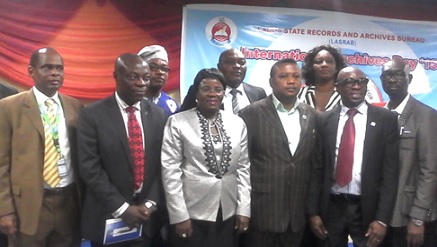
The Lagos State Records and Archives Bureau (LASRAB) on 2015 International Archives Day convened a stakeholder meeting to chat way forward to confront copyright issues in Nigeria as it relate to the law, with the theme “Copyright: Interpreting the law for Archives & Allied Institutions”.
Discussants comprising archivists, Liberians, Lawyers and academia, among others in the Copyright business said it has become expedient to stop copyright infringement in Nigeria, even as the institute of Information Management (IIM-Africa) insisted that awareness creation is key.
However, Barrister Chris Nkwocha, zonal Director, Nigeria Copyright Commission (NCC), Lagos Operational Office and guest speaker at the Forum, said that it was imperative for copyright laws to be respected and adhered to by all in order to prevent litigation.
He submitted that it’s was high time the act of piracy was stopped as it has constituted a major economic loss to millions of creative minds in the country, a factor that has further limited research works and launching of unique ideas.
Barr. Nkwocha therefore, pointed that it was time to eradicate further piracy of multimedia materials like Films, musicals and documentaries, many visible in Alaba market, Lagos and other major stores including Books piracies many surfacing in Bookshops across the country.
He added that Archivist and Records users should always adhere to the law and see that owners of a work are properly communicated and attributed if their works must be used.
However, he said they are exception to the law, which is fair use, it states that there is freedom to use part of a material for educational purposes examples are students and researchers who use an Author’s book for the purpose of learning, research or education and not for commercial gains.
Other discussants at the event, reiterated the need to create a society where copyright laws thrive and offenders are punished.
The Discussants were: Mr. Folarin Fambegbe, Director, Golden Scepter; Dr. Tajudeen Ajani Lawal, Director, Lagos State Library Board; Mr. Habeeb Sanni, Lecturer, Department of History and International Studies, Lagos State University, Ojo; Mrs Adebukola Agbaminoja, Chief Council Ministry of Justice, Lagos State; Amb. (Dr.) Oyedokun O. Oyewole,
President, RIMa Foundation/ Chairman, Board of Trustees, Institute of Information Management-Africa and Mr. Biodun Onayele, DG, LASRB.
Mrs. Oluranti Odutola, permanent secretary, Ministry of Information and Strategy, Lagos State pointed that it was important for Archivists to be conversant with the law of copyright in order to professionally operate in line with best global practices.
“Archivists or Archives operators are custodians of enduring records, who provide necessary data and information as published by creators, preserve and present them on request to researchers and the general public. It is therefore important that they are conversant with the law and comprehend its implication for their profession- especially as it affects the intellectual property Rights of the Persons who created the records and archives in their custody. It is essential to find out if they are vicariously liable for the actions for the users of the materials in their custody.”
Barr. Nkwocha further urged other states in the country to borrow a leaf from LASRB activities and successes.
LASRAB was conceived in 1995 as a Public Sector reform programme for better management of Lagos State records for planning, policy process, enhanced service delivery and heritage preservation.
In 2002, it was accepted as the Integrated Records and Archives Management Programme (IRAMP), a sub-component of the World Bank-assisted State Governance and Capacity Building Programme (SGCBP) which later became the Lagos Metropolitan Development and Governance Project (LMDGP).
A member of the panel of discussants, Dr. Oyedokun Oyewole, president/chairman Governing Council, Institute of Information Management contended that there was need for more awareness of copyright laws urging the Government to better empower NCC in discharging its duties.
His words, “You will agree that awareness is not enough. There is need for more awareness to be created. The NCC should be more empowered to embark on several initiatives and ensure that the entire nation is covered. It is very disturbing to note that many people are not even aware about the existence of Nigerian Copyright Commission”.
LASRAB formally came into legal existence as a Lagos State Government agency pursuant to Law 22 of 2007; the Bureau is under the supervision of the Ministry of Information and Strategy.
Administratively, LASRAB took-off on 1st August, 2008 but effective operation began on 1st December, 2008, with the appointment and assumption of duty of the premier Director General.



A jury in Los Angeles has found technology companies, Meta and Google liable for contributing to a young woman’s social media addiction, in a case being described as a landmark ruling.

The 20-year-old woman, identified only as Kaley, argued that she became addicted to Google’s YouTube and Meta’s Instagram from an early age due to their attention-driven design features.
According to her testimony, she began using YouTube at the age of six after downloading the app on her iPod Touch to watch videos about lip gloss and online games.
Kaley told the court that she joined Instagram at nine, bypassing parental restrictions put in place by her mother, and spent extended periods on social media.
The trial, which lasted about a month, with arguments and evidence from both sides.
Jurors also heard testimony from Mark Zuckerberg, chief executive, Meta and Adam Mosseri, Instagram head.
However, Neal Mohan, YouTube chief executive, did not testify.
The jury found that the companies were negligent in the design of their platforms and failed to adequately warn users about potential harms. Meta and Google were ordered to pay the woman $3 million in damages.
Jurors also recommended additional punitive damages, including $900,000 against YouTube and $2.1 million against Meta, according to company spokespersons.
The jury apportioned 70 per cent of the responsibility to Meta and 30 per cent to YouTube.
Kaley was present in the courtroom when the verdict was delivered, alongside parents of other teenagers who say they were harmed by social media use. Both companies said they plan to appeal the decision.
“We respectfully disagree with the verdict and will appeal. Teen mental health is profoundly complex and cannot be linked to a single app. We will continue to defend ourselves vigorously as every case is different, and we remain confident in our record of protecting teens online”, a Meta spokesperson said.
José Castañeda, Google spokesperson, said the case misunderstands YouTube, which is a responsibly built streaming platform, not a social media site.


Nigeria and Finland have signed a Memorandum of Understanding (MoU) on digitalisation and innovation, prioritising stronger cybersecurity cooperation amid a surge in cyberattacks targeting Nigerian institutions.

The agreement was formalised in Abuja on Monday between Dr Bosun Tijani, Nigeria’s minister of communications, innovation and digital economy, and Jarno Syrjälä, Finland’s under-secretary of state for international trade.
The MoU focuses on cooperation in digital governance, technology infrastructure, and cybersecurity to drive economic growth and improve public services, says a statement issued on Monday by Isime Esene, special assistant to the minister.
The agreement is a significant step in strengthening bilateral relations and advancing Nigeria’s digital economy agenda, says Tijani.
He notes the MoU builds on engagements in Helsinki in February, which centred on Nigeria’s Data Exchange Platform and Finnish participation in Project BRIDGE (Building Resilient Infrastructure for Digital Growth and Empowerment).
The talks also involved key Finnish finance institutions, including Finnvera and Finnfund.
The partnership is expected to unlock new opportunities for innovation and investment, positioning digital technology as a catalyst for shared prosperity, says Tijani.
Finland is committed to supporting the development of resilient, secure, and human-centric digital systems in Nigeria, says Syrjälä. He adds that digitalisation should enhance public trust and empower citizens, noting that Nigeria remains a strategic partner for Finland in Africa.
The agreement complements Finland’s lead role in a €23 million Team Europe Initiative aimed at strengthening Nigeria’s digital public services.
This programme is implemented by Finland’s development agency, HAUS, in collaboration with Estonia’s ESTDEV, and supports the 3 Million Technical Talent (3MTT) programme.
The deal comes as Nigerian organisations record the highest number of cyberattacks in Africa. In January 2026, organisations experienced an average of 4 701 attacks per week, a 12% year-on-year increase, according to Check Point Research.
In response, authorities are developing the 2026 National Cybersecurity Policy and Strategy update.
Expected later this year, the framework will mandate minimum cybersecurity investment requirements for organisations operating critical national information infrastructure, notes the ministry.

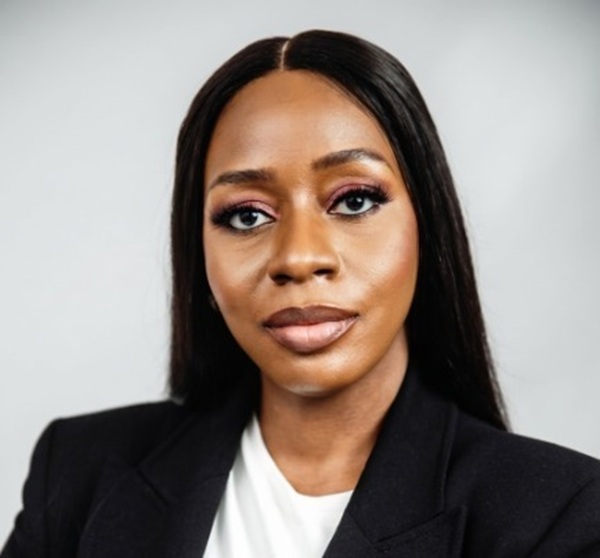
By Chinwe Iwobi, Head of Wealth Management, FairMoney Microfinance Bank
In Nigeria, women are the backbone of our economy. Data from the National Bureau of Statistics shows that women own approximately 40% of small and medium-sized enterprises across the country (NBS Country Data Overview 2023). Yet despite their outsized contribution to GDP, women-led businesses continue to face systemic barriers to the capital and financial infrastructure needed to scale.

Chinwe Iwobi
The cost of that gap is not abstract. When these entrepreneurs are held back, the ripple effect runs deep, from household stability to the education of the next generation. But the narrative is shifting. Nigerian women are proving, consistently, that they are not just resilient; they are sophisticated, high-earning innovators building businesses that deserve serious financial strategy.
Here are five foundational strategies every women-led business should be deploying to build lasting, generational wealth.
1. Separate Business and Personal Finances Without Exception
Mixing personal funds with business cash is one of the most common and most damaging financial habits I see among growing entrepreneurs. It obscures your true profit margins, makes tax planning nearly impossible and, critically, disqualifies you from accessing formal credit when you need it most.
The discipline of separation is not just administrative. It is the first signal you send to the financial system that your business is serious. Open a dedicated business account, maintain clean transaction records, and treat your business finances with the same rigour you would expect from any enterprise operating at scale. Clarity on your numbers is the foundation on which every other strategy here depends.
2. Build Both an Emergency Fund and an Opportunity Fund
Most financial advice stops at the emergency fund, which is three to six months of operating expenses set aside for lean periods. That is necessary, but insufficient. The entrepreneurs I have watched grow most aggressively also maintain what I call an opportunity fund: accessible liquidity specifically reserved to move fast when a prime supplier deal, an expansion location, or a bulk inventory discount appears.
In an unpredictable market like Nigeria’s, the businesses that scale are rarely the ones with the best products alone. They are the ones with the financial readiness to act decisively. Products like FairMoney’s FairSave are designed precisely for this, keeping your funds accessible while earning competitive daily interest so your idle cash is working even when you are not. Build both buffers, and build them before you think you need them.
3. Invest Profits Back into Revenue-Generating Assets
Surplus cash sitting in a current account is a slow leak. Inflation erodes it and opportunity costs compound quietly. The discipline here is to consistently channel profits back into assets that grow your revenue capacity, whether that is new equipment, improved technology, better inventory systems, or staff training.
For capital you do not need immediately, consider locking it into a fixed-term savings product that offers higher interest returns. The psychological benefit is as important as the financial one: ring-fencing that capital removes it from day-to-day spending temptation and ensures it is preserved and grown for a defined purpose. Discipline in capital allocation separates businesses that plateau from those that compound.
4. Diversify Your Revenue Streams Intentionally
Single-stream businesses are inherently fragile. If your sole revenue source is disrupted by market shifts, a supply chain breakdown, or a change in consumer behaviour, your entire operation is exposed. Resilience is built by design, not by accident.
If you are in retail, consider adding a service-based arm. If you are service-led, explore whether digital products or training offerings could create passive income alongside your core work. Beyond product diversification, consider how you accept payments. Building a verified, diverse transaction history through formal payment channels also quietly strengthens your credit profile, an asset that pays dividends when you approach lenders for growth financing. FairMoney’s Business POS infrastructure, for instance, allows entrepreneurs to expand their payment reach while simultaneously building that financial track record.
5. Invest Beyond the Business
This is the strategy most women entrepreneurs delay for too long, and it is the one I feel most strongly about. Relying entirely on your business for your net worth is a high-risk position, no matter how well that business is performing. Businesses face cycles; personal wealth should not.
As your business stabilises, begin systematically moving a portion of your profits into personal investment vehicles such as long-term savings accounts, money market funds, or other instruments that sit entirely outside the business cycle. Automate it if you can, so the decision is made once and executed consistently. The goal is to build a personal financial foundation that remains intact regardless of what your business goes through in any given quarter. True wealth is not what your business is worth on paper. It is what you own independently of it.
The Bigger Picture
For female entrepreneurs in Nigeria, wealth-building is not simply a personal ambition; it is an economic argument. When women-led businesses scale, communities stabilise, households invest in education, and local economies deepen. The strategies above are not complicated, but they require consistency and the right financial infrastructure to execute well.
The tools exist. The opportunity is real. What remains is the decision to treat your business, and your personal wealth, with the long-term seriousness both deserve.

Breaking…..Kuda Lays Off Many Employees in Broad Restructuring

NCC to Curb SIM Fraud, Strengthen Digital Security with New Platform

NBC Boss Urges Content Ceators to Participate in DSO

Kidnappers Now Use Banks to Collect Ransoms — Expert

CBN Says Bank Customers Won’t Lose Deposits because of Recapitalisation

Kaspersky Discovers New Phishing Campaign Exploiting Google Tasks Notifications to Steal Corporate Credentials

esentry 2025 Report Shows Healthcare, Financial Services and Telecoms as Staging Grounds for Increased Cyberattacks in Africa

Spotify’s Loud & Clear Report Reveals Over ₦60Bn Revenue for Nigerian Artists in 2025

MTN Nigeria Posts Record N1.70 Trillion Pre‑Tax Profit, Declares N20 Dividend for 2025

China Threatens to Shut Nigeria’s Satellite Over $11.44m Unpaid Debt




 E-Financial3 days ago
CBN Directs IMTOs to Open Naira Settlement Accounts

 Telecom3 days ago
Nigerians Lose N12.5Bn to AI-Driven Scams- PwC

 General News3 days ago
Court Remands Hacker for Allegedly Stealing N3.09Bn from FCMB

 Telecom3 days ago
Airtel Africa, Starlink Mobile Data and Messaging Testing Take off in Kenya

 E-Financial3 days ago
DLM Capital Group’s AAA-Rated Sovereign Bond-Backed Composite Notes (“SBCNS”) Strengthens Investor Confidence with Successful First Principal & Interest Payment

 E-Business3 days ago
AU Sees AI Adoption Evolving to Boost Economic Growth in Africa

 News3 days ago
Kaspersky, AFRIPOL Conduct Joint Cybersecurity Training for African law Enforcement

 Telecom3 days ago
GATEWAY Programme Opens Doors for 340,000 Nigerian Youths to Tap into $1.85trn Global Gig Economy